

WeDoctor Unveils Four-Pillar Strategic Business Platforms Driven by Big Data and Files for Hong Kong IPO
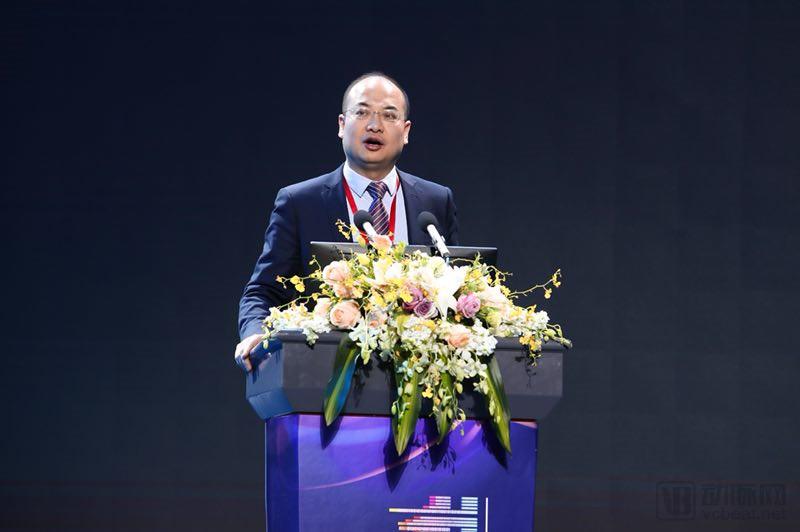
WeDoctor Founder Liao Jieyuan Delivers Keynote Address at the First Conference on Applications of Health and Medical Big Data
On February 2, the inaugural Health and Medical Big Data Application Conference was held at the G20 Summit venue in Hangzhou. Attendees included Jin Xiaotao, President of the Chinese Society for Health Informatics and Medical Big Data; Bian Zhenjia, Special Researcher of the Counselors’ Office of the State Council; Academician Han Demin, President of the China International Exchange and Promotive Association for Medical and Health Care; Feng Wen, Director of the Population and Culture Development Center under the National Health and Family Planning Commission; Wu Jian, Director of the Ruiyi Artificial Intelligence Research Center at Zhejiang University; and more than 3,000 guests from hospitals, pharmaceutical companies, insurance firms, and other industries.
As a leading medical technology company in China, WeDoctor was invited to release its four major business platforms at the conference: “WeDoctor Cloud,” “WeMedical Care,” “WePharma,” and “WeDoctor Insurance,” all driven by big data. “These four business platforms represent a comprehensive upgrade of WeDoctor’s strategy and operations, as well as an active response to the national initiative to vigorously promote the sharing and application of health and medical big data,” said Liao Jieyuan, founder of WeDoctor, at the launch event.
It is reported that WeDoctor Cloud is an intelligent medical cloud platform built by WeDoctor for the entire industry. Over the past seven years, WeDoctor has achieved the largest-scale “cloud-based hospital windows” in China by connecting more than 2,400 hospitals nationwide; it has realized the “cloud-based consultation rooms” for 260,000 doctors across China through the Wuzhen Internet Hospital and over 100 medical consortia nationwide; and, leveraging electronic health records and family doctor signing services as key initiatives, WeDoctor has facilitated deep connectivity of regional population health information in provinces and cities such as Heilongjiang Province, Wenzhou, Changzhou, and Pingdingshan.
Building on the “cloudification” of various healthcare scenarios, WeDoctor has partnered with the Ruiyi Artificial Intelligence Research Center at Zhejiang University to develop intelligent clinical decision support systems for both Western and traditional Chinese medicine—namely, the Ruiyi Intelligent Doctor and the Huatuo Intelligent Doctor. Furthermore, WeDoctor Cloud has established a Medical Artificial Intelligence Alliance with 11 Grade-A tertiary hospitals, including The First Affiliated Hospital of Zhejiang University School of Medicine, The Second Affiliated Hospital of Zhejiang University School of Medicine, and Guangdong Provincial Hospital of Traditional Chinese Medicine, to jointly promote the development and upgrading of intelligent healthcare in China and enhance its international influence.
Powered by WeDoctor Cloud, WeDoctor has built “WeMedical,” a new healthcare service system designed for hundreds of millions of families and tens of millions of institutions. This system comprises a three-tier service architecture consisting of “bases, outlets, and terminals,” providing users with integrated online and offline, as well as general practice and specialized care, medical services. As of November 2017, WeDoctor had connected with more than 2,400 key hospitals and 260,000 doctors across 30 provinces and municipalities in China, establishing over 100 regional medical service bases that include internet hospitals and medical consortia. It has also deployed 20,000 nationwide medical service outlets, including WeDoctor General Practice Centers, community health service centers, and pharmacy-clinics. The software and hardware terminals, comprising WeDoctor Tong and the WeDoctor APP, have enabled more than 150 million individual users and 1 million households to conveniently access comprehensive, round-the-clock medical and health services. As of January 2018, cumulative signed orders for WeDoctor Tong had exceeded 1.2 million units.
With the large-scale implementation of the “bases, outlets, and terminals” model, a new “home-based healthcare” service paradigm is gradually taking shape. In an exclusive interview with the media, Liao Jieyuan stated that in the future, 50% of medical and health services could be delivered at home, 35% of diseases could be treated at nearby outlets, and approximately 15% of complex cases would be referred to service bases. This approach aims to truly enable hundreds of millions of families to enjoy family doctor services comparable to those in Europe and the United States, facilitating a transition from passive medical treatment to proactive health management.
The micro-pharmaceutical sector, leveraging a prescription-sharing platform, has established large-scale connectivity among hospital information systems, retail pharmacy drug distribution and logistics systems, and medical insurance settlement systems, thereby enabling multi-party information sharing and application across healthcare services, medical insurance, and pharmaceuticals. Through the Wuzhen Internet Hospital, this platform has facilitated online prescription issuance and review for nearly 20,000 pharmacies across China, standardizing the circulation and use of prescription drugs, and has received recognition from the National Medical Products Administration as well as local food and drug regulatory authorities in multiple regions.
Weiyao has also leveraged its big data accumulation to promote the standardization and inheritability of clinical pathways in Traditional Chinese Medicine (TCM). Taking polycystic ovary syndrome (PCOS) as an example, Weiyao has integrated the theoretical explorations, clinical experience, diagnostic and treatment models, and specific applications derived from over 60 years of research by renowned senior TCM expert Yu Jin into a cloud-based auxiliary diagnosis platform. Repeated clinical validations have demonstrated an ovulation rate of 90% and a pregnancy rate of 70%. This approach was once recognized by the former president of the International Society of Hyperandrogenic PCOS as achieving optimal international outcomes.
Weiyi Insurance is the primary vehicle through which WeDoctor advances its open internet-based health insurance platform. By leveraging big data, it promotes the “revenue expansion” of commercial health insurance and the “cost containment” of social insurance. To date, WeDoctor has established business collaborations with over 30 institutions—including PICC Health, ZhongAn Insurance, and Taikang Life—in areas such as health management, medical services, and insurance e-commerce. WeDoctor also pioneered the online payment of medical services through basic medical insurance in Sichuan Province, enabling residents to access online consultations, e-prescriptions, medication delivery, and online payment services from home. This initiative has significantly improved the efficiency of both medical service delivery and medical insurance utilization.
To build a more comprehensive healthcare service system, WeDoctor and LF Healthcare Group Limited, controlled by the Fung Group, signed a memorandum of understanding in Kuala Lumpur on February 2. The parties announced the establishment of a joint venture for smart medical supply chain and procurement in China, aiming to deeply connect hospitals, nursing institutions, medical device manufacturers, and service providers. This initiative will achieve centralized procurement of medical devices, consumables, and services, streamline the healthcare service industry chain, reduce procedural steps and costs, and enhance the overall operational efficiency of medical institutions.
President Jin Xiaotao stated at the conference that the foundation of health and medical big data lies in connectivity, while its core resides in application. China’s health and medical big data sector has entered a period of rapid development characterized by equal emphasis on infrastructure construction and practical application. The Chinese Society for Health Informatics and Medical Big Data will establish a robust platform to actively encourage social forces to drive innovative development in health and medical services, promote the deep integration of these services with big data technologies, and comprehensively advance the implementation and application of big data.