

Ping An Good Doctor IPO Revelation: How to Build a Listed Internet Healthcare Enterprise in Three Years
Text and Photos by Liu Zongyu and Luo Shiming
On the evening of January 29, Ping An Insurance issued an announcement stating that it had submitted an application for the independent listing of Ping An Good Doctor Technology Co., Ltd. (Ping An Good Doctor) on the Main Board of the Hong Kong Stock Exchange. From its establishment in November 2014 to its IPO in Hong Kong, Ping An Good Doctor achieved this milestone in just over three years, with a rocket-like growth speed that created a miracle in the internet healthcare industry. It is expected that Ping An Good Doctor will list in Hong Kong as early as the second quarter of this year, becoming the first internet healthcare company to be listed on the secondary market.
Ping An Group established Ping An Health Internet in August 2014; in November 2014, Ping An Good Doctor was incorporated in the Cayman Islands; in April 2016, Ping An Good Doctor completed a $500 million Series A financing round; in December 2017, it secured a $400 million Pre-IPO investment from SoftBank. On January 29, 2018, it filed an IPO application with the Hong Kong Stock Exchange. From the company’s establishment to the submission of its IPO application, only three and a half years had passed, while Ping An Good Doctor’s products had been launched for less than three years.
What has enabled Ping An Good Doctor to stand out in the internet healthcare sector? What lessons from its development journey can the broader internet healthcare industry draw upon? Let us delve into the data from Ping An Good Doctor’s prospectus to uncover deeper insights behind its success.
I. Thanks to a well-connected father, Ping An Good Doctor started from a remarkably high platform.
According to VCBeat’s (WeChat ID: vcbeat) corporate database, there are a total of 161 internet healthcare companies focused on online medical consultation services. Among them, 12 have reached the mid-to-late stages of development, while the rest remain in the early stages. The earliest-founded company among these, Haodf Online, has been in operation for over 11 years. For most of these enterprises, they are still in the phase of validating their business models and have a long way to go before achieving scalable profitability, let alone pursuing an initial public offering (IPO) to realize capital gains.
However, at the current stage, internet healthcare unicorns such as Ping An Good Doctor, WeDoctor, Haodf Online, DXY, and Chunyu Doctors have amassed substantial resources of physicians and customers. Their revenue scales have expanded, with some companies already turning profitable and gradually acquiring the capability to enter the capital markets. The IPO of Ping An Good Doctor ushered in the first major wave of public listings in this sector, bolstering investor confidence in the internet healthcare industry.
The internet healthcare industry has long been known for its high barriers to entry. In addition to the traditional financial barrier, there are two other key aspects: one is the medical-side (physician-side) barrier, and the other is the user-side barrier.
First, the ability to secure a sufficient quantity and high quality of hospital and physician resources constitutes the foundation for the development of internet healthcare enterprises. Physician resources, particularly those of high caliber, are scarce, and all internet healthcare services are vying for these professionals. After attracting physicians to join their platforms through substantial financial subsidies, maintaining their engagement remains a significant challenge.
Second, although many patients turn to the internet for initial symptom checks in the mobile internet era, healthcare services are inherently low-frequency. Therefore, acquiring a sufficient patient base and retaining users are key to enabling internet healthcare companies to achieve a closed-loop business model.
How did Ping An Good Doctor cross this threshold?
Born with a silver spoon, completes record-breaking Series A financing
First, let us examine the capital threshold. Ping An Health Internet Company Ltd. was established on August 20, 2014, with a registered capital of RMB 350 million. It serves as one of the key vehicles for the “Healthcare” strategy within Ping An Group’s five major sectors: “Healthcare, Food, Housing, Transportation, and Entertainment.” In April 2015, the Ping An Good Doctor app was officially launched, becoming a premier entry point for healthcare and medical service platforms.
At that time, the shareholders were Shenzhen Ping An Financial Technology Consulting Co., Ltd., with a capital contribution of RMB 245 million, accounting for 70% of the equity; and the well-known Ping An internal employee stock ownership platform, Urumqi Guangfengqi Equity Investment Limited Partnership, with a capital contribution of RMB 105 million, accounting for 30%. As a wholly-owned subsidiary under the Ping An Group, Ping An Good Doctor had no concerns about operational funding at its inception.
One and a half years after its launch, Ping An Good Doctor secured $500 million in Series A financing in April 2016, setting two records: the largest single funding round in the global internet healthcare sector and the highest valuation for a Series A round. The ample capital ensured the execution of user acquisition campaigns and the rollout of subsequent business initiatives, such as the Health Mall.
Huarong Investment, Guotai Junan, JICC Wealth Growth Fund, Lifeline Capital, Linkus Capital, Hero Wall, Zhuhai Hexie Kangjian, and other Series A investors—comprising a total of 12 domestic and foreign institutional investors and corporations—collectively subscribed for 70,000,000 Class B ordinary shares, amounting to a total of USD 500 million. Among these, the 2,800,000 shares held by China Mobile, representing a 0.67% stake, were acquired by Huarong Investment on October 26, 2017, due to non-payment.
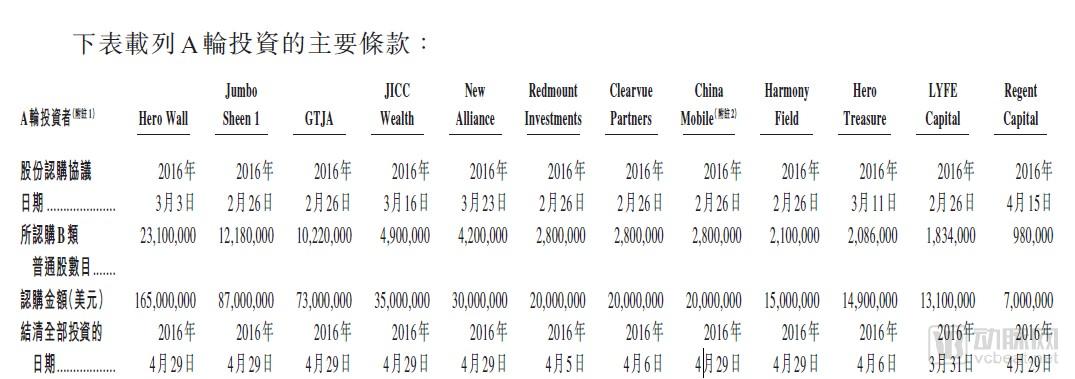
List of the 12 Enterprises and Institutions Participating in Ping An Good Doctor's Series A Financing Round in April 2016
Heavy-Asset, Self-Funded Physician Teams with AI-Assisted Medical Services
Next is the barrier to entry for physicians. Ping An Good Doctor established its own in-house medical team to deliver online healthcare services and consumer-oriented medical services. At that time, major platforms were engaged in fierce competition for physician resources from large hospitals, but Ping An Good Doctor unexpectedly adopted a capital-intensive operational model by building its own medical team to address this challenge. Initial reports indicated that Ping An Good Doctor had built an in-house team of 1,000 physicians and contracted with 50,000 external affiliated physicians as an extended service network.
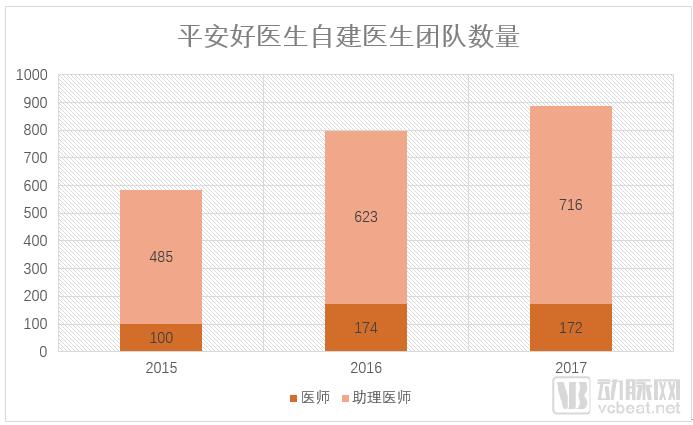
The prospectus disclosed the actual size of Ping An Good Doctor’s in-house physician team. In 2015, 2016, and 2017, the number of physicians on its proprietary medical team was 585, 797, and 888, respectively. The platform handled 11.6 million, 66 million, and 134.2 million online consultations in 2015, 2016, and 2017, respectively.
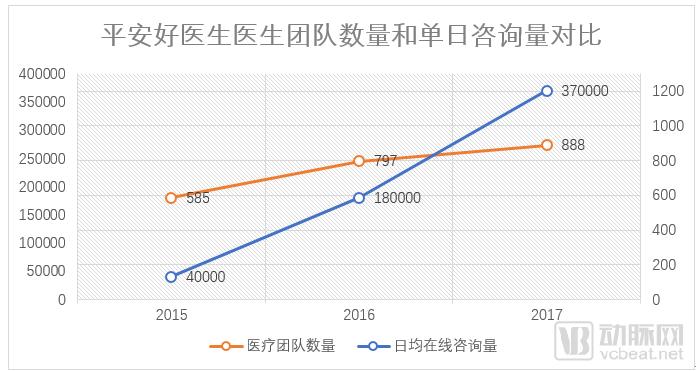
Data analysis reveals that from 2015 to 2017, Ping An Good Doctor’s physician team saw a modest increase of 303 doctors, representing a 51.8% growth. However, the average daily consultation volume surged from 40,000 to 370,000, marking an 825% increase. In 2015, each physician handled an average of approximately 68 consultations per day, whereas in 2017, this figure reached a remarkable 417 consultations per physician per day.
Ping An Good Doctor announced that it leverages its self-developed artificial intelligence technology to assist its physician teams in delivering high-quality medical services, despite a substantial increase in online consultation volumes. The AI assistant executes intelligent analysis pathways to direct patients to the most relevant departments or physicians and provides pertinent information and recommendations to its network of freelance doctors. Consequently, this approach significantly enhances efficiency and reduces costs compared to traditional offline consultations. According to user surveys, customer satisfaction with Ping An Good Doctor’s online consultation services reached 97%, even under such high-workload conditions.
As of 2017, Ping An Good Doctor had accumulated over 211 million online consultation records, with this database continuing to expand rapidly at a rate of 300,000 to 400,000 entries per day. Leveraging this vast clinical database, the capabilities of Ping An Good Doctor’s AI assistant are continuously enhanced through iterative learning. Its accuracy is steadily improved via collaborative training involving both internal and external physicians, as well as through advanced technologies such as natural language processing and semantic recognition. Furthermore, Ping An Good Doctor has partnered with enterprises and research institutions, including Unisound, to strengthen the AI assistant’s functionalities, aiming to achieve superior diagnostic and treatment capabilities.
Acquire a large base of seed users through Ping An Group
Ping An Good Doctor has become the largest internet healthcare platform in China by user base, with 192.8 million registered users as of the end of 2017. The number of registered users in 2015 and 2016 was 30.3 million and 131.5 million, respectively, representing a compound annual growth rate (CAGR) of 152.3%. Monthly active users (MAUs) reached 5.6 million, 21.8 million, and 32.9 million in 2015, 2016, and 2017, respectively, with a CAGR of 142.4%.
Ping An Good Doctor’s initial user base was primarily derived from the internal conversion of Ping An Group’s existing users. With its vast customer reach, Ping An Group reported in a 2017 news article that, according to Sun Jianyi, Vice Chairman of Ping An Group, the group had 143 million personal finance customers and 403 million internet users in the first half of 2017. These users constituted the source of Ping An Good Doctor’s seed users. Subsequently, the company expanded its user base through continuous external marketing and promotional campaigns.
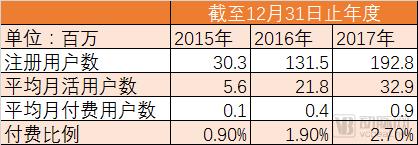
Number of Registered Users, Monthly Active Users, and Monthly Paying Users of Ping An Good Doctor
A large user base was acquired at the cost of high sales and marketing expenses.
In late 2015, Ping An Good Doctor launched the “Step-by-Step Gold Rush” promotional campaign, leveraging a referral mechanism to drive user base expansion and spark viral growth of its app. Within one year, the number of registered users surged from 30 million to 130 million. Correspondingly, Ping An Good Doctor’s promotional expenses reached RMB 385 million in 2016, compared with only RMB 7.1 million during the same period in 2015. Based solely on promotional spending, the customer acquisition cost was approximately RMB 3.8 per user, aligning with the industry average. However, such a substantial user scale was achieved at the expense of significant promotional outlays.
After accumulating a base of users, Ping An Good Doctor shifted its focus to promoting its Health Mall, significantly increasing commission expenditures in 2017. This strategy drove the Health Mall’s revenue to RMB 353 million by the end of September 2017, compared with only RMB 23.2 million during the same period in 2016.
II. Analysis of Ping An Good Doctor's Core Business
Ping An Good Doctor’s business operations primarily fall into four categories: family doctor services, consumer healthcare, health e-commerce, and health management and engagement.
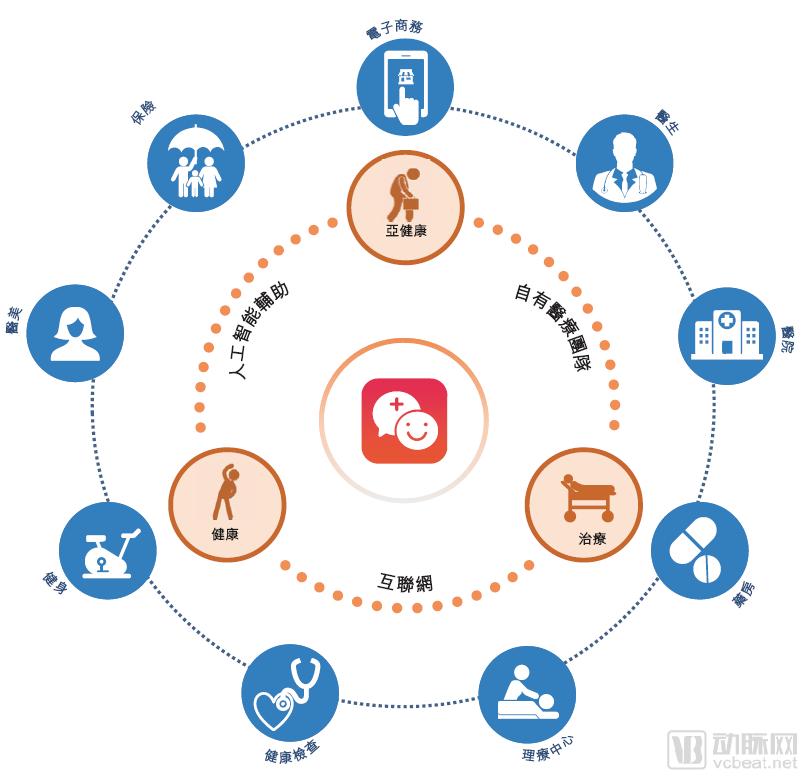
Ping An Good Doctor Business Ecosystem Map
Family doctor services are the core product of Ping An Good Doctor. Through its mobile app, the company provides family doctor services powered by an in-house medical team supported by artificial intelligence, as well as contracted external physicians and partner hospitals, offering online consultations, hospital referrals and appointment scheduling, inpatient admission arrangements, and second-opinion services.
Ping An Good Doctor has been providing online consultation services since April 2015, addressing users’ medical and health inquiries with a primary focus on common and chronic conditions such as hypertension, diabetes, allergies, and gastroenteritis. Users describe their symptoms via text, images, and voice messages; the intelligent triage system then automatically generates a list of doctors for user selection based on the symptom descriptions and medical records. Users can also browse the doctor database by specialty and select a doctor at their discretion. Each doctor has a profile page showcasing their key experience, areas of expertise, and user feedback.
Each medical consultation session lasts a maximum of 15 minutes, with the option for users to extend it by an additional 15 minutes. Based on user feedback regarding their condition, physicians provide medical advice or recommend hospital examinations, with results uploaded to the system for follow-up consultations. The in-house physician team generally offers free online consultation services; alternatively, fees ranging from RMB 20 to RMB 60 per session may be charged, depending on the physician’s qualifications, experience, and user ratings.
Family doctor services also provide online consultation through the Ping An Jin Guanjia plug-in program, in collaboration with Ping An Group. Ping An Life Insurance regularly pays fixed fees to Ping An Good Doctor. For other referral, registration, and hospitalization arrangement services, Ping An Good Doctor has signed agreements with approximately 650 tertiary hospitals across China.
Consumer Healthcare
Ping An Good Doctor offers standardized service solutions that integrate services from various healthcare institutions to meet users’ ongoing, preventive, and other health-related needs, such as health check-ups, genetic testing, and medical aesthetic services.
Ping An Good Doctor’s Health Mall provides individual users with online sales services for pharmaceuticals, health supplements, medical devices, fitness products, and personal care items.
Ping An Good Doctor recommends personalized content to users by developing various health plans, tools, and activities to help them maintain a healthy lifestyle.
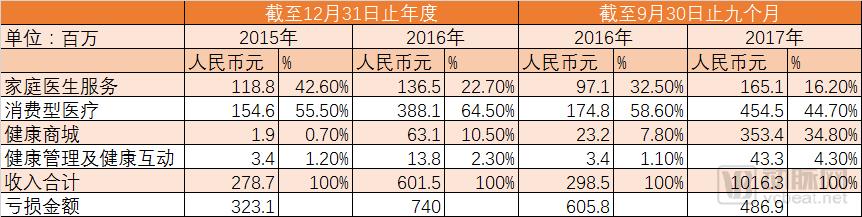
Ping An Good Doctor Revenue Statement
In 2015, Ping An Good Doctor reported a total revenue of RMB 278.7 million, with consumer healthcare accounting for the largest share at 55.5%. Family doctor services, primarily consisting of online medical consultation services, also represented a significant portion at 42.6%. However, after prioritizing the development of its Health Mall services in 2016, the revenue contribution from the Health Mall continued to rise. In 2016, the Health Mall accounted for 10.5% of total revenue. By the first nine months of 2017, sales from the Health Mall had already reached RMB 353.4 million, representing 34.8% of the total.
In the first nine months of 2017, consumer healthcare accounted for 44.7% of Ping An Good Doctor’s revenue, making it the largest revenue source, followed by the Health Mall at 34.8%. Over the past three years, family doctor services have seen modest growth, significantly lagging behind the increase in registered users, while their share of revenue has continued to shrink.
Ping An Good Doctor has been in operation for more than three years. Although its revenue has continued to grow, its losses have also widened. The company recorded a loss of RMB 323.1 million in 2015, RMB 740 million in 2016, and RMB 486.9 million in the first nine months of 2017. The cumulative total loss has exceeded RMB 1.5 billion.
Ping An Group's Related-Party Transactions Facilitated Early-Stage Business Development
Ping An Good Doctor was originally established to synergize with Ping An Group’s insurance and other businesses, aiming to build a Chinese HMO system. Its core business is inextricably linked to Ping An Group’s insurance operations in multiple aspects, demonstrating strong complementarity and mutual benefit. Consequently, during its early development stage, Ping An Good Doctor maintained extensive business ties with companies within the Ping An ecosystem.
Ping An Good Doctor provides the following four services to Ping An Group:
(1) Family physician services, including online consultations, referral and appointment registration, hospitalization arrangements, and second medical opinion services;
(2) Sale of “Healthy Life Pass” prepaid cards and health checkup service packages;
(3) Provide products for the Health Mall;
(4) Advertising Services
In 2015, the transaction amount was RMB 288 million; in 2016, it was RMB 478 million. As of September 2017, Ping An Group had paid a total of RMB 383 million to Ping An Good Doctor. It is expected that transactions will continue in 2018, 2019, and 2020, with amounts not exceeding RMB 1.194 billion, RMB 1.525 billion, and RMB 2.009 billion, respectively.
Ping An Good Doctor primarily purchases consulting services, business promotion services, settlement services, insurance services, online traffic referral services, and customer referral services from Ping An Group—in short, it buys traffic from the Ping An ecosystem. The company spent RMB 2.58 million in 2015 and RMB 39.32 million in 2016 on such purchases. As of September 2017, Ping An Good Doctor had paid RMB 38.92 million to Ping An Group for traffic acquisition.
How much traffic and revenue has the Ping An ecosystem brought to Ping An Good Doctor?
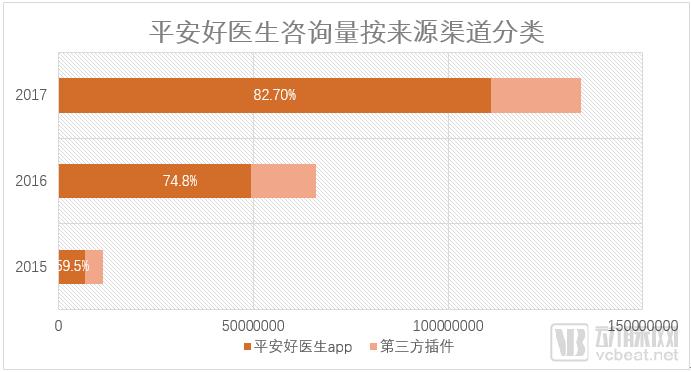
According to information disclosed by Ping An Good Doctor, in 2015, its consultation traffic originated primarily from the Ping An ecosystem, notably Ping An Jin Guan Jia, as well as third-party plugins. With the development of Ping An Good Doctor, consultation traffic from sources outside its own app now accounts for only 17.3%.
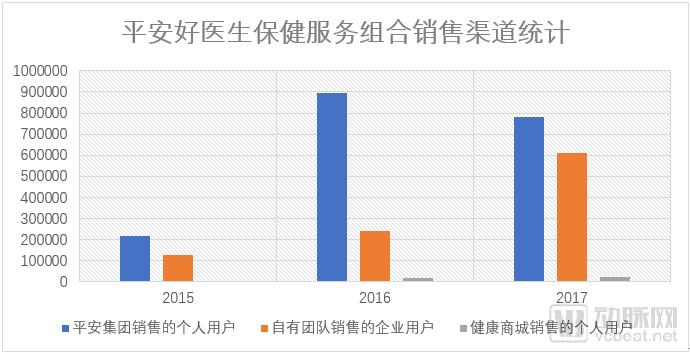
In the distribution of consumer healthcare services, support from the Ping An ecosystem is even more pronounced. Ping An Good Doctor’s in-house sales team is responsible for marketing bundled consumer healthcare services to corporate clients, while Ping An Group’s health e-commerce platform and sales agents handle distribution to individual consumers. Ping An Good Doctor typically provides sales compensation to the Ping An ecosystem at a rate of 5%–25% of the selling price. To date, sales generated through the Ping An Group still account for more than half of Ping An Good Doctor’s total sales volume in its consumer healthcare service segment.
In 2015, 2016, and for the period ended September 30, 2017, the transaction amounts related to products and services ordered from Ping An Group were RMB 288 million, RMB 478 million, and RMB 383 million, respectively.
During this period, Ping An Good Doctor’s revenue from orders of services/products by the Ping An Group amounted to RMB 235 million, RMB 256 million, and RMB 345 million, accounting for 84.3%, 42.7%, and 34.0% of Ping An Good Doctor’s total revenue, respectively.
Ping An Good Doctor maintains close ties with Ping An Group, its largest shareholder. Given the strong business synergies between the two entities, related-party transactions are inevitable. Adhering to the principle of “supporting at the start and accompanying along the journey,” Ping An Group provided not only personnel and capital but also substantial business and customer resources during the early entrepreneurial and developmental stages of Ping An Good Doctor.
However, it is evident that after benefiting from the initial traffic support within the Ping An ecosystem, Ping An Good Doctor has gradually embarked on a path of self-reliance and independence. It is believed that as Ping An Good Doctor’s online medical and health platform continues to improve, its operations will be able to operate independently of the Ping An ecosystem and become a key pillar supporting the health sector of Ping An Group.
III. Frequent Restructuring Activities Prior to the IPO
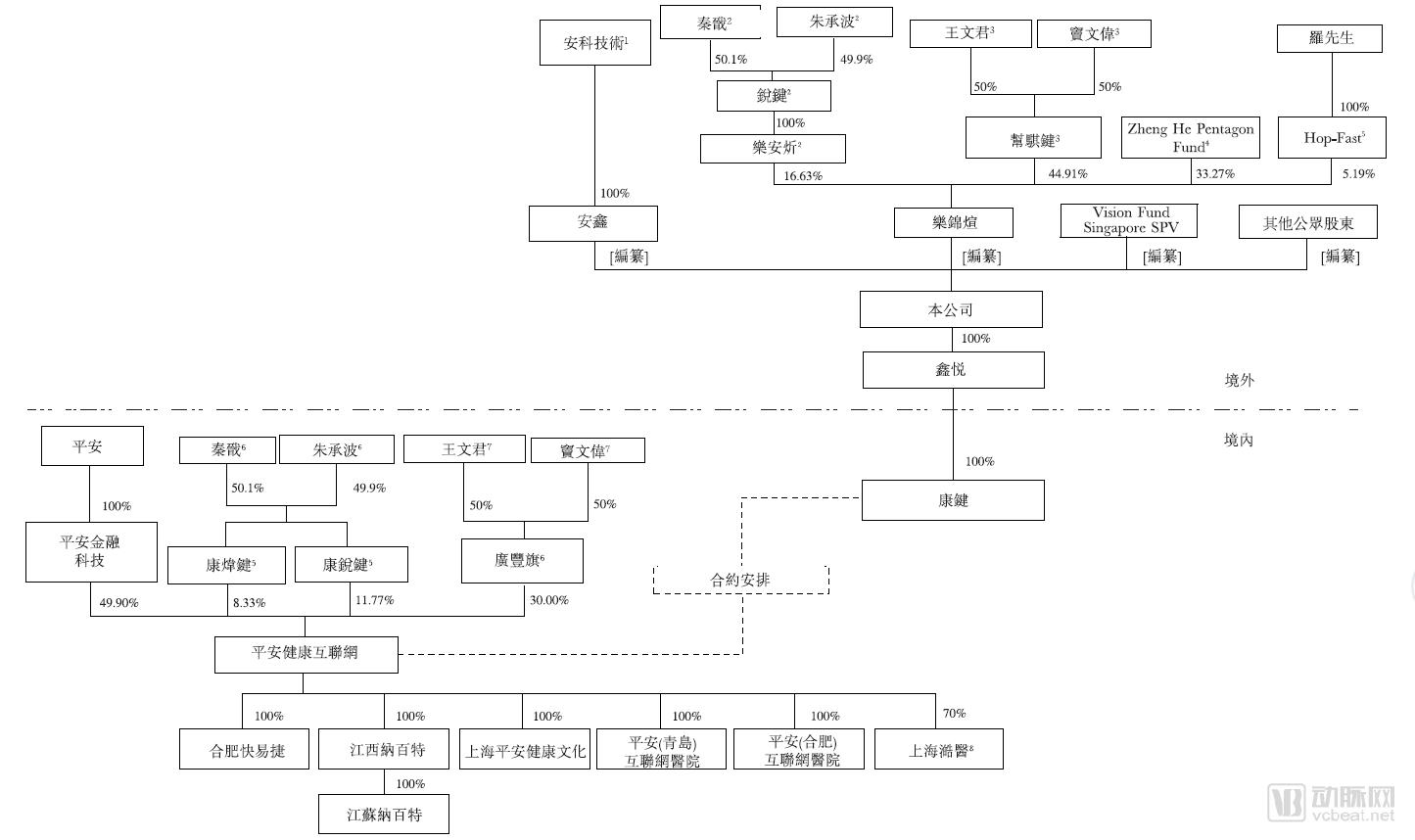
Ping An Health Internet Equity and Group Structure
"To spin off from Ping An Group and list independently, Ping An Good Doctor undertook a series of complex domestic and overseas restructurings starting in the second half of 2017, including the establishment of several special purpose vehicles (SPVs) to hold equity interests."
The overseas restructuring includes: the establishment of Le Jinxuan, which holds a 46.39% equity stake in Ping An Good Doctor; Le Anxin, Bang Qijian, Hop-Fast, and Zheng He Pentagon Fund hold 16.63%, 44.91%, 5.19%, and 33.27% equity interests in Le Jinxuan, respectively. Among these, Le Anxin holds shares in Le Jinxuan as a trustee on behalf of the beneficiaries under the Employee Incentive Plan. The original 12 institutional investors from Series A financing have become limited partners of Zheng He Pentagon.
In China, on October 18, 2017, Ping An Financial Technology transferred its 41,195,000 shares and 29,155,000 shares in Ping An Health Internet to Kang Ruijian and Kang Weijian, respectively. Following the transfer, Ping An Financial Technology held a 49.90% equity interest in Ping An Health Internet, while Kang Weijian and Kang Ruijian held 8.33% and 11.77% equity interests, respectively. Guangfeng Qi, also a related party of Ping An, held a 30% equity interest.
After establishing its onshore and offshore corporate structures, Ping An Good Doctor adopted a Variable Interest Entity (VIE) structure. Through contractual arrangements with a subsidiary named Kangjian, the operating entities, and shareholders, it obtained actual control over the current operating entities and all economic benefits generated thereby. Consequently, the operating results, assets, and liabilities of the onshore operating entities were consolidated into those of the offshore entities in accordance with International Financial Reporting Standards (IFRS), effectively rendering the onshore companies subsidiaries of the offshore company.
Following this series of actions, on December 1, 2017, Luo Zhaohua, the lead investor in Series A, increased his investment in Ping An Good Doctor by purchasing a 2.6% equity stake from Anxin through Hop-Fast, involving an amount of $87.9 million. Calculated at this ratio, the shares acquired by Luo Zhaohua on December 1 were valued at $3.4 billion, representing only an 11% increase over the $3 billion valuation of Series A. However, SoftBank’s investment on December 21 was based on a $5.4 billion valuation. Nevertheless, Anxin held the right of first refusal for the portion of equity increased by Luo Zhaohua.
In the full text of the prospectus, Luo Zhaohua is discreetly referred to as “Mr. Luo.” Based on the last disclosed name and affiliated company, he appears to be the renowned Hong Kong banker, former Managing Director of Goldman Sachs, and Chairman of Zhenghe Capital Management Co., Ltd. Mr. Luo also plans to inject additional resources into the Company, leveraging his network and global connections (including prestigious overseas medical schools and other local and international medical advisory boards) to help expand the business and establish a well-known brand for an international healthcare services platform.
Less than 20 days later, on December 21, 2017, Ping An Good Doctor secured a $400 million Pre-IPO investment from SoftBank Vision Fund, a subsidiary of the SoftBank Group, representing 7.41% of its issued share capital. In this funding round, SoftBank valued Ping An Good Doctor at $5.4 billion.
Following this series of capital maneuvers and structural reorganizations, a look-through analysis reveals that Ping An Group (including its subsidiaries Anke Technology and Anxin) holds a total of approximately 210 million shares in Ping An Good Doctor, representing a 46.20% stake. Luo Zhaohua, former Managing Director at Goldman Sachs and Chairman of Zhenghe Capital Management Co., Ltd., holds an 8.1% equity interest in Ping An Good Doctor through Hero Wall and Hop-Fast. Additionally, by virtue of the general partner rights held by Zhenghe Capital under his control, he has become one of the controlling shareholders of Ping An Good Doctor.
Finally, the controlling shareholders of Ping An Good Doctor at the time of its IPO included Anxin Limited, Ping An Group, Le Jinxuan Limited (hereinafter referred to as “Le Jinxuan”), and Luo Zhaohua, Chairman of Zhenghe Capital Management Co., Ltd. and former Managing Director of Goldman Sachs.
IV. Ping An Good Doctor’s IPO: Reflections for the Internet Healthcare Industry
Ping An Good Doctor went through the following four major steps from its inception to its IPO:
Step 1: Provide initial development funds through capital injection from Ping An Group.
Step 2: Establish the initial business model for online medical consultations and acquire seed users through related-party transactions and user migration within Ping An Group.
Step 3: Achieve significant user growth through marketing campaigns and cash subsidies.
Step 4: Achieve a substantial increase in sales revenue by establishing an online store.
From the perspective of its developmental trajectory, Ping An Good Doctor has invariably relied on the support of its parent company, Ping An Group, making its success nearly impossible for other internet healthcare enterprises to replicate. However, the rapid growth of Ping An Good Doctor may, on one hand, bolster investor confidence in the internet healthcare sector and potentially spur a wave of internet healthcare companies to list in Hong Kong. On the other hand, it may also prompt major insurance industry giants to seriously consider how to implement strategies integrating healthcare and insurance in the internet era.
Ping An Good Doctor has already achieved initial success in the field of internet healthcare. For other insurance companies with comparable strengths, its development path serves as an excellent reference model. It is estimated that more players from the insurance industry will subsequently enter the market. By aggregating capital, resources, and qualified licenses, these companies can rapidly cultivate unicorns in the internet healthcare sector.