Weekly Report: IPO Surge in Healthcare Sector, Yimai Sunshine Secures $570 Million Investment!
1
# This Week's Hot Topics
# Healthcare Enterprise IPO Report #
In 2016, there were 28 initial public offerings (IPOs) by biopharmaceutical companies, with an average of two healthcare-related companies going public each month. Star enterprises such as China Resources Pharmaceutical, Buchang Pharmaceuticals, and Yiming Pharmaceutical attracted significant attention from all sectors upon their listings.
Following a somewhat frenzied 2016, the capital market’s exuberance toward pharmaceutical and healthcare companies has continued, reaching a new peak.
Starting from the end of 2016, the number of new shares issued weekly on the Shanghai and Shenzhen stock exchanges increased significantly, and IPOs became normalized.Although the pace of IPO issuances slowed significantly starting in late May 2017 due to a market downturn.In October, the establishment of the new Issuance Review Committee marked a new era for China’s IPO review process, introducing significant shifts in approval philosophies and imposing stricter requirements on corporate business quality.
In 2017, a total of 50 companies in the healthcare sector completed initial public offerings (IPOs), among which 47 had venture capital/private equity (VC/PE) backing, involving more than 100 VC/PE firms.
VCBeat Research Institute compiled statistics on the full-year 2017 IPOs of healthcare companies based on publicly available data. By tracing every inflow and outflow of capital, we aim to map the journeys of those who have successfully reached their destination, offering silent encouragement to waiting investors and hearty cheers to striving entrepreneurs.
Viewpoint:
1、Mass Entrepreneurship and Innovation Ignite the Flame of Equity Investment
China’s equity investment sector has developed for over two decades. With the advent of the “Mass Entrepreneurship and Innovation” boom, the equity investment market has advanced in tandem with the startup wave, embarking on a path of rapid growth.
According to data from the Asset Management Association of China (AMAC), by the end of December 2017, the scale of private equity funds in China reached RMB 11.1 trillion, a year-on-year increase of approximately 41%. The number of fund managers stood at 22,400, the number of registered funds exceeded 66,400, and the total number of employees was 238,300.
Investment and exit form a closed loop; the investment boom in capital markets often marks the beginning of a return boom. In the following section, we will primarily analyze IPO data from the healthcare industry in 2017 to present an overview of leading enterprises and top-tier investment institutions in the healthcare sector.
2、Increasing Proportion of Domestic Listings for Healthcare Companies
2017 was a peak year for initial public offerings (IPOs) among healthcare companies, with the number of IPOs nearly doubling compared to 2016.
However, the number of healthcare companies pursuing overseas listings has declined rather than increased. Following the normalization of IPO reviews in China, the advantages of higher valuations and closer proximity to the domestic market have gradually become apparent.
On December 15, 2017, the Hong Kong Stock Exchange issued an announcement accepting listing applications from biotechnology companies that are not yet profitable or revenue-generating. This move is poised to attract a large number of high-potential companies in the R&D stage to list in Hong Kong, significantly stimulating the biotechnology sector and creating new opportunities for both investment institutions and enterprises.
Report:
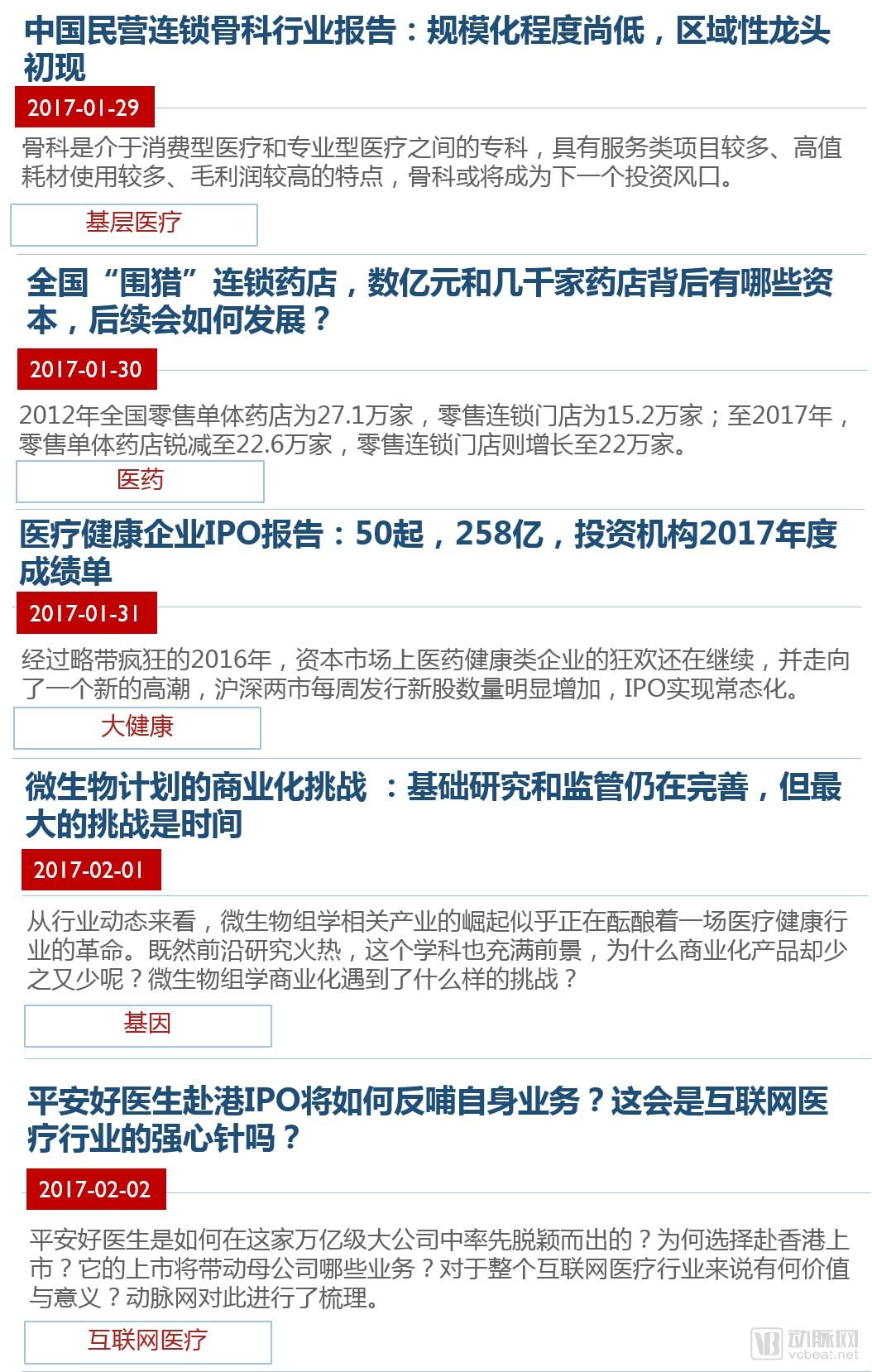
2017 Healthcare Company IPO Report: 50 Deals, RMB 25.8 Billion, Annual Performance of Investment Institutions
2
This Week's Headlines
3
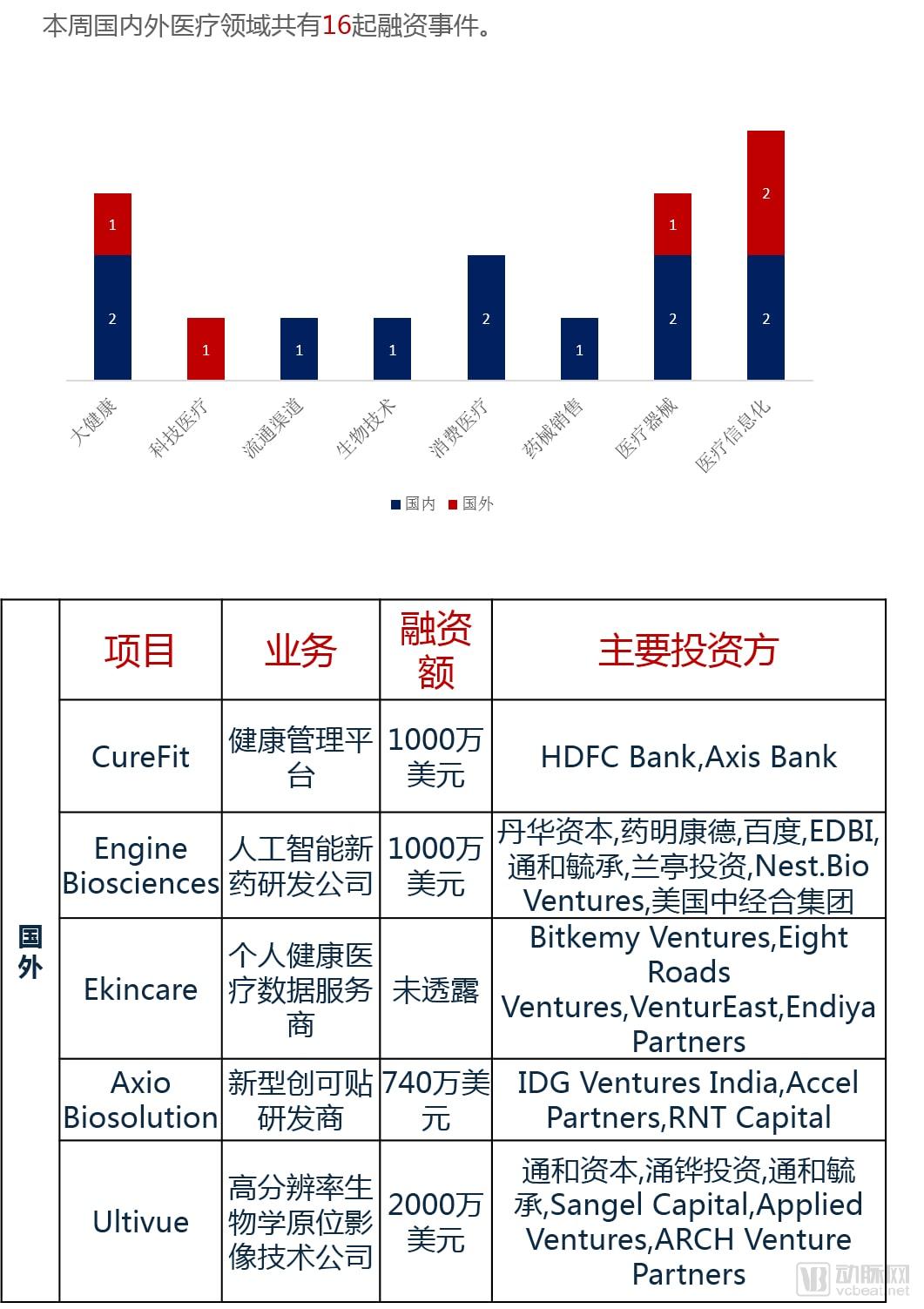
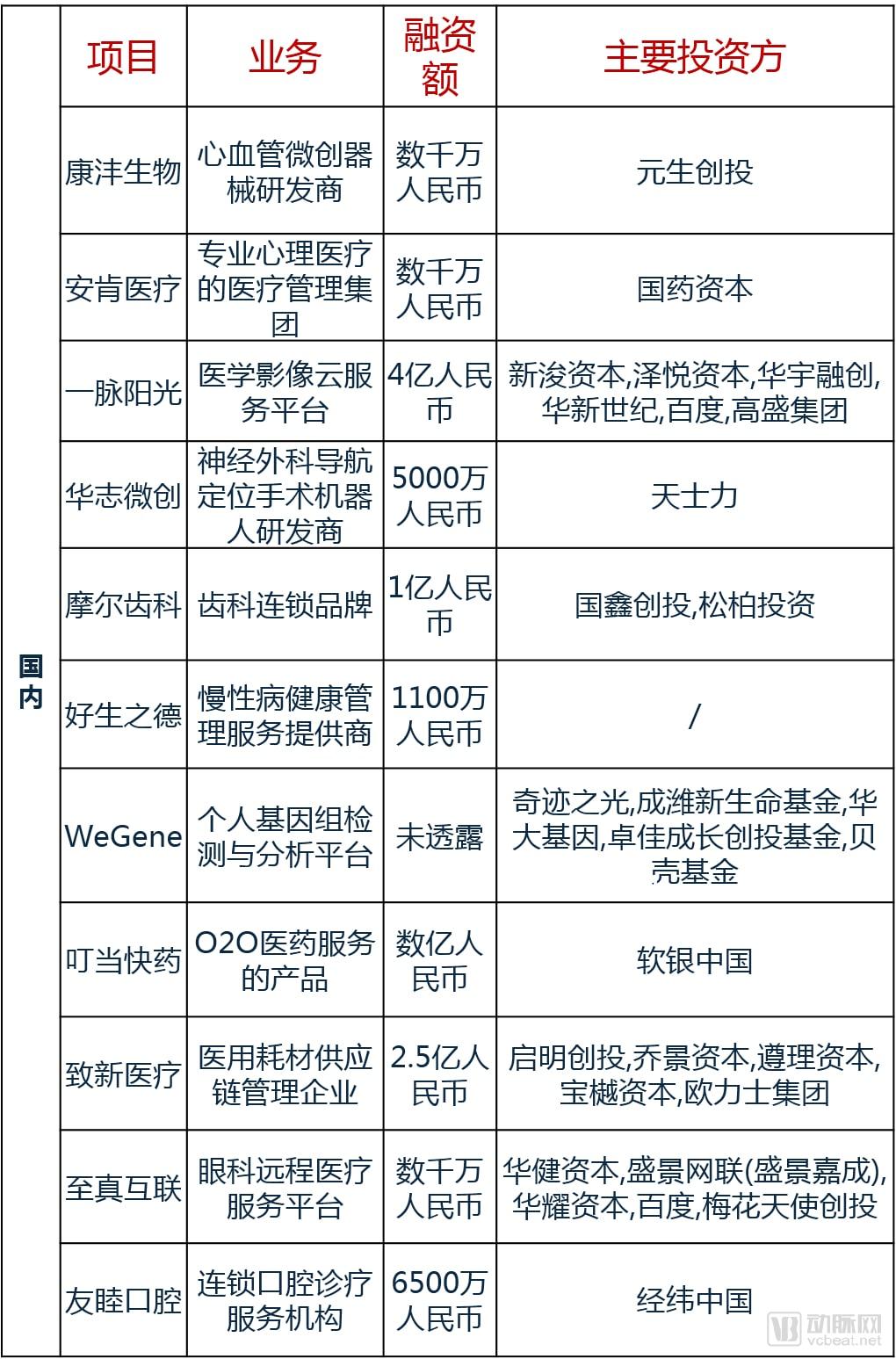
This Week's Financing Events in the Healthcare Sector
4
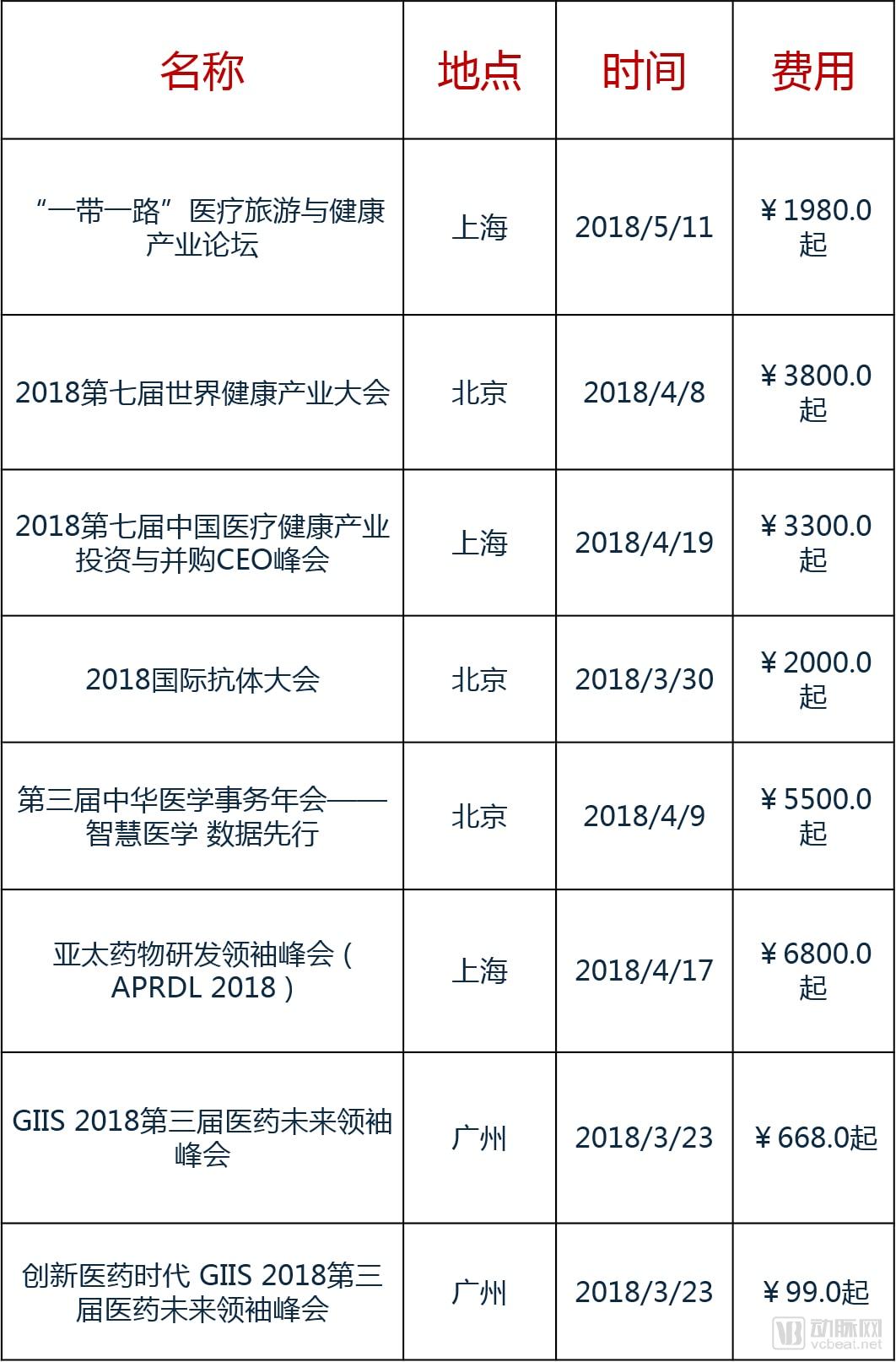
Healthcare Sector Event Preview
5
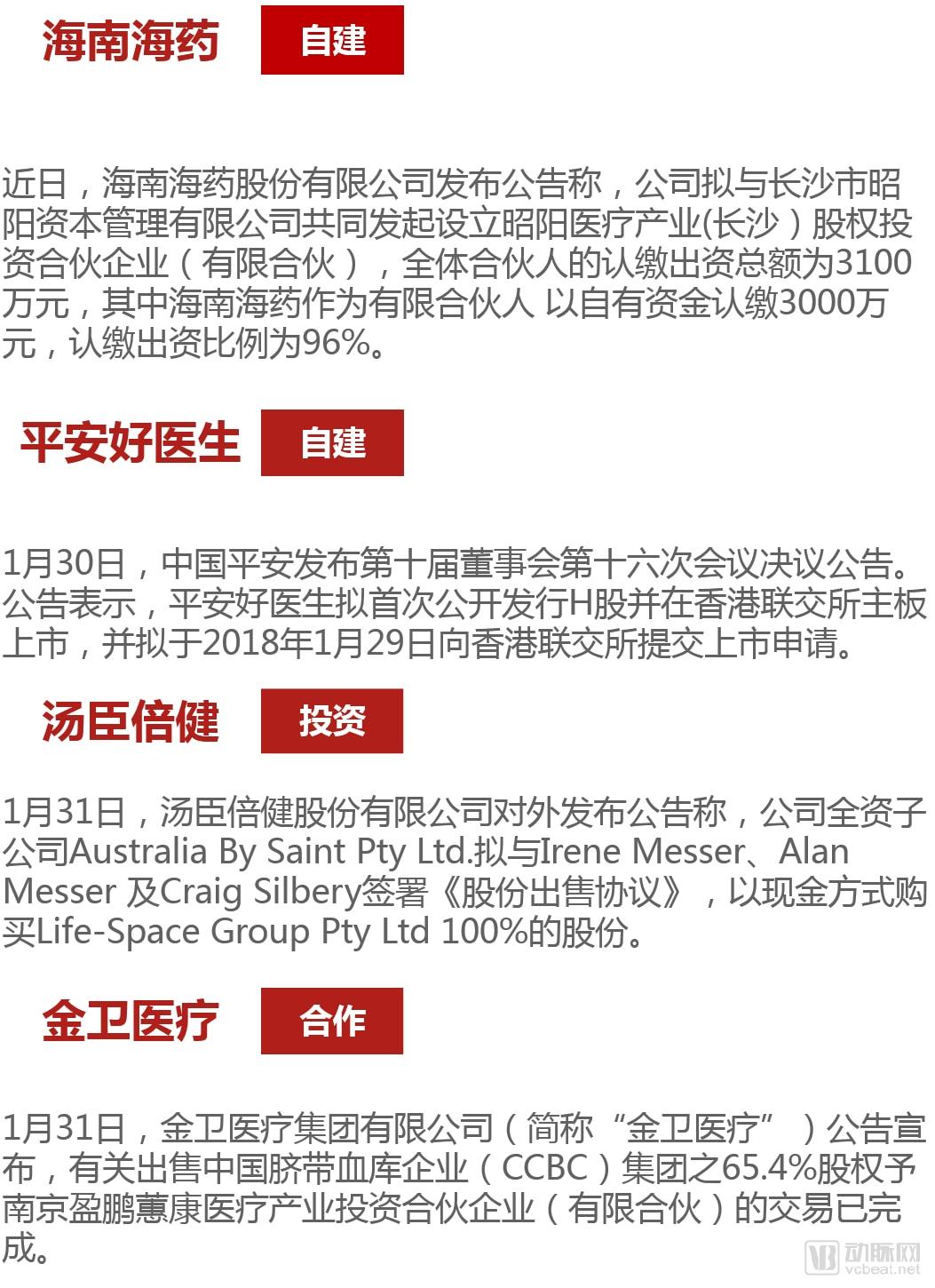
This Week's Industry Updates
5
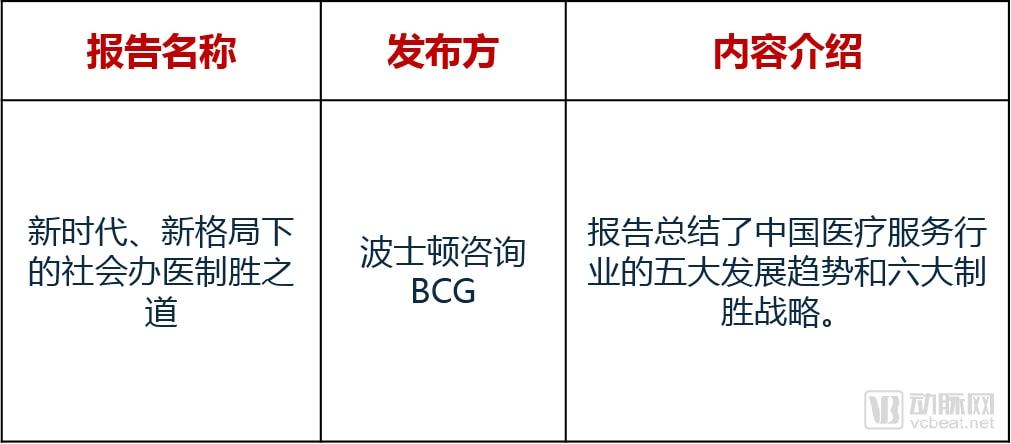
This Week's In-Depth Report
For more content, please refer to the VCBeat knowledge base!