

Amazon, Berkshire Hathaway, and JPMorgan Chase Launch Non-Profit Healthcare Venture to Disrupt U.S. System
VCBeat (WeChat ID: vcbeat) learned from TechCrunch that U.S. e-commerce giant Amazon, financial conglomerates Berkshire Hathaway and JPMorgan Chase announced on January 30 that the three parties plan to collaborate in establishing a nonprofit healthcare company aimed at providing high-quality, low-cost medical services to their employees.
The announcement stated that in its initial phase, the new company will focus on technology-driven solutions and will be jointly led by Todd Combs, Investment Chief at Berkshire Hathaway Inc.; Marvelle Sullivan Berchtold, Managing Director at JPMorgan Chase; and Beth Galetti, Senior Vice President at Amazon. Details regarding the long-term management team, headquarters location, and key operational matters will be announced in due course.
As part of employee benefits, this new nonprofit-motivated company will provide healthcare and wellness services to employees of the three founding companies, operating “freed from profit-driven incentives and constraints.” The new entity established by Amazon and two other companies is a long-term initiative aimed at differentiating the health services it provides to its own employees from those offered by third-party medical institutions whose ultimate goal is profitability.
The three companies stated their intention to leverage their respective resource advantages to address and resolve challenges and issues in the healthcare sector through innovative approaches. Reportedly, the three companies currently employ more than 1 million people globally, with hundreds of thousands of employees in the United States, and have a combined market capitalization of $1.6 trillion.
Soaring Healthcare Costs Are Forcing Companies to Seek Solutions
The high cost of healthcare in the United States was once viewed by the outside world as a symbol of development, but for U.S. businesses and employees, excessively high costs have become a source of concern.
In fact, whether it is Amazon’s previous initiatives in the healthcare sector or the recent joint establishment of a healthcare company by the three giants, this period coincides with a time of profound transformation in the U.S. healthcare system, as uncertainty surrounding the potential repeal of the Affordable Care Act continues to intensify.
The Affordable Care Act, implemented since 2010, primarily aims to increase health insurance coverage and control healthcare expenditures. Measures include providing insurance subsidies for low-income individuals, mandating employers to purchase insurance for employees, prohibiting insurers from denying coverage or raising premiums based on pre-existing conditions, and offering more comprehensive insurance plans covering services such as screenings, medications, and surgeries.
To date, the Affordable Care Act has drawn considerable criticism, with its effectiveness in curbing the growth of healthcare expenditures being called into question. According to statistics from the Kaiser Family Foundation, U.S. healthcare costs have risen dramatically over the past 60 years. In 1960, U.S. healthcare spending stood at $27.2 billion; by 2016, it had surged to $3.3 trillion, amounting to $10,348 per capita. These costs are shared among the government, employers, insurance companies, and individuals.
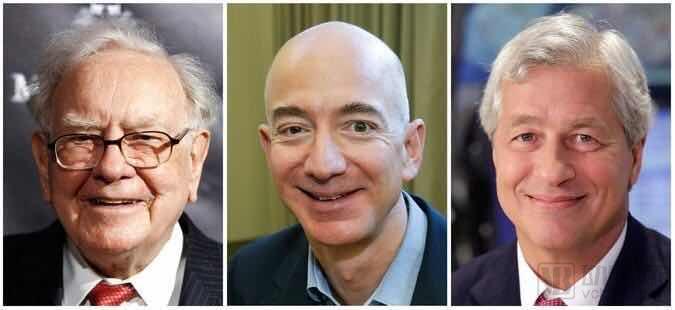
Warren Buffett, Chairman of the Board of Directors of Berkshire Hathaway, has described the costly U.S. healthcare system as a “hungry parasite that is eating away at the economy.” He believes that escalating healthcare expenditures represent a significant challenge facing the U.S. economy, and that integrating the resources and talent of three companies can help strive toward finding solutions to this problem.
As early as last year’s Berkshire Hathaway annual shareholders meeting, Buffett publicly slammed the excessively high cost of healthcare in the United States. At that time, Buffett argued that the urgent issue facing U.S. businesses was not reducing corporate taxes, but rather lowering the cost burden imposed by the healthcare system. “Fifty years ago, healthcare expenditures accounted for 5% of U.S. GDP; today, they account for 17%.” He even stated that the decline in the international competitiveness of U.S. companies stems from their having to bear higher healthcare costs—essentially another form of “hidden tax.”
Warren Buffett, the "Oracle of Omaha" who has long been concerned about risks to the U.S. economy, maintains that the United States should move toward a "single-payer healthcare plan," under which employers would no longer provide health insurance but would be required to pay higher taxes. Medicare, the federal health insurance program implemented in the United States for individuals aged 65 and older since 1965, is one form of a single-payer healthcare plan.
Jeff Bezos, founder and CEO of Amazon.com, stated: “Although our three partners recognize the significant challenges associated with entering the healthcare system as service providers, this initiative will be worthwhile given our ultimate goal of reducing the economic burden of healthcare while improving treatment outcomes for employees and their families.”
Jamie Dimon, Chairman and CEO of JPMorgan Chase, stated, “Our employees need transparency, knowledge, and control over their healthcare. With the extensive resources of our three companies, we aim to create healthcare solutions that benefit our employees and their families, and ultimately all Americans.”
It is reported that the medical collaboration plan among the three companies is still in its early stages. The new venture will initially focus on technology solutions to provide healthcare services to employees and their families at a reasonable cost. Currently, the company is in the planning phase, with details such as the management team, headquarters location, and other specific operational matters yet to be disclosed. Experts in the healthcare industry have stated that the new company will ultimately negotiate directly with pharmaceutical companies, physicians, and hospitals, leveraging its extensive database to better manage the costs of these services.
Three Major Giants Collaborate, Causing Significant Volatility in U.S. Healthcare Stocks
Affected by this news, U.S. healthcare stocks fell collectively, with shares of multiple health insurers and medical companies plunging more than 5%, resulting in a cumulative market capitalization loss of over $30 billion. Among them, health insurers Cigna and Anthem dropped 7.15% and 5.28%, respectively, on the day; pharmacy benefit manager Express Scripts and retail pharmacy chain CVS declined by 3.19% and 4.11%, respectively.
This turmoil has led many to recall the broad decline in the retail sector when Amazon acquired Whole Foods Market. Analysts believe that the collective drop in healthcare stocks reflects investors’ concerns that the plan could disrupt the status quo of the U.S. healthcare industry. The formation of a “super alliance” by the three companies is widely seen as a move likely to upend the current landscape of American healthcare.
These three companies each bring their own strengths—Berkshire Hathaway with its insurance expertise, Amazon with its technology and online channels, and JPMorgan Chase as the largest bank in the United States. Judging from official releases and announcements, this collaboration appears to be a transformation driven by technology and the integration of specialized advantages. Although they have not explicitly discussed the impact this initiative will have on healthcare services, the underlying message is clear: physicians and hospitals must adapt to the new environment by reducing costs, enhancing price transparency, and innovating both the physical and digital processes of healthcare delivery.
Why Amazon, Berkshire Hathaway, and JPMorgan Chase Joined Forces
In the latest Brand Finance Global 500 Study, Amazon has surpassed Apple and Google to become the world’s most valuable brand. Consequently, Amazon’s ambitions in the healthcare sector have been the subject of continuous external speculation.
Previously, as reported by VCBeat“Amazon’s Healthcare Business: A Comprehensive Review—Telemedicine, Pharmaceutical Distribution, Retail Pharmacy, and PBM Are All Within Its Sights”We have previously reviewed Amazon’s strategic initiatives in the healthcare sector, which include:
1. Establish a secret team named “1942” to develop internet healthcare technologies;
2. Acquired Whole Foods for $13.7 billion, with commentators noting that this would provide Amazon with a “suitable venue” for selling pharmaceuticals;
3. Amazon Web Services (AWS) has partnered with Cerner, the fourth-largest healthcare IT company in the United States, to help it leverage data for predicting patient health outcomes;
4. Secure wholesale pharmacy licenses in 12 U.S. states
Based on this analysis, Amazon is most likely to leverage its channel advantages to enter the pharmaceutical distribution sector.
Now, by joining forces with Berkshire Hathaway and JPMorgan Chase to establish a new healthcare company, Amazon’s move is seen not as a solo endeavor but as a strategic alliance of industry giants. Indeed, the mere announcement from these three corporate behemoths was enough to send stock markets tumbling.
Renowned analyst Ben Thompson argues that Amazon’s first step should be to create a new “interface” for its employees’ healthcare and establish a standardized infrastructure for its healthcare providers, subsequently transforming the latter into a marketplace. In this marketplace, pharmacy benefit managers (PBMs), health insurance administrators, pharmaceutical distributors, and pharmacies would need to compete with one another to qualify for serving corporate employees. Once this market is operational, Amazon could replicate this model to unlock demand among other large enterprises in the United States by offering such a standardized service “interface.”
Furthermore, Ben Thompson predicted that once Amazon acquired a certain number of end users, suppliers would flock to its platform, thereby commoditizing and modularizing the platform and attracting even more suppliers.
Will the three parties establish an insurance company to compete with other insurers? This is the direction most people have speculated based on limited statements. However, Ben Thompson pointed out, “Amazon may allow individual healthcare providers—such as physicians, hospitals, and pharmacies—to join its platform, thereby facilitating connections between healthcare providers and patients.”
Once this move is accomplished, the existence of other health insurance companies or medical infrastructure providers acting as “intermediaries” will be placed in an awkward position, meaning that Amazon has become a new “intermediary.”
At this point, looking back at the collaboration among the three companies, it is not difficult to see that Berkshire Hathaway controls entities such as National Indemnity Company, GEICO (Government Employees Insurance Company), and General Cologne Reinsurance. This is a company with significant advantages in the insurance business and holds partial equity stakes in companies such as American Express, Coca-Cola, Gillette, The Washington Post, and Wells Fargo.
From the perspective of revenue structure, the Group’s largest segment is currently retail services, followed by the insurance industry, which accounts for nearly 20%. Insurance business constituted the initial foundation of the entire Group. Therefore, Berkshire Hathaway serves as a highly valuable partner in the realm of medical insurance. Ben Thompson posits that Berkshire Hathaway provides not primary health insurance, but rather health reinsurance—meaning it underwrites risks for insurance companies. For Amazon, this implies that the company will not offer the direct insurance products typically required in the Amazon Health Marketplace; instead, it will provide specialized support tailored to Amazon’s overall health services ecosystem.
The partnership with JPMorgan Chase appears more straightforward and simple. With total assets of $2.5 trillion, total deposits reaching $1.5 trillion (accounting for 25% of all U.S. deposits), and over 6,000 branches, JPMorgan Chase is one of the largest financial services institutions in the United States. Building a system capable of reaching millions of corporate employees, or even the entire U.S. workforce, requires substantial time and capital. The collaboration with JPMorgan Chase helps healthcare companies, still in their early stages, secure financing in the capital markets.
Finally, we should note that the statement did not specify the next steps for the three companies. However, according to Ben Thompson’s prediction, while this scenario is speculative, it is by no means impossible. After all, healthcare is a slow-moving industry, and analysts view Amazon as a company with sufficient patience. All three companies have emphasized that this initiative will be a long-term effort. Although not aimed at immediate profitability, sustained efforts are more likely to generate economic benefits for a system, especially when it serves the interests of the majority.
References
https://stratechery.com/2018/amazon-health/
http://36kr.com/p/5117298.html