

With Less Than 10% Treatment Rate in a Trillion-Yuan Market, Can Internet-Based Mental Health Services Win Consumer Buy-In?

Beijing Zhujian Technology
Mental Health Service Platform
As we recognize that the brain is nearly the most complex entity in the known universe, a hundred-billion-dollar market spanning from physical to mental health awaits exploration.
Amid the mental health needs of 250 million people, VCBeat has recently launched a special report on the Mental Health Industry, covering enterprises and markets, as well as domestic and overseas sectors, where challenges and opportunities coexist. IWe will conduct a comprehensive scan of this field.If you are in this industry, feel free to communicate with the author at any time; for reporting needs, please contact VCBeat directly.
“There is a crack in everything, that’s how the light gets in.”
After Kangning Hospital’s IPO bid was rejected, greater attention has been drawn to the fact that, in addition to building its own hospitals, it collects management fees through hospital trusteeship arrangements. We will not comment on the intricacies of the profit model for private healthcare providers; however, the mental health industry behind Kangning Hospital represents a vast market worth exploring.
Amidst the widespread lamentation in the healthcare services market, data reveals a robust picture.On May 25 this year, the Bureau of Disease Prevention and Control under the National Health Commission convened a national conference in Hohhot to summarize and deploy work on the management and treatment of severe mental disorders, along with a training session. At the conference, the latest data were released: as of the end of 2017, among China’s population of 1.39008 billion, there were 243.264 million individuals with mental disorders, yielding an overall prevalence rate of 17.5%. The number of patients with severe mental disorders exceeded 16 million, with a prevalence rate exceeding 1%, and this figure continues to rise year by year.
An increasing number of people have become aware of the existence and severity of mental disorders, as well as the importance of diagnosis and treatment and the currently available diagnostic and therapeutic options. This has led to psychiatry gradually becoming a rapidly growing niche within China’s healthcare market.
Furthermore, targeting the substantial demand from the large population with subclinical mental health issues, an increasing amount of social capital is entering the mental health market. Data from the “2016 Insight Report on the Psychological Counseling Industry,” jointly released by Simple Psychology (Beijing Zhujian Technology) and the Peking University Center for Psychological Counseling and Treatment, shows that approximately 350 million people worldwide suffer from depression, 14% of the global disease burden is attributable to mental disorders, 800,000 people die by suicide each year, and 60 million people are affected by bipolar disorder.
The global market size for mental disorders has surpassed $150 billion. Driven by the rigid demand in the physical healthcare market for mental health, an emerging market leveraging the internet to deliver mental health counseling, psychiatric consultation, and diagnostic and therapeutic services has also garnered sustained attention.
From the perspective of mental health services requiring intervention in China, there are currently two types of internet-based psychological service platforms available on the market: one is primarily staffed by psychological counselors, and the other is mainly composed of clinical psychiatrists and psychologists. In this regard,VCBeat (WeChat ID: vcbeat)An analysis of mental health platforms in the market, examining the industry's current status, policy developments, and entry barriers, while cataloging the distinct attributes of various platforms in the mental health sector.
Mental Health and Psychiatric Wellness Have Been Elevated to the National Level, Yet Industry Barriers Persist
Human health comprises both physiological and psychological dimensions. In contrast to the extensive policy coverage addressing physiological health, policies targeting psychological and mental health remain scarce. The following section outlines key policies related to mental health issued since 2000.
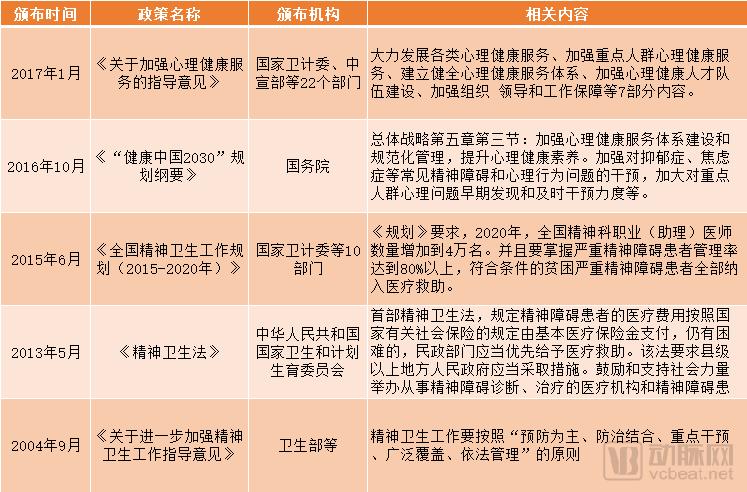
Key Policies Related to Mental Health Since 2000
Overall, over the past decade, national mental health and psychiatric health have been elevated to a national strategic priority. In addition to the issuance of policies on psychiatric health and mental health by multiple government agencies, President Xi Jinping proposed at the 2016 National Health and Wellness Conference to strengthen foundational research on mental health issues, enhance public education on mental health knowledge and psychological disorders, and standardize the development of mental health services such as psychotherapy and psychological counseling.
GF Securities holds the view that, given the rising incidence rates and the vast patient population, the mental health medical market represents a broad blue ocean. Socioeconomic developments—such as rising economic levels, urbanization, changes in family structures, and the frequent occurrence of disasters—have further driven up prevalence rates. HoweverDespite a significant rise in prevalence, hospitalization rates have remained relatively stable, while consultation rates have shown a downward trend. Jin Fengchun, a partner at SAIF Partners, once stated that the overall healthcare-seeking rate for individuals with mental disorders in China is less than 10%.The objective reality of “being ill but not seeking medical care” is driven by factors such as stigma and low levels of disease awareness.
Regarding service-providing institutions and professionals, during the regular press conference held in April 2017 to mark World Health Day on April 7, the National Health Commission (then known as the National Health and Family Planning Commission) presented an overview of China’s mental health services. Data showed that by the end of 2015, there were 2,936 mental health service institutions nationwide, with 433,000 psychiatric beds available, representing a substantial increase compared with 2010 (1,650 institutions and 228,000 beds). Across China, there were 27,733 licensed (and assistant) psychiatrists, 57,591 psychiatric nurses, and more than 5,000 psychotherapists. Over 900,000 individuals had obtained professional qualification certificates as psychological counselors.
Public awareness in China of common mental disorders, such as anxiety and depression, and psychological and behavioral issues is low, while social stigma and discrimination are widespread. Overall,, China's current levels of mental health service provision and information infrastructure lag significantly behind those of developed countries. A shortage of professionals has resulted in poor service accessibility and low consultation rates. There is a need to cultivate habits of seeking psychological counseling and clinical care, and to unlock latent demand, indicating broad prospects for the industry.
Light Consultation Prevails, with Weak Medical Attributes
Drawing on Dr. 2’s distinction between psychiatric consultation and psychological counseling, a preliminary differentiation is made here. Determining whether a case involves general psychological issues or a mental disorder primarily includes:
i. Whether hallucinations (such as auditory or visual hallucinations) or delusions have occurred
ii. Whether there are issues with self-awareness, and whether the individual is able or willing to accept psychological or psychiatric treatment
iii. Whether affect and cognition are inverted or disordered, whether cognition, emotion, and volition are unified, and whether social functioning is thereby severely impaired
Among enterprises providing psychological services via the internet, most focus on psychological issues, while a minority target psychiatric symptoms. Platforms offering either light counseling or severe psychiatric diagnosis and treatment are all classified as vertical mental health platforms.
VCBeat lists the following 38 mental health platforms based on publicly available data:
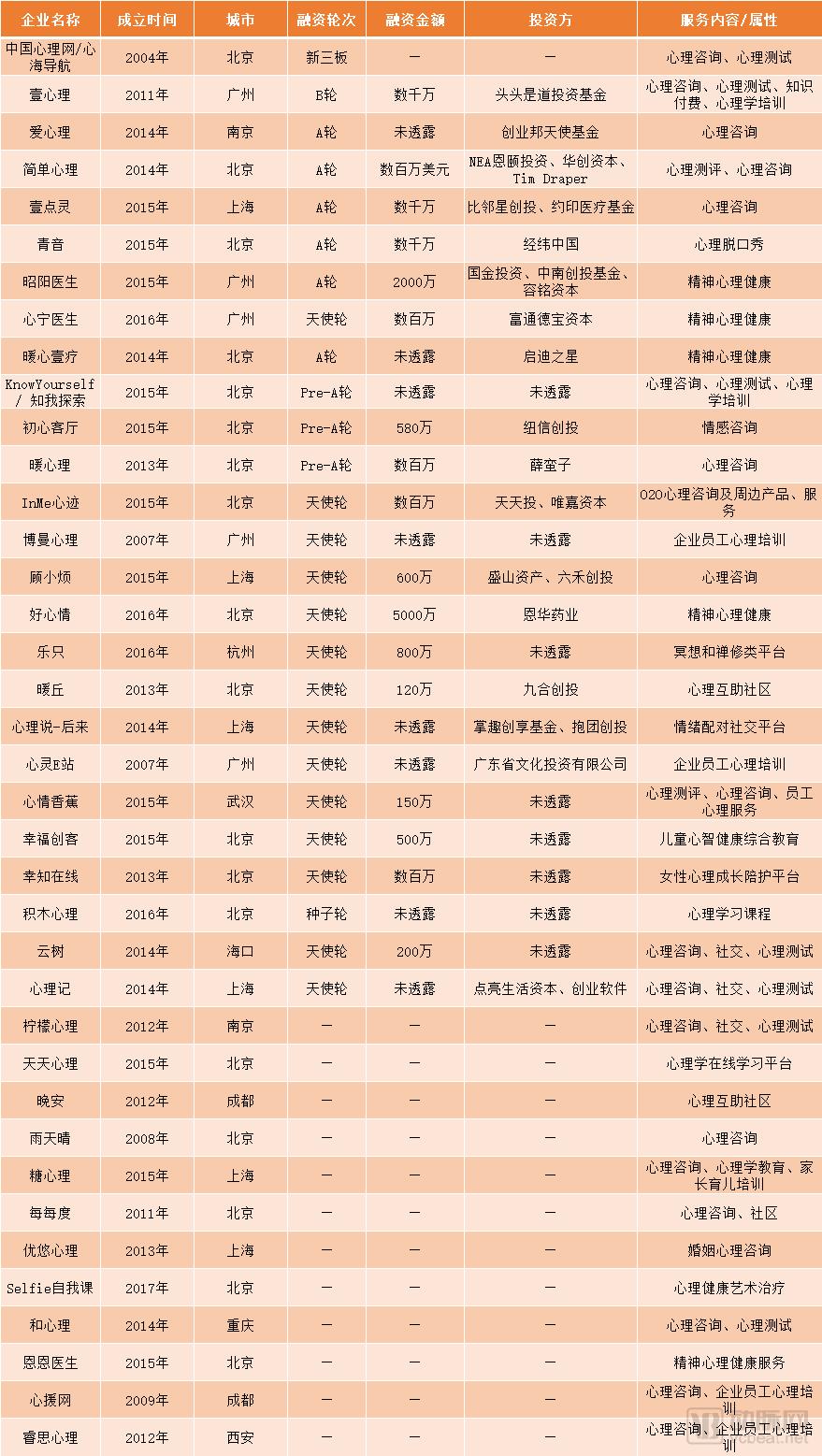
Information on Vertical Mental Health Platform Companies (Source: Public Search)
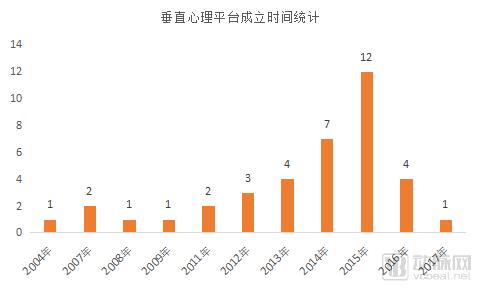
Currently, most mental health apps primarily adopt a platform strategy model. Among the aforementioned companies, we can identify 23 platforms established between 2013 and 2015, with around 2014 marking the inflection point for explosive growth in the mobile healthcare market. In fact, vertical mental health platforms have shown an upward trend since 2009, peaking in 2015.
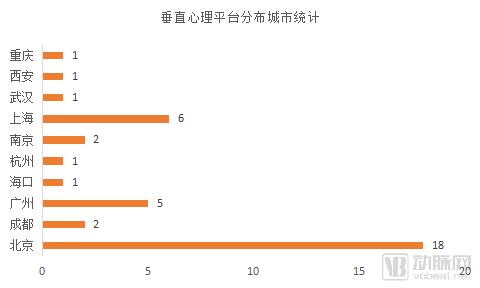
According to the demographic profile of 5,000 randomly selected paying users from Simple Psychology in the "2016 Psychological Counseling Industry Insight Report," 41.81% of users were from Beijing, with Shanghai and Shenzhen ranking second and third, respectively. In the user demographics of the YiXinLi platform, 30% of users came from first-tier cities (Beijing, Shanghai, Guangzhou, and Shenzhen). Among mental health platforms compiled by VCBeat, Beijing led significantly in the number of enterprises, followed by Guangzhou and Shanghai, which roughly correlates with the regional distribution of user demand.
However, the form of consulting services provided by internet platforms is not actually constrained by geography. While residents of first-tier cities face greater life and work pressures, they also possess stronger purchasing power, thus constituting the main body of users with such needs. From this perspective, receiving psychological counseling online can be regarded as a form of consumption upgrade compared to queuing at hospitals for consultations with psychologists or psychiatrists, both in terms of price and experience.
According to Caixin, in 2014, the major investments by BAT (Baidu, Alibaba, and Tencent) included Alibaba’s stakes in Haoyf.com, Sina Aiwen Doctor, and Huakang Mobile Health; Tencent’s investments in DXY.cn and Guahao.com; and Baidu’s backing of Huli.com, Quyi.com, and Jiuyi160. The number of mobile health financing deals reached 80, with total funding amounting to $700 million—figures that equaled the combined totals of the previous three years.
However, by 2016, mobile healthcare reached a turning point as a capital winter set in. Issues such as fake transactions and data fabrication on internet healthcare platforms became prominent. The vast majority of mobile healthcare apps secured only angel or Series A financing, and numerous mobile healthcare projects failed. The market environment in 2016 served as a “cold shower” for companies operating in the internet healthcare sector.
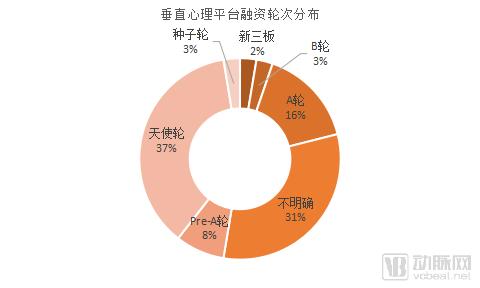
From the perspective of investment institutions, mental health projects have attracted prominent capital players such as ZhenFund, Matrix Partners China, NEA (New Enterprise Associates), and Silicon Valley venture capital pioneer Tim Draper (based on comprehensive historical funding rounds, not limited to the data in the table). This demonstrates that, driven by user demand,The blue ocean of mental health continues to attract widespread capital attention, yet the lack of a proven profitability model has resulted in companies remaining at early funding rounds.64% of companies are concentrated in the angel, Pre-A, and Series A rounds, with YiXinLi being the only one to have reached Series B. However, since 2018, companies such as Anken Medical, YiDianLing, and Nuanxin Yiliao have all secured new rounds of financing. Furthermore, VCBeat has learned that several mental health platforms that raised funds before 2017 are currently undergoing new rounds of financing.
In terms of disclosed funding amounts, the majority of financing events involved sums in the millions, with only Yi Xinli, Yidianling, Qingyin, Beijing Zhujian Technology (Jiandan Xinli), and Beijing Fine Hin Mobile Medical Technology Co., Ltd. (Hao Xinqing) securing tens of millions.
Among the companies with disclosed funding amounts, Haoxinqing secured a significant sum, raising RMB 50 million from the listed company Enhua Pharmaceutical in its angel round. Haoxinqing is a mobile health platform specializing in psychiatry and psychology, dedicated to providing internet-based medical services in this field. The platform primarily offers services such as continuing medical education for physicians, online communication, patient services, and patient management systems. From its establishment in 2016 to securing financing, Haoxinqing took only one month. Capital markets responded decisively to projects offering specialized diagnosis and treatment services for mental disorders.
In addition, it is reported that Haixinqing has recently completed a new round of substantial financing. VCBeat will verify the specific details and publish a separate report at the earliest opportunity.
Leveraging the Internet, Diversified Services to Meet the Needs of Different Populations
Treatment modalities for mental disorders are categorized into three types:
First,Pharmacological Treatment, such as antidepressants. Institutions providing such treatments must be approved by the National Health and Family Planning Commission and hold formal clinic qualifications.
Second,Psychological Counseling, psychological counselors and clients are in the counseling room, through verbal communication, or some auxiliary tools, such as pictures, drawings, etc., to understand and intervene in the client's psychological condition;
Third,Physical Therapy, instruments can help alleviate patients' psychological symptoms, such as repetitive transcranial magnetic stimulation (rTMS) for mood disorders and modified electroconvulsive therapy (MECT).
Traditional psychological counseling agencies are primarily studio-based, staffed by a few counselors, and deliver services through offline one-on-one sessions billed on an hourly basis. On internet mental health platforms, most entrepreneurs have migrated this offline counseling model online, designing “light counseling” products delivered via video, voice, and text. However, due to the current limitations in interaction technologies, online counseling cannot fully replace offline counseling.
In terms of service offerings, the main functional modules of current domestic mental health platforms include medical consultation, online counseling, psychological assessment, social networking, employee assistance programs (EAP), psychological courses (paid or free), and psychology education. These platforms primarily focus on “light” services, such as mild psychological counseling, peer support among users, and emotional venting. Compared with apps dedicated to specific single diseases, they feature fewer modules related to clinical diagnosis and treatment; their core services mainly consist of online consultations, patient management, and follow-up care.
A Comprehensive Overview of Mental Health Platform Enterprises: Categorized into Three Types Based on the Varying Levels of Service Recipients’ Needs
Psychiatric Consultation Platform: Serving Patients with Severe Mental Illness by Transitioning Offline Visits to Remote Care
Addressing the root cause of low psychiatric consultation rates—stigma—mental health-focused platforms engage specialist psychiatrists and leverage internet-based platform models. By employing professional clinical methods and technologies, these platforms assist patients with psychological and psychiatric conditions, providing disease management and mental health medical services. Core medical offerings include clinical guidance and counseling, post-diagnosis patient follow-up, and prescription refill services.
Taking Haokinqing as an example, by 2017, the Haokinqing platform had recruited over 18,000 registered psychiatrists, accounting for more than 75% of all licensed psychiatrists in China. The platform covered more than 2,000 psychiatric specialty hospitals and psychology departments in general hospitals across China, primarily engaging mid- to senior-level psychiatrists while encompassing clinical psychiatrists at all career stages.
From the physician’s perspective, Fine Hin primarily addresses the following three issues:
1. Mental health patients now have access to "private doctors." By leveraging data algorithms to precisely match users with mental health needs and physicians' availability, one-on-one online connections are established. Patients can engage in continuous online consultations and achieve self-healing through physician guidance and the system’s automated tracking and support. The platform also provides post-consultation follow-up services for physicians, which are particularly essential in psychiatry and clinical psychology due to the often prolonged course of treatment.
2. Monetizing Physicians’ Expertise. Psychiatrists often work under high loads and significant stress, with compensation disproportionate to their efforts. Haoxinqing enables physicians to convert their expertise into tangible income, with an average monthly income of RMB 15,898 per physician, a figure that continues to rise.
3. Cloud Hospital for Psychiatrists. As China’s first online practice platform for psychiatrists, Haoxinqing provides a mobile cloud hospital for psychiatrists, enabling them to engage in online learning and exchanges, as well as to access and publish scientific research and academic papers.
Furthermore, on the hospital front, Fine Hin is expanding its product offerings for hospital platforms. By undertaking secondary development of psychiatric hospitals’ WeChat system platforms, it provides services including hospital information and academic publications, brand building, patient education, online consultation, triage, patient guidance, and follow-up care. The next step will involve integrating these systems with hospital registration windows.
Online Psychological Counseling: Monetizing Services Through Science Popularization and Enhanced User Awareness
Online psychological counseling platforms primarily serve the function of market education, attracting users with free popular science content on psychology and raising public awareness of mental illnesses.In addressing user needs, most platforms offer features that connect users with counselors, which serves as the primary monetization model for mental health counseling platform companies. Strictly speaking, these platforms primarily facilitate user expression and emotional venting, with psychological counselors providing guidance. The overall operational model is asset-light, catering to individuals with mild symptoms who can recover through self-regulation or guided intervention.
Yixinli’s product positioning is that of a provider of psychology-related content and services. Xie Haoran, Product Director at Yixinli, stated to VCBeat: “We hope that anyone with questions or concerns related to mental health or psychology can find solutions on the Yixinli platform.”
To address users’ stress, depression, and other emotional challenges, as well as life’s setbacks, the platform uses free online Q&A as an entry point, encouraging users to articulate their concerns in writing and post them on the platform. Psychologists interested in these topics will then leave comments, allowing users to proceed with paid consultations with those counselors whose responses they find satisfactory.
Users can click on topics of interest based on their individual circumstances and review specialized introductions to these topics provided by different counselors, thereby quickly determining which counselor is the best fit. This design increases the likelihood of successful matching.
Huang Weiqiang, the founder of YiXinLi (One Psychology), once noted that purchasing counseling services is a relatively low-frequency behavior. The limited text-based consultations available on such platforms often yield suboptimal outcomes, leading to lower paid conversion rates. Therefore, user experience, platform professionalism, and the quality of psychological counselors are crucial for mental health platforms.
According to officially disclosed data, as of 2018, the platform had over 20 million registered users across its website and mobile app, with approximately 2.4 million paying users, representing a conversion rate of around 15%. The YiXinLi (One Psychology) app recorded 200,000 daily active users (DAU), while the website achieved 400,000 daily unique visitors (UV). In terms of professional resources, the platform hosted more than 600 counselors and featured over 200 psychology columnists who contributed high-quality psychological content to YiXinLi.
Yixinli’s psychological counseling services started relatively late, launching only in 2016. Currently, the platform has more than 600 licensed counselors and has served over 60,000 users. It is reported that online psychological counseling will be Yixinli’s primary focus over the next two to three years.
Psychology Content Monetization: Delivering specialized psychological knowledge in formats more readily accepted by users
2016 was hailed as the “Year One of Knowledge Monetization.” Relevant data shows that the market transaction volume in the knowledge sector reached approximately RMB 61 billion in 2016, a year-on-year increase of 205%, with around 300 million participants and 25 million service providers. In 2017, paid knowledge services, primarily delivered through audio and video formats, surged to a peak; however, rapidly growing sectors often encounter ceilings sooner. As more players entered the market, competition in the content payment industry intensified. With users becoming increasingly rational in their spending, paid knowledge content has evolved from fragmented information into more systematic and specialized knowledge frameworks. As the era of relying on celebrity IPs to drive traffic fades, vertical knowledge categories such as finance and health are gradually emerging.
Taking Zhihu, which built its foundation on rational knowledge, as an example, the platform leveraged its advantage of having influential psychology experts to launch a wide range of psychology-related courses in 2017. The psychology courses featured in the “2017 Annual Selection” included Live sessions such as “How to Cope with Performance Anxiety?” by renowned influencer “Motivation in Hangzhou,” Li Songwei’s “Seven Lessons in Psychological Thinking,” and Anyong’s “How to Manage Your Emotions,” all of which received strong positive feedback in terms of user purchases.
General knowledge platforms have conducted thorough market education in the short period since the rise of paid knowledge.。For users, paid psychological knowledge content priced from a few yuan to tens of yuan per session is more acceptable compared to high-priced psychological counseling services.The bottleneck of psychological counseling services lies in their unassessable outcomes, whereas paid knowledge-based psychological content enables individuals with mild psychological issues to engage in a process where they “spend money” and receive returns in the form of content-based products.
On platforms such as Dedao and Zhihu, there is no shortage of content related to mental health. As for specialized mental health platforms, VCBeat has reported that both YiXinLi (One Psychology) and ZiWoKe (Self Course) offer products involving paid knowledge services, with ZiWoKe being a content provider focused on psychotherapy.
Lin Xiao, founder of Ziwoke (Self-Course), revealed that after nearly nine months of experimenting with paid knowledge services in the psychology niche, Ziwoke has expanded its course offerings to more platforms, including NetEase Cloud Music, Lizhi Weike, and major WeChat official accounts. Online live-stream advertising revenue has reached several million yuan.
By leveraging traffic from existing platforms, we have accumulated a total of 15 million visits, with fewer than 100,000 paying users. She told reporters, “Online art therapy experiences are inherently limited; to enhance the user experience, we have begun offering offline courses.” Currently, Ziwo Ke has established a strategic partnership with high-end real estate developers, planning to add Ziwo Ke activity rooms in upscale residential communities, with a primary focus on launching its offline courses for mothers. High-end yoga and fitness centers in Beijing’s CBD are also seeking collaboration with Ziwo Ke, targeting professionals under high workplace stress.
Pain Points Persist Among Practitioners, Products, Payers, and Regulators
Despite the introduction of supportive policies and corresponding reactions from the capital market, the mental health industry continues to face numerous pain points. In his article “Can ‘Mobile Internet+’ Bring About Innovation in China’s Psychological Counseling Industry?” Tang Yanjing from the Department of Finance at the University of Hong Kong pointed out that the main pain points in the current mental health market are as follows:
1. Stratification of Services. Psychiatric practitioners hold medical licenses and thus have prescription privileges, allowing them to prescribe various psychiatric medications. In contrast, psychological counseling provides only consultative services and does not confer the authority to prescribe psychiatric drugs. Due to the lack of prescribing rights, psychological counselors must refer patients with severe mental disorders requiring medication or hospitalization to psychiatric hospitals. This creates a stratification of services: severe mental illnesses are managed by psychiatric hospitals, while mild psychological symptoms are addressed by psychological counselors. However, there is currently no scientific basis for distinguishing between these two categories using biomarkers; judgments must instead be made based on factors such as the duration of the patient’s condition, the degree of generalization, etiology, and level of self-awareness.
2. Uneven Competency Levels Among Practitioners. Due to the lack of effective regulation and standardization in the psychological counseling industry, practitioners vary widely in quality, which has tarnished the overall image of psychological counselors and become a significant factor constraining industry development.
3. Lack of standardized products. The psychological counseling industry is an emerging sector; its weakness lies in the absence of well-defined products and a mature business operation model, making word-of-mouth promotion difficult. As all participants are navigating through exploration, achieving profitability is no easy task.
4. Lack of a referral mechanism. In developed countries, many chronic conditions, such as depression, are incorporated into primary care services, with family physicians in local communities responsible for initial screening and management before referring patients to specialized hospitals.
5. Whether psychological counseling services will be included in the medical insurance system. In China, some individuals with a need for psychological counseling cannot afford the costs, which range from tens to hundreds of yuan per session, with each course of treatment lasting 5–8 hours. Pricing that is either too high or too low fails to meet the needs of both parties.
6. Lack of regulatory oversight. Currently, the accreditation and certification of psychological counselors in China fall under the jurisdiction of the Ministry of Human Resources and Social Security, with administration delegated to provincial and municipal human resources and social security departments. To establish a psychological counseling practice, counselors are only required to obtain registration and approval from local administrations for industry and commerce, placing them outside the regulatory scope of health authorities. This has resulted in a regulatory gap in the provision of professional psychological counseling services.
In the five-year plan for healthcare institution development, psychiatry has emerged as a major growth hotspot. Meanwhile, demand from individuals with subclinical mental health conditions is rising annually alongside the accelerating pace of life. Deep vertical specialization will become the most significant trend in the future development of internet-based healthcare.
Lin Xiao believes that the market is not lacking in demand, but rather in more high-quality products. The prevalent issues in the market are patients’ strong sense of stigma associated with illness and poor product experience.
Xie Haoran believes that the prevalent issue faced by companies in the mental health sector when providing "Internet + psychological counseling" services is the excessively high cost of user market education, which constitutes the industry's most significant pain point. This has subsequently given rise to concerns regarding platform professionalism and the quality monitoring of psychological counselors' services.
Ultimately, the technical feasibility of products or licenses hinges on enhancing market awareness of mental disorders.
In response to the pain points mentioned above, how to build an excellent platform model, develop suitable products, attract and retain both parties of transactions, and incentivize them to complete transactions and generate value has become a common consideration for entrepreneurs in this field.
Chen Guanwei, CEO of Fine Hin, believes that mobile application platforms for mental health can strive in the following four areas:
First, strengthen the application of artificial intelligence technology to address the shortcomings of the light consultation platform model.Mental and psychological disorders are diagnosed based on symptomatic principles, lacking objective third-party laboratory tests. Consequently, diagnostic variability among physicians can be significant. Artificial intelligence technology can enhance diagnostic accuracy and reduce misdiagnosis.
Second, address core issues with mainstream technologies.Mental disorders are common chronic conditions. In China, psychiatric healthcare resources are unevenly distributed and severely insufficient. Patients with mental disorders require long-term medication and frequent follow-up visits, particularly when pharmacotherapy is the primary treatment modality. Therefore, the focus of research lies in leveraging internet technology—on the basis of adhering to and understanding clinical treatment principles in this field—to provide convenience for patients, equip physicians with professional tools, and improve patient recovery rates.
Third, beyond convenience and efficiency, a critical value of the Internet in healthcare lies in its ability to raise awareness.Due to sociocultural factors, people in China generally avoid seeking medical attention and are reluctant to acknowledge illness, particularly mental disorders. Many individuals hold misconceptions about these conditions, resulting in a treatment-seeking rate of less than 10% in China, compared to over 70% in European and American countries. How can we enhance public awareness through various measures to facilitate early treatment?
Fourth, establish a mental health ecosystem.To elevate the professional competence of physicians in the mental health sector and advance clinical disciplinary technologies, it is essential to strengthen industry integration. By leveraging online platforms, Beijing Fine Hin Mobile Medical Technology Co., Ltd. connects technological and academic resources from leading domestic and international enterprises through innovative internet-based approaches, thereby establishing an effective ecosystem. In this context, mobile internet will serve as the most dynamic driver and executor of supply-side reforms in the psychological healthcare industry. Furthermore, within the process of constructing such an ecosystem, platforms that demonstrate responsibility, vision, and innovative capacity will exert significant influence.
Current “Internet + Psychology” initiatives primarily involve migrating offline services to online platforms, with a focus on diagnosis and treatment. However, pre-diagnostic prediction and post-diagnostic monitoring remain weak links, as psychologists and psychiatrists are unable to conduct pre-diagnostic predictions or provide post-diagnostic health management.
Drawing on international models of digital behavioral health, new technological approaches are being applied in the field of mental health, including the use of AI for autism identification, VR for psychotherapy, FDA-cleared digital therapeutics to alleviate addiction symptoms, and online medication ordering to improve medication adherence.
Overseas practices of cognitive behavioral therapy (CBT) have established a more accessible mechanism for improving therapeutic outcomes within a digital loop, spanning from assessment to prediction and from treatment to efficacy feedback. This ultimately achieves the ultimate goal of future healthcare pursued by innovation pioneers: “better outcomes at lower costs.”
Various overseas attempts, in terms of revenue models, have clear fee structures for both B2B and direct-to-consumer (B2C) services. Overall, the ultimate payers in Europe and the United States have followed the mobile health service model, involving three parties: insurance companies, corporate employers, and individual consumers.
Perhaps currently trending technologies such as artificial intelligence can help existing psychology startups streamline the entire value chain and establish more robust business models.
In the 1920s, Freud’s works were translated into Chinese; yet to this day, mental health services remain scarce in China. In terms of workforce, China has only 20,000 psychiatrists, whereas more than 100,000 are needed to meet the population’s demand in the coming years.
However, the pain point in China's mental health market does not lie in the large patient population versus only 20,000 registered psychiatrists, but rather in the issue of willingness to pay behind the supply-demand imbalance.
The Guardian once published an article analyzing that, within the context of China’s traditional culture, mental illness is often perceived as a stigma, which can adversely affect patients’ employment prospects and even their families’ financial stability, thereby subjecting individuals with mental health conditions to greater injustice.
Influenced by relevant policies, cultural perceptions, and channels of value transmission, talk therapy–based psychological counseling has not become mainstream in the market. Consequently, technology-driven enterprises in the mental health sector remain scarce. Following international development trends, platforms such as Yidianling and Yi Xinli have begun to incorporate technological elements into their strategic plans to enhance patient experience. Whether technology can transform the delivery of mental health services remains to be validated by the market.
Mental Health + Case Series: Related Links
Selected Reports on the Mental Health Industry:
[AI + Mental Health] Nationwide Anxiety: Can AI-Driven Cognitive Behavioral Therapy Come in Handy?
Yali Psychology: Helping You Eat Away the “Pressure” in Your Heart