

Suning Universal Vice President Jia Sen: Systematic Management and Service Capabilities Drive SuYa Aesthetic's Expansion and Integration
The influx of public market capital into the medical aesthetics industry is disrupting its established rules, heralding an era of transformation. Suning Universal has emerged as a dark horse in this sector.
In addition to investing RMB 360 million to jointly establish a joint venture within China with South Korea’s ID Health Industry Group, the largest acquisition by Suning Universal Health Investment Development Co., Ltd. (hereinafter referred to as “Suning Universal”), a wholly-owned subsidiary of Suning Universal Corporation, was the purchase of 11 hospitals for nearly RMB 570 million in July 2016.
Unprecedented in scale and speed, a rarity in the industry.
The company, centered on the Suya Medical Aesthetics brand, integrates existing medical aesthetics resources internally, strengthens the recruitment of medical aesthetics talent, enhances management standards within the medical aesthetics industry, and improves brand reputation and competitiveness. Externally, it continuously explores new medical aesthetics resources to expand and strengthen the medical aesthetics industry chain.
Currently, Suning Universal has completed the unified brand image upgrade for its Suyaa Medical Aesthetics brand, implementing comprehensive enhancements across six core systems: brand identity, services, management, expert teams, equipment, and treatment offerings. The company continues to expand the scale of its medical aesthetics business through mergers and acquisitions as well as self-built facilities, thereby steadily strengthening its brand influence and competitiveness within the industry.
How is Suyua Medical Aesthetics currently developing, and what is the status of the standardized integration of its affiliated hospitals? What new initiatives were launched in 2018? To address these questions, VCBeat (WeChat ID: vcbeat) conducted an exclusive interview with Mr. Jason Jia, Vice President of Suning Universal and Executive President of Suning Universal Capital.
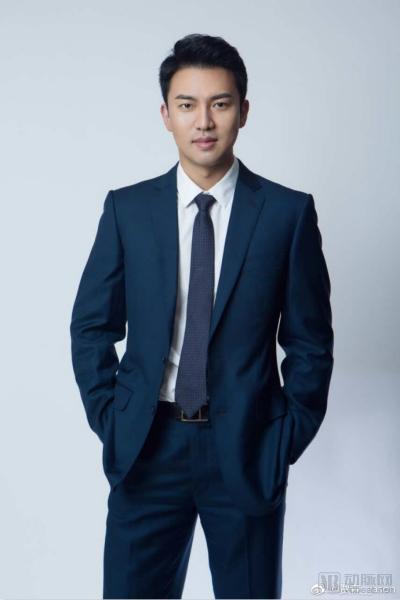
Jason Jia, Vice President of Suning Universal and Executive President of Suning Universal Capital
From a holistic development perspective, although the decade-long period of unrestrained growth that began in 2000 has passed, the medical aesthetics industry remains in a phase of relatively rapid expansion.
In 2017, the market size of China's medical aesthetics industry exceeded RMB 200 billion, with a compound annual growth rate (CAGR) of 22%-25% projected for the next five years. In popular regions such as Chengdu and Shenzhen, there is even a trend toward saturation among non-surgical medical aesthetic providers. Both large chains and small clinics are continuously expanding through chain operations, resulting in intense competition.
Jason remarked, “The number of newly opened chain clinics has been increasing over the past two years. Many people perceive the medical aesthetics industry as having high gross margins, large scale, and promising prospects, prompting them to seek a share of the market regardless of whether they have prior experience in medical aesthetics. However, from a capital perspective—whether industrial capital, funds, or listed companies—the investment enthusiasm in the second half of 2017, or even throughout the entire year, cooled down compared to the previous year.”
On July 18, 2016, Suning Universal issued an official board announcement regarding the substantial acquisition of 11 medical aesthetic institutions, with a total transaction amount nearing RMB 570 million. The boldness and speed of this move drew significant attention within the industry. In 2017, Suning Universal slowed its acquisition pace, adopting a steady and pragmatic approach by acquiring only five medical aesthetic hospitals through medical aesthetic funds. A notable example is Shanghai Tianda Hospital, which will subsequently be integrated into the Suyaa Medical Aesthetics system.
In July 2017, Suning Universal acquired Shanghai Tianda Hospital for RMB 63.56 million. The hospital holds qualifications and licenses for facial contouring surgery, a credential that is scarce in first-tier cities. Facial contouring procedures command high average transaction values and gross profit margins, aligning well with the superior medical resources possessed by Suyua ID Plastic Surgery.
In the second half of the year, Suyaa Medical Aesthetics also initiated the self-construction of its hospital in Chongqing, marking a key strategic deployment in Southwest China. This facility will cater to the growing aesthetic needs of consumers in the region and continue to extend its influence to surrounding areas.
Why is there rampant expansion by chain operators on one hand, yet cooling investor interest on the other? In response, Jason explained: “The traditional operational approaches in the medical aesthetics industry—spanning management, services, processes, and brand building—have been disrupted by the significant influx of capital. To achieve substantial growth, transformation is inevitable.”
The current market reality is that post-acquisition integration of clinics by capital investors proves highly challenging, which has led to a decline in capital participation.
“Integration demands considerable effort. If you evaluate the current management team against a standard of flawless, standardized management, few candidates meet the criteria. In the early stages of industry development, if the target company itself is subpar, post-merger performance will yield less than the sum of its parts (1+1<2), failing to achieve synergies. It is akin to comparing renovating an existing house with fitting out a new one; clearly, the latter offers greater flexibility,” said Jason.
The traditional medical aesthetics market does feature some seemingly crude yet effective and pragmatic approaches to boosting performance. Given the high upfront investment and long payback period in the medical aesthetics industry, “teams formed post-acquisition must be standardized and institutionalized, and future chain operations will be brand-oriented.”
From the perspective of the acquired institutions, Meilianchen is a chain brand in Beijing and Shijiazhuang. Due to its cross-industry expansion, "Suya Medical Aesthetics" gained access to the original hospitals' licenses and customer resources through acquisitions, enabling rapid market entry. These institutions are considered high-quality assets in terms of team, property, brand, customer base, and performance, with annual revenues reaching at least RMB 50–60 million."
Suyaa Medical Aesthetics primarily expands through self-built facilities, supplemented by acquisitions and integration. A common pitfall of traditional medical aesthetic institutions is that, despite their high gross profit margins, their marketing and management costs are also exceptionally high; when all factors are considered, they still operate at a loss. How can better synergies be achieved after integration? Jason believes that two teams are critical: the physician team and the management team.
Standardization in the medical aesthetics industry is inherently challenging. While minimally invasive procedures, such as those involving minor energy-based devices and skin treatments, can achieve a moderate degree of standardization, most surgical interventions—even relatively straightforward ones like double eyelid surgery—are difficult to standardize due to the unique anatomical and aesthetic characteristics of each patient. This necessitates the development of individualized aesthetic treatment plans, placing significant demands on the surgeon’s experience and technical expertise.
“To better incentivize the management team, Suyaa Medical Aesthetics retained the hospital’s original management team to the greatest extent possible after the acquisition. ‘In the early stages of our operational involvement, we did face some cultural conflicts. We aimed to introduce a standardized and high-quality control model. Without rules, an organization operates like undisciplined troops; it may thrive in the short term, but its risk resilience proves inadequate when confronted with significant challenges. When Suyaa Medical Aesthetics reaches a scale of 50–60 facilities, standardization and normalization will be imperative.’”
Prior to the acquisition, institutions could formulate their own marketing strategies based on specific market conditions to drive steady performance growth; however, after integration into a unified brand, teams need to place greater emphasis on compliance with rules.
“In the field of medical aesthetics, we must remain grounded and strive to view issues from the perspective of traditional practitioners, while also encouraging them to keep pace with the times by adopting a standardized management approach toward future development goals. This requires allowing time for team growth.”
However, the prerequisite remains stabilizing the existing management and medical teams. To attract top-tier talent in the industry, expand property holdings across China, and acquire small and medium-sized medical aesthetic institutions, Suyaa Medical Aesthetics has launched a Global Partner Recruitment Program. Under this equity incentive scheme, individuals can receive up to 10% equity in a single hospital, while teams can also obtain up to 10% equity in the institution.
“We also need to become more inclusive and grow gradually. After a period of adjustment, the entire team at Suya Medical Aesthetics is now gaining momentum,” said Jason.
“Today’s patients are vastly different from those of five years ago. Consumption is no longer about conspicuous display but has shifted toward service-oriented spending with medical attributes. ‘I am actually excited by the influx of an increasing number of medical aesthetics institutions, as it indicates that the industry is thriving and its base is expanding. Consumers have more channels for education, the industry is becoming increasingly transparent, and consumers’ ability to discern quality is strengthening. Quick-profit models are no longer viable; reputation will be the most critical factor in the future.’”
From a policy perspective, the state also encourages private capital to enter the healthcare sector and supports physicians in launching entrepreneurial ventures. Some outstanding physicians have left the public system to establish private clinics or even form physician groups, thereby securing a notable market position. Most of these physicians specialize in specific surgical procedures, attracting patients who seek their expertise by reputation.
Jason believes that physician clinics cannot become the mainstream of the medical aesthetics industry, as patients require one-stop services, particularly necessitating the urgent establishment of high-level service systems. “While physicians possess strong technical skills, management and operational capabilities are not necessarily their strengths. The combination of capital and technology, followed by chain expansion, allows for specialized personnel to handle management, operations, brand promotion, and surgical procedures, thereby leveraging each party’s comparative advantages. Physicians may achieve more complementary development through equity participation in such models.”
Regardless, during the process of chain expansion, enterprises remain unable to escape the bottleneck of talent scarcity. “First, do you have enough personnel in terms of quantity to support expansion? Furthermore, do these individuals meet your requirements, and are their operational strategies still confined to traditional approaches? In the highly competitive medical aesthetics industry, it remains quite challenging to find professionals who possess strategic vision, extensive experience, and managerial capabilities or aptitude.”
For enterprises, the ability to rapidly build a management team and swiftly implement standardized operations determines the success of chain expansion.
Regarding the currently prevalent “1+N” chain model—comprising one flagship store plus multiple small clinics and outpatient departments—Jason believes there is room for experimentation. “Once the flagship store establishes a strong brand, it can drive patient traffic to smaller clinics in the surrounding areas, allowing basic procedures such as microneedling and skin treatments to be performed at these clinics. However, given the low entry barriers and intense competition in the clinic sector, success hinges on systematic management and service capabilities. If service quality fails to keep pace—for instance, due to inefficient physician scheduling and poor patient experience—the more services are delivered, the more severe the damage to brand reputation becomes.”
In terms of information technology infrastructure, Suya Medical Aesthetics has established standardized systems for operations, organizational structure, marketing, customer service, and medical practice management. Additionally, it has independently developed a CRM system and an HIS system, striving to achieve service standardization.
“At Suyaa Medical Aesthetics, no surgeries under general anesthesia are performed after 4:00 PM. While this inevitably impacts revenue from a business performance perspective, patients understand and respect such stringent controls over surgical quality and safety. In the long run, it also helps prevent adverse incidents, which underscores the value of standardization.”
Of course, standardization may not yield tangible benefits in the short term; however, from the perspective of building a chain service system, it is an essential and rigorous undertaking that must be addressed sooner or later.
Jason revealed, “Publicly listed companies have access to diverse capital-raising channels, a unique advantage that others lack. We should take a holistic view of the development of the medical aesthetics industry and establish a robust standardized service system, which will serve as the foundation for supporting rapid chain expansion in the future. We cannot merely focus on the profitability of a few hospitals in the short term, nor simply assume that hiring a few executives and boosting single-store performance will suffice.”
Although medical aesthetics has become a relatively mature sector within the consumer healthcare industry, Jason believes that empiricism still prevails in this field, which remains in an extensive phase of rapid growth.
“The overall quality of talent in the industry is uneven. A welcome change, however, is that an increasing number of high-caliber executives are entering the field, steering it toward a more standardized and sustainable trajectory. The medical aesthetics industry will truly earn respect only when its professionals become universally recognized as indispensable assets. Currently, Suyaa Medical Aesthetics is undergoing a phase of consolidation. This requires us to deliver tangible business performance while simultaneously implementing systematic management controls, which demands significant effort in communication. For me personally, this experience represents a valuable opportunity for growth and professional development.”
Regarding the hospital’s revenue, Jason told reporters, “The average annual revenue ranges from RMB 80 million to RMB 100 million. Among these, Beijing, Shanghai, and Shijiazhuang have performed better.”
In terms of customer acquisition, Suyaa Medical Aesthetics maintains a diversified approach. “Traditional medical aesthetics relies on conventional advertising and Baidu’s pay-per-click (PPC) services. Currently, the cost per acquired customer visiting a clinic in Beijing through Baidu PPC has reached RMB 5,000, which is excessively high. In addition to leveraging new media, cross-industry alliances, and campus agents for customer acquisition, our primary focus is on strengthening our brand reputation, emphasizing referrals from existing customers and enhancing retention of loyal clients.”
On competition, Jason stated, “The medical aesthetics market is large enough that we have no immediate desire to benchmark ourselves against any competitors. Instead, we are focused on diligently validating the business model we are most passionate about. Once our standardized systems are established, we will then address competition. Outdated models that rely on information asymmetry for profit will be phased out. A case in point is the initial customer acquisition strategy employed by gynecological and andrological hospitals, which relied heavily on aggressive traffic redirection. While this approach initially yielded high profits and gross margins with low costs, rising expenses have since transformed the medical aesthetics sector into an industry characterized by both high costs and high gross margins.”
“To address the long-term development challenges of the medical aesthetics industry, the focus must shift from acquiring new customers to retaining existing ones and building brand reputation. ‘It is essential to emphasize sincere service, establish systematic management capabilities, accumulate positive word-of-mouth, and return to the core essence of medical practice. Only by gradually building a trustworthy brand can you ensure that your prestigious reputation remains intact 10 or 20 years down the line.’”
Regarding the development direction for 2018, Jason summarized four key priorities: steady expansion, continued dedication to strengthening core internal capabilities, business model innovation, and intensified efforts in talent development to build a robust talent pipeline for the future.
On one hand, continue to stay grounded and cater to the mass market; on the other hand, drive SuYa Medical Aesthetics toward a standardized system, appealing to the high-end segment. For Jason, it is now essential to pursue both strategies simultaneously.