

AI-Powered Cognitive Behavioral Therapy Steps In to Address Global Anxiety Epidemic
Commercial AI application scenarios are a topic of particular interest to me. Overall, most use cases are still in the exploratory phase, yet it appears that the entire business world is poised to undergo a wave of AI integration. Similar to previous upgrades in informatization and the digital transformation driven by the internet, success will be achieved once we reach the stage where “IT no longer matters” and “every company is an internet company.” I have consolidated discussions on this subject under the “AI Application Scenarios” section, where I will systematically examine and uncover various areas for practical deployment.
This article discusses the application of AI in cognitive behavioral therapy, a mental health treatment modality.
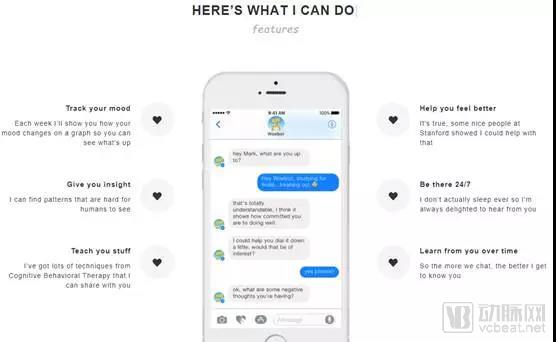
With the addition of former Baidu Chief Scientist Andrew Ng as Chairman, Woebot, a medical AI company, has recently garnered significant attention. Woebot is a Facebook Messenger chatbot that leverages Cognitive Behavior Therapy (CBT) to assist individuals suffering from depression. This represents a market with a substantial target user base of 300 million depressed patients worldwide. The application of new technologies can expand psychological therapeutic tools in many aspects, including their scale of use and efficacy. Currently, the field is shifting its focus toward artificial intelligence technology.
CBT Relies on Iterative Communication
Cognitive Behavioral Therapy (CBT), which originated in the 1960s, has gradually evolved into a structured, short-term, cognitively oriented psychotherapeutic approach. CBT primarily focuses on patients' irrational cognitions, aiming to alleviate psychological issues by modifying their perceptions and attitudes toward themselves, others, and events.
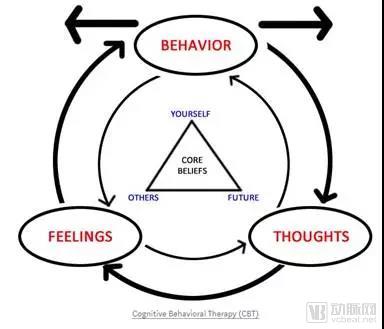
Cognitive behavioral therapy can be used to treat many diseases and psychological disorders, such as depression, anxiety disorders, anorexia nervosa, sexual dysfunction, drug dependence, phobias, chronic pain, and rehabilitation treatment for psychosis.
Unlike psychoanalysis, cognitive behavioral therapy (CBT) focuses on how individuals interpret specific events. A key component of this approach is Ecological Momentary Assessment (EMA), which requires therapists to regularly monitor patients’ emotions and map out their affective patterns. This process necessitates frequent communication with patients to gather their feedback and perspectives, enabling both patients and therapists to work closely together to clarify psychological states and identify underlying issues. Thus, it becomes evident that verbal expression and communication serve as the critical pathways upon which CBT relies.
The Previous Stage of Digital CBT
Cognitive Behavioral Therapy (CBT) is relatively expensive, costing approximately $200 per 45-minute session. In addition to the financial burden, barriers such as the inconvenience of attending in-person appointments and the psychological difficulty of opening up have discouraged many individuals from actively seeking treatment. Over the past two decades, practice has demonstrated that CBT can be successfully delivered online without a therapist present, without compromising therapeutic outcomes. Certain guidance elements can be designed as automated computer-driven instructions—for example, having the system ask patients, “How are you feeling today?” or prompting them to reread specific passages with psychological suggestive effects. By allowing machines to handle part of the therapeutic process, the threshold for accessing mental health care can be lowered.
In the realm of mobile internet applications, Cognitive Behavioral Therapy (CBT) has been integrated into various apps, with a significant majority featuring meticulously designed self-management models. Their core functionalities encompass self-monitoring of emotions, relaxation tools, health guidance, and patient communities, while some applications also offer personalized, coach-style guidance from professionals.
Joyable, founded in 2014, has raised over $10 million in total funding. It structures its Cognitive Behavioral Therapy (CBT) approach into treatment courses lasting at least 12 weeks, providing online psychological therapy and management services for anxiety disorders and obsessive-compulsive disorder (OCD) at a monthly fee of $99. Ninety-three percent of users reported alleviation of anxiety symptoms after using the service. Lantern, established in 2012, has secured more than $20 million in total funding. Its model involves initial assessment to confirm the user’s condition, followed by continuous self-training and guidance, ultimately leading to improved mental well-being.
In addition, myFeel, Sleepio, and Ginger.io have all developed CBT-based mobile applications, each with a distinct focus in diagnosis and treatment, and have all acquired a certain user base.
Three Reasons for the Convergence of CBT and AI
Following the advent of mobile applications, Cognitive Behavioral Therapy (CBT) continues to seek more efficient digital solutions. After engaging with artificial intelligence (AI) technologies, experts in the field of mental health disorders believe that integrating AI with CBT holds significant promise. Overall, there are three key value propositions:
First,Psychological issues are strongly reflected in language, creating significant opportunities for the application of semantic understanding technologies. Analyzing language to assess psychological states is highly effective and enables the discovery of optimized treatment pathways through data analysis. The use of algorithms to instantly process massive volumes of linguistic data significantly accelerates the modeling and analytical processes.
Second,AI-driven services, which can serve as guides in psychotherapy, still demonstrate significant efficacy and can partially replace therapists, thereby instantly reducing the cost of expensive psychotherapy services to an affordable level.
Third,Robots possess distinct non-human advantages; evidence suggests that individuals are more willing to open up when interacting with machines than with humans, a factor crucial to psychotherapy.
Several Cutting-Edge Practices of CBT+AI
In the field of mental health, certain specific contexts are highly aligned with semantic understanding. For instance, analyzing and assessing an individual's psychological state based on their conversational exchanges or published textual content.
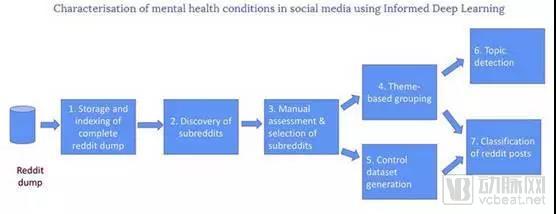
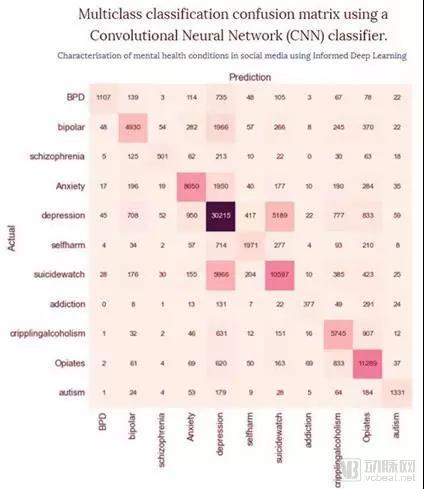
Some studies have begun to attempt to identify individuals at potential risk of suicide by analyzing their posts on social networks. A paper titled “Characterisation of mental health conditions in social media using Informed Deep Learning,” published in Nature in 2017, applied neural networks and deep learning techniques to conduct this research.

In 2015, IBM’s relevant research group also published a paper in Nature titled “Automated analysis of free speech predicts psychosis onset in high-risk youths,” demonstrating that AI-driven analysis can predict the risk of developing mental illness by analyzing speech patterns.
A Canadian AI services company named Advanced Symbolics is working on this, using AI technology to identify suicide signals. Not long ago, the Canadian government and Advanced Symbolics announced the launch of related initiatives. In 2017, Facebook, which possesses considerable AI capabilities and is itself a social media platform, also initiated a similar project.
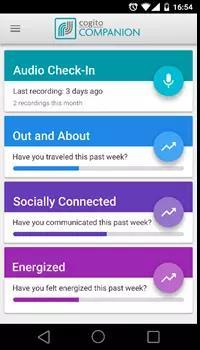
Cogito, another platform with a focus on speech analysis, monitors activity on social media and phone calls to identify patterns and detect symptoms of depression in users. It also includes a speech analyzer that searches for the impact of vocal patterns and changes in tone, which may be the earliest signs of depression.
Compared to purely digital self-management, professional guidance yields better outcomes and expands the range of treatable conditions. Fragmented guidance services and highly focused one-on-one therapy sessions are equally important. However, merely accessing therapists remotely does not fundamentally improve costs. The emergence of AI capabilities offers further possibilities. Two significant design approaches have arisen: designing AI assistants for therapists to enable them to serve more patients with the same time and energy investment, as seen with iESO; or deploying chatbots to interact directly with users, partially assuming the role of a therapist, as exemplified by Woebot.
In September 2017, the UK-based startup iESO Digital Health secured a new round of financing amounting to $24 million. The company offers remote cognitive behavioral therapy (CBT) through text-based conversations that simulate face-to-face interactions. Reportedly, iESO was recently listed by Deloitte as one of the 50 fastest-growing technology companies in the UK. Patients can book therapists online and engage in text-based chats via typing. The conversation history is stored on the user’s profile page. Additionally, patients may submit questions to their therapists outside of scheduled sessions, with responses provided within 24 hours.
iESO has developed an AI assistant from the therapist’s perspective to enhance work efficiency and individual productivity, noting that 64% of therapy sessions occur outside regular office hours. Furthermore, the AI can conduct in-depth analysis of dialogue transcripts to uncover subtle changes, thereby optimizing clinical practice and improving therapeutic outcomes.
Woebot places AI at the forefront of direct user engagement. This approach, on one hand, increases experiential pressure and imposes high demands on machine intelligent dialogue; many argue that machines still have a considerable way to go before achieving truly humanized communication. On the other hand, however, it offers distinct advantages, as the non-human nature of robots holds inherent value.
In 2014, the University of Southern California’s Institute for Creative Technologies launched a non-commercial project to design a virtual therapist named Ellie. In one experimental phase, 239 participants were divided into two groups: one group was informed that they would be interacting with a virtual therapist, while the other was told they would be communicating with a human therapist. In reality, participants were randomly assigned to interact with either a fully automated system or a hybrid human–computer virtual agent. Final analysis of the data revealed that participants who knew they were conversing with a robot engaged in deeper conversations and disclosed more emotional content.
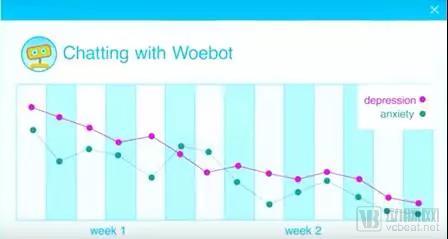
Woebot is a research outcome of Stanford University. In 2016, Woebot completed its beta version and began collecting clinical data. It was not until July 2017 that the commercial product for the general public was launched. Woebot charges a monthly service fee of $39. Woebot claims that users experience a significant reduction in symptoms of depression and anxiety after chatting with the bot for a few weeks.
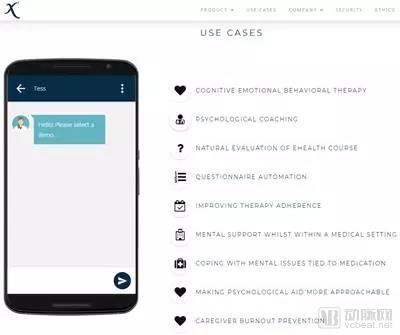
Another startup worth mentioning is x2.ai, which actually began its practice in this field earlier. x2.ai previously used a chatbot named Karim to provide psychological counseling to refugees. The company’s current model does not directly provide psychotherapy; instead, it offers intelligent solutions for the treatment of mental disorders, with Cognitive Behavioral Therapy (CBT) as its core focus. In other words, psychologists or medical institutions can use the platform provided by x2.ai to access available AI capabilities. In addition to variable fees for customization, x2.ai charges a platform fee of $50 per internal ID per month, as well as a usage fee of $1 per patient per month. Notably, x2.ai has developed an intelligent conversational system named Tess, which delivers services via text messaging.
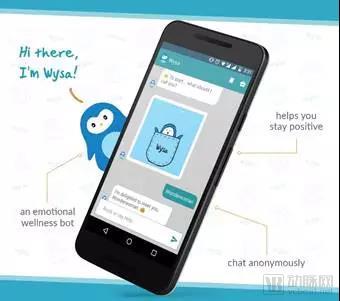
The integration of AI capabilities into the field of cognitive behavioral therapy continues to attract more startups to experiment with or emulate this approach. Among them, Wysa is a relatively young Indian company that secured $1.3 million in seed funding in June 2017. Wysa aims to partially address the situation in India where there is a large population suffering from mental disorders but a scarcity of psychotherapists.
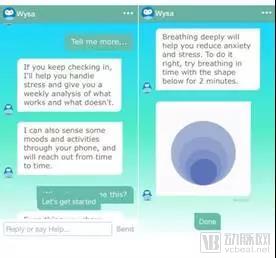
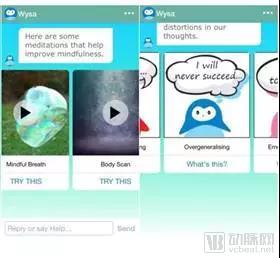
From assessment to prediction, and from treatment to therapeutic feedback, cognitive behavioral therapy appears to have established a more accessible mechanism for efficacy improvement within a digital loop, ultimately achieving “better outcomes at lower costs”—the ultimate goal of future healthcare pursued by innovation pioneers.
However, based on various overseas attempts, particularly in terms of revenue models, both B2B and direct-to-consumer (B2C) services have clear fee structures. Overall, the ultimate payers in Europe and the United States have followed the mobile health service model, involving three parties: insurance companies, corporate employers, and individual consumers.
In China, the population facing mental health challenges is vast, yet the market has remained lackluster. The number of practicing psychological counselors is low, but this does not necessarily lead to the conclusion—common in other sectors—that per capita medical resources are insufficient. Rather, it reflects weak supply driven by limited demand willingness. In particular, talk therapy as a primary treatment modality remains far from mainstream. This situation stems from multiple factors, including relevant policies, cultural perceptions, and channels of value dissemination. In a country where the offline psychological counseling market is still immature, how can technological advancements pave a new path? One thing is certain: directly replicating Western models will not work. So, what approaches offer greater promise? We welcome further discussion on this topic.