

Codoon Health Files for IPO: Tapping into the Underserved Market of Sub-Healthy Urban Professionals with AI-Powered Diet and Exercise Solutions
“We aim to provide individuals in a sub-health state with exercise and dietary solutions that can address their issues,” said Wang Lei, CEO of Gudong Health, in an interview with VCBeat (WeChat ID: vcbeat).
In 2016, the renowned British medical journal The Lancet published a global survey report on adult body weight. The survey found that the number of obese adults worldwide had surpassed that of underweight individuals, with China overtaking the United States to become the country with the largest obese population globally. Specifically, China had 43.2 million obese men and 46.4 million obese women, ranking first in the world.
The 2017 report, “Blue Book of Cities: Annual Report on Urban Development in China No. 9—On the Path to Healthy Cities,” released by the Institute of Urban Development and Environmental Studies at the Chinese Academy of Social Sciences, pointed out that the sub-healthy population in China had exceeded 75%, with a relatively even distribution across all age groups.
Nutrition-related chronic diseases, such as diabetes, cardiovascular and cerebrovascular diseases, and cancer, now account for 80% of all deaths in China. Residents’ health needs have shifted from traditional, single-mode medical treatment toward disease prevention, healthcare maintenance, and health promotion. As unhealthy lifestyle habits introduce potential risk factors for chronic diseases, the public is placing greater emphasis on health concepts, thereby driving the growth of the fitness and exercise market.
In exploring the connection between exercise, fitness, and dietary solutions, a startup named Codoon Health emerged. After its launch in November 2017, it secured millions of dollars in angel funding from SoftBank in December.

Wang Lei, CEO of Gudong Health
60% of the population engages in passive exercise; the “Record Health” app does not “provide health.”
As a tracking tool, Codoon boasts a user base of nearly 100 million. Following surveys of this population, Wang Lei and his team discovered that 60% of users are not motivated by a love for exercise, but rather by goals such as weight loss, slimming, or self-fulfillment.
You may have colleagues who frequently skip meals due to overtime work, making dizziness and stomach pain commonplace. Prolonged sitting, late nights, and excessive workload have become their defining characteristics. Their motivation for exercise often stems from spending more than eight hours a day seated at their desks, leading to poor body shape and abdominal obesity, thus creating a need for body sculpting. Meanwhile, this sub-healthy population does not require hospital treatment; instead, they prefer to improve their condition through scientific exercise and a balanced diet.
Wang Lei and his team are targeting individuals aged 25 to 50 in a sub-health state, primarily office-based white-collar workers who face high work-related stress and maintain unhealthy lifestyles. This demographic is typically characterized by a strong health consciousness and substantial purchasing power.
He emphasized, “The reason for launching Gudong Health is that our team aims to provide targeted, concrete solutions for the 60% of the population with greater health needs, helping them achieve their goals. These solutions encompass both dietary and exercise guidance.”
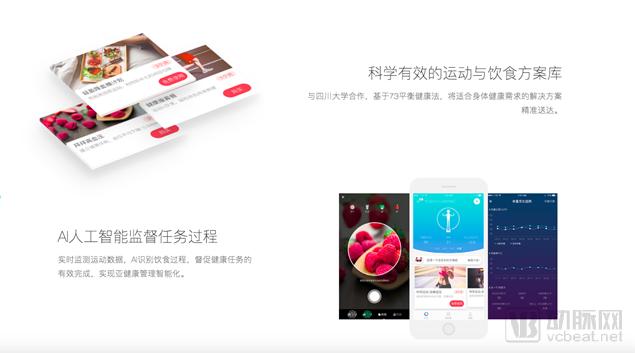
Gudong Health, as an independent project, is positioned as an internet service platform that provides scientific exercise and dietary health solutions based on big health data.
After registration, users can input data by completing the health assessment questionnaire within the app. Once user data is collected, the app evaluates their basic physical condition and, based on their personalized goals, leverages its Health Cloud feature to deliver tailored exercise and dietary plans.
In formulating health plans, Gudong Health employs gamified incentive mechanisms to enhance user adherence to the prescribed regimens. Users need only follow daily prompts to meet exercise or dietary requirements and achieve their goals within a set period, thereby effectively improving their physical condition.
Co-developing Healthy Meal Boxes through a Joint Laboratory with Sichuan University
The accelerating pace of life, unreasonable dietary habits, and unhealthy lifestyles have had a significant impact on the physical health of Chinese people.
The health philosophy of “70% diet, 30% exercise” is embodied in the “73 Balanced Health Method,” a comprehensive exercise and dietary regimen developed through the joint laboratory on health big data established by Gudong Health and Sichuan University. This initiative translates scientific research findings on evidence-based exercise and nutritional balance into internet-based solutions. Currently, Gudong Health and Sichuan University have jointly established the Joint Laboratory for Health Big Data to develop targeted solutions for exercise and diet.
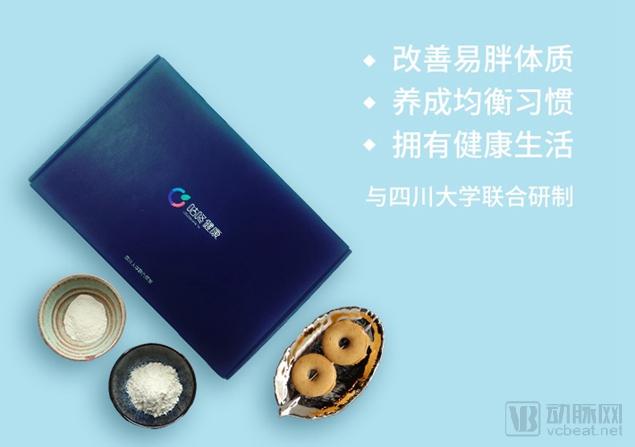
Codoon Health’s flagship product is currently the “73 Health Meal Box,” which aims to facilitate weight management through meal replacements such as protein biscuits and high-fiber nutritional powders. Compared with long-term dietary control plans like diet meals offered by various fitness apps, the Health Meal Box reduces the frequency of controlled meals to three or four times per week. Wang Lei stated, “Conventional diet therapies often require users to abstain from eating or consume only small amounts of low-calorie foods such as salads, imposing significant psychological pressure. Therefore, Codoon Health seeks to adopt a more accessible approach to help users embrace scientific exercise and dietary regimens, while also improving their lifestyle habits.”
Furthermore, Wang Lei established a Health Resource Center within the team, staffed by nationally certified registered dietitians. This center serves as a content module in the app, providing daily exercise and dietary health-related information, such as weight-loss meal plans and healthy lifestyle knowledge.
Seize scenario-based promotion, primarily adopting the B2B2C model.
Running groups and sports teams with clear orientations provide opportunities for the core scenarios promoted by Gudong Health.
Wang Lei revealed that for customer acquisition on mobile platforms, directly targeting consumers (C-end) is challenging and costly when market awareness is insufficient. Acquiring a single online user costs approximately RMB 50, and this only covers users who download the app; the cost is even higher for acquiring precise paying users.
Therefore, Gudong Health positions its platform model as B2B2C. In the initial phase, it collaborates with running clubs on the Gudong website to capture B-side scenarios as much as possible, such as hotels emphasizing health brands and physical examination institutions.
Wang Lei told VCBeat, “We reach users through small B-side channels such as running groups, rather than promoting directly to C-end consumers.” Targeting intent-driven audiences in core scenarios is Gudong Health’s primary customer acquisition strategy, while direct B-side promotion can reduce customer acquisition costs by approximately 60%–70%.
In light of the current consumption upgrade and the growing public emphasis on health, Wang Lei believes that now is an opportune time to introduce exercise and dietary health solutions via internet platforms.
However, faced with the pain point that health awareness has not yet fully taken off, Gudong Health’s next step is to convey health concepts at the operational level. “Health may be perceived as a basic necessity in people’s minds, but it does not necessarily translate into action. The users are there, but their awareness has not reached that level, and they may lack the willingness to pay or invest effort to improve their current state of sub-health. This is what the team needs to consider.”
Looking ahead, Gudong Health’s development will focus on two key directions. The first is a new retail business for health-related products, delivering scenario-appropriate health products to users through e-commerce platforms. This strategy is based on the results of Gudong Health’s earlier internal beta testing: “In fact, many users hope to obtain health products that fit their specific usage scenarios, and the online e-commerce retail model is relatively mature. Therefore, it is crucial to accurately identify user needs.” The second direction involves providing more content related to healthy eating through lectures and courses, while continuously exploring and refining its business model.