

From Space to Rainforest: How Portable DNA Sequencers Like MinION Are Making Genomic Analysis Ubiquitous
IlluminaA new sequencer was launched at the 2018 Morgan Stanley Healthcare Conference.iSeq™ 100. This isIlluminaThe smallest sequencer ever released, occupying only1square feet, priced in the United States region19900USD.
Compared with previously released sequencers, this model targets small laboratories as its primary focus in both product design and pricing strategy. Therefore, Illumina’s move is, to some extent, an attempt to gain access to this segment of laboratories through compact, low-cost instruments.
However, when it comes to miniaturized sequencers, the most classic example is undoubtedly Oxford Nanopore’s MinION. Known as a “pocket sequencer,” the MinION is only 4 inches long, roughly the size of a standard USB flash drive. It consists of a sensor chip, an application-specific integrated circuit (ASIC), and a fluidic system required for complete single-molecule sensing assays. Compared to the current mainstream “washing machine-sized” sequencers, the MinION stands out as unique and offers greater flexibility.
MinION was initially positioned to make sequencing ubiquitous, with Oxford Nanopore aiming for it to reach places inaccessible to large-scale sequencers, such as jungles, the open sea, and even outer space.
Heaven
Let us first envision the scenario in space. Aboard the International Space Station, astronauts orbit the Earth at a speed of 17,000 miles per hour, experiencing 15 sunrises and sunsets each day. They can feel the sensation of floating caused by weightlessness and witness breathtaking vistas, all of which constitute remarkable experiences. However, if an astronaut were to fall ill in space, the consequences would be unimaginable.
There are no devices aboard the International Space Station capable of definitively diagnosing diseases, let alone identifying the specific microbial pathogens responsible. If astronauts fall ill in space, they can only rely on describing their symptoms to medical personnel on Earth to infer potential diagnoses. However, this approach cannot determine whether the illness is caused by bacteria, viruses, or other agents. Deciphering the genetic code of these infectious sources in space would enable the identification of the microbes and facilitate the selection of appropriate therapeutic medications.
Prior to 2014, such an idea would have been considered absurd. At that time, sequencers were all bulky instruments, at least the size of a refrigerator or a microwave oven. Simply transporting these cumbersome devices into space would have been extremely time-consuming, let alone expecting them to remain intact in the space environment (where objects exist in a state of weightlessness).
In 2014, this became possible with the advent of Oxford Nanopore’s handheld sequencer, MinION. The MinION is compact and portable, allowing astronauts to easily handle it even in weightless conditions.
In August 2016, after testing the sequencer under microgravity conditions, NASA astronaut Kate Rubins brought the MinION to the International Space Station. The project transported pre-prepared DNA samples of mice, viruses, and bacteria to the ISS, where Rubins conducted analyses in space while the ground team performed synchronized sequencing.
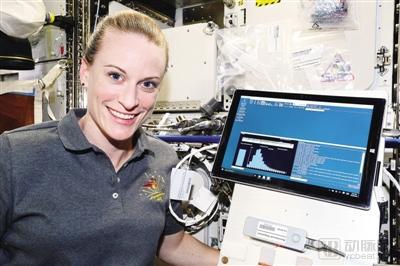
NNASA Astronaut Kate Rubins Performs First DNA Sequencing in Space Using the MinION Sequencer
At the conclusion of the experiment, researchers compared the sequencing results obtained on Earth with those from space, revealing a perfect match between the two datasets. This demonstrates that, with the aid of MinION, astronauts can directly detect genetic material or gene mutations during orbital flight. NASA has described this achievement as ushering in a new era of in-space genomic sequencing for living organisms.
Grounding
If sequencing can be performed in space, it is certainly not difficult to conduct it at sea or in jungles. Some researchers have planned to take the MinION device into the tropical rainforests of Tanzania to sequence frogs, while others have intended to deploy it in the Indian Ocean. However, at present, the greatest value of the MinION lies in the medical field.
Infectious diseases have always posed a significant threat to human health, with the number of deaths caused by infectious diseases far exceeding those from wars. A prime example is the Black Death, the most severe plague in human history. In 542 AD, Constantinople experienced an outbreak of the "Black Death" caused by the bubonic plague. This catastrophe not only shattered Emperor Justinian I's dream of restoring imperial unity but also nearly brought the entire Eastern Roman Empire to ruin.
Although this terrible disaster has passed, humanity has yet to shake off the threat of infectious diseases.
In 2015, the largest Ebola outbreak in history entered its second year, with more than 10,000 deaths and an even higher number of infections. Scientists and health workers made significant progress in containing the epidemic, but one key factor remained unresolved: the secrets of the Ebola virus genome.
If viruses can be sequenced, scientists can more effectively develop diagnostic reagents and vaccines. By comparing genomic information of viruses from different regions and timelines, they can determine whether mutations have occurred during transmission and thereby formulate and plan control measures; by comparing viral genomes from patients, they can trace transmission chains to identify who infected whom, thus helping to curb spread pathways.
Unfortunately, during the viral outbreak, only a small fraction of the viruses underwent genomic sequencing. The reason is straightforward: the virus predominantly affected remote areas. Due to poor transportation infrastructure, it was difficult to bring large-scale sequencers into these regions, and all samples awaiting sequencing had to undergo lengthy transport to well-equipped laboratories for analysis and testing.
Biologist Nick Loman asked, “Why not consider other methods for sequencing?” Clearly, the MinION has its place.
In February 2014, Oxford Nanopore finally launched the Early Access Program for MinION. Lomani was one of the hundreds of scientists who signed up for this program. For just $1,000, scientists received a MinION device and a starter kit, which included three flow cells, two kits, software, and regular free consumables.
In the early stages, due to issues with transportation and reagents, the performance of the sequencers was less than ideal. Several scientists had already abandoned their use, but Lomani persisted.
In 2014, Loman successfully sequenced Salmonella using the upgraded MinION at Birmingham Hospital. In April 2015, his student Joshua Quick and three other assistants took the MinION to Guinea.
Due to the inconvenience of transportation, Quick and his team kept their equipment to a bare minimum: three computers, some chemical reagents, a centrifuge, and a thermal cycler (borrowed without permission from a colleague in the same laboratory). Upon opening their suitcases, they set up two school desks as workstations. Two days after arriving in Guinea, they began sequencing the Ebola virus on this makeshift experimental bench.
During the outbreak, MinION perfectly demonstrated its value. Traditionally, scientists needed to collect hundreds of culture samples and ship them together, a process that often took several weeks to yield results. In contrast, MinION enables on-site sequencing, eliminating the significant time spent in transit.
After six months, the research team completed sequencing of 142 Ebola virus samples.
The World Health Organization declared the Ebola epidemic over in 2016, but shortly thereafter, another outbreak swept across the Americas. The Loman team once again set out with the MinION, traveling along the Brazilian coast in an effort to uncover more information about the Zika virus.
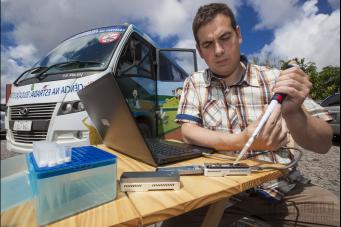
In 2016, the World Health Organization declared the Ebola epidemic over, but another adversary emerged—the Zika virus. It became the greatest threat of 2016, with outbreaks spreading across the Americas and the Pacific region. Loman embarked on another journey with MinION.
They drove a minivan along the Brazilian coast, traveling more than 2,000 kilometers through the epidemic-affected areas of Northeast Brazil and conducting genetic testing on over 1,300 infected individuals.
During the genomic sequencing journey involving humans, mosquitoes, and viruses, researchers conducted sampling and sequencing on the move from North America to Brazil, intensively employing a variety of detection methods: RNA extraction from humans and insects, Zika virus RNA-seq and cDNA sequencing, multi-party alignment to confirm whole-genome sequencing results (Thermo Fisher), phylogenetic analysis, and more.
By analyzing the viral genetic composition through genome sequencing, scientists have traced the spread of Zika in Brazil. The findings indicate that Zika originated within Brazil (Latin America) and had already begun to disseminate globally before the first case of Zika infection was detected in the United States (North America) in early 2016.
During this outbreak containment effort, MinION played a significant role in off-road field sampling.
Principle
Why is Oxford Nanopore able to make its sequencer so compact, while other sequencing platforms such as Illumina, PacBio, and Ion Proton are all bulky instruments weighing over 50 kilograms? How did Oxford Nanopore achieve such a small form factor? To answer this, we must start with the working principle of MinION.
Unlike current mainstream sequencing instruments, MinION is a third-generation sequencer based on nanopore sequencing technology.
Nanopore: The name sounds like that of a pore, and indeed it is. It is a tiny, nail-shaped hollow protein tube with a diameter of only billionths of a meter.
At the core of nanopore sequencing is a synthetic protein membrane embedded with nanopores. The synthetic protein membrane is immersed in a conductive solution. When a voltage is applied across the membrane, ions flow through the nanopores under the influence of the electric field, generating an ionic current. However, if an object (such as a DNA strand) obstructs the pore, ion flow is impeded, resulting in a decrease in current.
The backbone of a DNA molecule is primarily composed of phosphate groups and four nucleobases (abbreviated as A, T, C, and G). DNA sequencing essentially determines the sequential order of these four bases. Each base modulates the ionic current through a nanopore in a distinct manner. Therefore, as a DNA strand threads through a nanopore like a strip of paper, its sequence can be deciphered by measuring the resulting changes in electrical current.
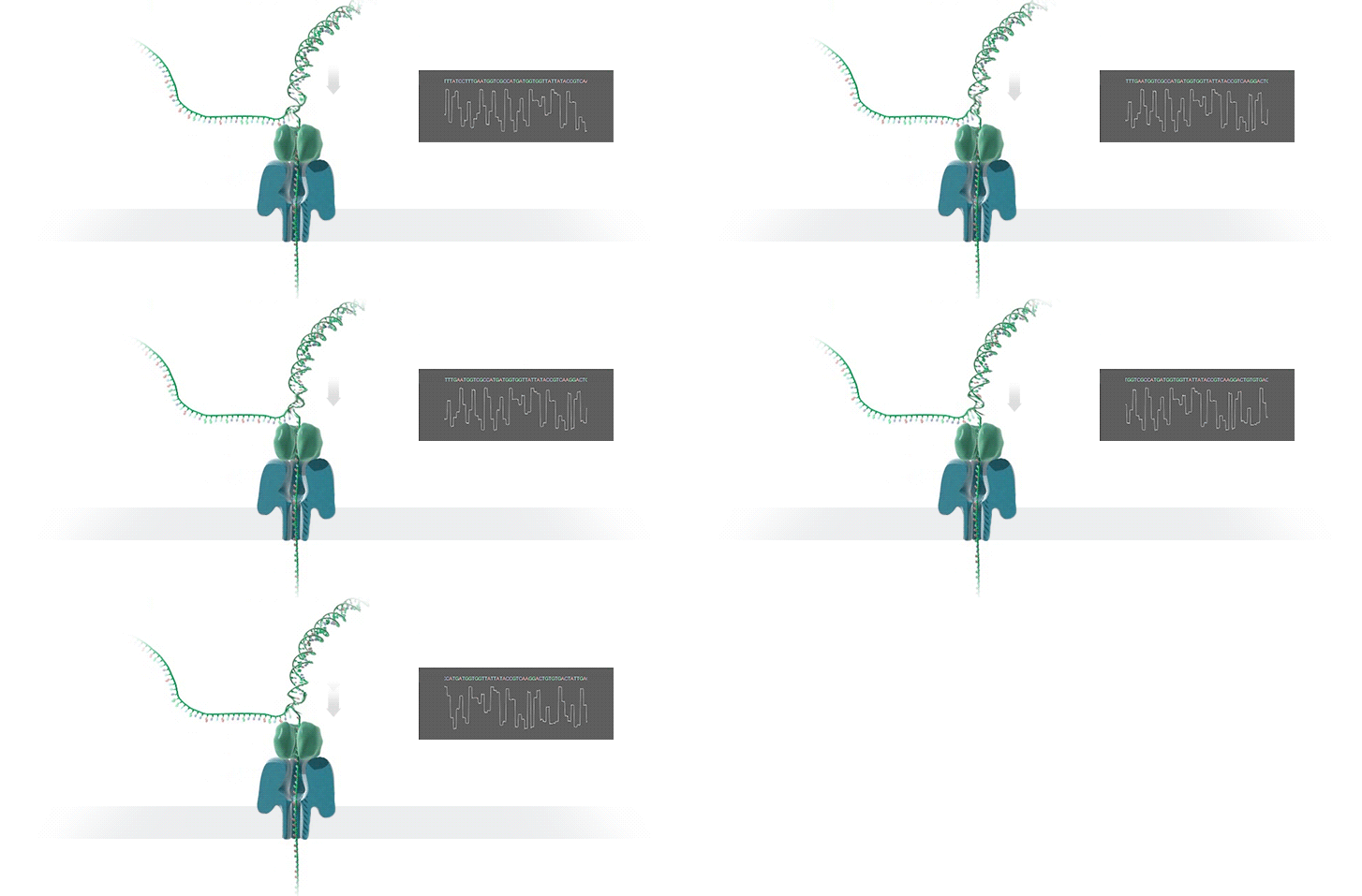
This sequencing approach differs significantly from traditional methods. In conventional techniques, scientists must amplify DNA molecules to generate numerous identical copies, fragment these copies into smaller pieces, sequence them individually, and finally assemble the fragmented sequences into a complete whole. This is akin to shredding a book into many chapters and then piecing them back together.
In contrast, nanopore sequencing can read an entire intact book in a single pass. DNA does not require amplification or fragmentation during the sequencing process, enabling long-duration continuous sequencing. Consequently, sequencers based on the nanopore sequencing principle are consistently compact in size.
Birth
Legend has it that the idea was first conceived in 1989, when David Deamer of the University of California found inspiration while driving along Interstate 5. Later, he and his colleagues spent more than a decade demonstrating that DNA could be captured by nanopores and that different bases could be distinguished thereby. Oxford Nanopore likewise devoted nearly the same amount of time to developing nanopore-based sequencing instruments.
Oxford Nanopore was founded in 2005, with the initial plan to produce large-scale sequencers like other companies. This large sequencer, named GridION, was approximately the size of a VCR from 1992. The idea of developing miniaturized devices originated from the company’s CTO, Clive Brown. At that time, Illumina’s sequencers were gradually gaining dominance in the market, and Brown aimed to surpass them.
Brown actually has deep ties to Illumina. Before joining Oxford Nanopore, Brown worked on sequencer development at Solexa. In 2006, Solexa was acquired by Illumina, but the company’s direction diverged from Brown’s own aspirations. Consequently, unlike many of his colleagues, Brown did not join Illumina; instead, he resigned and moved to Oxford Nanopore.
Building on the Solexa platform, Illumina developed several new sequencers, cementing its unassailable position in the sequencing industry. In 2009, this giant invested $18 million in Oxford Nanopore. This funding helped Oxford Nanopore commercialize its technology, but at the cost of Illumina’s CEO joining Oxford Nanopore’s board of directors.
At that time, Illumina’s portfolio was dominated by large-scale instruments, and Brown aimed to develop products that would be differentiated from those of its competitor.
The MinION was first unveiled to the public in February 2012 at a conference in Florida, when it was still a conceptual product. Brown used just one PowerPoint slide to introduce the device, sparking significant reaction. Some dismissed it as a joke, while others believed it would deliver a severe blow to Illumina.
More importantly, the public release of MinION marked Oxford Nanopore’s independence, as the company formally severed its financial ties in 2013.
However, as history has shown, blazing one’s own trail is never easy; the birth of MinION was also fraught with challenges.
As originally planned, the MinION was supposed to be launched by the end of 2012. However, due to manufacturing process issues, Oxford Nanopore failed to deliver on its promise as scheduled. To make matters worse, during the indefinitely extended delay, Oxford Nanopore remained silent, which led to a temporary loss of trust and support from the industry. Many scientists described the MinION as having “vanished into thin air,” leaving the company unable to refute the wave of ridicule it faced.
Development
Following the product’s launch, the industry was not short of skepticism toward MinION. Despite its advantages in flexibility and cost, MinION still struggles to gain a competitive edge against top-tier rivals such as Illumina.
MinION can sequence small genomes, such as those of bacteria and viruses. However, its sequencing speed is too slow for plant or human genomes. The size of the human genome is a thousand times larger than that of Escherichia coli, and the wheat genome is five times the size of the E. coli genome.
Furthermore, the error rate of MinION was also concerning; early experimental versions had an error rate of approximately 30%, while Loman reported an error rate of around 10% when sequencing the Ebola virus. In contrast, Illumina sequencers exhibited an error rate of only 0.1%.
This has also driven Oxford Nanopore to upgrade both the hardware and software of its devices. The MinION has undergone nearly ten upgrades, with the R9 version achieving a minimum error rate as low as 2%.
In December 2016, the Wellcome Trust Centre for Human Genetics at the University of Oxford and the UK-based genomics company Genomics plc announced that they had completed whole-genome sequencing and analysis of multiple human genomes using MinION for the first time. This success opened the door to large-scale application of nanopore sequencing technology.
Nevertheless, even so, to truly make sequencing location-independent, Oxford Nanopore must address another issue. Even if the sequencer can be miniaturized, sample preparation is still required before sequencing, involving instruments such as centrifuges and pipettes; after sequencing is completed, specialized analysis software is needed to interpret the obtained “ATCG” sequences.
Thus, the MinION faces a rather awkward predicament: while it can be taken anywhere, a single MinION device alone is incapable of accomplishing anything.
Upgrade Supporting Services
To this end, Oxford Nanopore has developed two new products.
In October 2014, Oxford Nanopore launched another sequencer, the PromethION. Naturally, they replicated the launch strategy used for the MinION, initiating the PromethION Access Programme (PAP) more than a year in advance to generate buzz for the product.
Compared to the MinION, the PromethION offers superior sequencing capacity. It contains 144,000 nanopores, enabling independent sequencing of multiple samples. Oxford Nanopore has also introduced the concept of “Run until,” allowing the PromethION to operate continuously until sufficient data are acquired.
Of course, due to its enhanced performance, the PromethION is slightly larger than the MinION. The PromethION is a benchtop sequencing instrument, somewhat larger than an iPad.
However, PromethION is also unable to resolve the issue of sample preparation. This problem has been like a tether, preventing Oxford Nanopore from fully realizing portable sequencing.
In October 2015, Oxford Nanopore held the London Calling user conference in London. At this event, Brown unveiled Oxford Nanopore’s new product. Attendees described it as a potentially “game-changing” launch, akin to Apple’s release of the iPhone.
This new product, called Voltrax, is an automated sample preparation system that converts raw biological samples into a form ready for immediate sequencing without the need for manual intervention.
Voltrax is a fully automated, disposable sample preparation system featuring 6–12 sample input ports and programmable functionality. Brown hopes that this product will effectively reduce sample preparation time, with their target being to complete the process within 10 minutes.
In terms of appearance, Oxford Nanopore has also endowed Voltrax with portability, making the device approximately palm-sized. More importantly, it can directly interface with MinION or PromethION sequencers.
The launch of Voltrax marks Oxford Nanopore’s completion of its product portfolio spanning from sample preparation to sequencing. More significantly, it truly liberates the MinION and PromethION platforms from external constraints, enabling real-time, on-site sequencing in the fullest sense.
Oxford Nanopore also released the conceptual product SmidgION in October 2016. If MinION brought us a brand-new portable sequencing experience, SmidgION introduced an even newer concept—the mobile sequencer. Smaller than MinION, SmidgION can connect to smartphones or other mobile devices via charging and headphone ports, making it highly suitable for real-time processing and on-site analysis in emergency situations.
SmidgIONPlug it into a smartphone to run; if the subsequent analysis software is further developed into a mobile app, sequencing could truly become a technology accessible to everyone.
Miniaturization Trends in Other Next-Generation Sequencers
Oxford Nanopore is currently the only company producing portable sequencing devices. However, other companies specializing in large-scale sequencers are also moving toward miniaturized equipment.
Since 2015, major mainstream sequencer manufacturers have successively launched their own miniaturized benchtop devices:
In September 2015, following its acquisition of Life Technologies, Thermo Fisher Scientific expanded its next-generation sequencing (NGS) instrument portfolio for the first time by launching the new Ion S5 series sequencers. The Ion S5 sequencer features key specifications positioned between those of the Ion PGM and Ion Proton systems, effectively filling the gap in the mid-range product segment.
Illumina released its first compact sequencer, the MiniSeq, in early 2016, and followed up with another compact sequencer, the iSeq™ 100 (which occupies nearly one square foot of bench space), in early 2018.
BGI Genomics’ BGISEQ-50, as well as the two sequencers MGISEQ-2000 and MGISEQ-200 launched by MGI Tech in 2017.
Among them, some companies have been influenced to varying degrees by Oxford Nanopore, but the fundamental driver is their alignment with the trend of gene sequencing moving toward small and medium-sized laboratories. These miniaturized devices already meet the majority of sequencing needs while offering flexibility that HiSeq-like products, designed for sequencing factory-scale operations, do not provide. With the development of the genomics industry and the gradual implementation of precision medicine solutions, personalized sequencing demands will emerge as a new market growth point.
Although these products are still far from meeting portable specifications, it is remarkable to consider the evolution from the 26.5 m³ ABI Prism 310 to devices now roughly the size of a microwave oven.
This brings to mind the evolutionary history of computers. When the first computer was born in 1946, few could have imagined that this massive machine would eventually shrink to a portable size. Perhaps one day, sequencers will no longer be high-end instruments confined to laboratories.
As sequencing costs decline to widely acceptable levels, people will inevitably begin to consider how to diversify sequencing applications.
Nowadays, large-scale projects remain the domain of mainframe computers, but minicomputers are ubiquitous in everyday applications. Moreover, portable laptops have gradually replaced small desktop computers, becoming indispensable tools for entertainment and office work in daily life.
At present, sequencers may not become everyday tools like computers. However, portable innovations in sequencing technology have not only expanded its applications to environments such as space, jungles, and oceans, but also lowered the barrier to entry, welcoming tech enthusiasts interested in gene sequencing.
Perhaps one day, you will be able to use a portable sequencer to detect the pathogens causing influenza, just as easily as taking your temperature. Perhaps children will bring portable sequencers to summer camps to sequence their favorite plants. In the future, sequencers may connect to smartphones, enabling data analysis through mobile apps.
The concept of portability offers sequencers greater application potential, and such devices may truly make gene sequencing a commonplace reality.Of course, to realize this vision, it is also necessary for sequencing costs and data analysis capabilities to keep pace with demand.