

CAR-T Therapy: A Million-Dollar Miracle or the Ultimate Cure for Cancer?
The field of cancer immunotherapy has begun to flourish at an astonishing pace in recent years, with investors pouring tens of billions of dollars into this sector. Immunotherapy treats tumors by enhancing the body’s own immune response.Bringing new hope to cancer treatment. Following the success of the first immune checkpoint inhibitor, many people have begun to focus onCAR-TTechnology is becoming the next explosive market in oncology treatment.
Novartis and Gilead’s Kite Pharma were the first to receive approval for their therapies, with hundreds of clinical trials currently underway worldwide.
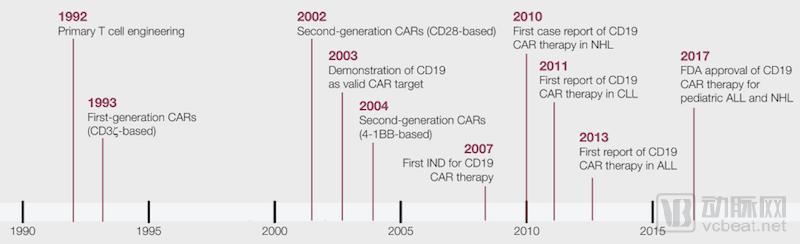
But we cannot help but ask: Does CAR-T therapy truly hold the promise of curing all cancers? Is this technology really worthy of the high expectations placed upon it? With severe side effects accompanying treatment and even deaths reported in certain clinical trials, is this technology truly ready? And are the exorbitant treatment costs really worth the price?
What Expectations Should We Have for This Technology in the Future, and What Essential Understandings Are Required?
What Exactly Is "Magical" Technology?
“CAR-T is both a cell therapy and a gene therapy as well as an immunotherapy. It is a new technology that completely deviates from traditional drug-based treatments,” said Michel Sadelain, co-founder of Juno Therapeutics.
T cells are a type of immune cell that can be regarded as soldiers within the immune system. When the human body’s immune system comes under attack, these soldiers are deployed to eliminate invading viruses, pathogens, and cancerous cells.
However, in addition to invading pathogenic microorganisms and diseased cells, the human body contains numerous normal cells. Immune cells do not operate with indiscriminate aggression; how do they distinguish between “healthy cells” and “harmful cells”?
Numerous antigens are present on the cell surface, serving as “secret codes” for intercellular communication. T cells rely on these “secret codes” to distinguish between self-cells and invaders.
However, tumor cells are a highly cunning group. When T cells approach to verify their identity, these cells employ various strategies to deceive T cells into recognizing them as “self,” thereby evading immune surveillance and attack. In the absence of T cell-mediated immunity, these immortalized tumor cells will proliferate indefinitely within the human body.
CAR-T cells are essentially a fusion of T cells and CARs (chimeric antigen receptors). The CAR component serves as the core element of CAR-T cells, endowing T cells with the ability to recognize tumor antigens. This is akin to equipping T cells with "fiery eyes" for enhanced detection.
With the assistance of CAR cells, the T-cell army will be significantly empowered.The new cells can recognize specific antibodies from tumor cells. Meanwhile, upon binding to tumor cells, the T cells within the CAR-T cells will be activated to launch a targeted attack against the tumor cells.
Second- and third-generation CAR-T cells also possess additional co-stimulatory domains, enabling more effective enhancement of the immune response.
Typically, the first step in CAR-T cell therapy is the extraction of the patient’s T cells, a process also known as leukapheresis. These T cells are genetically modified ex vivo to express chimeric antigen receptors (CARs) and then expanded in vitro. Finally, these engineered cells are reinfused into the patient’s body to combat tumor cells.
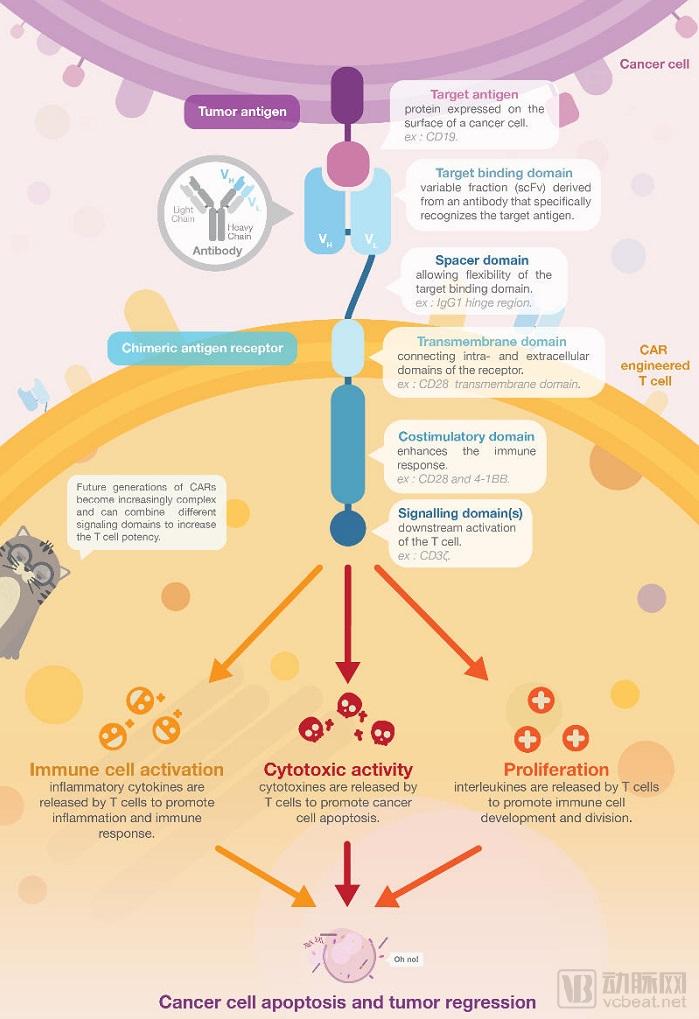
How CAR-T Turns the Tide
Checkpoint inhibitors based on immunotherapy have achieved success in cancer treatment. They enhance the cytotoxic effect of T cells against tumor cells by inhibiting tumor escape mechanisms. Meanwhile, CAR-T therapy, a form of cellular immunotherapy, further elevates the efficacy of T cell-mediated tumor cell killing by enhancing the immune system’s ability to recognize tumor antigens.
CAR-T therapy has demonstrated remarkably high response rates in clinical trials, showing efficacy in 94% of patients with severe tumors. This finding is particularly encouraging given that most participants enrolled in CAR-T clinical trials are those who have failed to respond to prior therapies. In terms of therapeutic efficacy, CAR-T has exceeded the expectations of both patients and investors. However, every coin has two sides, and CAR-T therapy is not without its drawbacks.
Cellectis CEO André Choulika revealed in an interview: “I must emphasize that CAR-T technology is not magic.”
Indeed, CAR-T cells can also cause serious side effects in the process of resisting tumors, such as neurotoxicity and cytokine release syndrome. In 2016, several companies reported a few cases of death in the late-stage clinical trials of CAR-T therapy. This made us realize that this technology is not as perfect as we imagined.
Currently, the vast majority of CAR-T therapies target CD19 on B cells. All leading companies’ CAR-T therapies are directed against CD19 and are primarily used in the treatment of B-cell malignancies, such as lymphoma and leukemia.
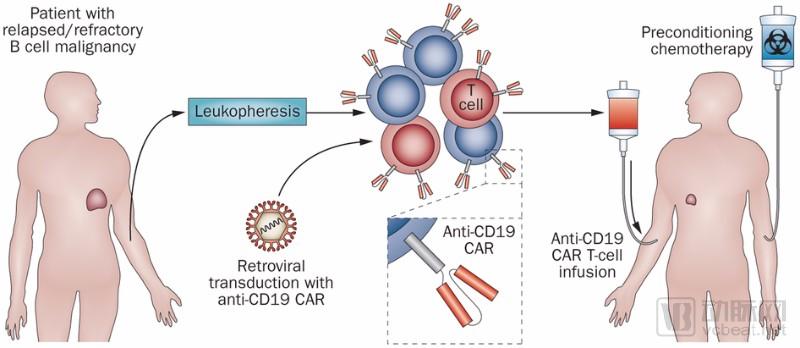
“The initial results were so promising that CD19 was rapidly developed and advanced into clinical trials,” said David Gilham, Vice President of R&D at Celyad. “However, this accelerated pace meant that robust preclinical models were lacking, and severe toxic side effects ultimately hindered further progress of the technology.” Fortunately, with the accumulation of sample sizes and continuous refinement in the study of underlying mechanisms, related methodologies are also being steadily improved.
Who Is Developing CAR-T?
Novus launched the first CAR-T therapy in August 2017, with the product named Kymriah. This therapy primarily targets acute B-cell lymphoblastic leukemia. In clinical trials, 83% of patients experienced disease remission after three months, all of whom had not responded to standard treatments.
However, alongside the therapeutic efficacy come toxic side effects, with 49% of patients experiencing severe cytokine release syndrome (CRS) during treatment. This adverse effect was also responsible for fatalities in clinical trials conducted by Novartis’s competitors. For instance, in March 2017, Juno Therapeutics had to terminate its trial after five patients died from cerebral edema, despite having been ahead of Novartis in development progress at the time.
Gilead was the second company to receive approval, gaining a first-mover advantage through its acquisition of Kite Pharma. Gilead’s therapy, called Yescarta, targets another type of blood cancer known as aggressive B-cell non-Hodgkin lymphoma. The therapy demonstrated a 72% response rate in clinical trials, but a total of three patients died from side effects during treatment.
Other companies currently conducting clinical trials include Juno, Celgene and Mustang Bio in the United States, Celyad in Belgium, and Sevier in France (which is collaborating with Pfizer).
How to Optimize CAR-T Therapy
Despite severe side effects and even fatalities in clinical trials, and despite ongoing debates over whether the risks of this therapy are justified, patients often have no alternative. On a positive note, some researchers are working to improve CAR-T cells to make the treatment safer.
Cellectis is one such company. This French firm has developed a CAR-T therapy called UCART19. Cellectis has entered into licensing agreements with Servier and Pfizer. The technology licensed by Cellectis features a switch-control system, whereby T cells are activated only upon administration of the drug rapamycin to patients. Under compassionate use provisions, the company successfully saved the lives of two children with aggressive leukemia, which subsequently led the therapy into Phase I clinical trials. Bellicum Pharmaceuticals, a U.S.-based company, is developing a similar technology known as GO-CAR-T, which requires the drug rimiducid to activate CAR-T cells.
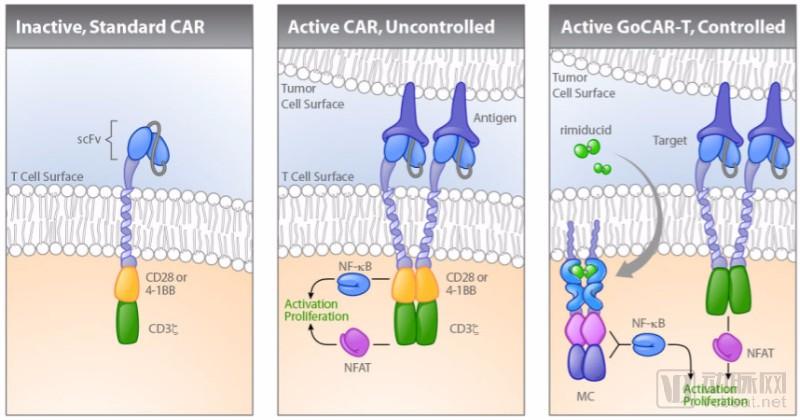
This is only a part of it; Celyad is developing a CAR-T technology that enables T cells to naturally kill target cells.
“This is groundbreaking, as NKR-2 binds to eight different ligands and can target more than 80% of solid tumors and hematologic malignancies,” said Christian Homsy, Co-founder and CEO of the company. “We are conducting the largest and most comprehensive trial in the industry, targeting a total of seven biomarkers.”
If successful, Celyad’s CAR-T cells will achieve a monumental feat in the history of human medicine. The treatment of solid tumors has long remained a challenge in the field of immuno-oncology. This is primarily due to the low infiltration of T cells into solid tumors and the ability of tumor cells to evade immune surveillance within the immunosuppressive tumor microenvironment.
Bluebird Bio is a partner of Scotland-based TC Pharma, which also possesses CAR-T technology applicable to the treatment of solid tumors. The company utilizes a specialized type of T cell known as γδ T cells. The remarkable feature of these cells lies in their ability to selectively target tumor cells without attacking healthy cells, thereby effectively reducing adverse reactions during treatment.
The above approach enhances safety by modulating T cells, while another strategy involves combining CAR-T cells with other types of immunotherapies. For instance, co-administration with immune checkpoint inhibitors can block tumor cell escape mechanisms from T-cell surveillance, thereby improving therapeutic efficacy and allowing for reduced dosing.
However, such an approach may further escalate treatment costs, as the prices of CAR-T therapy and immunosuppressants alone are prohibitively expensive.
Nevertheless, we should view this positively: as the technology matures, costs will inevitably decline. Thirty years ago, producing one gram of monoclonal antibodies or protein-based drugs could cost thousands of US dollars and was associated with significant side effects. Today, however, the production cost for one gram of monoclonal antibodies is only $100 to $200. By the same token, while the current cost and price of CAR-T therapy are high, from a technological development perspective, these costs will gradually decrease in the future.
Leveraging Allogeneic CAR-T Cells to Reduce Treatment Costs
The cost of CAR-T therapy has been a subject of ongoing market controversy. The two approved therapies are priced at $475,000 (Novartis) and $373,000, respectively, excluding other treatment-related expenses such as hospitalization and medications for adverse reactions. Experts estimate that when all costs are included, the total expenditure per patient could reach $1.5 million.
How to Reduce Costs? Allogeneic CAR-T Therapy Is Currently a Highly Anticipated Approach. This involves extracting T cells from healthy donors, enabling a more streamlined cell collection process and eliminating the costs associated with individualized harvesting from each patient.
Both Cellectis and Celyad are developing allogeneic CAR-T cell technologies, which has led to some friction between the two companies. Cellectis was the first to use two types of off-the-shelf CAR-T cells in clinical trials: one licensed to Servier and Pfizer, and the other an allogeneic cell product. In addition, Celyad’s allogeneic cell therapy remains in the preclinical stage, and the technology has been licensed to Novartis.
Such technology is faster and more cost-effective, but the development of off-the-shelf cell therapies remains “a scientific challenge.” Christian Homsy, CEO of Celyad, stated, “I am considering whether allogeneic CAR-T cells can become a true off-the-shelf therapy.” He added, “Immunology still faces many challenges to overcome, such as manufacturing, transportation, and storage, which must meet the standards and scale required for patient treatment.”
Even if scientists overcome certain technical challenges, this technology still faces regulatory requirements. As a completely novel technology, it is subject to significant variations in regulation across different countries.
Challenges are multifaceted, and the technology is clearly not perfect, but the advent of CAR-T therapy has offered new hope to many patients. With the first product entering the market, more products are expected to follow.
Cell therapy may become the next mainstream treatment modality, but the technical barriers to entry are exceptionally high. From another perspective, gene therapy, cell therapy, and antibody therapy have emerged as the three major technological pillars in recent years. Mastery of multiple technologies is essential to produce high-quality CAR-T cells. Therefore, for CAR-T companies to achieve long-term success, they must make substantial investments in building robust technical capabilities.