

Looking Back at China's Pharmaceutical Industry in 2017: Standing at the Dawn of a New Development Era
VCBeat (WeChat ID: vcbeat) has been committed to building a professional and rigorous content production system, aiming to empower our authors to become experts in their respective fields and consistently deliver forward-looking, in-depth insights to the industry. If our content can provide tangible assistance to practitioners or stimulate critical reflection on their business operations, it would represent the greatest affirmation of our media value.
Our journey began with an analysis of Spring Rain Doctor, a benchmark enterprise in the internet healthcare sector. To this day, our report on Spring Rain Doctor remains essential reading for new hires, designed to help them gain insight into the healthcare industry and learn methodologies for observation and validation.
In recent years, internet healthcare has undoubtedly been the most representative and high-profile sector within the industry. Over the past few years, companies such as Ping An Good Doctor and WeDoctor have successively announced their plans for initial public offerings (IPOs). From startup to listing, they have moved faster than any other company in the healthcare sector, experiencing rocket-like growth.
Throughout our continuous tracking of the development of internet healthcare, VCBeat has gradually established a comprehensive content system. We have assigned dedicated authors to specialize in fields such as internet healthcare, primary care, health tech, genomics, biotechnology, pharmaceuticals, and insurance, ensuring ongoing coverage of these sectors. Meanwhile, colleagues at VBInsight conduct more structured and systematic analyses of the industry, articulating their insights to transform “information” into “wisdom.”
2017 was a year of particular significance for many authors at VCBeat. It marked their first full calendar year taking root in their respective niche sectors. As their reporting deepened, they became increasingly familiar with the industry, positioning themselves closer to its core than anyone else and gaining deeper insights into the realities of healthcare enterprise operations and the essential nature of the sector.
The author focuses on the pharmaceutical sector, covering sub-sectors such as innovative drugs, chemical drugs, traditional Chinese medicine (TCM), pharmaceutical distribution, pharmaceutical retail, and “Internet + Healthcare.” Pharmaceuticals serve as the cornerstone of the healthcare industry and represent one of its most critical segments. As our engagement with the field deepens, we become increasingly aware of the gaps in our knowledge base and professional expertise. Fortunately, the platform and our readers have shown great tolerance, granting us the courage and motivation to learn, explore, and reflect, thereby transcending our own boundaries.
This year, we published 221 articles on the pharmaceutical and healthcare industry, totaling approximately 500,000 words. The articles covered various categories, including policy analysis, annual reviews, profiles of large corporations, features on startups, expert opinions, in-depth investigations, and news updates. Policy analysis serves as the foundation, annual reviews provide summaries, company profiles offer case studies, and expert opinions reflect critical thinking about the industry. Through this media lens, we have outlined our understanding and insights into the sector.
We are willing to put in the hard work, meticulously gathering materials, conducting interviews, polishing our prose, and crafting content, without seeking any shortcuts. We have no intention of reporting negative news merely to reap traffic benefits; nor do we seek speed at the expense of a comprehensive understanding of events; and we certainly do not engage in purposeful manipulation or offer unrealistic interpretations of the industry.
Over the past year, we have witnessed both the transformation and development of the industry, as well as the emerging opportunities and prevailing anxieties. The New Year is always an apt time for reflection and outlook. We have compiled VCBeat’s coverage of the pharmaceutical industry over the past year, categorized by policy, capital, and industrial innovation, serving as food for thought during this transition between the old and the new.
Policy: Reshaping the Landscape of the Pharmaceutical Industry
According to our incomplete statistics, in 2017, national and local regulatory authorities successively issued more than 2,000 policies and administrative orders related to the pharmaceutical industry. Among these, national-level authorities issued over 400 items, while local authorities issued more than 1,600. In terms of issuing bodies, the main publishers included the State Council, the Ministry of Human Resources and Social Security, the National Health and Family Planning Commission, and the China Food and Drug Administration. Other entities, such as the State Administration of Traditional Chinese Medicine and the Ministry of Industry and Information Technology, also participated in the formulation of certain policies.
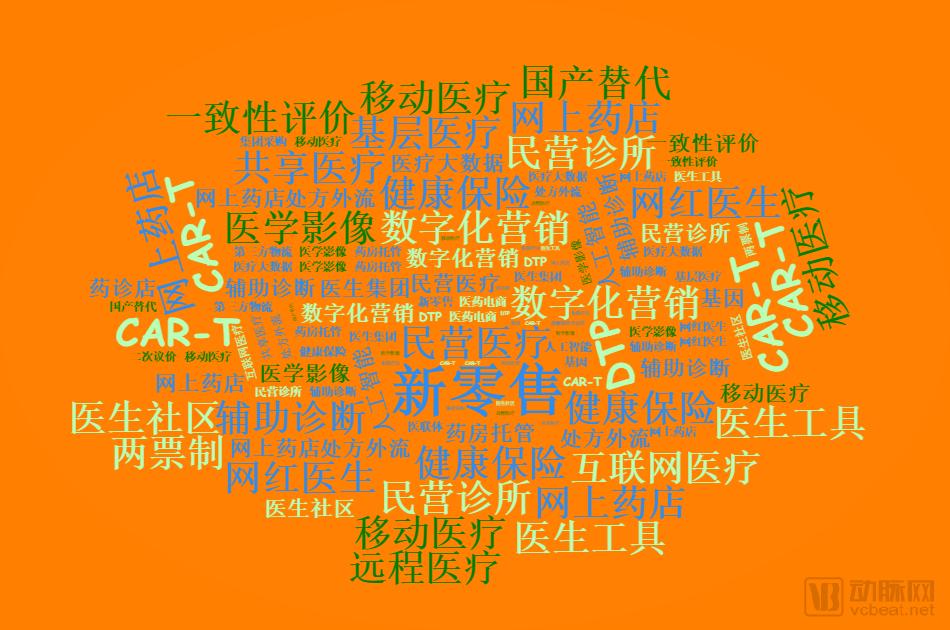
Categorized by upstream and downstream relationships within the industry chain, the sector generally follows a sequence encompassing drug R&D, manufacturing, distribution, and payment.
The focus of drug development is to encourage innovation, accelerate approval processes, and cultivate domestic capabilities in pharmaceutical R&D. On May 11, 2017, the China Food and Drug Administration (CFDA) simultaneously issued four policy documents aimed at fostering innovation in drugs and medical devices. These policies, which address new drug development, clinical trials, equity rights, and market approval procedures, are designed to promote innovation and guide the establishment of a comprehensive pathway from R&D to commercialization, exerting a profound impact on the industry.
The key focuses on the drug manufacturing side are the consistency evaluation and the Marketing Authorization Holder (MAH) system. Detailed regulations and supporting policies have been successively issued, including guidelines for waiving human bioequivalence studies, technical guidelines for evaluating drugs with changed specifications (oral solid dosage forms), and guidelines for on-site inspections, along with the determination of reference listed drugs and the expansion of clinical trial institutions. These supporting policies have bolstered companies’ confidence in advancing consistency evaluations, enhancing both the certainty and operability of the process. The MAH system offers significant benefits to drug innovation, the allocation of pharmaceutical production resources, and drug quality.
In pharmaceutical distribution, the “Two-Invoice System” is an absolute priority. By year-end, 29 provinces, municipalities, and autonomous regions across China had officially entered the implementation phase of the Two-Invoice System, with progress significantly exceeding policy expectations. The combination of “VAT Reform, the Two-Invoice System, and Distribution Rectification” helps combat gray-market practices such as invoice flipping and resale in pharmaceutical distribution, thereby enhancing industry transparency.
In terms of medical payment, on February 21, 2017, the Ministry of Human Resources and Social Security released the new edition of the "National Reimbursement Drug List" (NRDL), marking the fourth adjustment to the NRDL since the establishment of the basic medical insurance system, eight years after the previous adjustment. By the end of the year, 20 provinces and autonomous regions across China had publicly announced their local adjustment plans for the new NRDL or implemented the national version. Comprehensive reforms of payment methods were deepened, and intelligent monitoring of medical insurance was promoted, transitioning from a global budget-based model toward capitation and diagnosis-related group (DRG) payment systems.
On June 1, 2017, the China Food and Drug Administration (CFDA) officially became a member of the International Council for Harmonisation of Technical Requirements for Pharmaceuticals for Human Use (ICH). This is undoubtedly one of the most milestone events in the pharmaceutical industry, signifying that China’s drug regulatory system has truly integrated into the internationally recognized regulatory framework.
We believe that the core logic of the policy can be summarized as “supply-side reform in the pharmaceutical sector.” Specifically, through policy guidance, it aims to gradually raise entry barriers for the pharmaceutical industry, improve the quality of pharmaceutical product supply, accelerate market-driven selection and elimination, promote industrial optimization, and reshape the industry landscape.
Capital: Cultivating Unicorns and the M&A Integration Engine
Investment and mergers and acquisitions (M&A) are the two most important ways for capital to participate in industrial operations. The former represents expectations for the future performance of high-growth companies, while the latter signifies recognition of the target company's past performance.
In 2017, investment and financing activities in the healthcare sector remained robust. A total of 333 deals were completed throughout the year, involving a total amount of RMB 37.714 billion.
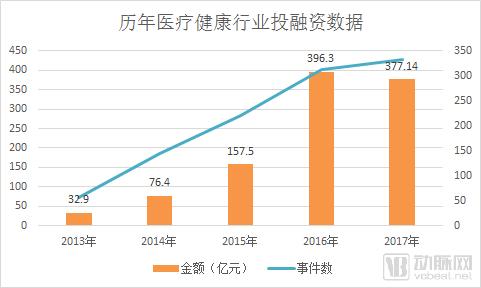
The above presents the investment and financing data for the entire healthcare industry. Specifically, in the pharmaceutical subsector, there were 103 investment transactions completed throughout the year, involving a total amount of approximately RMB 14.7 billion, based on incomplete statistics. In terms of both the number of deals and the total investment amount, the pharmaceutical subsector accounted for roughly one-third of the overall investment and financing activity in the healthcare industry.
In 2017, numerous innovative pharmaceutical companies secured substantial financing rounds, including I-Mab Biopharma (Series B, $150 million), Ascletis Pharma (Series B, $100 million), Changfeng Pharmaceutical (Series D, RMB 440 million), and Eddingpharm (Series B, RMB 400 million). Among the top twenty largest financing deals in the pharmaceutical sector, 17 involved drug research and development or service companies, while three were “new retail” pharmaceutical companies: Jianke Health (Series A+, $50 million), Sinopharm Online (Series A, RMB 120 million), and Kuaifang Medicine Delivery (strategic investment, RMB 60 million).
Two conclusions can be drawn from investment and financing data in the pharmaceutical industry: First, investment enthusiasm in the sector is cooling down, with capital returning to rationality after several years of high growth. Second, companies with a “moat” are more likely to attract sustained attention; capital has shifted from broadly betting on specific tracks to targeting high-quality assets, making across-the-board bets increasingly rare. Companies that have stood the test of time are more favored by investors—significant funding rounds have gone exclusively to Series B and later-stage enterprises. Capital now prefers to continuously nurture and catalyze industry “unicorns” rather than widely participate in the market validation processes of early-stage startups.
Next, let's look at the M&A data: in 2017, there were 374 mergers and acquisitions completed in the healthcare industry, involving a total amount of 157.94 billion yuan.
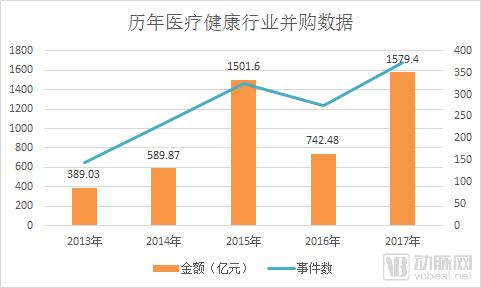
Mergers and acquisitions are driven by the goal of consolidating industry resources, occurring predominantly in the pharmaceutical distribution and pharmaceutical retail sectors. The former is influenced by policy-driven disruptions to the industry, while the latter reflects optimism about the future prospects of pharmaceutical retail, aiming to rapidly expand market share, secure consumer touchpoints, and position for future asset securitization.
Taking mergers and acquisitions (M&A) and integration in the pharmaceutical retail industry as an example, VCBeat statistics show that in 2017, investors such as Hillhouse Capital, Quanyi Health (Backed by CDH Investments), Huatai-affiliated capital, and GPC Baiyunshan participated in the M&A of retail pharmacies. Thousands of pharmacies have been integrated, and this process is ongoing. With capital support, the future landscape of China’s pharmaceutical retail sector will be characterized by a few national enterprises alongside regional leaders, with mutual checks and balances between national giants and regional frontrunners.
Industry Innovation: The Intrinsic Driving Force
Policy support and capital infusion are external factors for any individual company. The most critical driver for a company to sustain long-term, healthy growth is its own innovation.
The most closely watched innovation in the pharmaceutical sector in 2017 was “New Retail in Pharmaceuticals,” a term derived from “New Retail.” It refers to leveraging new technologies to fully tap into consumers’ purchasing potential or to provide users with more meticulous and thoughtful product and service offerings.
“The New Retail of Pharmaceuticals” is typified by the rise of online-to-offline (O2O) medicine delivery services. Renhe Pharmaceutical has incubated Dingdang Kuaiyao, Buchang Pharma has invested in Kuaifang Songyao, and platforms such as AliHealth, JD Daojia, Meituan, and Ele.me are all implementing home delivery of medications. Home delivery serves as the foundational offering of the new retail model in the pharmaceutical sector. Beyond “home delivery,” there is also “in-store” service. The integration of “in-store” and “home delivery” creates more consumer scenarios and enables the collection of richer user data. Data constitutes the core value of the “New Retail of Pharmaceuticals.”
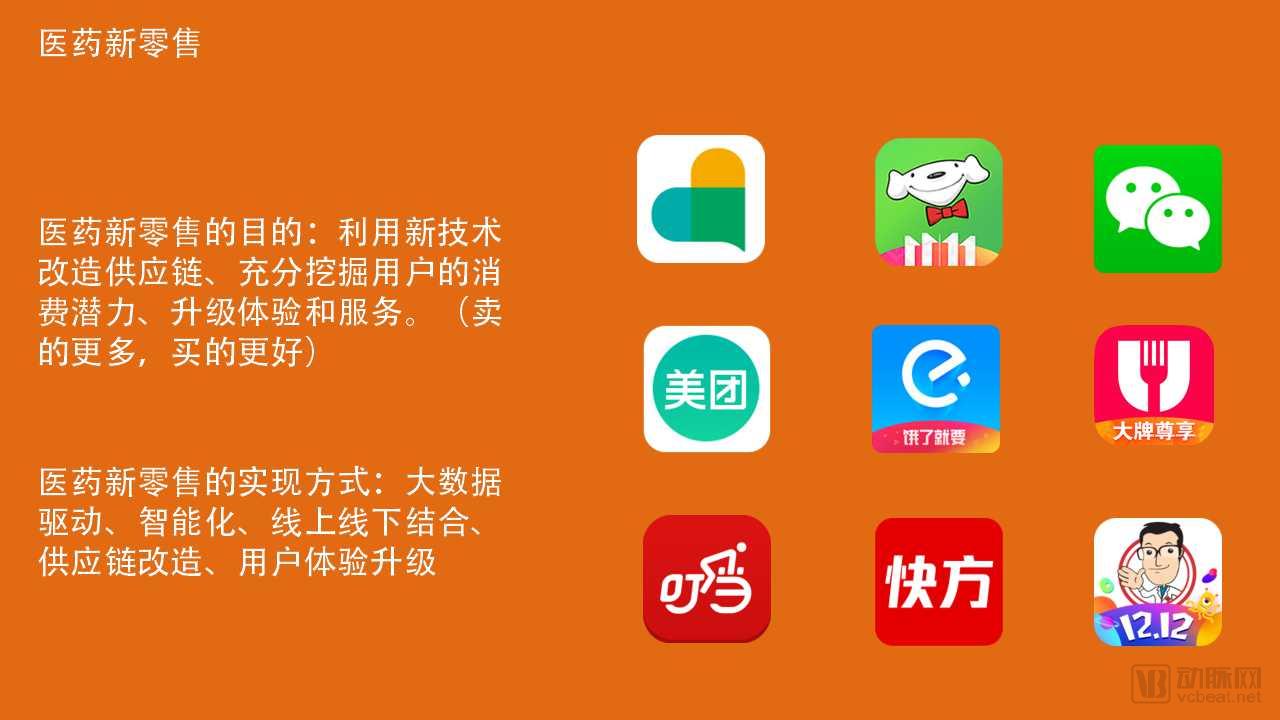
Centered on "new retail in pharmaceuticals," pharmaceutical manufacturers see new channels to reach patients, pharmaceutical distributors recognize evolving distribution demands, and pharmacy retailers identify value in new business models. As out-of-hospital channels gain increasing attention from pharmaceutical companies, new retail in pharmaceuticals has opened a new avenue for value creation within the industry.
Another key term is “integration,” a concept exemplified by internet-plus pharmaceutical enterprises. In recent years, online pharmacies have experienced rampant growth within ambiguous regulatory boundaries, with some companies achieving annual growth rates exceeding 100%. However, the 2017 policies on internet-based healthcare and the restrictive regulations concerning the online sale of prescription drugs have compelled internet-plus pharmaceutical companies to reevaluate their strategies and adjust their business operations in pursuit of more sustainable and healthy development.
Thus, we observe that various players are striving to build “closed-loop” business models. Whether through one-stop services for diagnosis, treatment, and medication, or comprehensive health management solutions, the aim is to retain users within a sufficiently secure boundary and expand broader commercial possibilities.
Industrial innovation also includes third-party logistics entering the pharmaceutical distribution sector, pharmaceutical supply chain finance, prescription-sharing platforms, and the integration of commercial insurance with pharmaceutical retail. How these nascent innovative companies will influence the future trajectory of the pharmaceutical industry remains to be seen. Nevertheless, their emergence has undoubtedly introduced new perspectives to the industry.
Other noteworthy developments include the entry of “national teams,” such as the national team for health and medical big data, the national artificial intelligence platform, and government-guided funds participating in industrial investment.
Cross-border M&A and the initiation of global R&D collaborations by Chinese innovative pharmaceutical companies are also commendable. The former involves acquiring high-quality overseas pharmaceutical resources and distribution channels through capital investment, while the latter signifies that the innovation capabilities of Chinese pharmaceutical enterprises have gained global recognition. Notable examples include the large-scale overseas investments and acquisitions undertaken by Fosun Pharma and Sanpower Group, as well as the out-licensing of innovative drugs by GenScript Biotech and BeiGene to foreign pharmaceutical companies for global market development.
As China’s pharmaceutical innovation ecosystem matures, a large number of overseas biotechnology professionals have returned to launch startups, rapidly gaining capital recognition with their technological advantages and global perspective. China is now accelerating onto the fast track of new drug development.
The above is our review of the pharmaceutical industry coverage in 2017. From a media perspective, it was a year of rapid change. Amidst these changes, there were continuations of trends from previous years as well as new developments and emerging opportunities. The combination of these factors suggests that 2017 may have marked a brand-new starting point for the pharmaceutical industry. In other words, we may be standing at a new pivotal node in the industry's development.
The healthcare industry is often referred to as the “perpetual sunrise industry.” Its foundational purpose is to alleviate suffering for patients and empower individuals to lead healthier lives, reflecting the sector’s profound sense of responsibility and mission.
For such a specialized industry, it is essential to document its development and amplify its voice. As newcomers to the field, we remain committed to continuous learning and in-depth understanding, embracing the unknown and challenges alongside the industry.
Pharmaceutical Industry Overview
Summary of China’s 2017 Policies on Healthcare, Pharmaceuticals, and Medical Insurance: A Comprehensive Analysis of Policy Directions and Regulatory Logic [2017 Year-End Review]
http://vcbeat.top/OTBlODg0NWEzZTJlNTk3YmZjZGVkYjMxMmFlMmU1N2U=
Pharmaceutical E-commerce: Online Sales of Prescription Drugs Hit the “Brakes,” “E-commerce + Healthcare” Model Rises, and Prescription Outflow Becomes a New Growth Point [2017 Year-End Review]
http://vcbeat.top/YWNlNTg1NTIyMWMyYTA0ZmYyNTFiZWRkZTY4MmE3MDc=
Pharmaceutical E-commerce: Online Sales of Prescription Drugs Hit the “Emergency Brake” as the “E-commerce + Healthcare” Model Rises; Prescription Outflow Emerges as a New Growth Point [2017 Year-End Review]
http://vcbeat.top/YWNlNTg1NTIyMWMyYTA0ZmYyNTFiZWRkZTY4MmE3MDc=
Pharmaceutical Industry: In 2017, Several Major Policies Were Implemented, Driving Strong Industrial Growth and Emphasizing Value Discovery in Investment and M&A [2017 Year-End Review]
http://vcbeat.top/ZWEzOWYxYjgyYTA1MWViMzMyMzcwYjYzNjA3M2QyNjI=
Commercial Health Insurance: Accelerating Efforts to Secure Licenses, Launch Products, Expand Channels, and Engage in Healthcare Services; Full-Year Market Size to Exceed RMB 400 Billion [2017 Year-End Review]
http://vcbeat.top/MjQ3YjVlOGY5NjE2NzBmZWJhOGFjYjJmMmNjZjUwMjg=