

Medical Imaging Industry Trends under the Belt and Road Initiative: Insights from Beijing Hospital Leaders and Innovators
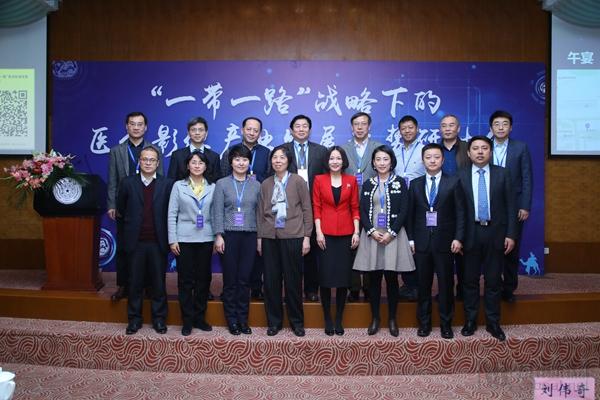
VCBeat has learned that the Seminar on Development Trends of the Medical Imaging Industry under the “Belt and Road” Initiative was successfully held recently at the Reception Hall of the Main Building of Tsinghua University. The event was jointly organized by the Center for Research on Chinese Enterprise Globalization at the School of Economics and Management, Tsinghua University, and Tongxin Yilian Technology (Beijing) Co., Ltd. Centered on the theme of development trends in the medical imaging industry under the “Belt and Road” Initiative, the seminar aimed to clarify the current state of the industry, share insights on the impact of relevant policies, and explore future opportunities and challenges through discussions from both medical professional and market investment perspectives.
The conference invited many well-known experts and directors in the field of medical imaging in China, including Professor Yang Li, former Director of the Department of Radiology at the Chinese PLA General Hospital, and Professor Zheng Zhuozhao, Director of the Department of Radiology at Tsinghua Changgung Hospital, to jointly participate in lectures and discussions on the medical professional aspects.
Following healthcare reform and fee reductions, workload has increased while profits have declined.
All parties simultaneously stated,Following healthcare reforms aimed at reducing costs, radiology departments in public hospitals have experienced varying degrees of increased workloads and declining profits, with long wait times becoming the norm.. At the same time, we look forward to the emergence of third-party imaging centers and artificial intelligence in the future.
Professor Yang Li, former Director of the Department of Radiology at the Chinese PLA General Hospital, stated that the establishment of third-party imaging centers would significantly assist public hospitals in disease management for high-risk populations.When referring patients to third-party imaging centers, factors such as convenience of access, advanced equipment, and improved diagnostic accuracy must be considered by both physicians and patients, as well as by investors and operational management.. He believes that imaging centers can build high-caliber physician teams by collaborating with accredited teaching hospitals and standardized residency training institutions.
Professor Zheng Zhuozhao, Director of the Department of Radiology at Beijing Tsinghua Changgung Hospital, stated,The impact of healthcare reform policies on the radiology departments of large public hospitals has been minimal, owing to the government's dual support for these institutions through subsidies for major medical equipment and medical service fees.;This will have a significant impact on some small public hospitals and certain non-profit private institutions,Because profits cannot cover operating costs when examination volumes are insufficient.
He believes that radiology departments in large public hospitals will trend toward expansion due to rising workloads, so small or private medical institutions need to consider how to attract patients. Professor Zheng stated,The development of teleradiology and cloud-based platforms represents a major direction for the advancement of medical imaging. Currently, the most effective model for telemedicine is the government-led Medical Consortium. However, challenges persist outside this framework, including reimbursement models for telemedicine, the implementation of multi-site practice privileges, integration with subsequent clinical care, and patient privacy protection.
Professor Yuan Huishu, Director of the Department of Radiology at Peking University Third Hospital, believes that the management of imaging departments in public hospitals should focus more on optimization and improvement, with the aim of enhancing management quality through more robust institutional frameworks.It was also pointed out that the current examination volume at the Third Hospital has reached saturation, with no significant change in volume following healthcare reforms. Professor Yuan further stated that for radiologists, the development of third-party imaging services offers opportunities for multi-site practice and better career prospects.
Professor Yu Wei, Deputy Director of the Department of Radiology at Beijing Anzhen Hospital, particularly emphasized the complementary role of third-party imaging centers to current Grade A tertiary hospitals in first-tier cities. She also stated that if future artificial intelligence in imaging could provide basic analysis for physicians, it would significantly improve their diagnostic efficiency.
Dr. Li Yongzhong, Director of the Department of Radiology at Beijing United Family Hospital, stated that, as a provider of high-end medical services, United Family HospitalReducing examination fees will not have an adverse impact; instead, greater efforts should be directed toward enhancing medical standards and service quality.
Director Ma Xuesheng, who manages one of the few chain imaging centers in China, stated that private capital or third-party imaging centers should place greater emphasis on service and management quality following healthcare reforms, and introduce more specialized examination items to retain patients. He also noted that Tongxin Medical Alliance ensures report quality through the multi-site practice of radiologists from Grade 3A hospitals, thereby establishing solid trust between doctors and patients.
When discussing the relationship between public medical institutions and third-party medical services, Dr. Ye Erqiang, former Vice President of Yuquan Hospital of Tsinghua University, former Director of the Department of General Surgery, and Chief Physician, summarized as follows:Medical institutions within an imaging medical consortium should foster a relationship of cooperation and complementarity, rather than competition.。
At the symposium, Liu Weiqi, Founder and CEO of Tongxin Yilian Technology (Beijing) Co., Ltd., the event organizer, stated in his speech: “For Tongxin Yilian, which currently collaborates with over 200 imaging centers and serves more than 200,000 patients, our positioning is that of an open and collaborative imaging medical consortium. On one hand, we partner with institutions that have idle resources and are willing to share their capabilities to jointly build medical consortia; on the other hand, we establish and operate a portion of our own imaging centers. Both approaches leverage an imaging cloud platform to achieve standardized, large-scale operations of medical services.”
Mr. Liu Weiqi believes that the service model for medical imaging must align with China’s national conditions, and that fully adopting the American approach is not advisable. He pointed out that,For Chinese enterprises providing third-party medical imaging services, sustained growth and development require overcoming seven key factors: funding, licensing, geographic location, healthcare personnel resources, payer support, quality of medical services and user experience, and the establishment of a low-cost, high-efficiency operational system.. He believes that in the future, large hospitals will focus more on managing complex and difficult cases, while a significant volume of primary care conditions will be handled by grassroots medical institutions. At that time, private enterprises will have greater opportunities to participate in the medical imaging market.
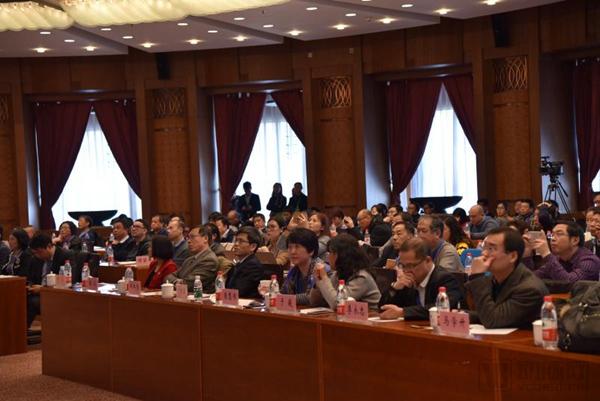
Investors Say
In addition, the market investment session featured presentations and discussions by Mr. Liu Fan and Ms. Wu Xia, Partners at CICC Kangrui; Mr. Xing Cheng, Investment Director at Legend Capital; Mr. Li Ming, Partner at Legend Star; and Mr. He Rongfeng, General Manager of Zhongguancun Technology Leasing Co., Ltd.
There is widespread optimism regarding investments in third-party medical services, with the necessity of independent imaging centers being acknowledged from various perspectives.
Liu Fan, Partner at Zhongjin Kangrui, Shared His Views on Trends in the Medical and Health Industry:Given the current deficits in the public health insurance fund, commercial insurance will become another vital lifeline for hospitals alongside government-sponsored medical insurance. Unlike critical illness insurance, future commercial coverage should be more comprehensive and closer to indemnity-based insurance. In terms of payment models, insurers should also move toward diagnosis-related group (DRG) payments and value-based or outcome-based reimbursement.。
In comparing the domestic service market share, it was noted that although the number of privately run medical institutions has surpassed that of public ones, their share of service volume stands at only 18%, falling short of government expectations. In particular, the excessively high outpatient volumes at public tertiary hospitals far exceed their intended role in treating complex and critical conditions.
Third-party medical services are indeed a practical solution to resource allocation, while also encouraging third-party service providers like Tongxin Medical Alliance to offer more external services that large hospitals are unable to provide.
When discussing the essence of healthcare, he argued that future medical practice will increasingly prioritize health prevention. Leveraging information technology platforms to deliver standardized services to patients and implement tiered diagnosis and treatment will constitute the future model of healthcare delivery. He specifically highlighted Kaiser Permanente,Kaiser Permanente has established a medical consortium model akin to China’s tertiary hospital alliances by integrating physician organizations, hospitals, and health insurers, thereby reducing total healthcare expenditures through comprehensive health management for its members.
During the discussion session, Ms. Wu Xia stated that while it is essential for China’s healthcare industry to learn from advanced U.S. technologies, its business models must incorporate Chinese characteristics.
Mr. Xing Cheng, Investment Director at Legend Capital, pointed out in the discussion that often only third-party chain service providers have the opportunity to make systematic arrangements, achieve balanced resource allocation, and develop business barriers.
Partner at Legend StarMr. Li Ming likens companies that currently employ complexity coordination methods, similar to Tongxin Medical Consortium, to triathlons, arguing that only by securing multiple resources—such as being technology-intensive and capital-intensive—can industry consolidation be achieved.。
Mr. He Rongfeng, General Manager of Zhongguancun Science and Technology Leasing Co., Ltd., shared his insights on project selection, emphasizing that he prioritizes business models, industry standards, and platforms. Medical imaging companies must foster synergies with upstream and downstream players in the industrial chain during their development, thereby enhancing the efficiency of asset allocation, asset turnover, and operations. Meanwhile, these enterprises must also possess sufficient capital, resources, and technological capabilities. Only companies that combine operational efficiency with diverse resource capabilities have the potential to become unicorns in the healthcare services industry.
This seminar explored and discussed the development of the medical imaging industry from both medical and market perspectives. In summary, third-party medical services, including medical imaging, are inevitably an emerging force in the future of the healthcare industry. Meanwhile, the challenges arising during industry development also warrant deep reflection.