

Beijing Tiantan Hospital Neurological Disorders Specialty Alliance: A Non-administrative, Non-profit Collaborative Network of Over 300 Hospitals
During this year’s “Two Sessions,” many new models for establishing medical consortiums were proposed. For instance, Li Weimin, President of West China Hospital, proposed the establishment of a “chimeric medical consortium,” while Gu Jin, President of Peking University Shougang Hospital, advocated for building tightly integrated medical consortiums. In light of these developments, what are the distinctive features of the specialty alliance model adopted by Beijing Tiantan Hospital?
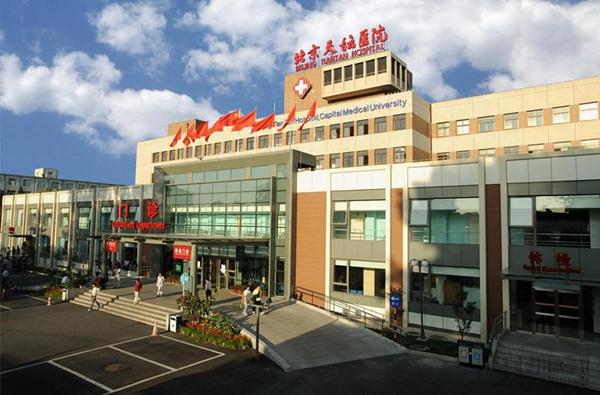
Beijing Tiantan Hospital is currently one of the largest diagnosis and treatment centers for nervous system diseases in the world, and it is also the only National Clinical Medical Research Center for Neurological Diseases in China. The hospital boasts strong scientific research capabilities; in the 2017 Chinese Hospital Science and Technology Influence Ranking released by the Chinese Academy of Medical Sciences at the end of 2017, both neurology and neurosurgery ranked first nationwide.
On April 23, 2017, the General Office of the State Council issued the Guiding Opinions on Promoting the Construction and Development of Medical Consortia, deploying comprehensive efforts to strengthen the development of medical consortia. On June 22, 2017, led by Beijing Tiantan Hospital, the Tiantan Neurological Disease Specialty Alliance (hereinafter referred to as the “Specialty Alliance”) was officially established at the China National Convention Center in Beijing, marking a pioneering initiative. More than 80 large public tertiary Grade-A hospitals across China became the founding member units of the Specialty Alliance.
Following the convening of the China Clinical Neuroscience Summit (CNS) and the awarding ceremony for the second batch of member units of the Tiantan Neurological Diseases Specialist Alliance at the new campus of Beijing Tiantan Hospital on January 19–20, 2018, the Specialist Alliance has now attracted more than 300 tertiary hospitals with strengths in neurology across China. Its network covers all 31 provinces, municipalities, and autonomous regions in mainland China, excluding Hong Kong, Macao, and Taiwan.
According to VCBeat (WeChat ID: vcbeat), the “Specialty Alliance” integrates medical resources and is committed to sharing expertise, clinical practice, research, and teaching resources. By establishing unified technical standards, clinical pathways, diagnostic and treatment protocols, service concepts, and management models, the Alliance aims to comprehensively elevate the prevention, diagnosis, and treatment of neurological diseases in China. The goal is to enable the majority of patients with neurological disorders across the country to access medical services meeting the “Tiantan Standard” close to home.
So, how is the specialist alliance operating? How many people have been served? What are the future plans? With these questions in mind, VCBeat had a discussion with Ren Tianhua, Director of the International Medical Department at Beijing Tiantan Hospital.
According to Ren Tianhua, the Neurology Specialty Alliance of Beijing Tiantan Hospital is being advanced as follows:First, establish the framework of the specialty alliance., member institutions will be recruited in phases from public tertiary hospitals across China at the national, provincial, and prefectural levels. The initial cohort will target large public Grade 3A hospitals at the provincial level, which must serve as regional medical centers in their respective areas and possess significant influence in neurology locally, with the aim of establishing provincial-level regional medical centers for neurology.
The selection of the second batch of member units focused primarily on key prefecture-level public tertiary hospitals., with the aim of enhancing the neurological disciplines in these prefecture-level hospitals and strengthening grassroots specialty development, thereby establishing a nationwide three-tier neurology network structured as National Centers–Regional Centers–Local Centers. Currently, the three-tier framework of the Specialty Alliance has been basically established.
Second, establish an expert system for the specialty alliance,This represents both a highlight and a key focus of our work. We have selectively recruited experts from member institutions of the alliance to join the Specialist Alliance Expert Pool. Currently, approximately 1,000 experts are participating in the Specialist Alliance, with 800 having been formally selected. Our goal is to establish an alliance expert resource pool comprising 3,000 experts. This will be the first nationally renowned expert database specializing in clinical research on neurological diseases, and it will be made accessible via the internet to medical institutions at all levels across China.
Although medical consortiums have garnered significant hype, the key lies in effective implementation. “Building platforms, laying foundations, and sharing resources” serves as both the philosophy and the action guide for this specialty alliance.
In simple terms, Beijing Tiantan Hospital has established an expert database and developed innovative models for telemedicine and remote teaching to facilitate two-way referrals among alliance hospitals. By promoting clinical pathways, the hospital has enriched the content of the specialty alliance, enabling all member institutions to share in these achievements.
Following the establishment of the specialty alliance, efforts will be focused on strengthening departmental capabilities within member hospitals, progressively achieving homogeneous management of medical quality, and developing a cohort of neurology specialties adhering to the “Tiantan Standard.” This initiative aims to divert patients with common diseases, chronic conditions, and those seeking initial consultations to primary care institutions, thereby alleviating patient concentration in Beijing and other major centers, enabling residents to access medical services closer to home, and reducing the disease burden.
Zhou Jianxin, Vice President of Beijing Tiantan Hospital, introduced that in the future, member units of the specialty alliance will not only have priority access to participate in such high-level academic activities but will also receive support from Beijing Tiantan HospitalComprehensive support spanning technical assistance, talent development, discipline construction, and research guidance.Furthermore, patients across hospitals within the alliance can schedule appointments at any partner institution, and medical records, key imaging data, and other relevant information can be transmitted during patient referrals.
In terms of talent development, Beijing Tiantan Hospital achieves this through remote teaching. They offer both static PPT courseware and dynamic video courseware, categorized into real-time live streaming and on-site live broadcasting. The Departments of Neurology and Neurosurgery conduct a comprehensive ward round once a week. These rounds are highly valuable as they involve real-world cases. Discussions cover the entire spectrum, from analyzing the etiology of patients’ conditions to live-streamed ward rounds and consultation sessions. Should other hospitals require such educational materials, Beijing Tiantan Hospital also provides customized courseware tailored to their needs.
In the future, remote video-based teaching will also leverage various tools. For instance, many neurosurgeons wish to observe Director Zhang Junting, known as “Asia’s First Scalpel,” performing surgeries; however, operating room space is limited. If Director Zhang were to wear Google Glass during a procedure, it would enable live streaming of the surgery, allowing viewers anywhere with internet access to watch his operations in real time, thereby greatly expanding accessibility for educational purposes.
In the operation of specialized medical consortia, Beijing Tiantan Hospital’s model features innovative telemedicine.
As is well known, traditional telemedicine has been practiced in China for over two decades. The typical operational model involves conducting consultations in a dedicated consultation room, providing point-to-point assistance to hospitals and patients in addressing medical conditions. Prior to the attending physician entering the consultation room, it is necessary to call specialists at tertiary hospitals to schedule an appointment. If the selected specialist is unavailable, an alternative specialist must be chosen, thereby connecting two individuals located in different places and time zones in real time.
This creates significant inconvenience for both hospitals and patients, as it is difficult and impractical to schedule appointments with specialists at tertiary hospitals. Truly practical and flexible telemedicine should provide on-demand access to online specialists, rather than requiring a separate call for each consultation.
According to Ren Tianhua, “The traditional approach to establishing a remote consultation center involves a healthcare institution adopting third-party hardware or software solutions. In contrast, the telemedicine system we have co-developed with WeDoctor Group is a tailored, personalized product. Specifically, we provide the concepts, creativity, and design, while WeDoctor Group handles the technical development.”
The reason for choosing to partner with WeDoctor Group is that they not only provide technology but also have experience in operating specialty alliances. In the past, the traditional medical consortium service model had resources from expert teams but lacked operational support from management teams, which was not conducive to the implementation of specialty alliances.
This system makes telemedicine accessible for routine outpatient care and widely available to the general public, enabling specialists from tertiary hospitals to provide consultations anytime and anywhere. Leveraging internet-based tools, it allows specialists at both tertiary and primary/secondary hospitals to communicate seamlessly using just a smartphone or computer. Similar to traditional outpatient visits, patients can book appointments with specialists in advance, who then conduct consultations at scheduled times without needing to travel—they can see patients directly from their own clinics or offices. Consequently, tertiary hospitals can pre-schedule specialist shifts and release appointment slots, facilitating advance booking and online payment for consultations. Upon completion of the consultation, results are immediately transmitted back to the specialists at lower-tier hospitals, thereby establishing a complete diagnostic and treatment chain.
As the specialist alliance is a hospital-based consortium operating on a B2B rather than a B2C model, this innovative approach to remote outpatient consultations has significantly enhanced interactivity among member hospitals.
Following the establishment of the specialty alliance platform, we plan to solidify and enhance regional demonstration projects this year. We will initially select approximately 10 provincial-level and prefecture-level hospitals to facilitate the implementation of the three-tier structure of the specialty alliance.
Regarding payment, the conditions typically requiring telemedicine consultations are complex or difficult-to-treat diseases, rather than common cases. Although some hospitals’ basic medical insurance schemes offer limited support, the reimbursement amount is determined by local policies. For instance, while one hospital may allow a reimbursement of 200 yuan for telemedicine services, another may cover only 50 yuan. Even so, these amounts are far from sufficient to cover the costs of telemedicine. Therefore, the primary payer should be commercial insurance rather than basic medical insurance.
In 2018, the hospital will relocate to a new site on the South Fourth Ring Road in Beijing, with its land area expanding to 181,600 square meters. The building area will reach 352,300 square meters, four times that of the old campus. After the relocation, advanced facilities and equipment such as 7T ultra-high-field magnetic resonance imaging (MRI), molecular imaging PET-MRI, and supercomputers will be introduced. Research platforms including the Neuroimaging Research Center, Clinical Trial Center, Basic and Translational Medicine Center, Monogenic Diseases and Precision Medicine Center, Multi-omics Experimental Center, and Lipidomics and Atherosclerosis Research Center will be established. Significant improvements and enhancements in both research environment and hardware infrastructure will create favorable conditions for building a national clinical neuroscience innovation center.
The specialized medical alliance established this time aims to build six centers: a Medical Consultation Center, an Expert Management Center, an Education and Training Center, a Data Quality Control Center, a Clinical Guidance Center, and an Operations Management Center; and to realize four functions: remote consultation, two-way referral, remote teaching, and the promotion of clinical pathways.
As Beijing Tiantan Hospital accumulates patient data to a significant extent, these data are organized in the following manner: first, offline data are leveraged to support online remote medical consultations. For instance, an analysis of patient origins over the past five years reveals that 90% of patients at Tiantan Hospital are from outside Beijing. The data identify which regions contribute the highest number of patients, with Heilongjiang, Inner Mongolia, and Shanxi being the top sources. Consequently, future efforts will prioritize strengthening specialized medical alliances in these key regions.
Next is the categorization of diseases. For instance, by selecting patients from Heilongjiang Province who came for diagnosis and treatment, we can analyze whether they suffer more from cerebrovascular diseases or brain tumors. This analysis will further guide the specialized alliance hospitals in that region to strengthen the development of relevant disciplines.
Finally, it lays the foundation for future deployment of AI-assisted diagnosis. According to Ren Tianhua, the framework is primarily built around four key aspects:
First: The Specialty Alliance Platform is not only open to experts from member institutions within the alliance, but also serves as an online medical service platform accessible via a mobile app to patients with neurological disorders across China.The “AI-Based Tiered Diagnosis and Treatment System for Neurological Disorders” we have developed will fully leverage data from alliance hospitals, including their licensed practice locations, specialty strengths, and expert resources. By utilizing the alliance platform’s patient referral and triage capabilities, the system provides patients with precise recommendations for appropriate hospitals, specialized departments, and suitable experts. It also enables timely and accurate matching with guiding experts from National Medical Centers and Beijing Tiantan Hospital, thereby achieving intelligent triage, patient guidance, consultation, and management functions for the Neurology Specialty Alliance.
Second, leverage big clinical healthcare data to build a clinical decision support system for neurology.Tiantan Hospital possesses China’s largest clinical dataset for cerebrovascular diseases and brain tumors. The specialist alliance comprises 300 hospitals, each maintaining its own independent clinical data on neurological disorders. However, these fragmented datasets lack unified standards and structure, limiting their value for development.
However, for the Specialty Alliance, these are excellent data. Because they have been cleaned according to Standard Operating Procedures (SOPs), with each disease managed and collected in accordance with established standards, the resulting clinical data is of very high quality, enabling standardization and structuring. Therefore, the Specialty Alliance can facilitate the construction of our clinical databases for cerebrovascular diseases, brain tumors, and other neurological disorders, which will be highly valuable for the future development of Clinical Decision Support Systems (CDSS) for neurological diseases.
Third, establish an AI-based pathology diagnosis and treatment system.China has a limited number of pathology experts, who are in short supply, particularly in the field of neuropathology. We are establishing a remote pathology consultation center to leverage pathological data for supporting future AI-based imaging diagnostics and to build a clinical decision support system.
Currently, Professor Zhang Jing, Chair Professor at Washington University School of Medicine, Chief Physician, and former Director of the Division of Neuropathology, has joined our hospital. In collaboration with Professor Zhang, we will establish a Telepathology Consultation Center. In the future, as pathological specimens from 300 institutions across China specializing in neurological disorders are aggregated on the platform, they will form a big data repository for neuropathology, enabling the development of an AI-based pathological diagnosis and treatment system.
Fourth, at the end of last year, the world’s first “AI Research Center for Neurological Disorders” was established at Tiantan Hospital.It was reported that at the Tiantan International Cerebrovascular Disease Conference to be held this June, AI-powered diagnostic products for head MRI and CT imaging will be officially launched. At that time, top experts from around the world will be convened to conduct a “human-versus-machine” competition in the diagnosis of neurological diseases, aiming to validate the accuracy of AI-based diagnostics. In the future, Beijing Tiantan Hospital will have numerous opportunities for development across various fields, including artificial intelligence, big data, and smart healthcare.
Artificial intelligence can address only 95% of disease-related issues, with final diagnostic and treatment decisions still requiring human judgment. Therefore, a clinical decision support system serves as an assistive tool for disease screening rather than making definitive decisions. Furthermore, it can be deployed in primary care settings; an AI-powered imaging robot stationed at the grassroots level functions equivalently to a chief physician, ensuring that 95% of patients’ conditions are not missed.
From the perspective of the specialty alliance established by Beijing Tiantan Hospital, it is a consortium formed among medical institutions with specialty collaboration as the link. Based on the advantageous specialty resources of medical institutions within the region, and focusing on the distinctive specialties of one leading medical institution, it integrates the specialized technical capabilities of other institutions in the same fields to establish several regional centers of excellence. This approach enhances the capacity for treating major specialty-specific diseases and fosters a complementary development model. It revitalizes existing medical resources horizontally while highlighting specialty distinctiveness.
This differs from the operational models of Medical Communities and Medical Consortia, as it lacks administrative jurisdiction and financial ties; it is merely focused on specialty development and support. Moreover, this support is not driven by government mandates but rather forms a spontaneous, voluntary alliance. Consequently, “Specialty Alliances” find themselves in a rather awkward position.
Amidst this awkward predicament, Beijing Tiantan Hospital has also carved out its own development path, which is worthy of our reflection and emulation.
One is its strong specialty advantages.It can provide more support to member hospitals, thereby encouraging them to join the alliance; the stronger the stickiness, the better—otherwise, a specialty alliance without such cohesion will be nothing but a disorganized scatter.
Second, there is no administrative management or binding of interests.Specialty alliances resemble academic societies, yet they involve more clinical engagement. While academic societies focus solely on academic exchange, specialty alliances foster deeper interactions in clinical practice, academia, and scientific research.
National policies prohibit us from holding administrative authority and from adopting models involving tied interests. Therefore, we can only attract member hospitals, enhance the alliance’s cohesion and appeal, by fully leveraging Tiantan Hospital’s disciplinary strengths, innovating the operational model of the specialty alliance, and expanding its service offerings.