

WeDoctor Unveils Four Strategic Business Segments in 2018: Signaling IPO Readiness and Ecosystem Expansion
Since Ping An Good Doctor and WeDoctor, two major internet healthcare platforms, successively announced their IPO plans, the previously subdued internet healthcare sector has once again heated up, attracting widespread attention and a steady stream of positive news. Indeed, after experiencing a phase of unregulated expansion followed by regulatory standardization, the internet healthcare industry is finally showing signs of promise.
Following Ping An Good Doctor’s submission of its IPO materials, we promptly interpreted its prospectus and conducted a thorough analysis of its business model and revenue structure. It is evident that consumer healthcare and the health e-commerce platform currently constitute the primary revenue sources for Ping An Good Doctor, while family doctor services—centered on online medical consultation—accounted for only 16.2% of total revenue, amounting to just RMB 1.651 million.
Compared with the business data from 2015, Ping An Good Doctor’s average daily consultation volume rose from 40,000 to 370,000, an increase of 825%, while its revenue grew by only RMB 463,000. This further confirms a persistent challenge in internet healthcare: online consultation services are too asset-light, and it is unrealistic to expect high returns solely by relying on this marginalized service. Therefore, for current large-scale internet healthcare platforms, this segment can only serve as a foundational business and traffic entry point to generate more commercial opportunities.
The rapid IPO of Ping An Good Doctor can be largely attributed to several key factors: 1. Backed by the Ping An Group, it enjoyed a high starting point and ample financial resources; 2. Leveraging the Ping An Group’s ecosystem, it acquired a large base of seed users, enabling rapid user expansion and accumulation; 3. Its strong business complementarity with other Ping An-affiliated entities made it an effective extension of the Ping An Group’s healthcare services.
For a detailed analysis of Ping An Good Doctor's IPO, please refer to the article:Ping An Good Doctor IPO Revelations—How to Rapidly Build an Internet Healthcare Listed Company Within Three Years
Besides Ping An Good Doctor, what has been the recent situation of WeDoctor, the other protagonist of the IPO, since the news of its $500 million Pre-IPO financing broke last December?
Previously, WeDoctor underwent three rounds of financing:
Series A, January 2012: Morningside Venture Capital and Fenghe Investment jointly invested $22 million;
Series B, October 2014: Tencent led the investment, with Fosun Capital, Morningside Venture Capital, and Qiming Venture Partners co-investing $106.4 million;
Series C, September 2015: China Development Bank Capital, Tencent, Fosun Pharma, and others jointly invested $394 million.
Although WeDoctor has not disclosed further Pre-IPO information, the company recently completed a new strategic plan, dividing its operations into four major business lines: WeDoctor Healthcare, WeDoctor Pharma, WeDoctor Cloud, and WeDoctor Insurance.
“These four major business initiatives represent a comprehensive upgrade of WeDoctor’s strategy and operations, as well as an active response to the state’s vigorous promotion of the sharing and application of health and medical big data,” said Liao Jieyuan, founder of WeDoctor, at the recently held inaugural Conference on Applications of Health and Medical Big Data.
Since its establishment in 2010, WeDoctor has undergone seven years of development. Starting from Guahao.com, it has successively expanded into business lines such as internet hospitals, general practice clinics, pharmacy-clinics, health e-commerce platforms, WeDoctor Cloud, and commercial insurance, forming a self-contained, closed-loop ecosystem.
As can be seen, WeDoctor’s business lines are extensive and complex, covering a broad spectrum, with varying levels of maturity across each line. This restructuring will help WeDoctor clarify the strategies and functions of its various business units.
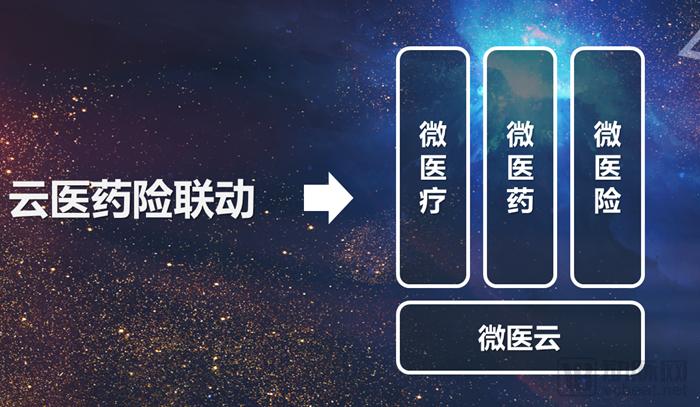
Micro Medical Group's New Strategy
WeDoctor: Deepening Home Healthcare Services
Micro Healthcare is currently WeDoctor’s most core and longest-established business line, as well as the business segment most likely to be listed first.
According to VCBeat, WeDoctor’s service system primarily consists of three tiers—“bases, outlets, and terminals”—providing users with medical services that integrate “online and offline” care as well as “general practice and specialty care.”
“Bases” refer to over 2,700 key hospitals and more than 7,400 expert teams connected by WeDoctor across 19 provinces and municipalities in China, encompassing over 100 regional medical service bases including internet hospitals and medical consortia; “Outlets” denote the 20,000 nationwide medical service outlets established by WeDoctor, comprising six offline WeDoctor General Practice Centers, community health service centers, and pharmacy-clinics; “Terminals” refer to the WeDoctor Pass hardware terminals, the WeDoctor App software terminals, and enterprise terminals.
Among these, Weiyitong serves as the core platform through which WeDoctor delivers “online + offline” and “general practice + specialty” medical services to consumers. Through Weiyitong, users can instantly connect with their dedicated family doctors via voice and video interactions, accessing services such as video consultations for common illnesses, e-prescriptions, and online medication purchases; in certain regions, direct online settlement using medical insurance is also available. For patients with urgent or severe conditions, family doctors can assist in scheduling appointments at nearby offline service bases for in-person care.
According to data released by WeDoctor, as of January 2018, the cumulative number of signed orders for WeDoctor Connect had exceeded 1.2 million units. Leveraging WeDoctor Connect as a platform, WeDoctor can not only generate revenue from hardware sales but also secure service fees spanning healthcare, pharmaceuticals, and insurance. Currently, WeDoctor is actively engaging in discussions with local Health and Family Planning Commissions to penetrate community households through WeDoctor Connect, thereby enhancing the accessibility of family doctor services. More importantly, once user stickiness is established, these smart terminals are likely to become key entry points for various home-based scenarios, similar to smart speakers such as Amazon Echo and Alibaba’s Tmall Genie. If this business initiative proceeds smoothly, it holds substantial market potential in the future.
Regarding the value of the micro-medical system, Liao Jieyuan once stated that in the future, 50% of medical and health services could be provided at home, 35% of diseases could be treated at nearby outlets, and approximately 15% of complex cases would be referred to service hubs, thereby enabling patients to truly benefit from family doctor services akin to those in Europe and the United States, and facilitating a transition from passive medical care to proactive health management.
Weiyi: Prescription Sharing Platform Facilitates the Outflow of Prescriptions
Purely online consultations and diagnosis/treatment will not generate scalable revenue. In the past, offline medical institutions relied on drug sales to subsidize medical services, making it even more difficult for online platforms to achieve profitability through medical services alone. Meanwhile, the range of medical services that can be delivered online is limited, hindering rapid scaling. The pricing structure established by offline providers sets a ceiling for online services; for example, if an in-person specialist consultation costs RMB 200, it is unlikely that online services can command higher prices. Therefore, while purely online medical services can attract substantial user traffic, they struggle to achieve scalable revenue.
Integrating medical services with pharmaceuticals is an effective pathway for all internet healthcare platforms to achieve scalable profitability, making the micro-pharmaceutical sector a core business focus for WeDoctor. Leveraging the opportunity to connect hospitals and build medical consortium platforms, WeDoctor has expanded into the “cloud pharmacy” business for medical consortia, primarily fulfilling hospital medication demands. On the other end, on February 2, the National Healthcare Big Data Application and Sharing Platform was launched, unveiling its affiliated National Prescription Sharing Platform and Artificial Intelligence Sharing Platform. WeDoctor became the technical operator for the Prescription Sharing Platform, primarily linking pharmaceutical distributors and manufacturers to facilitate the outflow of prescriptions as mandated by national policy.
The Micro Medical segment leverages a prescription-sharing platform to establish large-scale connectivity among hospital information systems, retail pharmacy drug distribution and logistics systems, and medical insurance settlement systems, thereby enabling multi-party information sharing and application across healthcare providers, insurers, and pharmaceutical stakeholders. Through the Wuzhen Internet Hospital, this platform has facilitated online prescription issuance and review for nearly 20,000 pharmacies nationwide, standardizing the circulation and use of prescription drugs.
After prescriptions are aggregated on the prescription-sharing platform, the revenue model becomes relatively clear: patients pay delivery fees, pharmacies charge service fees, pharmaceutical companies provide rebates, and insurance companies incur data-related costs. Regarding the exploration of prescription outflow, several companies in China, such as WeChat, Yi Fuzhen, Yifangda, and Baiyang Pharma, are currently implementing such projects, with pilot regions including Guangdong, Harbin, Hainan, and Guangxi. The “Wuzhou Model,” which we previously reported on, has been piloted since May last year and has already accumulated considerable experience, proving it is no longer an unrealistic concept.
WeDoctor Insurance: “Connecting” and “Empowering” to Benefit Users
Insurance services have consistently been the closest link to monetization within WeDoctor’s product ecosystem and remain a key area of sustained strategic focus. From the previously launched HMO and ACO product frameworks to the WeDoctor Internet Health Insurance Platform introduced in December 2017, each initiative underscores the critical importance of insurance operations in WeDoctor’s overall strategy.
Weiyi Insurance is the primary vehicle through which WeDoctor advances its open internet-based health insurance platform, leveraging big data to expand the sources of commercial health insurance (“open source”) and optimize the expenditure of social insurance (“cost containment”). By utilizing the big data accumulated by WeDoctor, Weiyi Insurance provides users with precise, intelligent recommendations across various scenarios, offering one-stop services for online purchase, healthcare, and claims settlement. Centered on health management, medical services, and insurance underwriting and claims processing, with insurance e-commerce as a supplementary component, it encompasses six core products: the Health Insurance Portal, Health E-Service Room, Insurance Underwriting and Claims Services, Weiyi Medical Pay, Telesales Cloud, and Health Account.
“Connection” and “Empowerment” are the two key keywords for WeDoctor Insurance. Through connection and empowerment, WeDoctor will assist financial institutions in providing differentiated services across scenarios, users, and channels, thereby enhancing customer acquisition, improving service quality, and strengthening user stickiness. By connecting with insurance institutions, WeDoctor will empower insurers in areas such as health management, medical services, underwriting and claims processing, agents, and intelligent telemarketing, helping them achieve “quality improvement and efficiency enhancement.” Meanwhile, financial and insurance institutions will also empower internet healthcare, ultimately creating value that benefits users.
WeDoctor Cloud: The Foundation of All Business Operations
On November 15, 2017, WeDoctor released “WeDoctor Cloud.” As the foundation of everything, WeDoctor Cloud serves as the most fundamental technical platform within WeDoctor’s ecosystem, providing support for WeDoctor Medical, WeDoctor Pharmacy, and WeDoctor Insurance.
Over the past seven years, WeDoctor has achieved the largest-scale “cloud-based hospital registration windows” in China by connecting more than 2,700 hospitals nationwide; it has realized the “cloud-based consultation rooms” for 260,000 doctors across China through Wuzhen Internet Hospital and over 100 medical consortia; and, leveraging electronic health records and family doctor contracting as entry points, WeDoctor has facilitated deep integration of regional population health information in provinces and cities such as Heilongjiang Province, Wenzhou, Changzhou, and Pingdingshan.
Building on the “cloudification” of various scenarios, WeDoctor, in collaboration with the Ruiyi Artificial Intelligence Research Center at Zhejiang University, has developed intelligent medical auxiliary diagnosis and treatment systems for both Western medicine and traditional Chinese medicine: the Ruiyi Intelligent Doctor and the Huatuo Intelligent Doctor. Powered by WeDoctor Cloud as its technological engine, WeDoctor has established the “WeMedical” ecosystem.
According to VCBeat, leveraging WeDoctor’s data accumulation and scenario connectivity, WeDoctor Cloud can provide dozens of cloud-based solutions—including internet hospitals, internet medical consortia, family doctor contracting, cloud pharmacies, and AI-assisted medical diagnosis—to a diverse range of users such as governments, hospitals, primary healthcare institutions, and health enterprises.
Furthermore, WeDoctor Cloud is an open intelligent healthcare cloud platform that empowers governments to implement family doctor contract services. In Henan and other regions, it has facilitated government procurement of services, establishing a capitation-based business model. WeDoctor Cloud also helps hospitals and physicians enhance their diagnostic and treatment capabilities, collaborates with pharmaceutical companies, insurance firms, and other institutions to build a comprehensive healthcare industry chain, improves China’s primary healthcare service system, and provides families with continuous, proactive, and end-to-end household health management services.
Liao Jieyuan stated that WeDoctor Cloud’s cloud computing and cloud storage capabilities will be opened to the entire industry, fostering multi-directional collaboration with alliance members as well as more medical institutions, physician teams, pharmaceutical companies, and research organizations to advance the development of smart healthcare in China.
For a detailed analysis of WeDoctor Cloud, please refer to the article:In the Post-Internet Healthcare Era, What Does “Weiyi Cloud” Mean for WeDoctor? How Will WeDoctor Transform?
WeDoctor’s New Strategy: Driving Revenue and Preparing for IPO
Based on Micro Medical Group’s new strategic proposal, combined with the previously disclosed IPO information, certain indications can be inferred: this business spin-off is intended not only to meet revenue requirements but also potentially to prepare for a public listing.
From a revenue perspective, the four business lines being spun off are relatively independent and can generate distinct commercial value. WeDoctor Care, WeDoctor Pharmacy, WeDoctor Insurance, and WeDoctor Cloud each have their own products, profit models, and partners.
WeDoctor’s traffic primarily comes from its online platforms, its transaction volume stems from offline channels, and its profits are derived from insurance. Its business segments correspond precisely to WeDoctor’s three spun-off units: WeMedical, WePharma, and WeInsurance.
Leveraging over seven years of accumulated business resources from WeDoctor, and in conjunction with the large-scale implementation of WeYiTong, Micro Medical is poised to become WeDoctor’s largest project by business volume.
Amid the overarching trend of prescription outflow, Micro Medical’s prescription-sharing platform has substantial room for growth. Currently, the drug-to-revenue ratio in public hospitals stands at approximately 36% and needs to be reduced to 30%, meaning that roughly 6% of prescriptions will shift outside hospitals. Based on current market size estimates, this represents a market worth at least RMB 100 billion.
Objectively speaking, WeDoctor’s insurance business is still in an exploratory phase, and the entire health insurance industry continues to undergo continuous optimization. Nevertheless, it is promising that this segment will become a future profit source for WeDoctor. Currently, WeDoctor has established business collaborations with more than 30 institutions, including PICC Health, ZhongAn Insurance, and Taikang Life, in areas such as health management, medical services, and insurance e-commerce.
In addition to serving as the foundational infrastructure for WeDoctor’s other business lines, WeDoctor Cloud is itself an open intelligent platform capable of accommodating diverse informatization and intelligence collaboration needs from various stakeholders. Leveraging WeDoctor’s years of accumulated resources, WeDoctor Cloud is the only third-party organization in China authorized by the government to operate the national primary platform for healthcare big data. This health big data platform creates substantial value for both government agencies and commercial entities.
As among the first internet healthcare companies to announce their IPO plans, both Ping An Good Doctor and WeDoctor have ample reason to be considered pioneers in this field. A comparison of their business models reveals that WeDoctor and Ping An Good Doctor have taken entirely different paths. Backed by the Ping An Group, Ping An Good Doctor’s business logic is to create complementary synergies with other Ping An-affiliated businesses within the group’s broader healthcare ecosystem. In contrast, WeDoctor has built a self-contained business loop, continuously adapting to healthcare reform policies. Its micro-healthcare services are closer to core medical care, primarily addressing the supply-and-demand relationship between patients and healthcare institutions.
Spurred by Ping An Good Doctor and WeDoctor, the internet healthcare industry is once again becoming a focal point of attention. Currently, industrial resources in internet healthcare are converging toward leading platforms, with new medical traffic gateways emerging as a key hallmark for major players. Large internet healthcare enterprises appear to have identified new growth paths, steering the industry in a positive direction. Given the strong precedents set by Ping An Good Doctor and WeDoctor, can IPOs be far off for Haodaifu Online, DXY, and Chunyu Doctors?