

No Health Without Bacteria: How Microbiome Therapies Are Revolutionizing Disease Treatment
A substantial body of research has shown that,Microbiomics and Human Health HaveSignificant correlations. These associations appear to open the door to a new world, revealing that not only inflammation but also neurological disorders, metabolic diseases, and even cancer are influenced by microorganisms. Based on these correlations, we may be able to diagnose or even treat certain diseases through microbial interventions. ButHow Can We Collaborate with Microbes? First, You May Need to Test Your Gut Microbiome.
DNA is the code of biological heredity, but we may not yet realize that the definition of DNA extends beyond our own human genome to include the thousands of microorganisms that coexist with us. These microbes may reside on our skin, in our gut, or even in the food we consume—virtually anywhere one can imagine.
The total number of genes in these microorganisms may be 150 times that of our own genes. Therefore, some scientists refer to the gut microbiome as the “second genome,” and some even regard it as another organ of the human body.
With the development and advancement of sequencing technologies, scientists have begun to conduct more comprehensive and in-depth studies on the roles that microbes play in our lives, and we no longer deny their critical importance in health and disease. Over the past decade, there has been an abundance of research findings related to microbes, revealing increasing correlations between microbes and human health, including conditions such as intestinal inflammation, diabetes, autism, AIDS, and cancer.
High expectations have also been placed on microbiome research, with the global human microbiome market projected to reach $3.2 billion by 2024. However, the field is not without controversy; some argue that the impact of microbes on medicine is not as significant as commonly believed. Therefore, we conduct a comprehensive review of studies linking the microbiome to disease, aiming to find answers from the ground up.
What Is the True Potential of Microbes?
The term “microbiome” was first coined by Nobel Laureate in Physiology or Medicine, Joshua Lederberg. He once wrote, “Pathogens and microbes form a symbiotic ecosystem within the human body; they are significant determinants of health and disease, yet they have long been overlooked.”
At the moment of birth, as infants leave the sterile environment of the uterus, they acquire their initial microbial community. Scientists believe that over the subsequent three to five years, they will establish their unique microbiota. However, the composition of these microbial communities continues to change in response to their living environment.
Numerous factors influence the composition of microbial communities, including diet, lifestyle, and environmental conditions. For instance, the gut microbiota of vegetarians differ from those of non-vegetarians. Additionally, age, geographic location, and many other as-yet-undetermined factors also play a role in shaping microbial community composition.
Alterations in certain conditions may lead to an imbalance in the microbial flora, known as dysbiosis. This dysbiosis may contribute to a range of diseases, including inflammatory bowel disease (IBD), diabetes, allergies, asthma, and autism.
To clarify the relationship between microbes and diseases, scientists have conducted extensive research on microbial gene maps, aiming to uncover the links between these microorganisms and various diseases. In Europe, the MetaHIT project has revealed associations between microbes and inflammatory bowel disease as well as obesity, while the Human Microbiome Project in the United States has focused on studying the relationship between commensal microbes and complications of preterm birth and human diseases.
Another significant portion of research focuses on cancer. Current studies have shown that certain microbes can render tumor-targeted drugs ineffective, while others can enhance their therapeutic efficacy. This implies that establishing a healthy microbiome in patients prior to pharmacological treatment will positively impact oncology outcomes.
“Clinical research on microbes and tumors will see significant progress in 2018,” said Isabelle de Cremoux, CEO of the venture capital firm Seventure, which established the first gut microbiome fund. De Cremoux anticipates that the first human clinical trials related to microbes will yield results this year, potentially ushering in a wave of microbiome-based therapies.
Microbiome-Derived Microbial Therapeutics
Fecal microbiota transplantation is a commonly used microbial therapy technique with a long history, dating back to China over 2,000 years ago. To avoid causing discomfort, detailed descriptions are omitted here.
Today, fecal microbiota transplantation remains in clinical use, though frozen capsules have made the procedure more acceptable to patients.
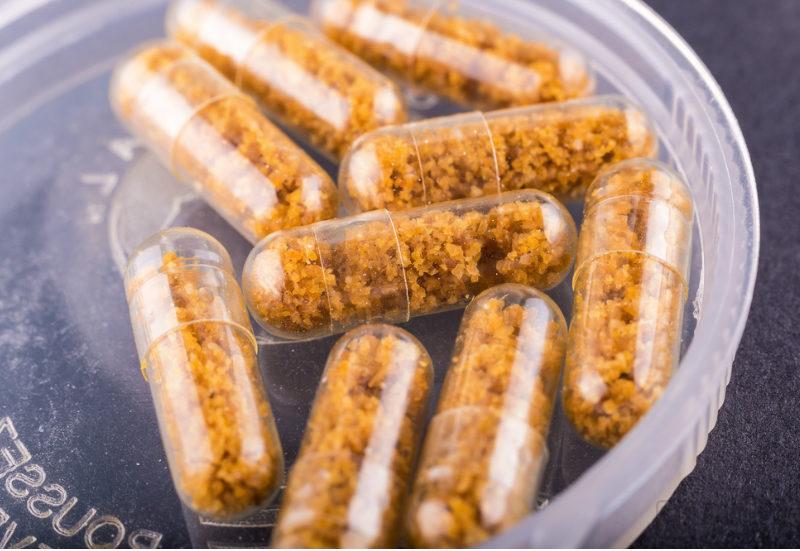
Following chemotherapy and antibiotic treatment, patients’ gut microbiota are damaged, and such damage is difficult to reverse under natural conditions. In France, MaaT Pharma leverages this technology to help restore gut microbiota in patients after treatment for leukemia and joint infections. In the United States, Rebiotix is also employing fecal microbiota transplantation (FMT) to treat severe Clostridioides difficile infection and ulcerative colitis.
Fecal Microbiota Transplantation Has Drawn Significant Attention, Yet Its Practical Value Remains Questioned. Some Scientists Argue That the Bacteria Introduced Through Fecal Microbiota Transplantation May Not Adapt to the Gut Environment as Effectively as the Original Intestinal Microbiota; These Bacteria Might Be Rapidly Excreted from the Body, Thereby Limiting Their Therapeutic Efficacy.
“Reviewing the past 50 years of clinical research on probiotics, there is no evidence to support the role of live bacteria in clinical efficacy.” Enterome CEO Pierre Belichard responded candidly in an interview. Consequently, some have adopted an “exclusion method” that is diametrically opposed to fecal microbiota transplantation.
Enterome, a Paris-based company, aims to develop a drug that can selectively eliminate disease-causing bacteria from the human body. Currently, its most advanced development program is a therapy for Crohn’s disease, while another candidate therapy targeting cancer has attracted the attention of Bristol-Myers Squibb, leading to a strategic partnership between the two companies.
Second Genome and C3J Therapeutics in the United States, as well as Infant Bacterial Therapeutics in Sweden, also employ similar drug selection therapies.
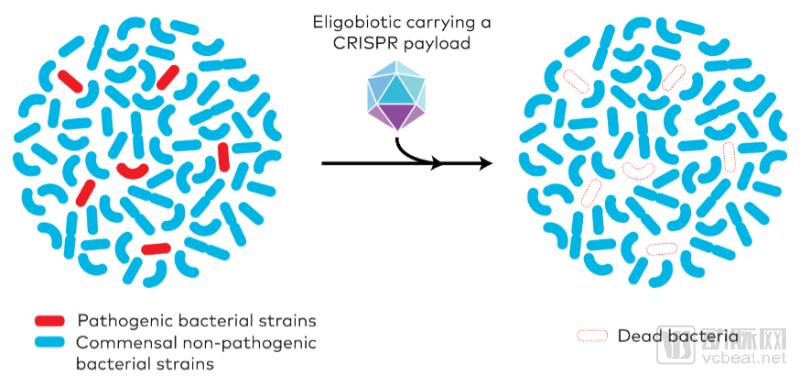
In addition to using drugs for microbiota modulation, some companies are employing viruses. Bacteriophages (phages) are viruses that infect bacteria and can be regarded as organisms that “prey” on bacteria. Phages must parasitize living bacterial cells and exhibit strict host specificity. Based on this characteristic, phages can be leveraged to kill specific bacterial strains. This is the approach currently being pursued by the U.S. company EpiBiome and the Israeli company BiomX.
French startup Eligo Bioscience has loaded the gene-editing tool CRISPR into bacteriophages. Once inside bacteria, CRISPR can shred their genetic material, thereby killing them. Of course, this process only occurs in microorganisms with specific DNA sequences. Therefore, even within the same bacterial strain, only microbes carrying specific genes (usually certain pathogenic genes) will be targeted for cleavage.
Ultimately, these engineered bacteria with specialized capabilities will be formulated into drugs that directly enter the human intestinal tract via oral administration. Key players employing this approach include Blue Turtle Bio and Synlogic in the United States, as well as Anaero Pharma in Japan.
These methods appear to be endless, and there may be an increasing number of them in the future.
Current Status of Microbial Therapy
The advent of next-generation sequencing (NGS) has also facilitated research into the association between microbiota and human health, yielding substantial scientific achievements. An increasing number of companies are beginning to leverage these associations for the diagnosis and treatment of diseases through microbiome-based approaches. However, this remains a nascent field. To date, only six microbiome-based therapeutic technologies have been publicly disclosed. For many investors, it is still challenging to demonstrate that investments in microbiomics represent a worthwhile venture, despite the fact that major corporations have started acquiring such technologies.
“The impact of microbes on health could fundamentally redefine the concepts of health and medicine, but our current understanding remains limited,” said David Kyle of Evolve Biosystems.
Perhaps researchers can find a large number of disease solutions through the study of microbiomics, but not all methods are feasible in the end. This phenomenon is not unique to the field of microbiomics; it applies to every new medical technology that emerges. However, one thing is certain: microbes do impact human health. Gut infections and inflammatory diseases are closely related to gut flora, and HIV infection, neurological disorders, and aging also seem to be associated with microbes to some extent. In most cases, microbes directly or indirectly influence diseases.
“At present, the greatest challenge facing this field is the uncertainty surrounding frontier research, as most associations have yet to be confirmed. ‘The microbiome is indeed a highly complex domain; each microbial colony has a remarkably intricate composition, and each individual’s symbiotic microbiota possesses its own unique characteristics,’ said Henry Raths, Vice President of Business Development at Seres Therapeutics.”
Indeed, although the development of the microbiome industry has become an irresistible trend and a number of experienced companies have emerged, the FDA has yet to establish a comprehensive regulatory framework for microbiome-related products.
Nevertheless, this also signifies opportunities. As venture capital firms such as Seventure and Flagship Pioneering continue to increase their investments, researchers will progressively yield more outputs, with these two factors mutually reinforcing each other to drive industry development. Furthermore, public attention can pave the way for the future marketization of these technologies. Companies like the UK’s Map My Gut and Israel’s DayTwo are already offering comprehensive kits that allow individuals to test their microbiome composition and receive personalized dietary recommendations—a promising start.
Undoubtedly, the field of microbiology will experience a turbulent development. However, intuition tells us that research in microbiomics will bring solutions to many current medical challenges. Perhaps this day is still some time away, but it will eventually come.