

Genfine Biological Secures Millions in RMB Angel Funding to Build Integrated Molecular Diagnostic Reagent Solutions
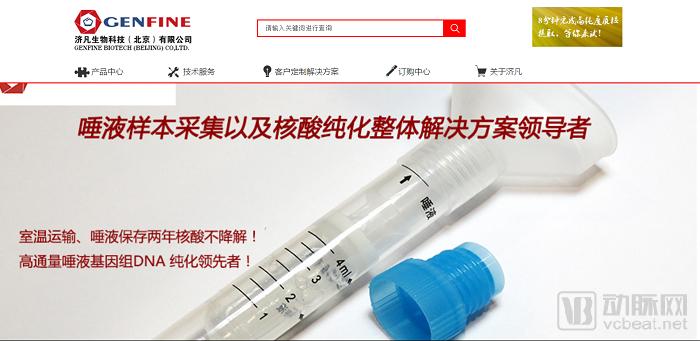
On February 26, 2018, Jifan Biotechnology (Beijing) Co., Ltd. (hereinafter referred to as “Jifan Biotech”) announced that it had secured an angel round of financing amounting to several million RMB. The investor was the West Taihu Medical Device Industrial Park. The funds raised will be used for product research and development and subsequent production, providing downstream enterprises with molecular diagnostic reagents and comprehensive solutions.
Jifan Biotechnology is a biotech company integrating R&D, production, sales, and technical services. Jifan is committed to becoming a leading domestic technology innovation company capable of providing comprehensive solutions in molecular biology. In the future, the company will evolve into a full-solution provider covering various aspects including medical sample preservation, extraction, PCR, next-generation sequencing (NGS), and third-generation sequencing.
When asked why he chose to start a business at that time, Yang Liang, founder of Jifan Bio, replied, “I hoped to build a sufficiently large platform, gather a few like-minded friends, and do something meaningful.”
Yang Liang and his partners have each worked in the field of molecular diagnostics for nearly a decade. In this sector, given the scarcity of domestic companies possessing core technologies, most reagents and consumables rely on imports from abroad, where the exorbitant profit margins are self-evident.
Jifan Bio’s team hails from prestigious Chinese universities, with members holding master’s degrees or higher in biology. They have previously worked at leading domestic molecular diagnostics companies such as Tiangen Biotech, Sansure Biotech, and Annuo. As industry experience accumulated, Yang Liang recognized that, amid the overseas monopoly on China’s reagent market and the concurrent rise of domestically produced reagents, the import substitution trend would sweep through the molecular diagnostics industry like a whirlwind.
Drawing on their professional experience, they aim to leverage purification and amplification reagents as a strategic entry point, adopting a “product + service” model to help industrial clients address specific challenges.In March 2016, three individuals commenced preliminary preparatory work.
"Embarking on his first entrepreneurial venture, Yang Liang candidly admitted that the journey was far from easy."Startup biotech companies require substantial resources in their early stages. “You have nothing, so investors will inevitably hesitate,” Yang Liang told VCBeat. “Later, we set up a laboratory in a small bungalow near Yizhuang, along the South 6th Ring Road in Beijing.”
One month later, they secured their first client—the leading domestic enterprise in the molecular diagnostics industry. In the same month, they obtained a seed funding round of RMB 500,000 from individual investors.
Although the amount was not substantial, this seed funding finally allowed the company to secure a more formal laboratory. To seize greater opportunities, they relocated the company to the Zhongguancun Biomedical Engineering Translation Center.
In August of the same year, the company was officially established; in September 2017, Jifan Biology rapidly secured an angel round of financing amounting to several million RMB.
“Given that we are destined to become a high-tech biomanufacturing enterprise, and taking into account factors such as logistics, raw material suppliers, and customer distribution, the company has relocated its production department to the West Taihu Lake Industrial Park. ‘We have planned to move our production operations to the West Taihu Lake Industrial Park. With our headquarters in Beijing, we believe the Yangtze River Delta region is better suited for our long-term development,’ said Yang Liang.”
After more than a year of research and development, Jifan Bio has established five core technology platforms centered on NGS and PCR: nucleic acid extraction reagent platforms based on sample preservation, spin-column membrane, and magnetic bead methods; PCR/qPCR/RT-PCR reagent platforms; one-step molecular diagnostic reagent platforms; multiplex PCR amplification reagent platforms; and second- and third-generation sequencing technology solution platforms.
In terms of nucleic acid extraction, the column-membrane method and the magnetic bead method are currently the two mainstream techniques. The column-membrane method yields stable results with high purity; however, it requires centrifuges and vacuum equipment, which hinders automation. In contrast, the magnetic bead method is more suitable for automation, representing a future development trend.
Regarding PCR reagents, the R&D capabilities of domestic molecular diagnostic reagent suppliers in China are generally weak, and their products mainly rely on TaqMan probe-based fluorescent PCR technology. With the evolution of several generations of technology, these products have gradually become modularized, broadly divided into three components: first, the sample processing module, primarily for DNA and RNA extraction; second, the nucleic acid amplification system; and third, primer and probe design. Jifan Biology has achieved full coverage across all these modules.
Building on this foundation, Jifan has developed a proprietary extraction-free Direct qPCR/RT-qPCR technology. Yang Liang revealed that this technology is rapid, simple, and highly reliable, making it well-suited as a foundational platform for rapid diagnostics. It can be widely applied in the detection of infectious diseases in human medicine, veterinary infectious disease diagnosis, and foodborne pathogen testing.
For NGS solutions, Jifan Bio is primarily dedicated to the technological development of various medical sample preservation fluids and nucleic acid extraction technologies for complex samples. The company has already provided customized sample nucleic acid extraction solutions to numerous second- and third-generation sequencing providers.
Based on this, Jifan Bio has established a product line capable of supporting PCR, NGS, and even third-generation sequencing.
“We are not merely providing them with products, but rather offering solutions,” said Yang Liang. “We have been quite fortunate; industrial enterprises each have their own pain points, which we happen to be able to address.”
To date, Jifan Bio has served more than 50 enterprises, covering both industrial companies and government projects.
In the future, the company will successively intensify its efforts in animal disease control, public health, direct-to-consumer (DTC) testing, and overseas markets. In terms of sales and marketing, the company will establish a dedicated sales team targeting industrial clients, consolidating both key accounts and smaller customers within each region into specialized sub-teams.
At the same time, they are also preparing for the regulatory approval of various reagents. “Our founding team previously specialized in Class III reagents, which gives us a significant advantage,” said Yang Liang.
Finally, leveraging its strengths in sample preservation and processing, as well as Direct qPCR technology, Jifan has invested substantial R&D resources into the POCT field, aiming to achieve breakthroughs and create a simpler, faster testing method.