

Weile Dental Deepens Aesthetic Orthodontics with a Three-Tier Clinical Model in Chongqing
Health Intelligence Valley is an innovative health industry cluster centered on health management and precision medicine. Leveraging Meinian Onehealth, China’s largest health traffic gateway and big data platform, it provides innovative enterprises with support in biological samples, data, market access, and capital.
In 2017, Health Intelligence Valley implemented a strategic layout across six industrial parks, cumulatively investing in and incubating nearly 100 startup teams and fostering dozens of high-growth “dark horse” enterprises in the health sector with valuations exceeding RMB 100 million. Series Report on Enterprises in Health Intelligence Valley Parks – Chongqing Weile Dental: Focusing on Aesthetic and Orthodontic Services, Pioneering a Three-Tier Diagnosis and Treatment Model, and Deepening Its Presence in the Chongqing Market by Leveraging the Resources of Health Intelligence Valley.
Dental Chain Expansion: Two Typical Models for Market EntryThere are two typical models for entering the dental chain market: one is establishing self-owned stores under a unified brand, or adopting a “1 (flagship store) + N (outpatient clinics)” model; the other involves asset-light acquisitions of well-operated local regional brands, followed by multi-brand operations. The choice largely depends on the company’s strategic positioning and resource characteristics.
Previously, VCBeat reported that Meiwei Investment Management Group (hereinafter referred to as “Meiwei”) pioneered a novel “Business Partner” model. Conceived based on its existing experience in developing private specialized chain institutions, this model joins forces with locally dominant dental clinics that demonstrate strong profitability. By empowering both the brand and the industry, these clinics are integrated into Meiwei’s brand portfolio. Guided by the principles of “complementary advantages and mutual integration,” Meiwei provides comprehensive support spanning capital, talent, technology, market access, and management, thereby establishing a stable, win-win community of shared interests.
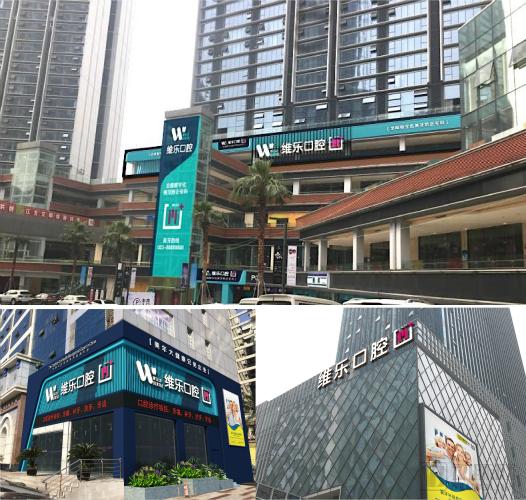
Chongqing Weile Stomatological Hospital Management Co., Ltd. (hereinafter referred to as “Weile Dental”) is a brand under the Meiwei portfolio. It currently operates four clinics in Chongqing’s Jiangbei and Yubei Districts. What is the current state of the dental market in Chongqing? How does Weile Dental leverage its specialties in aesthetic dentistry and orthodontics to implement a three-tier care model in the Chongqing market? To explore these questions, VCBeat (WeChat ID: vcbeat) interviewed Mr. Cheng Ji, General Manager of Chongqing Weile Dental.
Prior to joining Weile Dental (a brand under Meiwei), Cheng Ji served as Marketing Director at a major national dental chain. With extensive experience in the industry, he possesses profound insights into the current market landscape of the dental sector.
Compared with regions such as Beijing, Shanghai, Guangzhou, and Chengdu, where the private dental sector is thriving, Cheng Ji believes that “Chongqing’s market capacity still lags significantly behind and is far from saturated. A simple comparison illustrates this: although Chengdu and Chongqing are geographically close, Chengdu may have more than 8,000 dental clinics, whereas Chongqing has only 1,000–2,000.”
Many people believe that the dental industry is currently in a window of opportunity for development. Regarding this view, Cheng Ji stated, “It varies by regional market; across China, development is uneven. However, the growing number of entrants into the dental sector—opening clinics, advertising, and promoting services—engages in competition, which is actually a positive development as it helps raise public awareness of oral health.”
“Backed by West China Medical University and West China School of Stomatology, patient education efforts in the Chengdu market have progressed more smoothly to some extent, as local residents tend to place greater emphasis on oral health.”
When encountering dental issues, patients can now easily find a clinic in shopping districts, communities, and other locations, with chain clinics becoming increasingly prevalent.
“The tipping point for the development of Chongqing’s dental market was 2014. Prior to this, search volumes on Baidu for keywords such as ‘dentistry,’ ‘dental care,’ ‘dental implants,’ and ‘orthodontics’ were very low. After large dental chain providers entered the Chongqing market, search volumes doubled, signaling a warming market and promoting oral health education among patients.”
However, the problem with chain operations is that resources often become dispersed after rapid expansion. Compared with other sectors of the healthcare industry, the barrier to entry in dentistry is relatively low: “A dentist can open a clinic by simply purchasing a few dental chairs. Newly opened clinics typically have a long ramp-up period, and without adequate experience in management, operations, and marketing, they are difficult to run.”
It has been learned that major dental chains such as Bybo Dental, Ruitai Dental, and Huanle Dental had already established their presence in the Chongqing region prior to Meiwei’s market entry.
Unlike the model of establishing unified brand stores, Meiwei adopts a platform-building approach. A prominent issue currently facing most private dental chain brands is an excessively long management radius, which prevents management measures from being effectively implemented across geographically dispersed dental institutions.
To address this predicament, Meiwei launched its “Business Partner” model. “Guided by the principles of complementary strengths and mutual integration, Meiwei has built a platform for the oral health industry, empowering its premium dental brands with resources in capital, talent, technology, market access, and management. This significantly reduces operational risks for regional brands while providing broader opportunities for growth.”
“Outstanding dental brands can join the Meowee system. The platform serves an enabling role, addressing deficiencies in clinic operations, marketing, management, and workflows, thereby helping clinics grow and expand,” said Cheng Ji.
Currently, Meiwei has acquired numerous brands and now operates nine dental chain brands across China, with a network of 85 dental hospitals and clinics covering 32 cities.
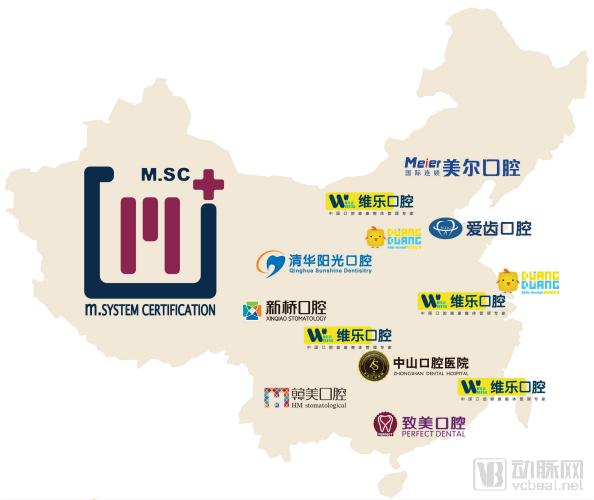
In Meiwei’s brand matrix planning, acquisitions and organic growth are not two clearly distinct paths; rather, they are intertwined, with organic development embedded within acquisitions and acquisitions integrated into organic growth.
It has been learned that Meivi aims to build a regionalized multi-brand chain empire. In each specific region, it focuses on cultivating a particular brand to excellence. For instance, Meivi has selected Zhimei Dental in Guangdong, Aichi Dental in Tianjin, Zhongshan Dental in Jiangxi, and Tsinghua Yangguang Dental in Wuhan. These are all high-quality regional dental chains with stable teams of dentists, infusing vitality and competitiveness into Meivi’s brand matrix.
“Typically, after acquiring clinics, many companies replace the management team or change their operational strategies. Although we acquired a controlling stake, we retained the original core team while standardizing operations to help improve performance. Once stability was achieved, the entire Meiwei team withdrew from daily management and operations. I believe this requires great magnanimity,” Cheng Ji revealed. This collaborative business model and cultural atmosphere have gradually gained recognition among partners.
Meiwei’s platform model maximizes the continuity of acquired brands. “It’s not about homogenizing them after acquisition; rather, we preserve some of their best practices and corporate culture.”
If a city lacks suitable acquisition targets, Meiwei will establish its own clinics. Weile Dental is Meiwei’s self-developed brand, and there are currently four Weile Dental clinics in the Chongqing market.
For every dentist, owning a private dental clinic is a lifelong dream. Currently, the market is still dominated by standalone practices or small clinic chains.
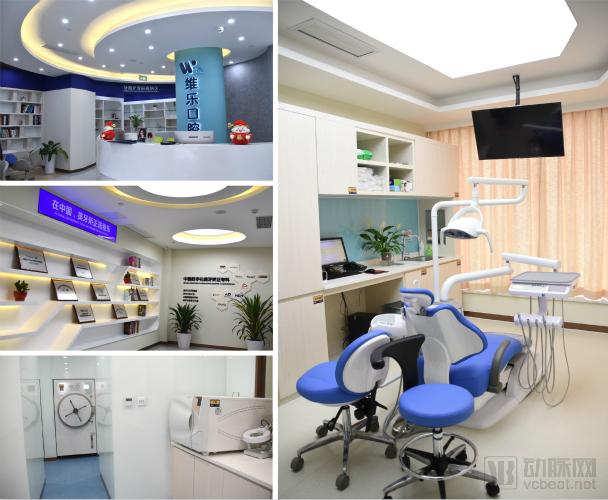
Cheng Ji believes, “Opening a small clinic independently and running it as a viable business is certainly feasible. However, if one intends to leverage a physician’s brand for expansion, there are numerous constraints. For instance, procurement costs for a single-site operation are high, while risks related to performance, safety, and management are also significant. The operation of a physician-led outpatient clinic involves not only clinical aspects but also requires a comprehensive knowledge system encompassing customer service, operations, marketing, and other complex domains.”
"After joining the Meiwei system, 'sourcing supply chains through the platform has significantly reduced procurement costs. Meiwei provides assistance in chain brand management and operations, greatly enhancing service quality and management standards.'"
“In the interview, Cheng Ji emphasized the importance of preserving the unique identity of acquired clinics. He noted that although there are numerous nationwide dental chain organizations in China, few unified-brand chains have achieved outstanding overall operational performance. This is primarily due to significant regional market disparities, including differences in consumer behavior, regulatory policies, and competitive intensity, which necessitate differentiated strategies. Therefore, Meowei will strive to extend the core characteristics of the original brands or adopt a single brand to cover multiple cities with similar market environments.”
As the number of chain clinics increases, those lacking distinctive features or brand equity are prone to falling into the trap of price wars. In this regard, Cheng Ji stated, “Many chain providers on the market offer services across dental implants, orthodontics, prosthodontics, and pediatric dentistry. However, patients are often unclear about which provider to choose and what distinguishes each one. Without core competitiveness, the ultimate differentiator becomes price.”
Weile Dental has been deeply committed to aesthetic dentistry and orthodontics. “We must deepen our expertise in academics, workflows, equipment, and technology, striving for greater depth and precision in our business operations. Our goal is to ensure that when consumers consider orthodontic treatment, they think of us first, confident that we can provide excellent solutions.”
With a deep focus on aesthetic and orthodontic services, how has Weile Stomatology broken into the Chongqing market? Cheng Ji revealed that Weile Stomatology adopts a three-tier healthcare delivery model: hospitals, outpatient clinics, and community-based stores.
“Each entity varies in scale, number of dental chairs, and staffing. The main hospital spans over 2,000 square meters, equipped with 20 dental chairs and staffed by 10 dentists. Standard outpatient clinics are under 600 square meters, with 8 dental chairs and 5 dentists, while community-based clinics are typically under 200 square meters, possibly having only 3 dental chairs and 3 dentists. Property costs must be kept within 15%.”
To address the most pressing challenge of dentist shortages amid current expansion, Weile Dental has also found its own solution. Cheng Ji stated, “Private dental practices do not need to emulate public dental hospitals by offering comprehensive general dentistry. Instead, they can identify market gaps or focus on specialized single disciplines, advocating the concept of ‘strong specialties, compact general practice.’ Since we focus on aesthetic dentistry and orthodontics, we primarily recruit orthodontists. Some institutions hire all types of dentists, which incurs high costs, leads to a lack of sense of belonging among staff, and makes recruitment difficult.”
"Specialization is more appealing to specialists. For instance, orthodontists feel that the platform is tailored specifically for them, as it aligns with their professional expertise in terms of equipment, technology, training, and medical services, thereby fostering greater cohesion among physicians."
Orthodontics is the core competitive advantage of Weile Dental. “Each clinic is fully staffed with physicians. Furthermore, to address various issues associated with orthodontic treatment, such as periodontal and implant concerns, we have dedicated teams of periodontists and implantologists. Each team consists of two to three specialists who conduct rotating consultations.”
An inescapable fact is that dental care and medical aesthetics are gradually evolving into experience-driven consumption, with the most prominent indicator being their presence in commercial districts. “To some extent, dentistry is not an absolute necessity; much of the spending is impulsive. Patients seek not only treatment but also a conducive environment and setting for their experience. Naturally, commercial districts offer significant advantages, such as the substantial organic foot traffic seen at Tianyi Group’s Health Intelligence Valley,” revealed Cheng Ji, explaining why Weile Dental chose to locate its clinics in shopping areas.
In its expansion within the Chongqing market, Weile Dental has primarily focused on the main urban districts over the past one to two years. “We aim to consolidate the operations of our current four clinics, deliver high-quality service to every patient, and provide each individual with the optimal treatment plan. We will not rush our growth, nor will we compromise our core values for the sake of performance metrics.”