

YunChao ZhiLian: Unlocking Blockchain Value from Regional Health Information Platforms
In 2015, Yunchao Zhilian was registered and established, marking Mo Yi’s first entrepreneurial venture. At that time, he had never imagined that the company he founded would eventually become a medical blockchain enterprise.
On January 30, 2015, the State Council issued the “Opinions on Promoting the Innovative Development of Cloud Computing and Cultivating New Business Formats in the Information Industry” (Guo Fa [2015] No. 5). The integration of cloud computing with healthcare undoubtedly became a technological lowland at that time.
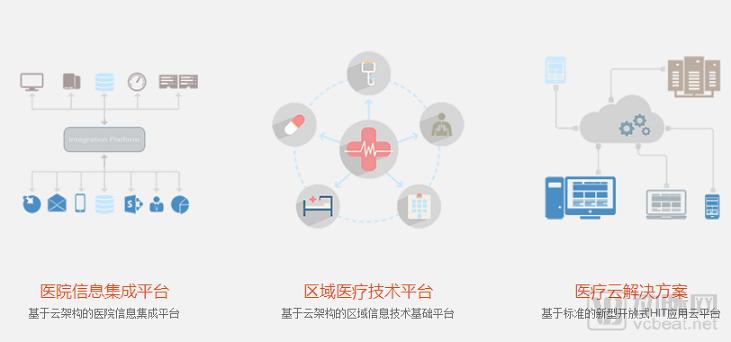
Under the policy guidance of cloud computing, Yunchao Zhilian has focused on the interconnectivity of medical information, developing a hospital information integration platform based on cloud architecture.
At the end of 2015, Yunchao Zhilian undertook its first informatization project—the Regional Health Information Platform in Langfang, Hebei Province. The project, which had been planned since 2015, was built entirely using a cloud architecture.
Langfang City covers an area of 6,500 square kilometers, administers 10 districts and counties, has a permanent population of approximately 4.5 million, and employs around 30,000 healthcare professionals. Based on the projection that each individual within the jurisdiction will generate 20 MB of health data annually, the Langfang Regional Health Information Platform is expected to produce approximately 100 TB of health data per year in the future.
At that time, medical data in Langfang City was scattered across various healthcare institutions. However, over time, there was a growing risk of data loss or the data becoming dormant and unusable. Centralizing the storage, development, and utilization of this vast amount of health data would bring about revolutionary changes to Langfang’s healthcare industry.
The Foundation of Big Data: Regional Health Information Platforms
Regional Health Information Platform is the foundational platform supporting the operation of various internal business systems of the Langfang Municipal Health Bureau, and also serves as the carrier for interconnectivity and information integration among the basic business information systems of healthcare institutions within Langfang City.
From a business perspective, the various information systems on the platform are designed to provide diverse business services to residents, healthcare providers, and health administrators, rather than serving only specific groups. From a technical perspective, the platform itself does not directly serve business users; instead, various business information systems developed based on the platform deliver relevant business services to these users.
The core planning components of the Langfang Regional Health Information Platform encompass three tiers: the IT infrastructure resource layer (IaaS), the platform layer (PaaS), and the application layer (SaaS).
The IT infrastructure resource layer planning focuses on cloud data centers, which provide highly elastic and scalable storage, network, and computing resources for various applications through resource centralization and dynamic allocation.
The platform layer is designed as an application support and sharing platform, which will provide supporting capabilities for upper-layer applications in areas such as data and business collaboration and technology reuse. It aims to achieve standardized and platform-based integration of IT capabilities, enabling interoperability among applications.
The application layer planning primarily encompasses the cloud portal component, which provides a unified entry point and tenant self-service management for internal administrators and external enterprise users.
According to Mo Yi, “More than ten hospitals in Langfang City have already connected to the regional health information platform.”
Upgrading Requirements: Security of Shared Data
In October 2016, the Langfang Municipal Health and Family Planning Commission put forward further requirements on the basis of regional information interconnectivity.
First, there is the issue of granting access to medical data, which must be made traceable. Second, in the process of data sharing among healthcare institutions via platforms, the introduction of third-party health information products poses challenges to the security of medical data.
The ability to enable patients to directly authorize third-party institutions to access their medical and health data via mobile phones has become a practical application requirement.
Mo Yi, a veteran in the healthcare informatics industry, assessed that traditional information technologies (such as IHE XDS) could address some issues through policy-based secure access, but still exhibited overall limitations. At that time, the emerging blockchain technology offered security mechanisms precisely suited to resolving this challenge. Consequently, Cloud Nest Smart Link began investing in research and development for “blockchain + healthcare” solutions from that point forward.
As blockchain is a distributed database and medical data constitutes an extremely large data system, enterprises cannot store raw data directly on the blockchain. CloudNest SmartConnect’s approach is to store summary information and event indices on the chain, allowing only authorized users to access the final raw database through these indices. (The raw database referred to here is the Langfang Regional Health Information Platform, which is a centralized database.)
Once medical information is recorded on the blockchain, administrators can clearly trace the source of the information. Since the data cannot be tampered with, it ensures non-repudiation.
Currently, the project is in the POC (Proof of Concept) phase. According to Mo Yi’s projections, Langfang City’s medical blockchain is expected to be implemented by the end of 2018.
Three Major Challenges in Blockchain Implementation
Mo Yi candidly stated that the core of blockchain technology is a decentralized architecture, whereas the healthcare industry currently operates under a centralized system, inevitably leading to certain conflicts between the two. “Some existing interest relationships will be disrupted; therefore, blockchain will inevitably encounter institutional barriers.”
Furthermore, blockchain technology faces challenges related to standardization. For instance, development platforms such as IBM’s and Ethereum’s each adhere to different technical standards. Currently, the Chinese government has not yet issued corresponding guidelines for medical blockchain technology, which remains in an exploratory phase.
After patient, physician, and healthcare institution information is recorded on the blockchain, their identifiers vary across different administrative levels (municipal, provincial, and national), making a global master patient index system critical. Mo Yi stated, “The more participants involved, the greater the number of master index identifiers, leading to increased complexity in the entire blockchain system.”
In response, YunChao Zhilian has developed its own master index system.
In terms of security, since most blockchain companies currently use open-source frameworks, it remains undetermined whether the core cryptographic algorithms of these frameworks comply with national security standards. Therefore, blockchain companies need to upgrade their existing encryption algorithms to domestically produced cryptographic algorithms certified by the State Cryptography Administration in subsequent developments.
Currently, the main Chinese national cryptographic algorithms are SM1, SM2, SM3, and SM4.
SM1 is a symmetric encryption algorithm. Its encryption strength is comparable to that of AES. The algorithm is not publicly disclosed; invocation requires access through the interface of an encryption chip.
SM2 is an asymmetric encryption algorithm based on Elliptic Curve Cryptography (ECC). This algorithm has been publicly disclosed. As it is based on ECC, its signature generation and key pair generation speeds are faster than those of RSA. The security strength of 256-bit ECC (SM2 employs a variant of 256-bit ECC) is higher than that of 2048-bit RSA, while its computational speed is also faster than RSA.
SM3 is a message digest algorithm. The algorithm has been made public. The verification result is 256 bits.
SM4 is a block cipher algorithm for the wireless LAN standard. It uses symmetric encryption, with both key length and block length being 128 bits.
A Passionate Technology Team
“We are a team of technical experts driven by passion!”—this is a statement on the official website of YunChao Zhilian.
Mo Yi believes, “To excel in healthcare informatization, one must possess a solid technical foundation and uphold the craftsmanship spirit of shared honor and disgrace while pursuing excellence.”
Currently, YunChao ZhiLian has a founding team of approximately 22 members, the majority of whom are R&D personnel, and has initiated its angel financing round. Mo Yi hopes to leverage this funding round to attract more senior talent with shared values and extensive experience in marketing and management.
Join the blockchain discussion group to access more blockchain resources, corporate information, project whitepapers, and updates on offline events. Please scan the QR code to add the VCBeat Membership Assistant on WeChat (WeChat ID: vcbeat_m; please note “Blockchain”). Companies involved in medical blockchain businesses may also contact Hao Xueyang at VCBeat (WeChat ID: hxy942416176) for media coverage.