

Kaiser Permanente Ventures' Six-Year Investment Strategy: Focus on Medical Device Innovation and Insurance-Linked Health Solutions, with 4 IPOs Among 27 Portfolio Companies
The renowned Kaiser Permanente is undoubtedly familiar to healthcare professionals, as its pioneering integrated care model enables members to enjoy comprehensive, unified medical services. However, Kaiser Permanente Ventures, the health system’s venture capital arm, may be less well-known to the general public.
For Kaiser Permanente, the operations of Kaiser Permanente Ventures are not merely aimed at generating revenue for the group; more importantly, by investing in other healthcare enterprises, it introduces innovative products and services to enhance medical quality and provide its members with more comprehensive care, thereby achieving multiple objectives with a single strategy.
For healthcare startups, accepting investment from Kaiser Permanente Ventures is highly beneficial. First, as the venture capital arm of Kaiser Permanente, it can provide founders with extensive industry experience and strategic guidance, thereby offering robust support for these companies’ growth.
Furthermore, as an industry giant, Kaiser provides its portfolio companies with access to its extensive healthcare network and facilitates strategic partnerships between these companies and other authoritative institutions. Access to world-class investment partners, including Tufts Health Plan and the Hospitals Contribution Fund of Australia (HCF), has also become readily available.
Furthermore, the deeply ingrained brand equity of Kaiser Group can enhance the credibility of these portfolio companies, laying a solid foundation for the establishment of national-level brands.
As mentioned above, Kaiser Permanente Ventures has achieved a perfect win-win outcome through its investments in the healthcare sector. With an investment track record spanning more than 15 years, it has consistently generated substantial profits while minimizing losses, a testament to its distinctive and insightful vision.
However, not every company can win the favor of Kaiser. According to the official statement from Kaiser Permanente Ventures, the key characteristics they look for in companies are primarily:
1. Capable of delivering significant innovative medical solutions;
2. It can improve the medical quality of Kaiser Group and reduce operating costs;
3. The potential market in the United States exceeds $500 million;
4. The management team possesses extensive experience and a proven track record of success.
From 2012 to the time of publication, Kaiser Permanente Ventures invested in a total of 27 companies in healthcare-related industries, covering areas such as innovative diagnostics, medical devices, wearable devices, and HCIT (Healthcare Information Technology, including telemedicine, data platforms, etc.).
Among these 27 companies, eight are known to have been led by Kaiser in their funding rounds, and nine received two separate capital injections from Kaiser. Notably, only one company failed to survive over the six-year period, while the rest continue to operate actively in their respective fields, with four having already completed initial public offerings (IPOs).
VCBeat (WeChat ID: vcbeat) has categorized these 27 companies in this article and provided a brief analysis of Kaiser Permanente Ventures’ investment trends over the past six years for our readers.
1、GluMetrics
GluMetrics, founded in 2005 and headquartered in Irvine, California, USA, is dedicated to developing medical devices for critical care monitoring by clinicians.
Their current flagship products include the GluCath continuous glucose monitoring system. This system employs a quenching-based chemifluorescence mechanism to perform optical blood glucose measurements via a radial artery catheter or direct peripheral venous access, while also enabling regular ultrasound assessments of blood flow and thrombosis, demonstrating significant clinical value.
In March 2012, four investors, including Kaiser Permanente Ventures, jointly invested $13.3 million in the company.
2、AtheroMed
AtheroMed, founded in 2006 and headquartered in Menlo Park, California, specializes in the Phoenix Atherectomy System, which treats peripheral artery disease by removing atherosclerotic plaque from arterial walls.
Phoenix reaches the target location via a guidewire and relies on a cutting element at the distal end of the catheter to excise lesions through circumferential cutting. The cutting blade is designed to allow the excised material to enter directly into the catheter for removal from the body, rather than re-entering the bloodstream.
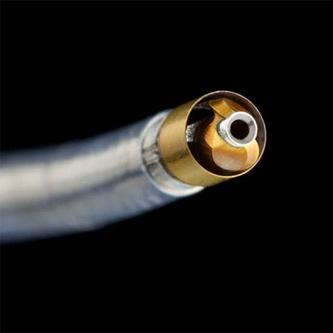
Schematic Diagram of Phoenix Catheter and Cross-Section
The catheter specifications of this system range from 1.8 mm to 2.4 mm, enabling surgical access to arteries with diameters less than 2.5 mm. Its proprietary over-the-wire delivery system facilitates navigation through tortuous and complex arterial structures. Furthermore, the entire system can be operated by a single practitioner and does not require additional equipment for the dedicated removal of excised tissue during the procedure, thereby significantly reducing labor costs and enhancing medical efficiency. This system has received FDA approval.
Kaiser Permanente Ventures made two investments in AtheroMed’s private equity rounds in March 2012 and April 2013, totaling over $15 million. The company was acquired by Volcano Corporation for $117 million in May 2014.
3、TriVascular
TriVascular, founded in 1998 and headquartered in Santa Rosa, California, is dedicated to developing new medical devices to address current clinical gaps, particularly in endovascular repair, where it has pioneered numerous innovative designs.
The company’s first-generation products are next-generation endovascular stents, primarily used for the treatment of aneurysmal disease in the abdominal and thoracic aorta. Its Ovation Prime abdominal aortic stent-graft platform received FDA approval in October 2012. This technology employs polymer-filled sealing rings to create a seal and effectively protect the aortic neck. The polymer is delivered into the artery in liquid form and solidifies into a semi-solid state within 14 minutes to achieve sealing. It provides patients with a minimally invasive, customized treatment option, addressing many limitations of traditional endovascular aneurysm repair devices.
The company raised a total of $100 million in its Series D and Series E financing rounds in June 2012 and November 2013, respectively, with Kaiser Permanente Ventures participating in both rounds.
TriVascular went public in 2014 and completed a merger with Endologix, another company dedicated to the medical treatment of aortic diseases, in January 2016, continuing its new product development.
4、Vapotherm
Vapotherm, founded in 1999 and headquartered in Exeter, New Hampshire, specializes in the research, development, and manufacturing of respiratory support devices to improve clinical outcomes, enhance patients’ quality of life, and further reduce healthcare costs.
In 2009, Vapotherm launched its latest flagship product, the Precision Flow high-flow respiratory device, which features an integrated electronic flow meter and oxygen analyzer, along with a precision flow model designed for 80:20 heliox mixtures.
Precision Flow integrates non-invasive positive pressure ventilation (NIPPV) and basic high-flow nasal cannula (HFNC) therapy, utilizing proprietary Hi-VNI technology to heat and humidify gases. The flow rate, oxygen concentration, and temperature of the gas can be controlled simply and precisely. With gas flow rates exceeding those of traditional devices, it effectively prevents CO₂ rebreathing and helps clear respiratory secretions to open the airways, thereby providing a more comfortable treatment experience for patients suffering from respiratory distress.
Vapotherm’s devices are currently in widespread clinical use at more than 1,000 hospitals across the United States, benefiting over one million patients.
Kaiser Permanente Ventures participated in Vapotherm’s private placement round in April 2013 and its Series B financing round in April 2014, through which Vapotherm raised a total of $49 million.
5、Transcend Medical
Transcend Medical, spun out of ForSight Labs in 2005, is a startup focused on minimally invasive surgical devices for glaucoma.
The CyPass Micro-Stent, developed by Transcend, is primarily designed to widen the drainage pathway into the suprachoroidal space. Compared with traditional invasive glaucoma surgeries, the CyPass Micro-Stent can lower intraocular pressure with less invasiveness. With approximately 3 million people in the United States affected by glaucoma, this represents a substantial market.
Kaiser Permanente Ventures participated in Transcend Medical’s Series B and Series C financing rounds in January 2012 and April 2014, respectively, through which the company raised a total of $38 million.
In January 2016, Alcon, the eye care division of Novartis, announced the acquisition of Transcend, a move that helps Alcon further solidify its leadership in the treatment of glaucoma and cataracts.
6、Torax Medical
Torax Medical, founded in 2002 and headquartered in Minnesota, specializes in the development and manufacturing of medical devices for gastrointestinal diseases.
Torax’s core technology lies in its proprietary dedicated magnets. Its technology platform, known as Magnetic Sphincter Augmentation, enhances defective sphincters through magnetic force to treat gastroesophageal reflux disease and accidental fecal incontinence.
Currently, the company’s flagship product is called LINX, a device that requires minimally invasive surgical implantation but does not alter gastric anatomy.
The LINX device is a small, flexible band of magnetic titanium beads that enhances the lower esophageal sphincter through gradual magnetic attraction, thereby preventing gastric reflux. Patients can resume a normal diet as early as the second day after implantation, with no additional maintenance required. Most importantly, the procedure is reversible, offering significant convenience to patients and eliminating the burden of high-dose medication for suppressing acid reflux.
Kaiser Permanente Ventures made its initial investment in Torax Medical during the company’s Series D round in September 2012. Four years later, in June 2016, it reinvested in Torax Medical’s Series E round, underscoring Kaiser’s strong confidence in the company’s business prospects.
In March 2017, Ethicon, a subsidiary of Johnson & Johnson MedTech, announced the acquisition of Torax Medical, although the specific transaction amount was not disclosed.
7、CytoPherx
CytoPherx, founded in 2007, was a company focused on the development of clinical medical devices for acute kidney injury. Kaiser Permanente Ventures invested in CytoPherx during its Series C financing round in January 2012, at which time the company was initiating a new large-scale clinical trial for patients with renal failure. Its vision was to leverage its proprietary device to assist the 2.79 million patients suffering from acute renal failure across the United States, representing a multi-billion-dollar market opportunity.
However, the promising vision failed to materialize. This was also the final round of financing for CytoPherx, whose official website is now closed, making it the only investment misstep for Kaiser in the past six years.
8、Valeritas
Valeritas, founded in 2006 and headquartered in New Jersey, USA, is a company focused on the development of drug delivery medical devices, with its initial R&D efforts centered on diabetes treatment.

Valeritas' V-Go Insulin Delivery Device
The company has launched an insulin delivery device called V-Go, which leverages its proprietary h-Patch technology to precisely preset and administer insulin based on meal times, enabling millions of patients with type 2 diabetes to receive meticulous daily insulin therapy. The h-Patch technology is currently under further development, with the aim of expanding its scope of application.
Kaiser Permanente Ventures invested in the company during its $45 million Series D financing round in July 2014.
9、Chrono Therapeutics
Chrono Therapeutics, founded in 2004, currently focuses on the addiction management market. Chrono’s addiction management platform combines drug delivery, embedded sensor technology, and personalized behavior tracking.
Chron’s first application focuses on smoking cessation. For smokers, timely drug administration helps reduce cravings. Chrono’s wearable transdermal drug delivery device extends nicotine delivery to the moments when cravings are most intense, creating a “peak-and-trough” pattern of nicotine delivery throughout the day. This technology has demonstrated favorable clinical outcomes, and its applications will be expanded in the future to include opioid addiction, Parkinson’s disease, and pain management.
Chrono’s Series B financing round in 2016 was led by Kaiser Permanente, with participation from eight other investment firms, raising a total of $47.6 million.
1、Astute Medical
Astute Medical, founded in 2007 and headquartered in San Diego, USA, is a company specializing in the development of novel biomarker diagnostic technologies. Its currently launched products primarily focus on the diagnosis and risk assessment of acute kidney injury.
In 2014, Astute Medical launched its acute kidney injury risk assessment test, NephroCheck, which received FDA approval.
This test leverages the biomarkers for acute kidney injury—urinary insulin-like growth factor-binding protein 7 (IGFBP7) and tissue inhibitor of metalloproteinases (TIMP)—to assist clinicians in conducting short-term risk assessments within 15 minutes, which is undoubtedly of immense help to critically ill patients for whom every second counts in the fight against life-threatening conditions.
Currently, Astute Medical is continuing to develop diagnostic technologies for diseases that lack adequate diagnostic methods, including acute coronary syndrome, cerebrovascular injury, and sepsis.
Kaiser Permanente Ventures invested in the company during its $40.4 million Series C financing round in June 2012. According to Kaiser Permanente’s official website, they continue to participate in this corporate initiative.
2、Genome Medical
Genome Medical closed its Series A financing round at the beginning of 2018, led by GE and followed by three other investment firms, including Kaiser Permanente Ventures. The total funding amount was $11 million, marking Kaiser’s first investment in 2018.
Genome Medical was founded in 2016 by three leading figures in the field of genetics. It is the world’s first clinical practice program in genomic medicine and has completed three rounds of financing to date, raising a total of $23 million.
Genome is focused on building a remote genomics platform. Leveraging its top-tier clinical genetics experts and cutting-edge telehealth technology network, it provides genetic counseling services across all 50 U.S. states, and delivers medical services by genetics specialists and primary care physicians in 30 states.
The company plans to further expand its service scope in 2018 and deepen its research in oncology, cardiovascular diseases, and reproductive genetics. Genome’s prominent investors will also assist in extending its services to hospitals and large healthcare groups, enabling these institutions to accelerate the adoption of genetic therapies through collaboration, thereby achieving a win-win outcome.
3、Oxford Immunotec
Oxford Immunotec, founded in 2002 and headquartered in Abingdon, UK, has grown into a global, high-growth medical diagnostics company. Leveraging its innovative T-cell testing technology, the company develops novel diagnostic tests for a variety of diseases.
Oxford Immunotec’s first product is the T-SPOT®.TB test, an innovative in vitro diagnostic method that primarily works by measuring T cells triggered by Mycobacterium tuberculosis. It is used for the diagnosis of latent tuberculosis infection, replacing the tuberculin skin test that has been used for many years, and providing a new diagnostic option for patients who respond poorly to skin testing.
The product has been approved for sale in more than 50 countries, including the United States, China, and Japan. Its second-generation products are test kits for a range of tick-borne diseases, such as Lyme disease.
Kaiser Permanente Ventures invested in Oxford Immunotec in June 2012; the company announced its initial public offering (IPO) in 2013, issuing 5.4 million shares.
4、iRhythm Technologies
iRhythm Technologies, founded in 2006 and headquartered in San Francisco, is dedicated to the development and sales of innovative diagnostic devices.
The Zio® Patch ambulatory cardiac monitor launched by the company received strong support from the California HealthCare Foundation (CHCF) in 2012, with CHCF investing $1.5 million in iRhythm to help promote the Zio® Patch ambulatory cardiac monitor in public hospitals, outpatient clinics, and rural areas.

iRhythm’s Zio® Patch Ambulatory Cardiac Monitor
The Zio® Patch is a breakthrough approach to cardiac monitoring and the lightest arrhythmia diagnostic device on the market, offering up to 14 days of monitoring to significantly simplify and optimize the diagnosis and management of arrhythmias.
Kaiser Permanente Ventures invested in the company during its 2012 private placement round and its Series D financing in 2013. iRhythm has since gone public via an IPO, with a current market capitalization of $539 million.
Agile Therapeutics
Agile Therapeutics, founded in 1997 and formerly known as Levotech (renamed in 2001), is headquartered in Princeton, New Jersey. The company specializes in the development of women’s health medications and topical products.
The company has launched Twirla, a once-weekly contraceptive patch. Built on its patented Skinfusion transdermal technology, the product features optimized adhesion and abrasion resistance, offering women a new contraceptive option that eliminates the hassle of daily oral contraceptive pills. Agile’s short-term goal is to establish a leading position in the U.S. contraceptive market, which totaled $5.5 billion in 2016.
Kaiser Permanente Ventures invested in Agile’s Series C financing round in 2012. Agile went public in 2014 and currently has a market capitalization of $181 million.
Given the large number of projects in this category and the space constraints of this article, the author will streamline the descriptions as much as possible. Interested readers are encouraged to visit the official websites for detailed information.
1、Protenus
Protenus’s Series B financing marks the second investment by Kaiser Permanente Ventures since the beginning of 2018. Just six months earlier, Kaiser had already participated in the company’s Series A round, leading both investments. This underscores Kaiser’s strong confidence in the company.
Protenus, founded in 2014, has built a large-scale AI-powered healthcare data platform to audit medical records across major national healthcare systems, addressing the exponential growth of data following the digitization of medical records and better safeguarding patient data privacy.
Leveraging AI with clinical learning capabilities, the platform can analyze whether patient data is being used appropriately, reduce improper data access, and improve the efficiency of physicians’ data retrieval.
2. Collective Medical
All three companies serve hospitals and healthcare institutions, aiming to enhance operational efficiency and reduce healthcare costs; however, each company has a distinct strategic focus.
Collective Medical was founded in 2006 and is dedicated to developing digital tools that enable seamless collaboration among healthcare teams, thereby enhancing medical efficiency.
Currently, Collective Medical has launched two software solutions—EDIE and PreManage. EDIE is an interconnected platform specifically developed for emergency departments across various regions, enabling healthcare teams to promptly access patients’ visit information from other emergency departments, thereby ensuring the efficiency of emergency care.
PreManage categorizes patient populations and tracks risks, enabling the system to push standardized care pathways for each group to the nursing team during patient visits, thereby conserving medical resources.
Kaiser invested in Collective Medical during its Series A financing round in November 2017, with Galen Health raising a total of $47.5 million.
3、Ingenious Med
Ingenious Med, founded in 1999, is a company that provides inpatient information management systems, dedicated to automating the workflows of hospital teams. Its product offerings include the IM Visit Management Program and clinical tools. The former helps physicians track inpatient costs, generate billing information for finance departments, and facilitate communication among doctors; the latter primarily serves as an electronic prescription system and electronic medical record documentation tool.
Caesar invested in Ingenious in 2015. This round of financing was led by North Bridge Growth Equity, with the specific amount undisclosed. In 2014, North Bridge had already acquired a majority stake in Ingenious.
4、Health Catalyst
Health Catalyst, founded in 2008, has built a large-scale data platform housing information on over 85 million patients. By leveraging technologies such as machine learning, it provides analytical solutions for the complex electronic data in the healthcare industry, thereby optimizing the quality of medical services and reducing costs.
Health Catalyst’s Series B financing round in March 2013 was led by Kaiser Permanente, which continued to invest in Catalyst during its Series C round in 2014, bringing the total funding from both rounds to $71 million.
5、Big Health
Big Health, founded in 2010, is a digital health company focused on sleep health. Its first product, Sleepio, personalizes sleep improvement plans through a simple online test, delivering weekly sleep reports and guides to enhance users’ mental well-being and restore their sense of happiness.
The program was proven in clinical trials to be as effective as CBT (Cognitive Behavioral Therapy), helping 76% of insomnia patients regain healthy sleep.
Caesar participated in the company’s Series B financing round in July 2016, which raised a total of $12 million.
6、Kit Check
Kit Check, founded in 2011, has grown into a leader in automating medication tracking and restocking management for hospital pharmacies.
Kit Check’s services combine cloud-hosted software with IoT technology, reducing medication restocking time by 72%–96% while significantly improving accuracy. Additionally, its Narc Check product streamlines the documentation of intraoperative medication usage, medical waste, and billing records, thereby enhancing operational efficiency in healthcare institutions. Currently, Kit Check’s products are widely used in hundreds of hospitals across the United States and Canada.
Kaiser invested in Kit Check during its Series B and Series C financing rounds in January 2015 and June 2016, respectively, with Kaiser leading the Series B round.
7、Hometeam
Hometeam, founded in 2014, specializes in home care for the elderly. The company provides customized personal care plans and matches clients with professional caregivers. Its operational model can be likened to the “Uber of home care,” offering greater peace of mind for seniors and their families.
Meanwhile, Hometeam provides professional training for home caregivers, enabling the elderly to receive more specialized care while allowing practitioners to earn higher compensation as their skills improve.
Hometeam received a $5 million investment from Kaiser in its Series B financing round in February 2016.
8、Vidyo
Vidyo, founded in 2005, is a technology company specializing in remote video communications. Vidyo’s products are dedicated to simplifying and optimizing users’ video communication experiences. In the healthcare sector, telemedicine has emerged as a rapidly growing field; although Vidyo is not itself a telemedicine company, it has maintained close collaboration with the medical community.
Unlike software such as Skype, Vidyo’s video communications are encrypted and HIPAA-compliant, making it favored by the healthcare industry. It has established partnerships with Philips, the California Telehealth Network, Mercy Health, and the Mayo Clinic.
In December 2015, Vidyo raised $15 million in its Series E financing round, which was led by Kaiser.
9、Validic
Validic was founded in 2010. Unlike the myriad wearable device companies that have sprung up in recent years, Validic focuses on integrating data from various smart home devices, fitness equipment, clinical sensors, and wearable sports devices worldwide.
In August 2017, Validic launched its next-generation data connectivity platform, Inform, featuring a more robust and scalable architecture capable of streaming real-time data into systems. As the healthcare industry’s first data integration and connectivity platform, this new release marks a significant step forward for Validic in telemedicine, preventive care, and continuous monitoring, providing the most effective means for capturing personal health data.
In April 2015, Validic completed its Series B financing round, led by Kaiser Permanente, raising a total of $12.5 million.
10、Ginger.io
Ginger.io, founded in 2011, is a leading medical technology company specializing in mental health management.
Leveraging machine learning technologies developed at the MIT Media Lab, Ginger.io utilizes smartphone data and user self-reports to assess users’ mental health status. It facilitates timely communication with care teams when issues become severe, enabling prompt and targeted interventions that reduce the need for in-person hospital visits and lower healthcare costs.
In 2014, Ginger.io completed its Series B financing round, raising a total of $20 million, with Kaiser Permanente leading the investment.
11、Omada Health
Omada Health, founded in 2011, launched a management platform focused on chronic diseases such as type 2 diabetes and obesity. It has achieved significant results among its more than 120,000 users and continues to explore the application of such services to the management of additional chronic conditions.
Caesar participated in Omada’s Series B financing round in April 2014, which raised a total of $23 million.
12、Movable
Movable, founded in 2011, is a wearable device company. Its flagship product is the Movband, a wristband primarily targeting schools and enterprises by integrating employee and student health data with broad population health analytics.
Caesar participated in Movable’s seed funding round in June 2013, which raised a total of $1.9 million. As information about Movable is no longer available on Caesar’s official website, it can be inferred that Caesar has exited this project.
13、MetricStream
MetricStream, founded in 1999, is a company specializing in the development of enterprise management software. Its unique solutions have been adopted by many pharmaceutical, medical device, energy, and automotive companies, as well as healthcare systems. Therefore, the author categorizes this company under the HCIT (Healthcare Information Technology) sector. Their products primarily serve quality process control, regulatory compliance, risk management, and corporate governance.
In September 2014, MetricStream raised $60 million in financing, with Kaiser participating in this round.
A review of Kaiser’s investment projects over the past six years reveals that this healthcare giant has distinct investment preferences and styles, which have undergone certain shifts over time.
In terms of investment style, Caesar, a seasoned veteran who has navigated the healthcare industry for many years, pursues steady gains through a conservative approach.
Among these 27 companies, it is rare to see Kaiser making investments at the project’s inception; typically, Kaiser only opens its purse strings during later funding rounds, such as Series B or even Series E.
This is also consistent with the statement on the official website of Kaiser Permanente Ventures,They prefer teams with a proven track record of success., among the projects invested in by Caesar Capital, there are quite a few enterprises that have been established for over a decade.
It is precisely thanks to this prudence and steadiness that the survival rate of these 27 projects has been remarkably high, with several emerging as leaders in their respective fields.
As for investment preferences, clues can also be gleaned from the classification of 27 companies. First, as operators of large-scale clinical medical networks,Caesar has an urgent need for innovation in clinical medical devices., so the share of investment in clinical medical devices and innovative diagnostic technologies remained substantial over these six years, and this trend has not changed over time; the clinical field also encompasses various aspects.
This investment relationship is highly beneficial for both Caesar and the investee. The investee can rapidly achieve large-scale adoption by leveraging Caesar as an entry point, while Caesar gains early access to cutting-edge clinical technologies.
Kaiser, in addition to its vast network of clinical medical institutions,It also operates health insurance businesses, which is its unique Kaiser model.Given the sheer scale of such a conglomerate, more scientific management approaches are naturally required to enhance efficiency. Consequently, Kaiser has spared no effort in investing in management-related projects, with software vendors such as MetricStream also earning its favor.
With the widespread adoption of telemedicine, artificial intelligence, and big data in healthcare, Kaiser Permanente has naturally refused to lag behind. As evidenced by its investments in the Health Care Information Technology (HCIT) category, Kaiser is gradually intensifying its efforts in this area.
However, the author found thatKaiser did not follow the trend by making significant investments in the wearable device market., the only Movable was not ultimately chosen by Caesar.
This may be partly due to the large number of products in this area with significant functional overlap, requiring further market validation; on the other hand, such technologies are not particularly urgent for healthcare institutions like Kaiser.
Investment in HCIT,Kaiser has primarily focused on areas such as telemedicine technology and data platforms., such as Kit Check’s advanced pharmacy tracking system and Protenus’s electronic health record (EHR) management platform. The technologies from these initiatives can quickly yield positive impacts on Kaiser Permanente’s own medical operations, enhancing efficiency and quality of care while effectively reducing healthcare costs.
References:
1. https://www.medgadget.com/2014/01/atheromed-gains-fda-approval-for-phoenix-atheroctomy-device.html
2. http://www.northbaybusinessjournal.com/industrynews/technology/5185245-181/trivascular-merges-with-endologix
3. http://www.kpventures.com/Home/PressRoomDetails/44
4. https://www.agiletherapeutics.com/index.html
5、https://www.collectivemedicaltech.com