

Gengmei App's Liu Di Strengthens Expansion into Tier-2 and Tier-3 Cities as Medical Aesthetics Industry Enters Deep Reform Phase
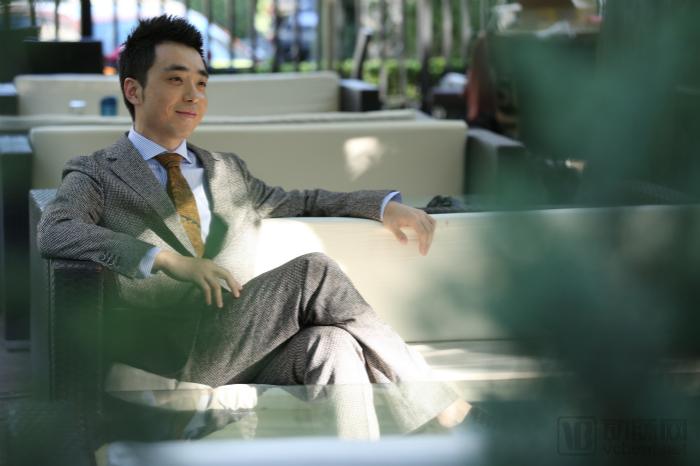
Liu Di, Founder and CEO of Gengmei
Information asymmetry and high marketing costs have jointly led to the characteristic of high gross profit margins but low net profit margins in China's medical aesthetics industry, creating an opportunity for transformation in the medical aesthetics market.
Medical aesthetics apps are among the earliest disruptive forces to emerge. Compared with traditional offline channels and search engine advertising, medical aesthetics platforms have addressed trust issues between consumers and providers, enhanced industry transparency, and rectified the longstanding industry imbalance of prioritizing marketing over service.
After several years of development, only a few leading players remain in the medical aesthetics app market, with Gengmei standing out as a frontrunner. In May 2017, it launched the “Life Is Not Innate” brand upgrade campaign, which sparked discussion and attracted attention from 30 million people within seven days.
According to data from Quest Mobile, a domestic third-party mobile data monitoring platform, the Gengmei App maintained an industry-leading number of active users during November and December 2017 and January 2018, positioning it as a top-tier platform in the first echelon.
As of December 2017, the Gengmei App had partnered with 7,000 licensed medical aesthetic institutions and 15,000 practicing physicians. The platform had accumulated 3.4 million real-life cosmetic surgery case studies, covering 204 cities worldwide as well as five overseas countries and regions, helping 22 million users enhance their appearance.
What changes occurred in the medical aesthetics market in 2018, and what new plans did Gengmei introduce for its community, e-commerce, and enterprise services? To find out, a reporter from VCBeat (WeChat ID: vcbeat) interviewed Liu Di, founder and CEO of Gengmei, to gain insights into the company’s new developments in 2018.
Liu Di believes that after two decades of the “Putian Model,” China’s medical aesthetics market has undergone rapid upgrading and iteration since 2016. “Apart from a few well-established clinics that can sustain their performance by leveraging their historical brand equity and technical expertise—albeit with sluggish growth—over 95% of institutions have found that customer acquisition, along with the long-standing operation model centered on it, has clearly become ineffective.”
As for the reasons, this is closely related to changes in the structure and habits of the consumer base. A large number of post-80s and post-90s consumers are flocking into the medical aesthetics market, becoming a new engine for industry growth. Consumption in medical aesthetics has shifted from luxury and conspicuous behavior to experience-oriented consumption that emphasizes efficacy.
“The consumption habits and information-gathering capabilities of consumers born in the 1980s and 1990s are vastly different from those of the previous generation. They are immune to traditional hard-sell advertising and rely more on social networks, professional platforms, and consumer reviews to make purchasing decisions, as seen on platforms like Taobao, Ctrip, and Dianping.” Liu Di believes that the medical aesthetics industry’s outdated model, which emphasizes marketing over service, is no longer suitable for younger consumers.
“Aesthetic medicine consumers are becoming increasingly rational. Customer acquisition channels have shifted from the earlier reliance on Baidu pay-per-click bidding and television advertising to a current model dominated by internet-based aesthetic medicine platforms and new media matrices.”
VCBeat has learned that for institutions in first-tier cities with high customer acquisition costs, the cost of acquiring a single in-store consumer is around RMB 5,000. “After Baidu Search implemented strict controls on medical aesthetics advertising, these institutions found themselves with advertising budgets but unsure where to allocate them.”
To address the core pain points of C-end consumers and merchant institutions, Liu Di revealed, “The services provided by Gengmei effectively reduce customer acquisition costs. Acquiring a single in-store customer on the platform costs only RMB 100–500. The platform precisely recommends the most suitable customers to institutions and provides guidance on user management after customers make in-store purchases.”
In 2017, product changes at Gengmei mainly went through three stages, focusing on user stickiness, distribution efficiency, and commercialization.
In the first phase, design and development efforts primarily focused on enhancing user stickiness. During this period, features such as medical aesthetics Q&A were launched, the diary system was deeply optimized, and live streaming functionality was introduced, encouraging users to actively engage in the beauty enhancement community.
"In the medical aesthetics industry, avenues for consumers to access authoritative knowledge remain limited. With this latest community upgrade, Gengmei has prioritized trending questions and high-quality articles based on user interest, while also ranking professional, high-quality answers and those with more likes prominently beneath each question. This effectively creates a specialized, vertical 'Zhihu-like' platform within the medical aesthetics sector," said Liu Di. He believes that outstanding physicians and medical aesthetics influencers can distinguish themselves through high-quality responses, thereby gaining more followers.
In the second phase, we primarily enhance the conversion efficiency from user demand to transaction by establishing merchant tiering and implementing personalized homepage feeds. This enables users to quickly find what they are looking for and allows institutions of all sizes to connect with the most suitable users on the platform.
The new homepage has removed the commonly used carousels and grid modules, adopting a pure feed-stream model instead. “Content distribution takes into account user interests, geographic location, life-cycle stage, and prior product purchase history to determine the types of content displayed to each user. Content quality is evaluated based on journal entry popularity, system-assessed journal quality, interactions between publishers and users, and the most recent update time of journal entries. The ultimate goal is to enable users to browse high-quality content that aligns with their interests.”
“In addition, the Gengmei platform conducts comprehensive quality reviews of listed medical aesthetic institutions and physicians, accumulating data related to industry qualifications. Data such as organic user feedback, purchase volume, and engagement levels are updated in real time. Based on random inspections and follow-up visits to institutions, the database is continuously refined, and physicians are graded using a competency quadrant framework. Physicians with higher ratings not only gain access to tailored financial services but also receive premium resources from the platform, including dedicated brand packaging teams to help them strategize their positioning on the platform,” said Liu Di.
In the third phase, we focused on the B2B sector, established a commercial traffic management system, implemented various effective marketing strategies for different merchants, and achieved substantial revenue growth.
In 2017, Gengmei rolled out a major update to its B-side products. “Physicians can now query their own project view rates, order placement rates, consultation rates, actual in-clinic consumption rates after order placement, and case publication rates. This enables full visibility into the platform’s closed-loop transactions. By comparing their individual performance metrics against city-level averages, physicians can strategically address their areas of weakness.”
As of December 2017, Gengmei App’s revenue increased by more than 500% compared to the previous year. Regarding Gengmei’s product focus for 2018, Liu Di stated, “We will focus on making users perceive medical aesthetics as a routine service. Specifically, this entails making medical aesthetic services more high-frequency, localized, and affordable. These are also Gengmei’s three expectations for the development of China’s medical aesthetics industry in 2018.”
The prerequisite for the platformization of medical aesthetics apps is traffic, but the ability to monetize that traffic stems from operational excellence. In empowering merchants, Gengmei, as a leading entry point for medical aesthetics information, commands massive traffic. It covers the entire process—from traffic acquisition and transactions to medical services and post-operative management—enabling precise advertising placement for institutions, which has made it highly favored.
For key core merchants, Gengmei adopts a “stable plus additional” advertising cooperation model. “This volume-guaranteed advertising partnership is currently progressing well, with many processes being streamlined. Each city now targets only 1 to 3 KA (Key Account) merchants, i.e., core merchants. In traditional channels, the ratio of advertising spend to sales revenue for offline medical aesthetic institutions typically ranges from 1.5:1 to 2:1. On the Gengmei platform, the efficiency of advertising expenditure is 2–5 times higher than that of traditional channels, reaching up to 1:10 at its peak.”
In response to shifts in consumer behavior and market dynamics, Gengmei has collaborated with merchants to refine innovative customer acquisition strategies and corresponding monetization models. “In 2018, we will focus on enhancing operational synergy between the platform and merchants to help them generate greater revenue, which will naturally lead to increased gains for us as well.”
Expanding into second- and third-tier markets to reach a broader population is also one of Wanmei’s established strategies. “Users in second- and third-tier cities also have aesthetic enhancement needs, but we have observed that they often purchase surgical services from first-tier cities, traveling long distances to Beijing and Shanghai for procedures, while overlooking local doctors and institutions,” Liu Di revealed. A significant reason for this is information asymmetry; users are either unaware of or do not trust the doctors and medical institutions in their own cities.
“In 2018, Gengmei’s plan is to allocate resources for in-depth operations in second- and third-tier markets. We will invest human resources by adding business development (BD) positions and staff in these cities, deploy advertising resources across media and outdoor channels, launch promotional campaigns, and secure featured placements on the Gengmei platform. The ultimate goal is to enable users to choose local institutions and doctors that are closer, more affordable, and offer guaranteed technical outcomes for their surgeries.”
As a leading medical aesthetics platform, Gengmei has seen increased merchant reliance on its ecosystem. By enhancing overall operational efficiency across its community, e-commerce, and enterprise service segments, the platform has continuously strengthened its comprehensive monetization capabilities.
Liu Di concluded, “The direction of consumption upgrading across various industries is largely similar. I believe that premiumization, standardization, and emotional connection are the three foundational pillars. Frankly speaking, talent capable of excelling in any one of these three areas is extremely scarce within the traditional medical aesthetics sector, which constitutes the biggest bottleneck to industry development. The Gengmei model has entered the deep-water zone of industry transformation alongside broader sectoral changes. We look forward to seeing a complete revitalization of the entire medical aesthetics industry during the 2018–2020 period.”