

First FDA-Approved Seizure Alert Wearable Paves Way as Apple and IBM Advance in Epilepsy Prediction
According to WHO data, by the end of 2017, there were approximately 50 million epilepsy patients worldwide. Due to the limitations of existing treatment technologies, one-third of these patients had poorly controlled seizure activity.
Technologies for epilepsy prediction and corresponding protective devices have recently achieved encouraging results. On December 5, 2017, EBioMedicine, a journal published by The Lancet, released a study led by scientists from IBM Research–Australia and the University of Melbourne, demonstrating an artificial intelligence-based system capable of predicting epileptic seizures.
On February 5, 2018, Empatica’s Embrace became the world’s first smartwatch approved by the FDA for neurological applications. This milestone victory opened new avenues for advancement in the field of epilepsy.
Seizing this opportunity, VCBeat (WeChat ID: vcbeat) has conducted a comprehensive review of the epilepsy field, along with the development status of related companies and products within this sector.
Related Companies and Their Products
Empatica and the Embrace Smartwatch
Empatica is a spin-off from the MIT Media Lab, with offices in Cambridge, Massachusetts, and Milan, Italy. The company has 45 employees and has independently developed its internal systems (hardware, software, and data science). It also manufactures the E4 research device (a sensor), which has been sold to thousands of institutions, including top-tier hospitals, research organizations, and pharmaceutical companies worldwide. Data collected by this device has been used in research on various conditions, such as stress, sleep disorders, migraine, and depression.
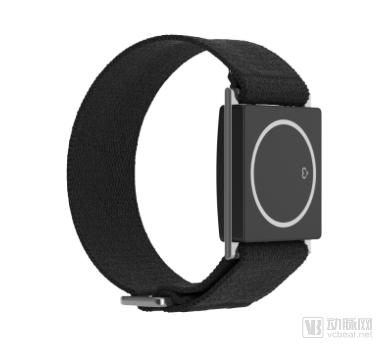
Embrace is a smartwatch developed by Empatica and is the only FDA-approved smartwatch for seizure monitoring. It continuously captures general physiological health data, monitoring sleep, stress, and physical activity.
Its core components include an EDA sensor, a gyroscope, a three-axis accelerometer, and an ambient temperature sensor. The top layer is made of anodized aluminum, and the electronic board within the core houses a CPU, memory, Bluetooth antenna, light-emitting diode (LED), touch sensor, accelerometer, and gyroscope.
When the wearer experiences a seizure, Embrace uses sensors to detect the event and sends an alert to the wearer’s family. General users can also wear it to track their activity and stress levels. Upon detecting a potential seizure, the wristband vibrates; if the user responds to the vibration, it is considered a false alarm. If there is no response, Embrace signals the paired smartphone to issue warnings to the user’s doctor and family members. Additionally, patients with epilepsy can use the detected rise in stress levels as an early cue to practice breathing exercises or meditation for prevention.
Embrace leverages advanced machine learning to identify convulsive seizures, send alerts to caregivers, and provide analysis of sleep, rest, and physical activity. In a multi-center clinical study, 135 patients diagnosed with epilepsy were admitted to Level IV epilepsy monitoring units for continuous video-electroencephalogram (video-EEG) monitoring while wearing Empatica devices. Over a period of 272 days, Embrace recorded 6,530 hours of patient data, including 40 generalized tonic-clonic seizures, with the Embrace algorithm achieving a 100% detection rate for these seizures.
What sets Embrace apart from other seizure detection systems is its ability to measure multiple seizure metrics. Its unique feature is the use of electrodermal activity (EDA) signals for monitoring, a physiological signal used by stress researchers to quantify changes associated with sympathetic nervous system activity, also known as the “fight or flight” response. Since April 2017, Embrace has been approved in Europe as a medical device for seizure monitoring and alerting.
Smart Monitor and Smart Watch
Digital health company Smart Monitor, founded in 2009 and headquartered in Silicon Valley, USA, integrates sensors, mobile and cloud technologies with big data analytics into a seamless environment. It aims to provide monitoring and tracking solutions for patients with chronic diseases. Its patented solution empowers chronic disease patients, enhances safety, ensures privacy, delivers timely and meaningful interventions, and provides significant convenience for family members and caregivers.
“Smart Monitor’s Inspyre is a valuable tool for family members of patients with epilepsy, providing timely alerts, reassurance, and enhanced safety,” said Dr. Robert S. Fisher, Professor of Neurology at Stanford University.
SmartWatch is the flagship product of Smart Monitor. It is an intelligent, non-invasive watch that continuously monitors users and immediately alerts family members and caregivers in the event of abnormal movements, such as generalized tonic-clonic seizures.
When the SmartWatch detects repetitive shaking motions, it automatically sends text and phone call alerts from the user’s Bluetooth-connected Android phone to designated emergency contacts. Within seconds, family members will receive a SmartWatch alert containing information such as the date, time, GPS location, and duration of the activity. The SmartWatch Inspyre™ reviews and analyzes the collected data and stores it in a HIPAA-compliant cloud.
SmartWatch offers numerous assistive features that help users address safety and therapeutic concerns. Among these, the medication reminder function allows users to set up alerts for taking medications or other useful notifications. For many patients with epilepsy, adhering to a daily medication regimen can be challenging, making medication reminders highly valuable and potentially life-saving at any moment.
Another useful feature is the “Get Help” button, which allows users to immediately notify parents or caregivers and, if necessary, use the SmartWatch’s GPS functionality to quickly guide them to the user’s exact location. With this feature, users can also receive assistance during non-GTC seizures that are not detected by the SmartWatch.
Apple and Apple Watch
Apple has maintained a leading position in research on wearable devices, and the sales volume of the Apple Watch has proven that it is far from being a superfluous product. The new-generation Apple Watch Series 3 features more robust health monitoring capabilities, enabling around-the-clock heart rate measurement during rest, walking, or post-exercise recovery. If a user remains inactive for 10 minutes while their heart rate rises above a certain threshold, the Heart Rate app will promptly issue an alert.
According to Apple’s official description, the heart rate sensor in the Apple Watch utilizes photoplethysmography (PPG). This technology is based on a simple fact: blood appears red because it reflects red light and absorbs green light. The Apple Watch employs green LED lights paired with light-sensitive photodiodes to measure the volume of blood flowing through the wrist at any given moment. When your heart beats, blood flow in the wrist increases, leading to greater absorption of green light; between beats, blood flow and absorption are reduced. By flashing the LEDs hundreds of times per second, the Apple Watch calculates the number of heartbeats per minute, i.e., the heart rate. The heart rate sensor supports a range of 30–210 beats per minute. Additionally, the sensor is designed to compensate for low signal levels by increasing LED brightness and the sampling rate.
Smart Monitor has recently launched the SmartWatch Inspyre™ app for Apple Watch to ensure compatibility with iOS. This new application employs a unique algorithm to identify repetitive shaking movements exhibited by the wearer; once such behavior is detected, it indicates that the patient is experiencing a convulsive epileptic seizure. The app can send alerts to family members and caregivers, enabling them to provide immediate assistance to the individual having the seizure. Many people living alone have already benefited from this device.
ResearchKit is an open-source software tool designed for medical researchers, physicians, and scientists to facilitate data collection from individuals with conditions such as Parkinson’s disease and diabetes. In September 2015, Apple partnered with ResearchKit to focus on epilepsy research, a collaboration that concluded in 2017.
During the 10-month investigation, participants tracked their seizures using a study-customized application. When participants sensed an epileptic "aura," they opened the app and commanded the Apple Watch to record heart rate sensor and accelerometer data, as well as gyroscope data from the iPhone, within a 10-minute window. During this period, the app prompted users to respond to reflex and awareness tests.
Following the conclusion of a seizure, participants were surveyed regarding seizure "auras," loss of consciousness, and potential seizure triggers. The testing process recorded nearly 1,500 seizure events in total. Data indicated that 37% of seizures were associated with stress, 18% with insomnia, 12% with menstruation, and 11% with excessive fatigue. Other significant triggers included dietary factors, non-adherence to medication schedules, and fever or infection. The application also provides useful features for tracking seizure frequency, prescribed medication usage, and drug side effects, helping individuals better manage their condition.
IBM
On December 5, 2017, The Lancet’s EBioMedicine journal published a study led by scientists from IBM Research–Australia and the University of Melbourne, which employed modern artificial intelligence for epilepsy prediction. The researchers developed this system using electroencephalogram (EEG) data collected from patients with epilepsy.
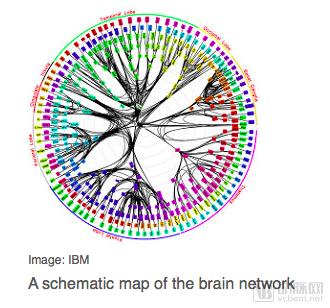
This dataset comprises continuous electroencephalogram (EEG) recordings of brain activity spanning over 16 years, capturing thousands of epileptic seizures in patients who had chips surgically implanted in their brains. The findings were published in the paper “Epileptic Seizure Prediction using Big Data and Deep Learning: Toward a Mobile System.” The study primarily involved deploying mobile processors equipped with heuristic deep learning algorithms in the brain to measure data outcomes during epileptic seizures.
IBM scientists used the aforementioned dataset to train a neural network deep learning algorithm to learn to identify brain activity patterns associated with epileptic seizures. IBM runs the neural network on its ultra-low-power neuromorphic computing chip, TrueNorth. The chip, which is only the size of a postage stamp, can be integrated into wearable devices for epilepsy patients or connected to mobile devices.
Throughout the experiment, the algorithm achieved a 69% success rate in predicting epileptic seizures in patients. Research in this field has been constrained by the limited amount of data available.
Professor David Grayden, Head of the Department of Biomedical Engineering at the University of Melbourne, leverages the world’s most comprehensive electroencephalogram (EEG) dataset collected from intracranial electrodes in epilepsy patients, stating that this technology can be tailored to individual patient needs. “By collecting data from within patients’ skulls and combining it with deep learning and artificial intelligence, we have developed a self-training system capable of learning brain states and preemptively identifying personalized seizure precursors,” said Professor Grayden. “Our algorithms also allow for immediate and straightforward adjustments, giving patients flexible control over alert sensitivity and advance warning times.”
IBM’s system remains in the proof-of-concept stage and has not yet undergone human testing. “This demonstrates the feasibility of establishing a verifiable seizure prediction system,” said Harrer. His team tested the chip in a simulation study using previously collected brain activity data.
Previous epilepsy prediction studies could only be implemented on high-performance computers, whereas IBM’s latest brain-inspired computing chip can be integrated into wearable devices, enabling real-time seizure warnings. However, the prediction accuracy of this technology still needs improvement, primarily due to the unique manifestation of symptoms in each patient and the significant long-term variations in individual brain signals.
When designing seizure prediction devices, designers must also consider patients’ preferences regarding how and when they wish to receive alerts. For example, while sleeping, patients may prefer to “turn down the dial,” so that the system only alerts them when they are at a very high risk of seizure (if at all). Similarly, when driving or engaging in social activities, patients may prefer a more sensitive alert system for safety reasons. “This has always been an important consideration in our system, allowing the advisory system to be adjusted according to individual preferences.”
IBM aims to further enhance algorithm performance by exploring alternative neural network architectures that incorporate additional factors and biomarkers. Meanwhile, it also seeks to develop methods for training algorithms using data collected via extracranial means, rather than through electrodes implanted in the brain.
Graphnet
Graphnet Health is the UK’s leading provider of shared care record software for the NHS and social care services, and in 2016 it collaborated with other members of the Epilepsy Care Alliance to develop the myCarecentric app.
Although the Microsoft Band 2 came preloaded with this software, its sales were lackluster, and there were no significant new developments in 2017. Nevertheless, Graphnet’s research capabilities are unquestionable, and with a powerful partner like Microsoft, it still holds promise in the future wearable device market.
Defects and Opportunities Coexist
Seizure prediction features have already benefited a large number of patients with epilepsy, but false alarms remain an issue. If the accuracy of seizure monitoring can be improved and false alarms eliminated, wearable devices will better serve patients’ families and healthcare providers.
Stereotypes persist regarding wearable devices, whether they are smart bands, watches, or glasses. Although companies position their functionalities broadly, consumers often remain confined by stereotypes, such as the belief that a watch’s primary function should be telling time. This leads consumers to overlook or resist trying out excellent innovative features. Some product features require “interaction” between the consumer and the device to take effect; for example, when manually measuring heart rate with Embrace, the user must ensure the band fits snugly against the skin. Perhaps wearable devices need such “room for operation” to satisfy consumers’ psychological needs for perceived usefulness.
Furthermore, the shift in consumer psychology from “tech-fashion” to “health monitoring” is a gradual process. The key to driving this psychological change lies in in-depth communication with patients, enabling them to understand the devices; as rational individuals, patients will naturally recognize the value of effective equipment. Therefore, if device manufacturers can earn the trust of hospitals, the adoption of these devices will be significantly accelerated, as no recommendation is more memorable than that given by a physician.
Graphnet Health is a partner of Poole Hospital, which promotes the concept of wearable devices to patients while delivering healthcare services. However, Graphnet Health’s previous products (the Microsoft Band series) were suboptimal. Today, next-generation devices are more personalized and intelligent, with features that are more closely aligned with daily life. These substantial improvements have laid a solid foundation for collaboration between device vendors and hospitals.
The validation of seizure prediction systems has demonstrated the practicality of wearable devices, while monitoring algorithms for other diseases are undergoing continuous refinement. In the future, we may see the development of multi-functional wearables such as smartbands, smart glasses, or portable devices worn on other body parts. These devices will not only safeguard patient safety but also assist companies in collecting physiological data, thereby enabling researchers to explore the correlations between such data and various diseases.