

China's Healthcare Industry at a Turning Point: Declining Birth Rates Reshape Opportunities in Maternity, Elder Care, and Commercial Insurance
In January 2018, the National Bureau of Statistics announced that the number of newborns in 2017 was 17.23 million, a decrease of 630,000 from 2016. The number of newborns in China experienced an unexpected negative growth in the second year of the implementation of the “universal two-child” policy.
Does the decline in newborns indicate that China has entered an era of low fertility? How will low fertility affect China’s future demographic structure? What impact will changes in demographic structure have on China’s healthcare industry? By analyzing survey data from authoritative institutions such as the National Health and Family Planning Commission and the United Nations, interviewing partners at top consulting firms, and leveraging insights gained from its long-term focus on the healthcare sector, VCBeat·VBInsight aims to answer these questions.
In this report, “China’s population” refers to the population of mainland China, excluding the populations of the Hong Kong and Macao Special Administrative Regions and Taiwan Province.
Special AcknowledgementsMs. Xing Liping, Partner in Management Consulting for the Healthcare Industry at PwC China、Mr. Lin Jianghan, Partner in the Pharmaceuticals and Healthcare Industry at Roland BergerThe strong support provided during the research phase of this report.
Table of Contents:
I. Current Demographic Situation: The Two-Child Policy Falls Short of Expectations, and the Aging Trend Remains Unstoppable
(1) Both the current population size and the birth rate are at historic lows
(II) Compensatory Childbearing Has Replaced Age-Appropriate Childbearing as the Primary Driver of Current Fertility in China
(3) The population of childbearing age remains at a high level, but fertility intentions are low
(4) The number of newborns will further decrease on a large scale
II. Investment Opportunities: Maternity Care, Elderly Care, and Commercial Health Insurance Embrace Development Prospects
(1) Maternal and Infant Care: Rising Quality Demand Offsets the Risk of Declining Customer Base
(2) Healthy Aging: Diverse and Personalized Elderly Care Needs Drive High Industry Segmentation
(3) Commercial Health Insurance: Objective Conditions and Internal Drivers for Rapid Development Are Already in Place
III. Outlook: Improving Population Quality to Promote China's Sustained Development
I. Current Population Status: The Two-Child Policy Falls Short of Expectations, and the Aging Trend Remains Unstoppable
(1) Both the current population size and the birth rate are at historic lows
In the nearly 70 years since the founding of the People's Republic of China in 1949, the country's total population increased from 540 million at its inception to 1.39 billion by the end of 2017. Due to a large population base and the traditional fertility concept of "more children, more blessings," China experienced explosive population growth for a considerable period. The peak in newborns occurred in 1963, when the number of births reached 29.34 million, with a birth rate exceeding 40 per thousand.
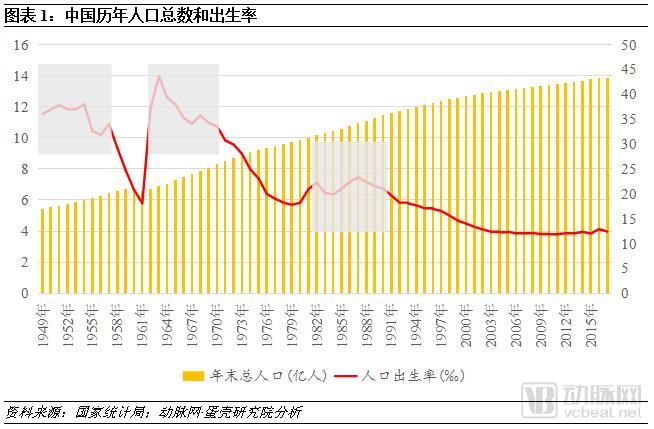
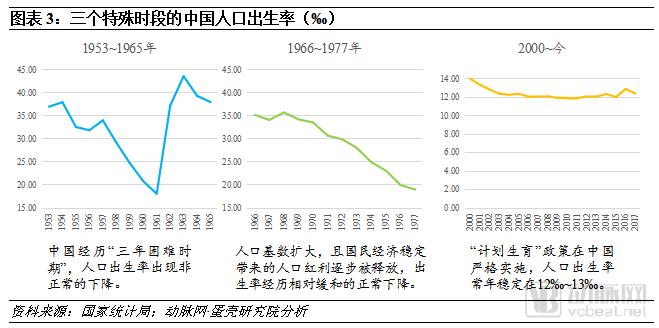
Since the founding of the People's Republic of China, there have been three baby booms: The first occurred from 1949 to 1957. With social stability, improved living standards, and better medical conditions after the establishment of the PRC, the average annual number of newborns reached 20.57 million, with an average crude birth rate of 36‰. The second took place from 1962 to 1970. Following the end of the "Three Years of Difficulties," the national economy gradually recovered, leading to a rapid population rebound. During this period, the average annual number of newborns reached 26.68 million, with an average crude birth rate of 37‰. The third boom spanned from 1981 to 1990. After the launch of reform and opening-up, people’s material lives became more affluent, and those born during the second baby boom collectively reached childbearing age. Although the average annual number of newborns during this period reached 22.68 million, the average crude birth rate was lower than that of the previous two booms, at 22‰, due to the already large population base of 1.1 billion and the implementation of family planning policies since the early 1970s.
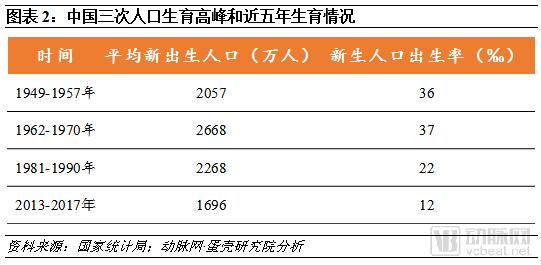
Over the past five years, China’s average annual number of newborns has been 16.96 million, with an average crude birth rate of 12‰. Excluding the abnormal and substantial population decline observed during the “Three Years of Difficulty,” both the absolute number of newborns and the crude birth rate in China are currently at historic lows.
(II) Compensatory Childbirth Replaces Age-Appropriate Childbirth as the Main Force of Current Fertility in China
2016 marked the first year of China’s implementation of the “universal two-child” policy, which yielded immediate effects on the country’s newborn population: in 2016, the number of first-born children was 8.4 million, while the number of second-born children reached 8.2 million. Compared with 2015, the year before the relaxation of the “universal two-child” policy, the number of first-born children decreased by 260,000, whereas the number of second-born children increased by 1.68 million, effectively unleashing the policy dividends.
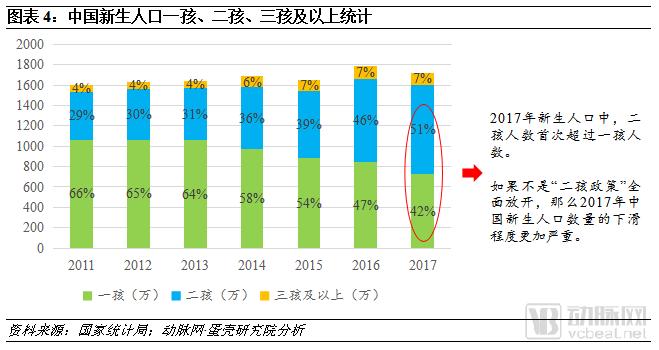
The positive effects of the “universal two-child” policy introduced in 2017 continue to persist: the number of second children has continued to rise, reaching 8.8 million. However, at the same time, a dangerous signal has become increasingly clear: the number of first-born children has plummeted by 1.15 million, dropping to 7.25 million.
From 2011 to 2017, the number of first-born children decreased from 10.65 million to 7.25 million. Meanwhile, the fact that the number of second-born children surpassed that of first-born children for the first time indicates that the main driving force behind childbirth in China has shifted from normal childbearing among women of appropriate age to compensatory childbearing. Without the implementation of the “universal two-child” policy, China’s newborn population would likely have faced a cliff-like decline.
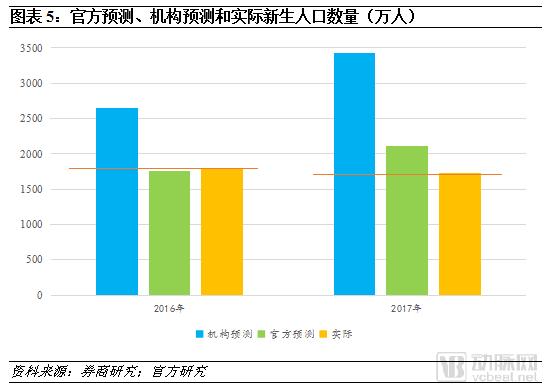
Prior to the relaxation of the “universal two-child” policy, both government authorities and commercial institutions maintained an optimistic outlook on its potential to boost the number of newborns. In a special study, official sources indicated that following the implementation of the “two-child policy,” China’s projected number of newborns in 2017 would be 20.23 million under the low estimate, 21.09 million under the medium estimate, and 21.95 million under the high estimate. Securities firms also estimated in their reports that the number of newborns in China would reach 26.42 million in 2016 and peak at 34.24 million in 2017.
(3) The population of childbearing age remains at a high level, but fertility intentions are low
The persistent decline in the number of first births can be attributed to two possible factors: one is a reduction in the population of women of childbearing age, and the other is a decreased willingness to have children among this demographic. Medically, it is widely recognized that the optimal childbearing age for women is between 24 and 30 years, while pregnant women over the age of 35 are classified as "advanced maternal age." Considering the prevalence of older unmarried or childless women in China's first- and second-tier cities, along with the legal marriage age of 20 for women, we define women aged 20 to 35 as the population of childbearing age.
The most accurate statistical data currently available on China’s population is from the Sixth National Population Census (2010), which indicated that there were 171 million women of childbearing age in 2010. Based on this, we can project the future number of women of childbearing age in China.
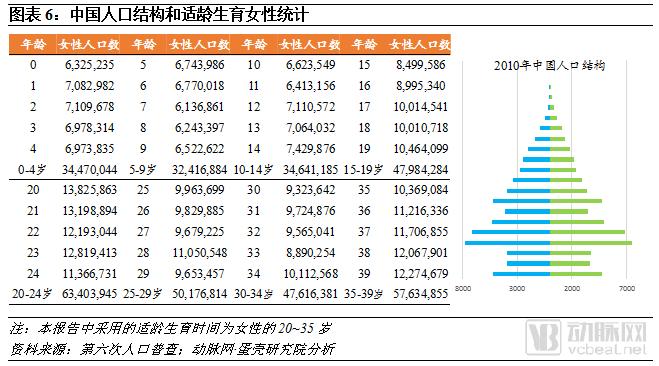
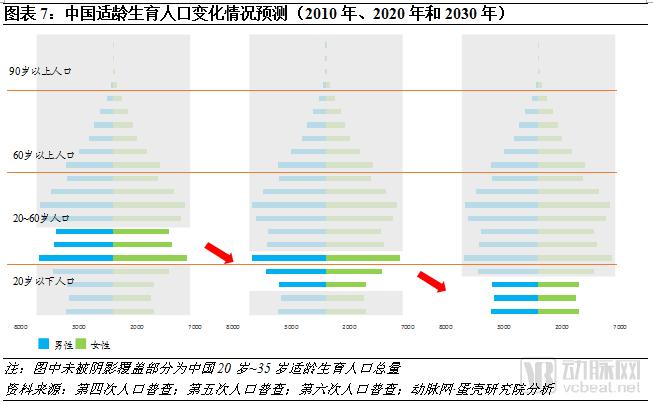
In 2020, the number of women of childbearing age in China was approximately 156 million, a figure projected to decline to 110 million by 2030. This indicates that while the current population of women of childbearing age remains relatively large, the number of first births has been decreasing year by year. Coupled with the persistently low fertility rates observed since the turn of the millennium, we believe that another significant factor contributing to the current decline in population size and birth rates is the reduced willingness to have children among individuals of childbearing age.
There are multiple reasons why modern women of childbearing age or families in this demographic choose not to have children, but they ultimately boil down to three categories: economic considerations, shifting mindsets, and objective circumstances. Economic considerations encompass the direct costs of raising a child, such as education and material consumption, as well as the career development risks women face due to childbirth. Shifts in mindset are primarily correlated with educational attainment; childbearing-age individuals, particularly those born in the 1990s who embrace LOHAS (Lifestyles of Health and Sustainability), no longer view having children as an obligatory life milestone, believing instead that quality of life can be enhanced through alternative means. Objective circumstances refer to factors that render childbearing impossible, such as infertility or same-sex sexual orientation.
(4) The number of newborns will further decline on a large scale
In ten years, the number of Chinese women of childbearing age will have decreased by approximately 40 million compared to the current level. More alarmingly, data from the Sixth National Population Census indicates that the average female population across each age cohort born after 2000 has dropped to 6–7 million, significantly lower than the 8–10 million average observed in each age cohort born in the 1990s. As the demographic dividend from the “universal two-child” policy is fully realized, the sharp decline in the number of women of reproductive age makes it nearly inevitable that China will experience a further large-scale drop in newborn populations. Based on current fertility rates and accounting for the full impact of the exhausted two-child policy dividend, China’s annual number of newborns is projected to fall below 10 million within the next decade.
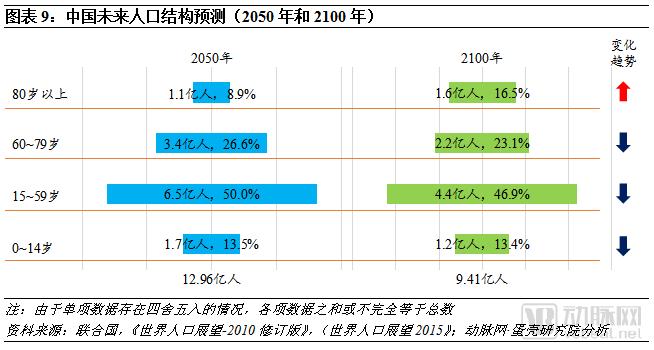
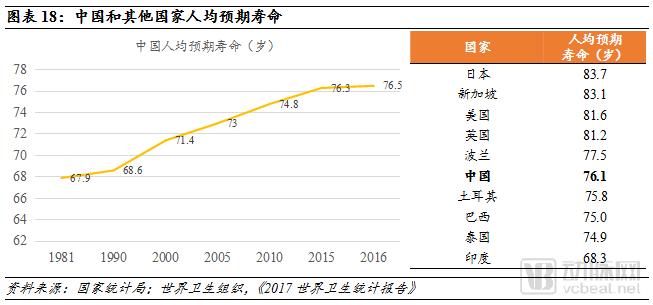
The most significant medium- to long-term impact of declining birth rates in China lies in the transformation of its demographic structure. With advancements in medical technology and improved material living standards, average life expectancy has continued to rise. According to the National Bureau of Statistics, China’s average life expectancy at birth reached 76.34 years in 2015, while World Bank data reported a global average of 71.60 years for the same period. However, as the elderly population grows, there has been insufficient influx of newborns to replenish the base of the population pyramid, marking China’s entry into an aging society.
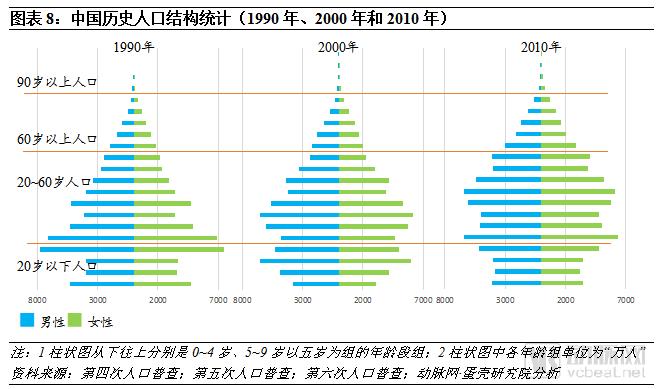
The United Nations defines an “aging society” as one in which individuals aged 60 and above account for 10% of the total population. Based on current trends, China is projected to have 35.5% of its population (approximately 450 million people) aged over 60 by 2050, far exceeding the UN’s threshold. By 2100, not only will the proportion of those aged 60 and above rise to 39.6%, but the country’s total population will also shrink to 941 million, resulting in an unprecedented level of population aging.
The content of the remaining two sections:
II. Investment Opportunities: Maternity Care, Elderly Care, and Commercial Insurance Embrace Development Prospects
III. Outlook: Enhancing Population Quality to Promote China’s Sustained Development
Scan the QR code below to become an official VCBeat member and gain access to the full report, “China’s Healthcare Industry in the Era of Low Fertility: An Analysis of Development Trends and Investment Opportunities.” Gain insights into how birth rates impact the industry. Additionally, over the next year, you will enjoy unrestricted access to comprehensive industry trend reports, timely updates on the latest global financing and investment activities, a complete database of healthcare companies, and extensive resources for business matchmaking.

Scan the QR code to become a VCBeat member