

How ZwoKe Built the Leading Psychology Live Streaming IP with 7M Views in 3 Months Amid the Second Half of the Knowledge-Paid Era
In recent years, the prevalence of mental disorders has risen year by year, yet the consultation rate has declined instead, highlighting the objective reality that some patients with mental illnesses do not seek medical care despite being ill.
Mental health conditions are unique in nature, and patients often seek help online first due to the so-called "stigma" associated with mental illness. Consequently, numerous mobile internet-based platforms for psychological counseling and psychiatric treatment have emerged in the market. However, the term "treatment" inherently implies a state of illness; for individuals with mild mental health issues, self-relief, mutual support, and emotional expression are more important.
On the other side of clinical care, psychology-focused vertical content—primarily in the form of paid audio programs—is attempting to leverage art therapy to provide new service models for the more than 200 million people suffering from anxiety. The year 2017 marked the dawn of the paid audio era. As the period of relying on celebrity IPs to drive traffic came to an end, specialized knowledge content emerged as a major trend. Health-related columns have shown strong performance metrics on knowledge-monetization platforms such as Ximalaya and Dedao. In light of this, VCBeat (WeChat ID: vcbeat) conducted an exclusive interview with Lin Xiao, founder of Self-Course, a provider of psychotherapeutic content.

Lin Xiao, Founder of Self-Course
The Persistent Psychological Entrepreneurial Dream
Lin Xiao graduated from Beijing Normal University with a degree in Psychology and later earned a Master’s degree in Management from the Guanghua School of Management at Peking University. Prior to founding Self-Class, she served as Vice President of Chunyu Doctor, Game Brand Director at Changyou (a NASDAQ-listed company), and Marketing Director for Procter & Gamble in Greater China.
With a formal academic background in psychology and years of operational experience in the market, Lin Xiao observed during his tenure at Chunyu Yisheng (Spring Rain Doctor) that patients’ willingness to pay for psychological services ranked among the highest across all medical specialties. Meanwhile, in Chunyu’s newly established division focused on in-depth consultations, Lin led his team in producing two live-streaming programs, “Invite the Top Doctors” and “Doctors, Speak Up,” which leveraged the appeal of renowned physicians and internet-famous doctor IPs. In the course of content production, the team rapidly explored and established pathways for monetization through subtle product placement.
The asset-light investment and novel business model enabled Lin Xiao to recognize the advantages of producing content-based products.
In October 2016, the death of Zhang Rui, founder of Chunyu Yisheng (Spring Rain Doctor), sent shockwaves through the industry. Coincidentally, within three weeks of losing her founder, Lin Xiao also suffered a bereavement in her own family. This marked her first intense, direct confrontation with mortality, which dealt a significant emotional blow. At that time, she turned to art therapy and drama therapy to help her emerge from grief and depression. Having personally navigated the experience of depression, she gained a deeper understanding of its suffering. This solidified Lin Xiao’s resolve regarding her entrepreneurial direction: to focus on the field of psychology.
“The dream of pursuing psychology has never truly faded; I am willing to help others by providing psychological companionship and support. After all that I have been through, I want to explore what more I can do within the field of psychology: How can I eliminate the stigma associated with mental health? How can I transform it into a trendy lifestyle? Can it become a routine, much like the fitness industry, enabling people to regularly clear away the ‘dust’ from their minds?”
In November 2017, Beijing Zhixing Youchuang Culture and Technology Co., Ltd. was officially registered and established, marking the beginning of Lin Xiao and her content team’s journey into art therapy within the field of mental health.
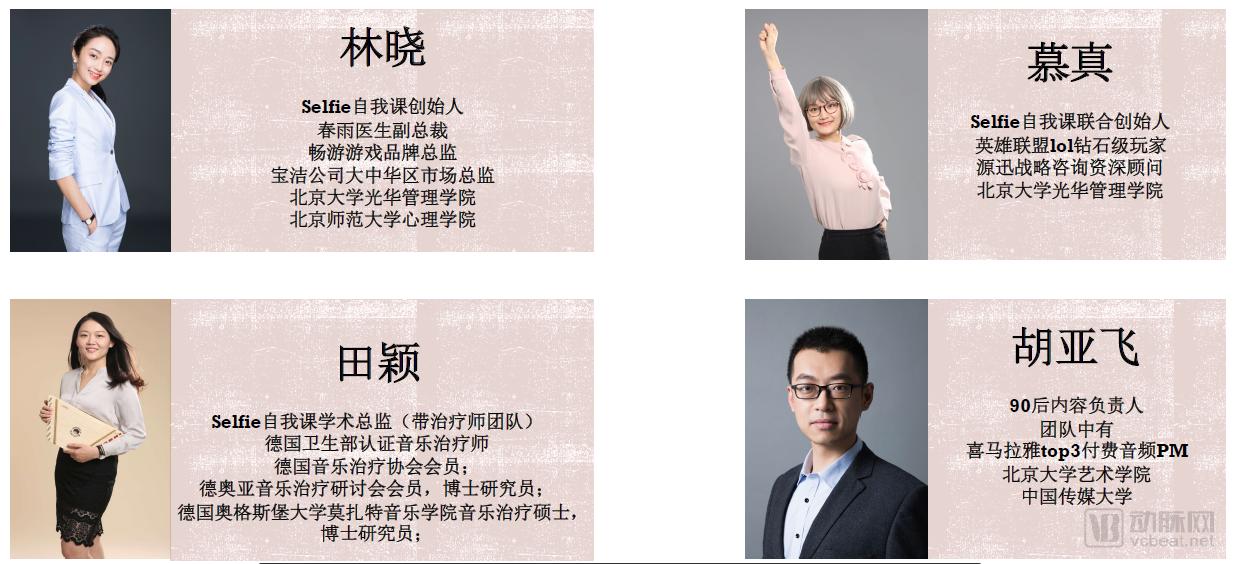
Core Team Members of Self-Course
“Stigma” + Poor Product Experience Become Market Constraints
Psychology is a distinctive discipline, characterized by high product differentiation due to its slow onset of therapeutic effects and low degree of standardization.
Based on the scope of services, the sector can be categorized into three major areas: psychological education, psychological counseling, and diagnosis and treatment of severe mental disorders. The market is not lacking in demand; rather, it is short of high-quality products. Excluding education, mental health initiatives can be further divided into two service models: online mobile platforms for psychiatric and psychological care, and offline psychotherapy institutions.
However, Lin Xiao believes that the pervasive issues in this market are patients’ strong sense of “stigma” and poor product experience.
Stigma is a negative emotional experience exhibited by patients with mental disorders, which adversely affects the recovery of their social functioning.
This issue stems from historical and cultural factors as well as the understanding of the nature of diseases; the general public often holds an exclusionary attitude toward individuals with mental illnesses. In a 1996 article published in the American Sociological Review, Link et al. reported on a survey of U.S. public attitudes toward people with mental illnesses. Among the 1,444 respondents, 63% were unwilling to interact with individuals diagnosed with schizophrenia, 47% refused to interact with those suffering from depression, and the exclusion rate was even higher for individuals with substance use disorders.
Given the serious nature of medical care, “seeing a doctor” typically involves diagnostic and therapeutic interventions such as injections and medication. Moreover, due to the often ambiguous definition of mental health conditions, patients with psychological disorders usually require professional assessments to determine the severity of their illness, rather than relying on simple self-administered psychological tests at home. This has created a vicious cycle: individuals who are unaware of their condition do not seek medical attention, and without seeking medical attention, they remain unaware of their illness.
Offline counseling agencies typically price their services based on time. Since psychological diagnosis and treatment rely primarily on patient narratives, patients tend to speak far more than clinicians within limited session durations. Moreover, the high cost of psychological counseling—often ranging from hundreds to thousands of yuan per session—deters ordinary individuals, resulting in poor user experience and low scalability.
Online mental health mHealth services often rely primarily on text, audio, or video communication, leading to unclear descriptions, limited therapeutic efficacy, and poor user retention, which makes it difficult for most platforms to achieve sustainable growth in the market.
Therefore, Lin Xiao avoided the market's shortcomings and, drawing on his prior experience, chose to generate content through art therapy interventions, thereby becoming a content provider in the mental health sector.

Therapeutic Instrument Group
Replace Treatment with Art to Eliminate Stigma
Modern psychotherapy, delivered through verbal communication, cannot resolve all psychological issues; it is effective only in correcting irrational cognitions and thought patterns, but proves inadequate in addressing psychological problems where emotional distress is the primary symptom.
As stated in the book Art Therapy, published by the American Art Therapy Association in 2009, art therapy, also known as art psychotherapy, is a form of psychotherapy. While conventional psychotherapy primarily relies on language as the main medium for communication and treatment, art therapy is distinguished by its unique approach, which utilizes artistic materials and experiential activities as therapeutic modalities.
Lin Xiao stated that the promotion of art therapy within the psychological field aims to eliminate “stigma.” For individuals in everyday life, being labeled with a “mental illness” or “psychological disorder” is more frightening than the condition itself. Seeking medical help for an illness is inherently an act of seeking assistance; however, patients with psychological conditions such as depression often refrain from seeking treatment due to concerns about societal judgment.
The use of art therapy enables therapists to flexibly employ various expressive techniques to achieve emotional and psychological communication with patients. Art therapy has been widely adopted in Western countries; for instance, the UK’s National Health Service (NHS) even covers the cost of art therapy services. Consequently, art therapy has become one of the core modalities in psychological counseling and treatment.
Lin Xiao and her team leverage their expertise to transform psychotherapy into art therapy, enabling users to channel their anxiety, depression, and other negative emotions through creative outlets such as painting or songwriting.
Currently, the services offered by Self-Course include two categories:
First, there are paid online audio courses and live video classes. Currently available courses include “33 Days After a Breakup: A Drama Therapist Guides You Through,” “Turning the Small Matter of a Breakup into a Song (Music Therapy),” “Postpartum Depression: Why ‘Good Enough’ New Moms Are the Most Reliable,” and “Entering Society: Overcoming Shyness and Low Self-Esteem,” with prices ranging from 20 to 99 yuan.
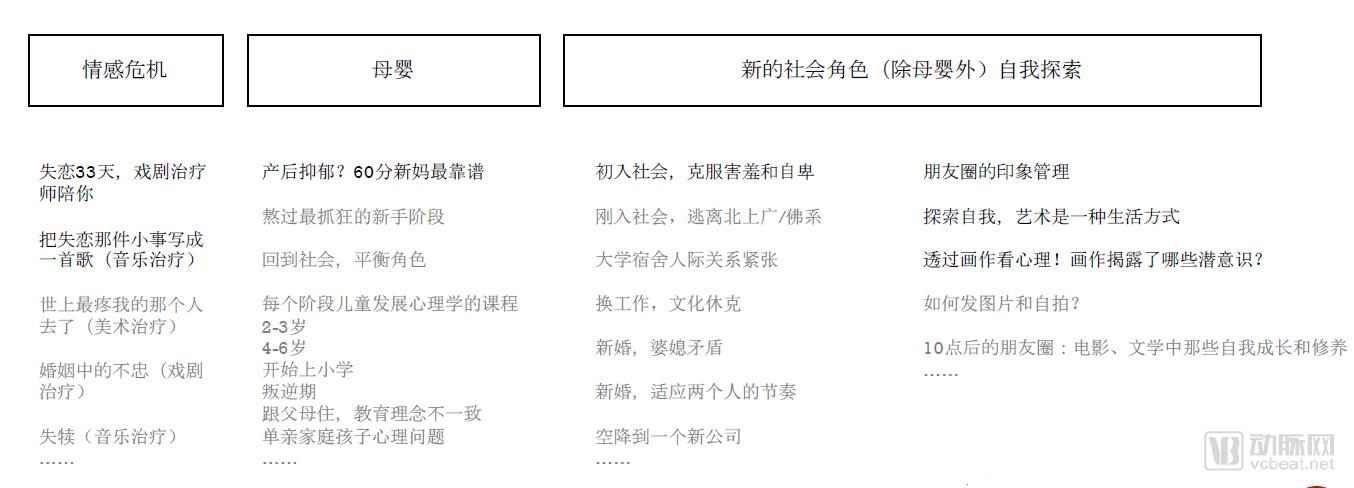
Selected Self-Developed Courses (black text indicates courses already launched; gray text indicates products currently under development)
Within less than a month of launch, the low-priced, sustainably monetized paid audio offerings attracted 50,219 paying users to Ziwoketang.
Next are the in-person, face-to-face group psychotherapy sessions, which are currently not open to the media. These sessions are conducted live by professional psychological counselors in a one-to-many format, with service fees ranging from approximately RMB 600 to 800 for a 100-minute session.
The content of offline group sessions draws on the mechanism of immediate feedback in games, changing the traditional model of 40 minutes of patient speaking and 10 minutes of doctor commentary in offline psychological treatment. It fully interacts with on-site clients and provides each person with a private card for feedback after the course ends, allowing clients to fully immerse themselves and spontaneously spread the results of the course.
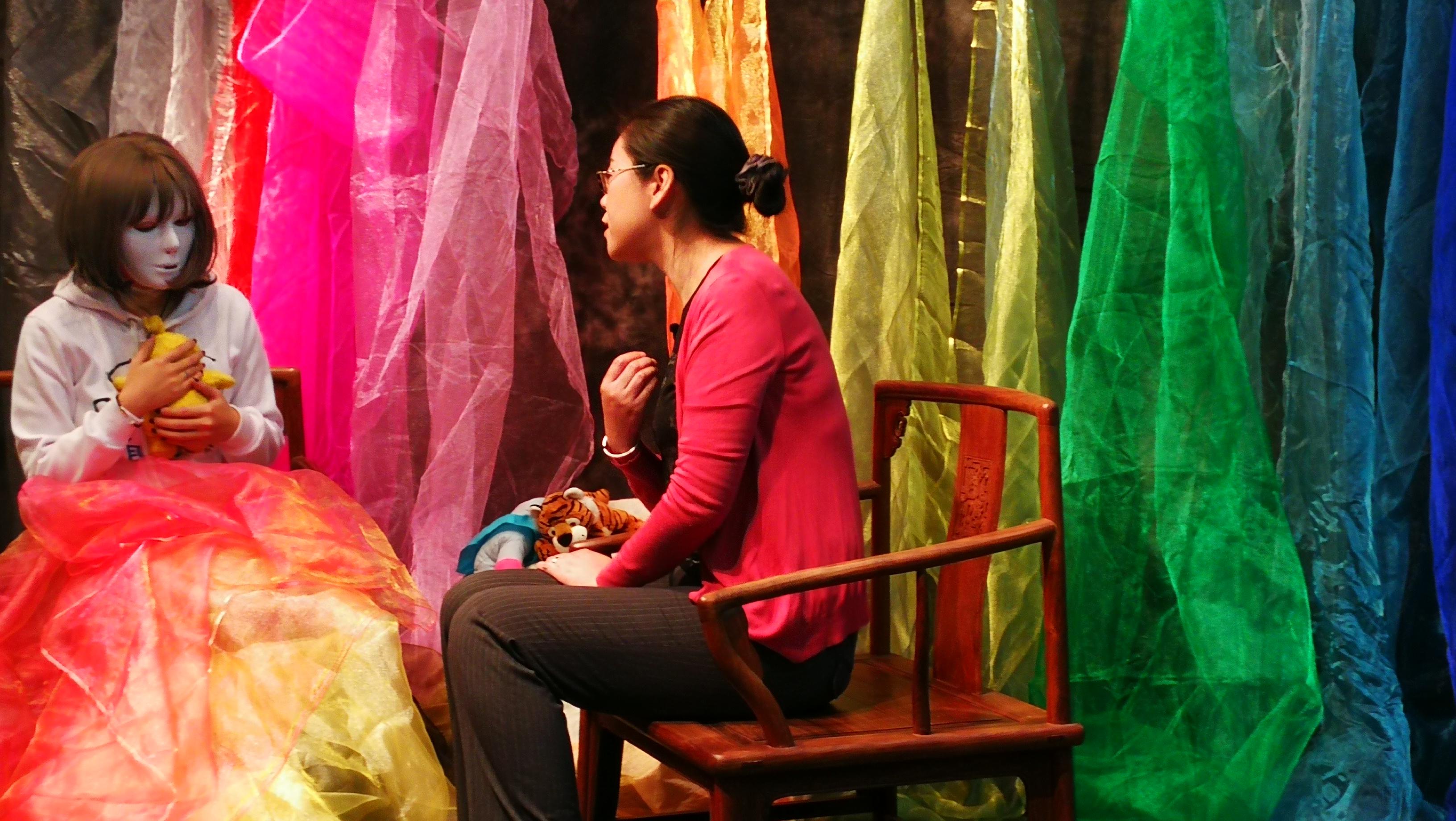
Protecting User Privacy During Consultations
Three Major Channels for Traffic Acquisition
For self-produced courses that primarily operate on a knowledge-payment model, content is paramount, while distribution channels are secondary.
The channels for self-directed course traffic acquisition include three types:
First, there are centralized hubs for paid audio content, such as Himalaya FM, Lizhi FM, and NetEase Cloud Music. These channels are characterized by a precisely targeted audience, high user payment rates, and strong conversion rates. Currently, Self-Course has launched on 20 leading paid audio platforms, including Himalaya FM, Lizhi FM, Qingting FM, and Qianliao Live.
The second channel consists of paid audio sections within news client apps such as Phoenix News and NetEase News. These channels are characterized by massive traffic volumes and strong gateway attributes. According to Lin Xiao, the self-produced course live-streaming entry point on Phoenix News generated 7 million views in just three months, with monthly traffic reaching 2.2 million and weekly traffic hitting 550,000. The paid conversion rate stands at approximately 2%.
The third channel leverages a matrix of WeChat Official Accounts, partnering with key opinion leader (KOL) accounts that hold sway in lifestyle or knowledge sectors to promote courses through revenue-sharing resource exchanges.
Single-content production with looped playback drives high-traffic acquisition of paying users, making paid knowledge a lucrative, low-cost, high-revenue opportunity.
Lin Xiao’s ambition is to rival Kangning Hospital, a leader in psychiatric care, by achieving a net profit of RMB 1 million and a price-to-earnings (P/E) ratio of 34.5 within the next year.
Become a B2B content provider and expand application scenarios
Previously, reporters covered the Saint Bella Postpartum Care Center in Zhuhai, which employs art therapy to treat postpartum depression. For mothers suffering from this condition, art therapy is not only an effective remedy for depression but also a valuable means of enhancing their artistic cultivation. According to Lin Xiao, high-end obstetrics and gynecology hospitals as well as maternal-and-child health platforms have extended invitations to her, seeking to introduce her self-care courses onto their platforms.
In her vision, "Self-Course" will become a lifestyle of consumption upgrade, embedded in more scenarios:
1. Entered the yoga studios of the top 200 high-end gyms in Beijing, Shanghai, and Guangzhou;
2. Establish self-care classrooms in the top 100 private obstetrics and gynecology hospitals in Beijing, Shanghai, and Guangzhou to help alleviate postpartum depression;
3. Establish self-improvement classrooms in the top 50 elderly care institutions in Beijing, Shanghai, and Guangzhou to enhance the quality of life for seniors;
4. Establish self-study classrooms in the top 50 children's art training institutions in Beijing, Shanghai, and Guangzhou, enabling parents to accompany their children in enhancing artistic cultivation together.
Furthermore, commercial insurance providers are also among the B-side clients it targets. Lin Xiao stated, “When I was still at Chunyu Doctor, a senior executive from a commercial insurance company asked me if there were any psychological wellness courses with a good user experience available. Currently, the insurance industry lacks products in two categories: psychology and dentistry. At that time, there were indeed no high-quality, well-experienced products in the psychology space.”
Currently, Ziwoke is seeking an angel round of financing, with a target amount of RMB 3.5 million in exchange for 10% equity.
British author Alain de Botton wrote in *Status Anxiety*: “The new economic freedom has enabled hundreds of millions of Chinese people to live affluent lives. However, amidst the tide of economic prosperity, a problem that has plagued the Western world for centuries has also crossed over to China: status anxiety.” In Baidu’s 2017 list of trending search terms, “era anxiety” featured prominently. We may either be living in a tense atmosphere crafted by the media or deeply feel the pressure exerted on us by life.
Yet, in an age defined by anxiety, there often emerges a cohort driven forward by this very unease. Entrepreneurs of our time are all anxious, and the more than 200 million people grappling with anxiety seem to signal that new paradigms are inevitable—a psychological revolution is gradually unfolding.