

Xinlin Healthcare: Tapping into the Underserved Niche of Premium Outpatient Mental Health Services
If awards were to be given for niche specialties within hospitals, many departments could be nominated, such as geriatrics, rehabilitation, and nutrition.
Of course, one indispensable department is the Department of Clinical Psychology. Factors such as low consultation fees, a significant shortage of physicians, and severely compressed patient consultation times have placed the Department of Clinical Psychology in an awkward position within general hospitals.
In May 2017, Hu Sanhong, then a psychiatrist at the Third Affiliated Hospital of Sun Yat-sen University in Guangzhou—one of the first major tertiary hospitals in China to establish a psychiatric department—decided to leave the institution and open his own private psychiatric clinic.
There are many reasons for this choice, said Hu Sanhong, co-founder of Xinlin Medical.VCBeat (WeChat ID: vcbeat)He stated that his 15 years of experience in psychiatry and the market demand for psychiatric services prompted him to establish his own practice.
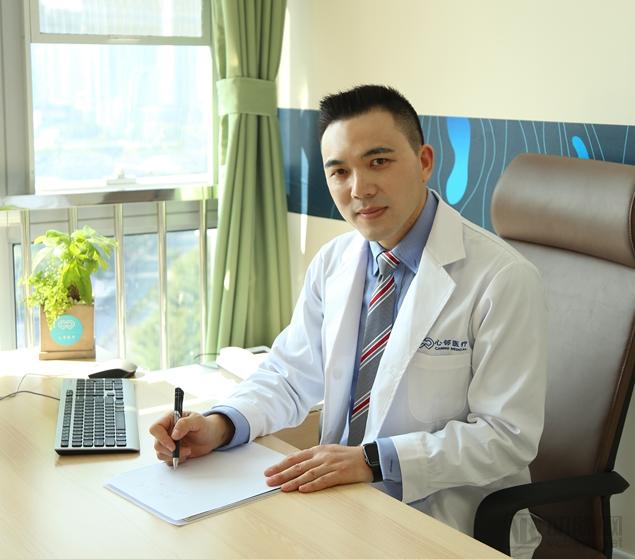
Hu Sanhong, Co-founder of Xinlin Medical
The Marginalized Department of Psychiatry
Psychiatry is a specialty primarily centered on patient disclosure and narrative description, with clinical services typically billed on an hourly basis. Although public hospitals offer superior diagnostic and therapeutic resources, the psychiatry departments in general hospitals remain relatively undervalued within the broader healthcare landscape.
Due to the relatively low fees—psychological counseling costs only 70–80 yuan per hour—it is difficult for hospitals to generate economic benefits. As public hospitals need to sustain their operations, investment in psychiatric departments has been correspondingly reduced. This has led to the frequent marginalization of psychiatric departments in public hospitals, with some existing merely as a “showcase.”
Hu Sanhong told reporters that while the psychology departments in public hospitals were not popular specialties many years ago, they have seized new opportunities in first-tier cities such as Beijing, Shanghai, and Guangzhou, driven by economic development and rising stress levels among the population.
However, at hospitals with a relatively strong reputation in psychiatry, the overwhelming patient volume forces doctors to work nonstop, resulting in a poor healthcare experience for patients.
Taking the Third Affiliated Hospital of Sun Yat-sen University as an example, this general hospital, which has operated a clinical psychology department for over 30 years, may see hundreds of patients daily. This means that a psychiatrist might need to consult with 60 patients within a four-hour morning session, compressing each consultation to just a few minutes. Despite such an overwhelming workload, the physician’s consultation fee amounts to merely tens of yuan per hour, falling far short of the hundreds of yuan typically charged by private psychological healthcare institutions in the market.
To boost revenue, hospitals’ increase in patient caseloads inevitably comes at the expense of consultation time per patient, forcing physicians to curtail communication with patients and focus primarily on basic pharmaceutical services.
It is both an opportunity and a test. Psychotherapy inherently has a slow onset of action and subtle therapeutic effects. For individual psychological counseling institutions or clinics, the market is plagued by issues such as uneven service quality among providers and incomplete qualifications of counselors, resulting in a poor patient experience.
Average Transaction Value: RMB 1,200 per Visit, Offering a Premium Psychotherapy Experience
Xinlin Medical Psychological Clinic, founded by Hu Sanhong, is located in the central business district of Guangzhou. Targeting high-income, high-stress white-collar professionals in the vicinity, the clinic positions itself in the mid-to-high-end market segment. It provides clinical diagnosis, pharmacotherapy, psychological counseling, and physical therapy delivered by psychiatrists from Grade 3A hospitals for various psychological conditions.
Its scope of services includes the diagnosis and treatment of various mental disorders, such as depression, bipolar disorder (manic-depressive illness), anxiety disorders, obsessive-compulsive disorder, phobias, hypochondriasis, neurasthenia, sleep disorders, childhood emotional disorders, and autism spectrum disorder.
Compared to clinics prominently located along roadsides, office buildings offer greater privacy protection for clients, thereby addressing the issue of "stigma associated with illness."
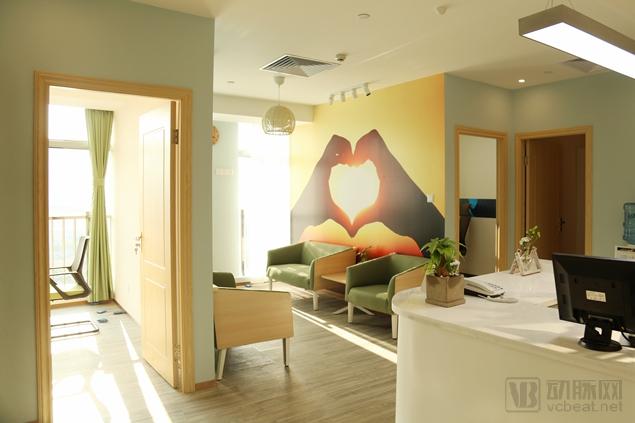
Clinic Interior (Photo courtesy of Xinlin Medical)
According to Hu Sanhong, the treatment of mental disorders is categorized into three types. The first is pharmacotherapy, such as the use of antidepressants; institutions providing this type of treatment must be approved by the National Health and Family Planning Commission and hold formal clinic qualifications.
Second is psychological counseling, where counselors and clients interact within a counseling room through verbal communication or auxiliary tools such as images and drawings to assess and intervene in the client's psychological condition;
Third, physical therapy can alleviate patients' psychological symptoms through the use of medical devices, such as repetitive transcranial magnetic stimulation (rTMS) for mood disorders and modified electroconvulsive therapy (MECT).
Similar to other psychological counseling and treatment institutions, Xinlin Medical charges by time. The consultation fee for an attending physician is RMB 600 per 50 minutes, supplemented by pharmacotherapy, resulting in an average transaction value of RMB 1,200.
Following the lifting of the ban on multi-site practice, Hu Sanhong previously served as a part-time attending physician in the Department of Psychiatry at Distinct HealthCare, where he gained valuable insights into the operational practices of high-end clinics. He told us that the competitive advantage of Xinlin Medical lies in its professional team and standardized management.
Hu Sanhong is the Chief Expert at Xinlin Medical. In addition to 15 years of clinical experience in the Department of Psychiatry at the Third Affiliated Hospital of Sun Yat-sen University, he also serves as the Secretary-General of the Mental Health Promotion and Management Professional Committee of the Guangdong Provincial Mental Health Association.
The remaining psychiatric specialists are from top-tier tertiary hospitals, including the Third Affiliated Hospital of Sun Yat-sen University, the First Affiliated Hospital of Sun Yat-sen University, and Guangzhou Huiai Hospital, with over ten years of clinical experience.
Regarding psychological counselors, Xinlin Medical relies on the Professional Committee of Psychological Counselors under the Guangdong Mental Health Association. All counselors have undergone rigorous assessment and possess over five years of experience in psychological counseling. They provide systematic services including psychoanalysis, cognitive behavioral therapy (CBT), family therapy, trauma therapy, and sandplay therapy.
Currently, Xinlin Medical has assembled a team of 30 members, including eight part-time expert physicians who provide on-site consultations and twelve psychological counselors, to support daily clinical operations at its clinics.
Initial investment of 2 million to collaborate with platform-based enterprises for traffic acquisition
For specialized outpatient clinics, an essential qualification is the Medical Institution Practice License issued after approval by the National Health and Family Planning Commission. In contrast, most psychological counseling agencies in the market do not possess the qualifications to provide diagnostic and therapeutic services.
Hu Sanhong told us that Xinlin Medical is actually the Xinlin Specialty Outpatient Department, which holds qualifications as a medical institution and is similar in nature to other general practice clinics.
Compared with high-end private clinics located in communities, Xinlin Medical’s overall design emphasizes a warm and welcoming atmosphere. The clinic occupies approximately 260 square meters and features eight private spaces, including two psychological counseling rooms, three consultation rooms, one physical therapy room, one sandplay therapy room, and one multi-purpose room. In addition, there are three patient waiting areas, offering comprehensive functionality.
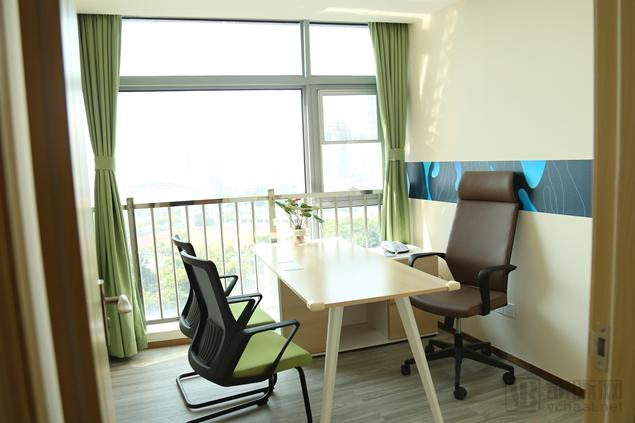
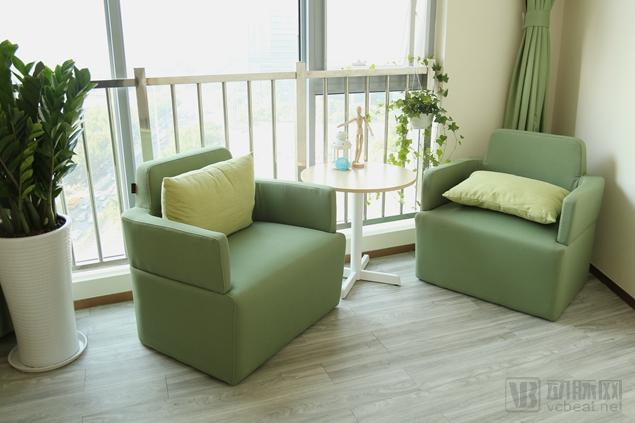
Consultation and Counseling Rooms (Photo courtesy of Xinlin Medical)
The clinic is equipped with instruments such as repetitive transcranial magnetic stimulation (rTMS) therapy devices, quantitative brain function imaging systems, tinnitus sound therapy fitting platforms, and sleep therapy devices.
Patients are received through a rotating schedule across five consultation rooms, with a maximum daily capacity of 40 patients.
Such a small yet specialized clinic requires an initial investment of approximately RMB 2 million. Similar to most brick-and-mortar medical institutions, labor costs account for 60%–70% of total expenses.
In the early stages, store traffic acquisition relied heavily on partnerships with platform-based enterprises, such as the maternal and child health platform Yuejiankang and Yijiankang, the appointment registration system under China Telecom. These channel collaborations involved opening API endpoints within their apps.
Currently, specialized psychological care chains are rare in the market. Most clinics are established by retired physicians or young doctors who have left the public healthcare system. Notable examples include the Wu Zhihong Psychological Studio, and there are few competitors in this sector.
Therefore, although Hu Sanhong has plans for chain expansion, his current strategy is to first establish a solid foundation in the market. In his projected financial model, Xinlin Medical can achieve break-even within eight months under ideal conditions.
“Our primary objective at present is to achieve a balance between operational inputs and outputs within an appropriate timeframe. Once this equilibrium is attained, sustainable growth will enable Xinlin Medical to expand by opening its second clinic at the right moment.”
Psychological health projects face similar pain points, typically poor user experience and the barrier of stigma among patients. However, the market is vast with numerous individuals in need. In the absence of unicorns and even with limited competition, those who can successfully validate their business model first and capture a larger market share will gain a first-mover advantage.