

RonLian QiMo: Transforming Healthcare Customer Service with AI-Powered Cloud Contact Solutions
“Although Ronglian Qimo is a SaaS software company, we are more like a service-oriented company,” Cai Zhibin, CEO of Ronglian Qimo, told VCBeat.
In 2005, Cai Zhibin, a graduate of Wuhan University with a degree in Computer Science, joined IBM and began working on the development of internet voice communication products.
With over a decade of industry experience, Cai Zhibin has developed a profound understanding of the office software and voice communication product markets. He believes that voice services will remain the dominant model for customer service in China for the foreseeable future, and voice communication capabilities constitute one of the core strengths of Ronglian Qimo’s products.

(Cai Zhibin, CEO of 7moor)
Since its establishment in 2009, Ronglian Qimo has accumulated over 10,000 corporate clients and more than 150,000 customer service agent seats. It now serves numerous benchmark enterprises across sectors including finance, travel and transportation, securities, banking, healthcare, e-commerce, education, O2O, and lifestyle services. Typical users include Tujia.com, Renrenche, Lagou, Evernote China, Shouqi Limousine & Chauffeur, 5i5j, 51shebao.com, 12348, and 12366.
Leveraging Cloud Customer Service to Penetrate the Healthcare Industry
Core Product of Ronglian Qimo: Qimo Cloud Customer Service, a Comprehensive Enterprise Contact Center Solution.
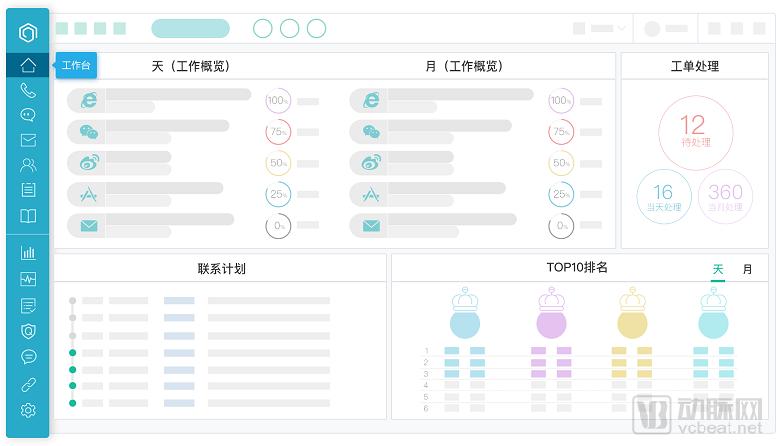
(Product Image)
According to Cai Zhibin, 7moor Cloud Customer Service has redefined customer service in the mobile internet era, embodying the product vision of “connecting enterprises and customers anytime, anywhere.” Its omnichannel capabilities facilitate seamless communication between businesses and their clients, while intelligent chatbot technology reduces the workload of human customer service agents. Furthermore, by leveraging artificial intelligence and big data analytics, the platform helps enterprises uncover latent customer needs, thereby lowering operational costs and enhancing customer acquisition and service efforts.
By the end of 2017, Ronglian Qimo officially began expanding into the healthcare enterprise sector. To date, it has served more than 100 clients in the medical industry.
The implementation of Ronglian Qimo in the healthcare industry does not differ significantly from its application in other sectors. For customer consultation services, Qimo provides enterprises with a dedicated communication channel, handling common inquiries such as medical service hours, pricing, and specific offerings.
At present, in addition to traditional telephone hotlines, consultation channels for enterprises and hospitals now include online chat windows on websites, WeChat Official Accounts, and Weibo. 7moor Cloud Customer Service can integrate traditional call centers, social media platforms, and online website customer service into a single platform, offering it to clients as a unified product.
In the past, online customer service and call centers at internet healthcare companies were managed by separate teams, with their information and data largely siloed. When multiple customers reached out simultaneously through various channels, companies often encountered scenarios where multiple customer profiles pointed to the same individual, resulting in significant redundant work for customer service representatives.
After adopting 7moor Cloud Customer Service, agents no longer need to operate multiple terminals simultaneously. By simply opening a browser and logging into the unified interface, they can handle phone calls, respond to website inquiries, and manage consultations from WeChat and Weibo all at once. This enables the processing of inquiries from all channels through a single, unified terminal.
Taking 7moor Intelligent Cloud Customer Service as an example, the product has currently achieved interface integration with multiple service channels, including voice call centers, websites, WeChat, Weibo, email, WebChat, instant messaging (IM), and mobile apps. Through 7moor’s one-stop cloud service platform, inquiries from these diverse channels can be responded to and recorded.
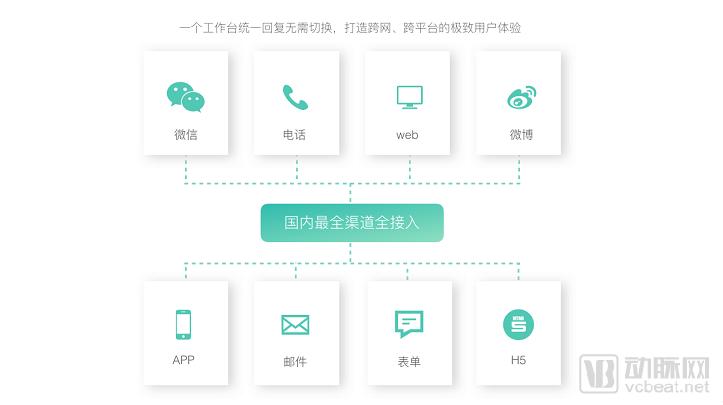
(7moor Cloud Customer Service Omnichannel)
Help enterprises reduce costs and improve customer service efficiency
The distribution of Ronglian Qimo’s healthcare partners is relatively fragmented, with no discernible pattern yet established. Among its more than 100 partner clients, internet healthcare companies account for a significant proportion, including Chunyu Doctor, Haoyayi, Ciming Health Checkup, and Kuaifang Medicine Delivery. A portion of the clientele consists of hospitals, predominantly private institutions.
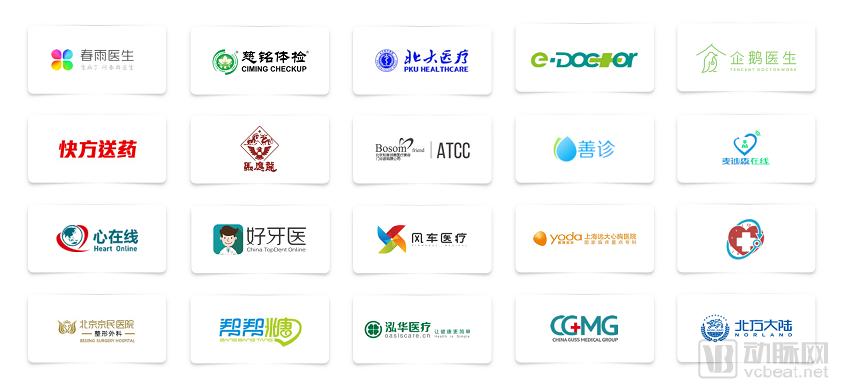
(Partial Medical Customer Knowledge Graph)
In response to this situation, Cai Zhibin stated, “For internet healthcare companies to compete with traditional medical institutions, they need to provide new service models that address the pain points of both doctors and patients. Therefore, when seeking solutions, they will leverage new technological means to the fullest extent.”
Previously, these companies and institutions typically required a team of around 10 people to handle customer service operations, with some staff managing phone inquiries and others handling online support. With the adoption of a unified system, enterprises no longer need to purchase multiple software solutions.
With the surging popularity of artificial intelligence, intelligent robotic customer service agents capable of partially replacing human labor have gradually become the new favorite in the CRM industry. In this regard, 7moor’s customer service robot stands at the forefront of the industry technologically, currently achieving a 90% accuracy rate in semantic recognition. Integrated with its knowledge base, the customer service robot can engage in autonomous learning based on visitor inquiries, resulting in extremely low maintenance costs.
Driven by the efficiency gains enabled by the platform, enterprises can significantly reduce their customer service headcount, thereby lowering customer service expenditures for businesses and institutions.
Comprehensive Product Portfolio and Monetization Models
To expand its user base, Ronglian Qimo once launched a free version. However, after a period of observation, it was found that the free version attracted very few users, and such users tended to churn naturally after using it for a certain period.
Following an investigation, the Ronglian 7moor team identified that the core reason lies in the significant differences between enterprise users and consumer (C-end) users. Enterprise users do not seek free solutions to meet temporary needs; rather, they require long-term, secure, and stable services. Enterprises prefer to view their purchases not merely as software, but as a guarantee.
Since then, Ronglian Qimo has ceased offering free products. Meanwhile, to address the varying needs of users at different tiers, Ronglian Qimo has categorized its products into three types.
The first category consists of basic website customer service, providing consultation services to customers through online agents; the second category builds on the first by adding telephone functionality; the third category expands upon the previous two by incorporating omnichannel support (WeChat, apps, Weibo, etc.), a ticketing system, and a CM system.
In terms of pricing, the three product tiers are priced at ¥99/month, ¥199/month, and ¥399/month, respectively. Additionally, an annual subscription option is available, which includes two extra months of service free of charge. Enterprises can select the most suitable plan based on their specific needs.
Data shows that, due to the high volume of consumer-end inquiries across various channels, Ronglian Qimo’s clients have largely adopted the third category of omnichannel services.
Regarding the company’s positioning in the healthcare industry, Cai Zhibin stated, “From a technical perspective, the communication capabilities we provide are essentially interface-based services, such as voice and video interfaces. The application of these interfaces to enterprise scenarios requires thorough needs analysis and communication. From a value perspective, Ronglian Qimo leverages its communication capabilities to offer healthcare enterprises and institutions a novel communication solution, helping them address communication challenges between patients and customer service representatives, as well as between doctors and patients.”