

Proposal Highlights from Hospital Presidents at the 2018 National Two Sessions on Effective Medical Consortium Development
"Medical Consortium," a keyword repeatedly mentioned during this year's Two Sessions.
Indeed, since the medical consortium model was listed as a key initiative of the new healthcare reform last year, hospitals at all levels across China have responded actively. A medical consortium is formed within a specific region by integrating tertiary hospitals with secondary hospitals, community health centers, and village clinics. Its purpose is to alleviate the difficulty patients face in accessing medical care; for instance, minor ailments such as fever and colds can be treated at primary care facilities rather than overcrowding tertiary hospitals. This approach addresses the challenge of difficult access to medical services and has achieved the anticipated goals of satisfaction among the public, the government, and healthcare workers.
In the run-up to this year’s “Two Sessions,” Gu Jin, a deputy to the National People’s Congress (NPC) and President of Peking University Shougang Hospital, shared the focus of his proposal: building tightly integrated healthcare systems. During the Two Sessions, Li Weimin, an NPC deputy and President of West China Hospital of Sichuan University, also submitted a proposal titled “Recommendations on Establishing ‘Chimeric Medical Consortia.’” Meanwhile, Zhu Shuchai, an NPC deputy and Director of the Third Radiotherapy Department at the Fourth Hospital of Hebei Medical University, highlighted that more than 300 medical institutions at the secondary level or above in Hebei Province have established cooperative relationships with hospitals in Beijing and Tianjin through various models—including opening branch campuses, hospital trusteeship, joint development, and specialized collaboration—achieving significant results.
So, what specific measures and experiences have they shared regarding the development of medical alliances?
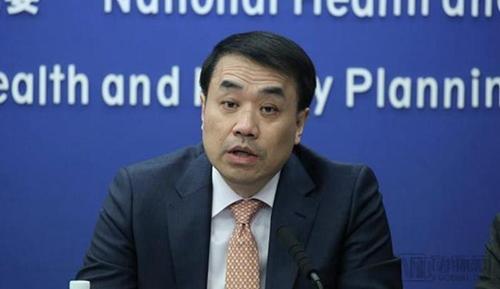
Gu Jin, Deputy to the National People's Congress and President of Peking University Shougang Hospital
A close-knit medical consortium refers to a hospital alliance formed to address the difficulties and high costs associated with accessing medical care for the general public. In such a consortium, human resources, financial assets, and material resources among member hospitals are centrally allocated, and economic interests are integrated. This model is regarded as a relatively effective form of medical consortium, a conclusion supported by the practical experience of Peking University Shougang Hospital’s medical consortium.
According to Gu Jin, a deputy to the 13th National People's Congress and President of Peking University Shougang Hospital, Peking University Shougang Hospital operates under a model inherited from the planned economy era. The hospital, along with four community health centers and five community health service stations, all fall under the affiliation of Shougang Hospital, implementing unified management of personnel, finances, and materials, thereby eliminating issues related to benefit distribution. Its approach to building a close-knit medical consortium primarily involves the following four steps:
First, establish the foundation of a close-knit medical consortium, namely, the decentralization of experts, disciplines, and management.Shougang Hospital has deployed specialists in common conditions such as respiratory, cardiovascular, endocrine, and oncologic diseases to community settings, thereby meeting residents’ demand for access to expert care. Meanwhile, disciplines with high patient demand—including dentistry, traditional Chinese medicine, and massage rehabilitation—have also been extended to the community level. Gu Jin stated that this “three-tier decentralization” enables patients to consult specialists within their communities, thereby enhancing their willingness to seek care at the community level.
Second, using informatization as a bridge.Through information technology development, Shougang Hospital has built a collaborative office system to achieve interconnectivity of resources and information with community medical institutions. This facilitates the referral of patients with common and chronic diseases to community-level facilities, while ensuring that patients with complex and rare conditions can be smoothly transferred to tertiary hospitals, thereby optimizing the patient distribution across different levels of healthcare institutions.
Third, leverage health insurance policies to guide patients in seeking medical care in an orderly manner.In other words, the reimbursement rate of medical insurance at community healthcare institutions should be increased. In addition, a reasonable talent mechanism must be established. Taking Yunnan’s “county-level recruitment for township-level service” model as an example, community physicians are granted staffing quotas and professional status affiliated with superior hospitals, including tertiary hospitals, thereby ensuring the stability of the community medical workforce and the delivery of high-quality services.
Fourth, establish a talent system for primary healthcare institutions.This is achieved through measures such as experts providing mentorship to community physicians, community physicians undertaking advanced training at tertiary hospitals, tertiary hospital experts leveraging community advantages to guide general practitioners in conducting primary care research, and delivering online continuing medical education to grassroots community physicians.
Since 2014, Peking University Shougang Hospital has been building a tightly integrated medical consortium based on these four steps. This approach differs from the loosely coupled medical consortia adopted by most hospitals today, where specialists from large hospitals merely conduct outpatient consultations and ward rounds at community hospitals. This model not only facilitates the downward deployment of specialist resources from Shougang Hospital to community medical institutions but also enables the referral of complex and difficult cases to tertiary hospitals through screening by community providers, thereby effectively implementing tiered diagnosis and treatment.
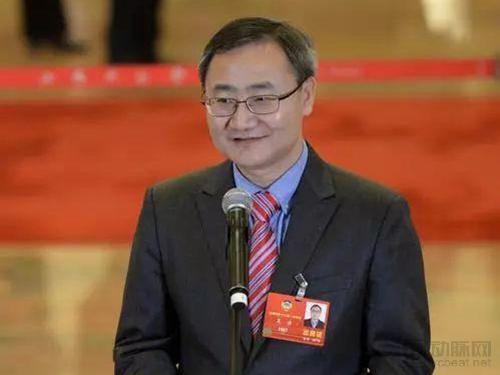
Wu Hao, Member of the 13th National Committee of the Chinese People's Political Consultative Conference (CPPCC) and Director of the Fangzhuang Community Health Service Center in Fengtai District, Beijing
Although tight-knit medical alliances offer numerous benefits, most healthcare institutions currently operate under loose medical alliance models, wherein tertiary hospitals and community health centers lack administrative subordination. The operation of such models inevitably relies on information technology.
In this regard, a member of the 13th National Committee of the Chinese People's Political Consultative Conference,Wu Hao, Director of the Fangzhuang Community Health Service Center in Fengtai District, Beijing, has deep insights into this. “Our community health service center is part of a medical consortium that includes four institutions, such as Tiantan Hospital and Peking University School of Stomatology.”
Unified information systems, in simple terms, require that the information systems of lower-tier hospitals be interconnected with those of higher-tier hospitals. Without such connectivity, referrals of patients to higher-level facilities lack clear documentation and fail to provide specialists with sufficient clinical information, often leading to redundant testing. Consequently, lower-tier hospitals are reduced to mere registration portals, while higher-tier hospitals bear the stigma of “patient siphoning.”
Wu Hao used the information connectivity between the Fangzhuang Community Health Service Center and Tiantan Hospital as a case study to highlight the specifics of health information exchange. “Every night, data on patients enrolled with the Fangzhuang Community Health Service Center is synchronized with Tiantan Hospital. Whether patients are referred from the community center to Tiantan Hospital or seek care there directly, their inpatient records are integrated into the electronic health record database and the contracted physicians’ management platform. This ensures that physicians can continuously monitor changes in patients’ conditions during hospitalization, and facilitates follow-up care and health management at the community level after discharge.”
“If a patient requires the expertise of an attending physician at Tiantan Hospital, register them with an attending physician; if a deputy senior specialist is needed, advise them to book an appointment with a deputy senior specialist. Meanwhile, this information should be transmitted to the relevant medical institutions.” Only in this way can the significance of initial diagnosis at primary care facilities and the referral system be fully realized. With the involvement of community physicians, referral-based registration not only becomes more convenient but also more scientific, helping patients better recognize the value of initial diagnosis at the primary care level.
Wu Hao stated that the tiered diagnosis and treatment system should establish a collaborative service model, in which community physicians and specialists each manage their respective segments of care, working together to safeguard the health of the public.
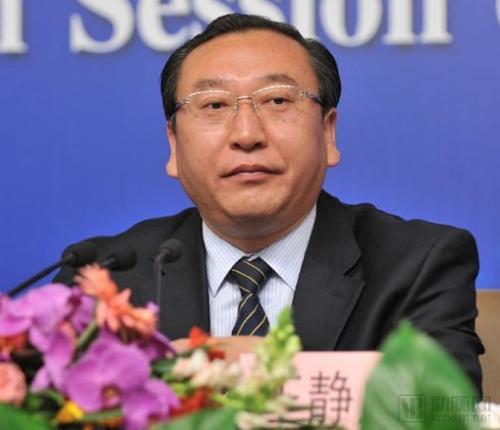
Wang Jingcheng, President of Northern Jiangsu People's Hospital and Deputy to the 13th National People's Congress
For Wang Jingcheng, a deputy to the 13th National People’s Congress and president of Subei People’s Hospital, his approach to assisting subordinate institutions is distinctive: he conducts on-site investigations before formulating assistance strategies.
“What kind of assistance to provide, and how to provide it, is not a matter of empty talk,” Wang Jingcheng frankly stated. Taking the Fangxiang Central Health Center, a member unit of the Northern Jiangsu People’s Hospital Medical Consortium, as an example, he personally led relevant department heads from the hospital not only to investigate the health center’s actual conditions but also to assess the healthcare needs of the surrounding community.
“According to their research, residents of Fangxiang Town exhibited a high incidence of gastric diseases; however, at that time, no medical institution in the town was capable of performing gastroscopy, despite strong public demand. Since the establishment of the gastroscopy unit, Fangxiang Central Health Center has completed over 1,300 gastroscopic examinations and treatments, diagnosing more than 40 cases of gastric and esophageal cancer, all of which received timely treatment,” said Wang Jingcheng.
Advancing the Construction of Medical Alliances: The Core Lies in Enhancing the Service Capacity of Primary Healthcare InstitutionsVigorously promoting chronic disease prevention and control, and actively participating in primary care family doctor contract services, are innovative measures adopted by Northern Jiangsu People’s Hospital in advancing the construction of medical alliances. Wang Jingcheng stated that the hospital is jointly carrying out “trinity” comprehensive screening, prevention, and treatment for hypertension, diabetes, and stroke with primary hospitals. Meanwhile, it dispatches doctors and nurses to form family doctor health service teams with primary hospital medical staff and village doctors at community health stations under a “1+1+1” model, thereby providing high-quality family doctor services to the grassroots population.
Wang Jingcheng frankly acknowledged that numerous challenges remain in advancing the construction of medical consortia, such as insufficient multi-party collaborative efforts, weak downward flow of high-quality resources, and the absence of a long-term, stable, and sustainable operational mechanism. He recommended promoting institutional and mechanistic innovations within medical consortia, further strengthening coordination among human resources, finance, pricing, and medical insurance sectors, and improving internal incentive and safeguard mechanisms for personnel, thereby enabling medical consortia to become more truly “connected” and “operational.”
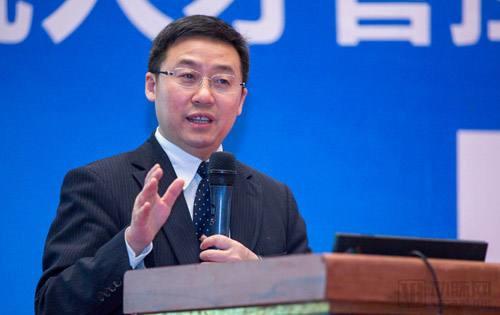
Li Weimin, Deputy to the National People's Congress and President of West China Hospital, Sichuan University
During the two sessions, a new model of medical consortium emerged: the “Chimeric Medical Consortium.” This concept was proposed by Li Weimin, a deputy to the National People’s Congress and President of West China Hospital, Sichuan University.
According to Li Weimin, a "Chimeric Medical Consortium" refers to the integration of specialists, management expertise, and medical quality standards from tertiary hospitals into primary care hospitals in regions with underdeveloped medical resources. This model establishes unified financial management, resource allocation, compensation systems, and operational management. As a result, primary care hospitals effectively become branch campuses of tertiary hospitals, fundamentally enhancing their self-sustaining capabilities and addressing the public's difficulty in accessing medical care. This approach is similar to the "Close-Knit Medical Consortium" model.
Currently, West China Hospital has established “medical consortia” with more than 640 hospitals across China, including group-based models, hospital-led management models, and specialty alliances. Physicians from West China Hospital participate in the operations of these consortium hospitals through various forms of engagement. In reality, Li Weimin believes that such “medical consortia” lack a solid foundation unless they achieve unified management, a standardized compensation system, and integrated human resource allocation.
Currently, West China Hospital dispatches key physicians to work at hospitals within its medical consortium alliance on an annual basis; however, these assignments are often short-term, and physicians are reluctant to establish long-term practices at the grassroots level. If a management model were adopted that integrates West China Hospital and grassroots hospitals into a unified management system, the situation would improve significantly.
Taking Sichuan Province as an example, which has 36 tertiary Grade-A general hospitals and 60 ethnic minority counties, each tertiary Grade-A hospital can establish a hybrid-type medical consortium with one or two county-level hospitals based on its actual conditions under government leadership. This approach enables precise and comprehensive decentralization of high-quality medical resources and demonstrates strong operational feasibility.
Tertiary hospitals manage primary care hospitals as branch institutions, forming an integrated system with distinct functional roles and geographically dispersed locations. Budget management, human resource allocation, and other functions are centrally coordinated by the tertiary hospitals, with assistance provided primarily through a combination of online and on-site support.
Meanwhile, establish an incentive-based compensation system that rewards greater effort and superior performance. For physicians in primary care hospitals, arrange two- to three-month rotations at tertiary hospitals every two to three years to further enhance their professional competencies. Physicians recruited or introduced to work in primary care hospitals for more than eight years with outstanding performance may, on a voluntary basis, return to work at tertiary hospitals in mainland China.
Facilitating personnel mobility can enhance physicians' work motivation. Meanwhile, Li Weimin also mentioned the need to establish an “Incentive Mechanism for Expert-Level Core Physicians in Ethnic Minority Regions,” with the aim of effectively addressing the shortage of expert-level physicians at the grassroots level.
Li Weimin believes that grassroots work experience should be integrated into performance evaluations and promotions. For instance, physicians at tertiary hospitals must have prior experience working in primary care institutions if they wish to be promoted to key clinical roles, core business positions, or higher professional titles. This approach would encourage expert-level physicians to voluntarily serve at the grassroots level.
West China Hospital’s experience shows that doctors dispatched to work at the grassroots level can see an increase in their income. For instance, while a doctor working at West China Hospital’s main campus earns a monthly salary of 10,000 yuan, those assigned to grassroots positions receive 12,500 yuan per month.
If unified management between tertiary hospitals and primary care institutions is achieved, then West China Hospital physicians working at primary care facilities would simply be relocating their practice to one of West China Hospital’s branch campuses.
Only when medical personnel are allowed to circulate can the technical proficiency of primary care hospitals be improved, patients be willing to receive treatment at these facilities, and the public’s difficulty in accessing medical care be resolved.
According to relevant data, by the end of 2017, 2,134 public hospitals across China had participated in pilot medical consortium initiatives, achieving full coverage of medical consortium development among all public tertiary hospitals. This has gradually led to the formation of relatively mature models, including urban medical groups, county-level medical communities, cross-regional specialty alliances, and telemedicine collaboration networks covering remote and impoverished areas.
Based on the above data, the establishment of medical consortiums across China has achieved phased success, but opposition remains strong.
From the perspective of medical consortium members, tertiary hospitals serve as the leading entities. These institutions are primarily composed of specialists whose professional ethos prioritizes technology and quality above all else, with a preference for achieving optimal outcomes through the most advanced techniques. Consequently, when tertiary hospitals lead rehabilitation hospitals and community health centers, there is a natural tendency toward high-technology, high-quality care, which inevitably entails high costs and lacks macroeconomic efficiency. This top-down vertical integration model can easily transform community healthcare institutions into mere patient referral channels. International experience also indicates that specialist-dominated healthcare systems tend to incur higher medical expenses without necessarily delivering higher quality of care.
Loose-knit medical consortiums, which generally lack shared financial interests, are often inherently contradictory. Top-tier Grade 3A hospitals do not rely on primary care institutions to refer patients, as patients willingly queue up at their outpatient halls on their own initiative. While these hospitals do not mind referring some patients for rehabilitation and prescription refills to primary care facilities, patients are often reluctant to go. Consequently, the hospitals are more than happy to retain these patients for continued treatment and medication dispensing within their own institutions.
Mid-tier tertiary hospitals are eager to receive patient referrals from primary care institutions, but such referrals are not materializing. If patients need to seek medical care in the provincial capital, they would rather go to top-tier Grade 3A hospitals; they will not choose a particular tertiary hospital in the provincial capital simply because it has formed a medical consortium with a county-level hospital.
Moreover, physicians at tertiary Grade A hospitals are extremely busy; they must treat every patient, regardless of whether the condition is major or minor, or whether the patient is a stranger or an acquaintance. A higher volume of outpatient visits translates into more patients on operating tables and in hospital beds, which in turn brings both professional renown and financial gain. In such circumstances, who would care about where patients “should” seek medical attention? Many hospitals use administrative mandates to compel physicians to provide support to grassroots-level medical institutions, imposing penalties such as suspension of prescribing privileges, ineligibility for promotion, and deduction of bonuses for non-compliance. Under such coercion, how much meaningful assistance can specialist physicians actually provide to grassroots facilities?
Gu Xin, a professor at the School of Government of Peking University, once stated that the current “medical consortium” model faces a challenge: although the government has proposed achieving “shared and coordinated utilization of medical resources,” no reasonable benefit-distribution and incentive mechanisms have been established in practice to ensure that all parties can earn profits within a reasonable range.
With the convening of this year’s Two Sessions, the further development of medical consortiums is undeniable, and hospitals at all levels across China may deeply implement the medical consortium model.
In terms of fiscal support, since the 18th National Congress of the Communist Party of China, RMB 47.48 billion in central government investment has been allocated to support infrastructure development at 110,000 county-level hospitals and primary healthcare institutions, continuously improving the primary healthcare service system.In 2018, each city was required to establish at least one medical consortium with demonstrable effectiveness.By 2020, all secondary public hospitals and government-run primary healthcare institutions had fully participated in medical consortiums.