

Will the Healthcare Big Data Industry Produce a Super Unicorn? Insights from Flatiron Health's $1.9 Billion Acquisition by Roche
For medical big data companies, this may well be the best of times. Policy support, market trends, demand, and capital have all converged favorably.
Let’s start with policy. The 2018 Government Work Report, delivered at the recent Two Sessions, called for implementing a big data development initiative, advancing the research and application of artificial intelligence technologies, and promoting “Internet Plus” initiatives in the healthcare sector. This signals that medical big data will remain a market favorite for a considerable period to come.
Since 2012, the sector has entered the “Big Data Era”—the Baidu Index for the term “big data” has surged since 2012.
Furthermore, regarding requirements, big data has long had mature solutions in industries such as education, healthcare, finance, and retail.
Finally, regarding capital: countless investors are holding cash and waiting on the sidelines, with many industry-specific players holding out for the right price.
When it comes to industrial capital taking control of medical big data companies, Roche’s acquisition of Flatiron Health is the most prominent recent example. During the Lunar New Year holiday, news of a major acquisition emerged from across the Pacific: global pharmaceutical giant Roche announced its plan to acquire oncology big data company Flatiron Health for $1.9 billion.
The news immediately sparked heated discussion within the industry. Key points of interest include: Why did Roche invest heavily in acquiring this company, and what unique business model has earned it recognition?
More importantly, will this acquisition become a milestone event in the field of oncology big data, and even healthcare big data at large? Does it signify the industry’s recognition of the commercial and social value of healthcare big data? Will there be more transactions and collaborations centered around healthcare big data in the future? Will healthcare big data play an increasingly important role in the medical industry?
In light of this acquisition, VCBeat (WeChat ID: vcbeat) interviewed investors from domestic healthcare big data-focused investment firms, pharmaceutical consulting experts, and healthcare policy analysts to gather their insights on the transaction and the development of healthcare big data.
Roche Acquisition Case: The “Ferryman” Acquires the “Bridge Builder”
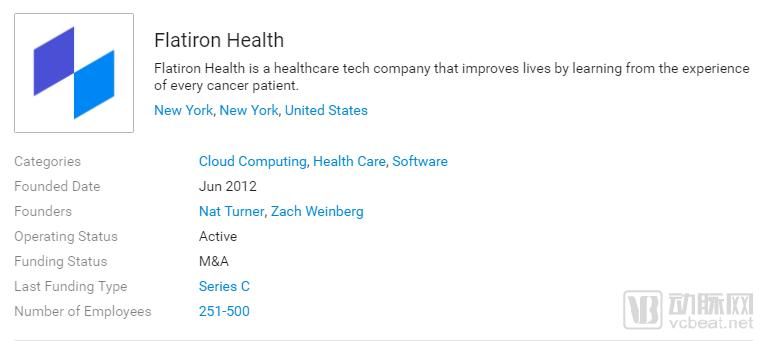
Flatiron Health is a healthcare technology and services company headquartered in New York, and it is a market leader in electronic health record (EHR) software and Real World Evidence management in the field of oncology.
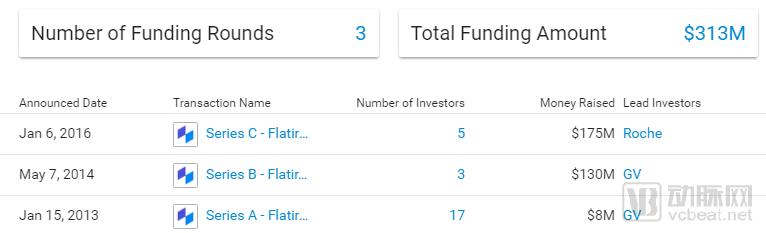
Flatiron was founded in 2012, with a mission from the outset to leverage big data analytics to support cancer treatment. This business model quickly gained industry recognition, securing Series A and Series B funding rounds led by Google Ventures.
Roche also “set its sights” on the company in 2016, leading a $175 million Series C financing round. Daniel O’Day, then Roche’s Chief Operating Officer, stated in his remarks, “Flatiron Health possesses a massive database that can help us understand how patients respond to medications. This is a long-term strategic investment, and such strategic collaboration brings significant benefits to us, with value extending far beyond financial returns.” Ultimately, this long-term strategic investment evolved into an acquisition. At the time of the acquisition, Flatiron’s valuation had reached as high as $2.1 billion. (Prior to the acquisition, Roche already held a 12.6% stake in the company.)
Flatiron Basic Information
Flatiron Financing Status
There has been considerable commentary within the industry regarding the rationale behind the acquisition. Andrew Matzkin of healthcare consulting firm Health Advances wrote that the pharmaceutical industry is increasing its investment in medical big data to better understand the complex interactions between drugs and biological systems, as well as the overall impact of treatments on health outcomes. Meanwhile, Forbes contributor David Shaywitz stated that Roche may leverage Flatiron’s existing clinical data to inform its new drug development decisions, accelerate the time-to-market for novel therapies, and save billions of dollars in R&D costs.
Roche CEO Daniel O’Day commented on the transaction, stating, “This is a significant step in Roche’s personalized healthcare strategy, as we believe that regulatory-grade real-world evidence is a key factor in accelerating the development and accessibility of innovative oncology treatments. As a leading technology company in the field of oncology, Flatiron can provide the necessary technical and data analytics capabilities to support oncology drug development for Roche and the industry at large.”
Jiang Xiaodong, Managing Partner at Changling Capital, offered a vivid analogy for this acquisition. “If Roche is viewed as the ‘ferryman’ in the oncology field, then the technological direction represented by Flatiron is that of the ‘bridge builder.’ The ‘ferryman’ invested in a ‘bridge-building’ company, and now the bridge is nearly complete. Once the bridge is finished, the ferryman’s business will become difficult to sustain. To gain full control over this bridge, Roche spearheaded the acquisition.”
In a report on the matter, analysts at Oddo & Cie, a renowned French asset management firm, stated that the transaction could hold “pioneering value,” noting that “although the price appears high at present, the value of big data in the healthcare sector—particularly in oncology—is poised to surge in the coming period.”
Therefore, some industry insiders believe that the transaction amount is somewhat forward-looking, reflecting Flatiron’s “future value.” The rationale is that the healthcare industry is poised to become the next major growth engine, rivaling the internet economy, and Flatiron is well-positioned within this trend. It has the potential to grow into a company on par with Google or Facebook, meaning Roche has “secured a significant bargain.”
Jiang Xiaodong also stated, “The value of medical big data lies not in how much it is worth today, but in how much it can earn in the future. Oncology big data may become the ‘infrastructure’ for oncology drug R&D and treatment. Flatiron’s future commercial prospects could far exceed its current valuation; had it not been acquired by Roche, it would have had every potential to become a super unicorn—but this would have required time and sustained effort.”
“For Flatiron’s shareholders, this acquisition may be good news; however, for the industry, a big-data company controlled by pharmaceutical firms may struggle to deliver the value it could have generated as an independent entity. This is particularly concerning for cancer patients, as a pharma-controlled big-data company will find it difficult to remain neutral and fully leverage data from the ‘patient’s perspective.’ It will inevitably serve the interests of pharmaceutical companies,” Jiang Xiaodong added.
There are arguments to support Flatiron’s valuation, whether based on conventional or forward-looking metrics. What is undeniable is that pharmaceutical companies, represented by Roche, are recognizing the value of healthcare big data—particularly in the specialized field of oncology—and are willing to pay for it, even going so far as to invest in or acquire companies in this space.
Real-World Evidence Is a Key Value of Oncology Big Data
In the U.S. market, several companies offer services similar to Flatiron’s, including Cerner, Epic, and Allscripts. However, Flatiron’s depth of expertise in oncology is unmatched by its competitors. Meanwhile, Flatiron is developing a new technology—natural language processing (NLP)-based data extraction tools—to mine data, and it employs trained medical experts to extract information from non-electronic records, such as physicians’ notes and other unstructured or non-standardized data sources. These approaches enable Flatiron to compile datasets that are more valuable than those of its peers.
In the past, although healthcare institutions generated vast amounts of data, they lacked appropriate technical means to effectively extract it, let alone conduct analytics and applications based on big data. The emergence of medical big data companies has addressed this issue by creating “datasets” through more structured data storage methods and effective data cleaning, thereby meeting the data needs for clinical practice and scientific research.
For pharmaceutical companies, the value of healthcare big data lies in its support for “real-world studies”—which is, in fact, the core service and primary revenue stream that Flatiron Health provides to pharmaceutical R&D organizations. Real-world studies refer to research conducted on large sample sizes (covering a broader population of clinical patients) to observe the therapeutic outcomes achieved by treatment measures undertaken in real-life settings, influenced by actual disease conditions, patient treatment preferences, and economic circumstances. These studies facilitate evaluations of drug safety, pharmacoeconomics, and indications in environments that more closely reflect real-world practice.
“Real-world studies can be applied in both the pre- and post-marketing phases of drugs. This includes site selection for pre-marketing clinical trials, multi-center collaboration, and patient recruitment, enabling faster identification and screening of target patients, particularly for rare diseases and end-stage cancers. Post-marketing applications are more diverse, encompassing evaluations of drug safety and efficacy, management of patient adherence, assessment of therapeutic effects under comorbid conditions, responses to combination therapies, and evaluation of differences in treatment outcomes across various populations,” said Li Hua Ding, a pharmaceutical consulting expert and President’s Coach at Vistage USA.
“Pharmaceutical companies also have a rigid demand for real-world evidence (RWE), as relevant regulations explicitly require them to submit post-marketing drug safety monitoring data; failure to do so risks the withdrawal of the drug from the market. Real-world evidence offers an effective means for pharmaceutical companies to meet such regulatory requirements. With regulatory acceptance, companies can access clinical data as conveniently as querying a database, which is more efficient than obtaining data through traditional randomized clinical trials,” added Ding Lihua.
In short, real-world studies based on big medical data can help pharmaceutical R&D institutions shorten the time to market for new drugs and obtain richer clinical data after launch.
The U.S. government has provided substantial support for real-world research. In June 2016, Flatiron Health and the U.S. Food and Drug Administration (FDA) entered into a collaborative research agreement to investigate the use of immunotherapy in patients with advanced non-small cell lung cancer. The two parties will leverage real-world evidence to assess drug efficacy, clinical safety, and other parameters.
In late 2016, the U.S. Congress enacted the 21st Century Cures Act, which proposed that “Real World Evidence” (RWE) could be used to support approvals for expanded indications in lieu of traditional clinical trials, thereby accelerating the market entry of drugs and medical devices and further prompting pharmaceutical companies to increase their investment in real-world studies.
As Maxwell Kirkby, AstraZeneca’s Vice President of R&D, stated in a previous interview, the company is strengthening its use of real-world patient data to gain deeper insights into the diseases it targets and to advance drug development. Analyzing aggregated data from patient medical records can help corroborate or challenge findings from conventional randomized controlled trials. Additionally, it was reported that AstraZeneca and LinkDoc Technology, a Chinese healthcare big data company, reached an agreement last December to engage in a strategic partnership focused on “intelligent, big data-driven comprehensive patient management.”
The Application of Medical Big Data Will Span the Entire Healthcare Process
“Big data applications are not limited to real-world studies; rather, they can be integrated throughout the entire healthcare process, including drug research and development, clinical diagnosis and treatment, insurance reimbursement and commercial insurance design, as well as health management and public health services,” said Liu Junshuai, Deputy Director of the Policy Special Committee of the China Pharmaceutical Innovation Promotion Association.
So, how does big medical data play a role in the healthcare process? First and foremost is big data collection, which relies on the level of informatization within relevant institutions and the interoperability of information between different institutions. Taking hospitals as an example, many clinical records exist not in electronic form but as paper documents or image files. To obtain complete patient case data, these scattered records need to be organized and stored in a structured manner to facilitate retrieval.
In practical operations, data collection must be conducted through a combination of automated tools and manual intervention, as current technical tools still lack sufficient capability in processing non-standardized data. After acquisition, the data will be made accessible to multiple stakeholders and invoked based on actual needs.
In terms of clinical decision-making, healthcare institutions can leverage big data to optimize diagnostic and treatment workflows, thereby enhancing operational efficiency and the quality of care. Furthermore, with the rise of artificial intelligence (AI), intelligent diagnostic tools that integrate big data and AI have become a prominent focus. Such products can assist physicians in processing and analyzing medical records, reducing repetitive administrative burdens.
In terms of health management, user health profiles can be constructed from medical and other health data to enable preventive care (“preventing disease before it occurs”) as well as personalized, precision diagnosis and treatment. Health management and healthcare big data can generate strong synergies, creating a viable commercial loop. Health management itself is a struggle against human nature; big data can assess users’ health risks and guide them toward healthier lifestyles, thereby achieving the goal of health intervention.
Public health is a key area for the application of medical big data, where trends in disease incidence can be analyzed and predicted from hundreds of thousands of clinical records to guide prevention and control efforts; additionally, characteristics such as the incidence rates of specific diseases can be identified to inform the formulation of public health policies.
Other applications of big data include supporting management decision-making in healthcare institutions, optimizing the allocation of medical resources, controlling insurance costs, and designing insurance products. Insurance cost control involves cross-referencing prescriptions and clinical practices with specific disease categories to identify and eliminate excessive medical treatment and clinical risks, thereby achieving the goal of cost containment. Medical big data plays a significant role in shaping the currently implemented diagnosis-related group (DRG) payment policies. Insurance product design refers to the extensive analysis of case data to observe the progression pathways of certain diseases, estimate the diagnostic and therapeutic burden, and assist commercial insurance companies in designing or improving their insurance products.
“China is currently actively advancing cost containment within its basic medical insurance system, and big data applications can play a significant role in this effort. By introducing big data solutions, we can enhance the supervision of medical practices, improve service quality, and optimize the price formation mechanisms for pharmaceuticals, medical consumables, and other items, thereby achieving the goal of cost control,” said Liu Junshuai.
“Furthermore, the state is gradually establishing and standardizing a dynamic adjustment mechanism for drug catalogs, linking catalog adjustments with new drug approvals to alleviate market access pressures for new drugs and meet clinical needs. Big data analytics can assist decision-making bodies in identifying innovative and patented drugs that are clinically essential and demonstrate definitive efficacy, thereby reducing the market entry of so-called ‘miracle drugs’ and lowering medical insurance reimbursement levels, thus providing support for drug catalog adjustment decisions,” added Liu Junshuai.
Medical Big Data Sector May Give Rise to a Super Unicorn
The case of Flatiron demonstrates that big data applications in the single domain of oncology hold significant commercial value. However, within the broader healthcare big data industry, Flatiron has only scratched the surface of its commercial potential. If health and medical big data are leveraged on a larger scale, companies even more successful than Flatiron could emerge.
Currently, multiple companies in both China and the United States have established a presence in the medical big data sector. These include tech giants such as Google DeepMind, Amazon AWS, Alibaba, and Tencent, as well as healthcare IT enterprises like Cerner and Epic in the U.S., and Neusoft Group and Winning Health in China. Additionally, there are a few medical big data companies that directly compete with Flatiron, such as LinkDoc Technology.
A comparison of the development of medical big data in China and the United States reveals that although the U.S. started earlier and has already produced companies like Flatiron, China’s more favorable policy and industrial environments suggest that a super unicorn in the medical big data sector is likely to emerge in China.
Driven by China’s vast population base and rapidly rising economic strength, the scale of China’s healthcare industry is expanding at a fast pace. China has already become the world’s second-largest healthcare market—and is poised to become the largest.
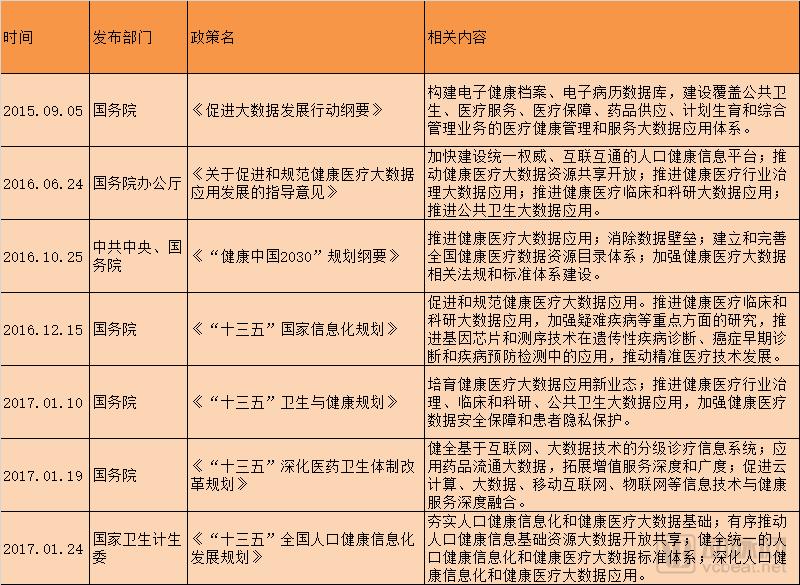
In terms of policy, there has been a surge in the issuance of policies related to health and medical big data over the past two years, with comprehensive planning covering top-level design, data privacy, security mechanisms, standardization, data sharing, and business models.
Following the 19th National Congress of the Communist Party of China, the Political Bureau of the CPC Central Committee held a group study session on implementing the national big data strategy. The meeting promoted the implementation of this strategy at the central level, proposing to accelerate the improvement of digital infrastructure, advance the integration and open sharing of data resources, ensure data security, and speed up the development of a Digital China to better serve China’s economic and social development and improve people’s livelihoods. Particular emphasis was placed on “Internet Plus Healthcare” and the popularization and application of big data in medicine and health.
Policies Related to the Field of Medical Big Data
Innovative companies in the field of medical big data are also worth attention, with investment institutions actively following up in this area. According to our statistics, nearly 10 financing events occurred in the medical big data sector in 2017 alone, involving amounts exceeding RMB 1 billion.
Selected Financing Activities in the Medical Big Data Sector in 2017

Data Sources: VCBeat Knowledge Base, IT Juzi
Multiple interviewees believe that China’s medical industry and policy environments are more favorable than those in the United States, providing fertile ground for cultivating innovative healthcare big data companies. Furthermore, the challenges facing China’s healthcare sector are more pronounced than those in the U.S., which will compel the industry to pursue innovative initiatives aimed at improving the supply of medical services and enhancing patient satisfaction. In this context, the application of healthcare big data represents a key direction for such innovation.
Of course, becoming a super unicorn cannot rely solely on industry drive and policy support; related companies need to have a clear development path. In this regard, Flatiron undoubtedly provides an excellent model.
“Success means choosing a very difficult direction, persisting in it, and ultimately achieving success. Currently, there are already companies in China that rival Flatiron, surpassing it in terms of data depth. If we continue to persevere, we may well succeed in this endeavor,” said Jiang Xiaodong.
Regarding how domestic medical big data companies should navigate their path to becoming unicorns, Jiang Jian, a partner at Broadband Capital, offered his analysis: “The development trajectory of Flatiron demonstrates that innovation in the medical big data sector is not merely about technological advancement. Beyond technology, a profound understanding of the healthcare domain and an established network of relationships are essential. Flatiron’s two founders possessed extensive entrepreneurial experience and successfully recruited a medical professor from Duke University to join as Chief Medical Officer at the outset. This enabled the company to gain deeper insights into the healthcare industry and facilitated greater acceptance of its products within the sector, underscoring the critical importance of a cross-disciplinary team composition for big data startups. In the Chinese context, LinkDoc Technology and Hangzhou Tongdun, both portfolio companies of Broadband Capital, are highly representative examples. They feature cross-industry founding teams with deep familiarity with their respective sectors, and we are optimistic about their future growth.”
“The business environments in China and the United States differ. We believe that outstanding Chinese medical big data companies have promising development prospects and ample room for growth. Maintaining corporate independence also facilitates better collaboration with industry partners and clients. Startups need to further enhance the value creation of their data products by gaining a deep understanding of and insight into industry pain points, rather than approaching them purely from a technical perspective. Most importantly, they must refine products that truly solve customer problems, thereby laying a solid foundation for their journey toward becoming unicorns,” said Jiang Jian.
Authors: Guo Xiaolong, Gao Kangping