

Traditional Chinese Medicine Gains Momentum at the Two Sessions: Industry Poised for Golden Era of Growth
During the Two Sessions, traditional Chinese medicine (TCM) once again received significant attention, with multiple deputies to the National People’s Congress and members of the Chinese People’s Political Consultative Conference offering proposals and suggestions on the inheritance and development of TCM.
VCBeat (WeChat ID: vcbeat) has compiled and found that the suggestions and proposals from deputies and committee members mainly focus on the inheritance of traditional Chinese medicine culture, industrial development, and the internationalization of traditional Chinese medicine.
At the same time, emphasis is placed on synergy with “healthcare reform,” requiring deep engagement with and rooted presence in “primary care settings,” so that the general public can access high-quality traditional Chinese medicine (TCM) services right at their doorstep.
What Achievements Has Traditional Chinese Medicine Made?
Wang Guoqiang, Director of the National Administration of Traditional Chinese Medicine, outlined the achievements made in the development of traditional Chinese medicine (TCM) during the first “Ministers’ Corridor” session of the Two Sessions. He stated that over 90% of township health centers and community health service centers across China are capable of providing TCM services, while more than 80% of community service stations and over 60% of village clinics can also offer such services. Moving forward, having addressed the issue of TCM service availability, the focus will shift to ensuring the quality of these services.
The National Administration of Traditional Chinese Medicine will strengthen the cultivation of core TCM professionals; establish medical consortia to channel high-quality urban hospital resources down to the grassroots level; meanwhile, the establishment of TCM clinics has shifted from an approval-based system to a record-filing system, enabling more individuals to open outpatient departments and allowing the public to access more diverse and varied TCM services.
In terms of the global expansion of Traditional Chinese Medicine (TCM), since the launch of the Belt and Road Initiative, many countries along the routes have shown strong interest in TCM. TCM is now applied in 183 countries and regions worldwide, and 86 national governments have signed agreements with China on TCM-related cooperation. China has established 17 TCM centers abroad. However, due to cultural differences between China and Western countries, among other factors, international regulatory approval for TCM still faces certain barriers, indicating that there is still a long way to go for TCM’s global outreach.
“What concerns me more is how ordinary Chinese citizens can access better traditional Chinese medicine (TCM) services right in their communities,” stated Wang Guoqiang. He noted that while the grassroots level serves as the vital source and focal point for TCM development, it also remains where the most significant shortcomings and weaknesses lie. For the general public, particularly elderly patients, those with chronic diseases, and individuals in rehabilitation, seeking treatment at large hospitals involves time-consuming and laborious queuing, making it highly inconvenient. There is a strong desire to receive TCM care locally. Therefore, in alignment with the Healthy China Strategy and the Rural Revitalization Strategy, efforts should be made to train more than 10,000 core TCM professionals at the grassroots level.
What Are the Highlights of Traditional Chinese Medicine at the 2018 Two Sessions?
Beyond these achievements, many challenges remain in the inheritance, development, and industrialization of Traditional Chinese Medicine (TCM). This has become a key focus of proposals and suggestions from delegates and members of the Two Sessions, particularly those associated with the pharmaceutical industry and the TCM sector. A search by VCBeat reveals that recent TCM-related proposals and suggestions have concentrated on the preservation of TCM culture, industrial development, and the internationalization of TCM.
Summary of Recommendations and Proposals Related to Traditional Chinese Medicine in the Past Two Years
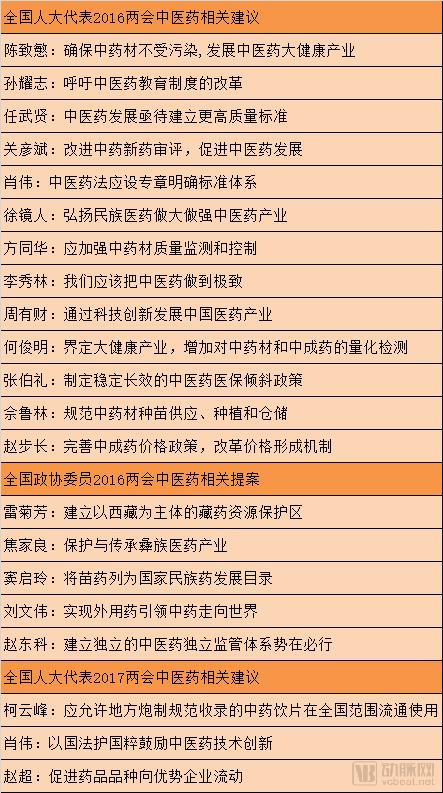
As can be seen, deputies to the National People’s Congress and members of the Chinese People’s Political Consultative Conference have put forward diverse suggestions and opinions on the inheritance and development of Traditional Chinese Medicine (TCM), with ethnic medicine and the industrialization of Chinese herbal medicines being the focal points of attention.
In addition to formal suggestions and proposals, the perspectives expressed by pharmaceutical industry representatives on the development of Traditional Chinese Medicine (TCM) during the Two Sessions were equally compelling. At the 10th “Voice • Responsibility” symposium for NPC deputies and CPPCC members from the pharmaceutical sector in 2018, multiple representatives shared their views on the advancement of TCM.
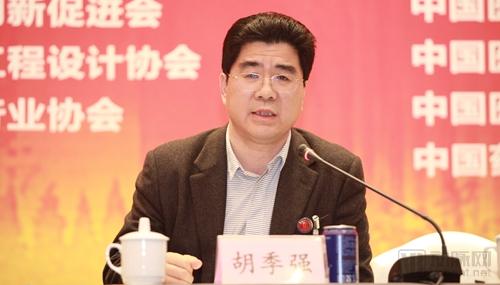
Hu Jiqiang, Deputy to the National People's Congress and Chairman of Zhejiang Conba Pharmaceutical Co., Ltd.
Streamlining the Development Order of the Entire Traditional Chinese Medicine Industry Chain
As supply-side reforms in the pharmaceutical sector and the integrated healthcare reforms linking medical services, health insurance, and pharmaceuticals deepen, coupled with the upgrading of pharmaceutical consumption, the entire pharmaceutical industry is undergoing structural adjustments in product portfolios, industrial structures, and organizational frameworks. This represents a critical period of reshuffling. High-quality enterprises that produce superior, innovative, and effective medicines must seize this pivotal moment to accelerate their own development. Relevant government departments should also formulate supportive policies from the strategic height of national rejuvenation, helping China’s pharmaceutical manufacturing enterprises grow larger and stronger.
Taking the development of the traditional Chinese medicine (TCM) industry as an example, there are currently two serious problems in its development process:
First, the entire traditional Chinese medicine (TCM) industry chain is plagued by disorder across various stages, including herbal cultivation, primary processing at source, production of TCM decoction pieces, extraction, and manufacturing of proprietary Chinese medicines. Without high-quality raw herbs, it is impossible to produce high-quality TCM decoction pieces or proprietary Chinese medicines. Without high-quality TCM products, the inheritance and development of traditional Chinese medicine as a whole cannot be sustained. It is hoped that relevant departments under the State Council will take the lead in developing comprehensive plans for the entire TCM industry chain, with particular emphasis on the upstream segment, while simultaneously implementing stringent special rectification campaigns to promote the healthy development of the TCM industry.
Second, in the past two years, the medical terminal market—including health departments, family planning and health commissions, and social security agencies—has exhibited policy-based discrimination against traditional Chinese medicine (TCM), primarily manifested through “drug restrictions.” Although many TCM products have been added to the national reimbursement drug list, numerous restrictions have been imposed on their use at the medical terminal level. Consequently, both public opinion and policy environments are highly unfavorable for TCM’s market access. The 19th National Congress of the Communist Party of China explicitly emphasized the parallel development of traditional Chinese and Western medicines, rather than adopting a model dominated by Western medicine with TCM in a supplementary role. Relevant authorities are urged to attach greater importance to how this balanced approach can be effectively implemented.
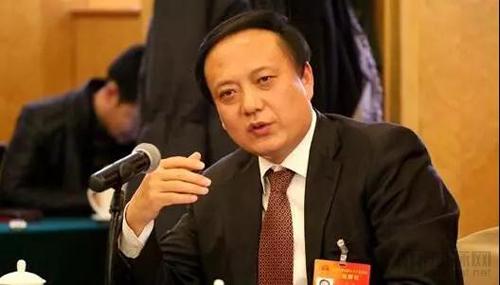
Zhao Chao, Deputy to the National People's Congress and Chairman of Shaanxi Buchang Pharmaceutical Co., Ltd.
Support Leading Enterprises and Major Products to Enhance the International Competitiveness of Traditional Chinese Medicine
With the comprehensive implementation of the Healthy China Strategy and the deepening of healthcare system reforms, the landscape of the pharmaceutical industry has undergone significant changes. Technological innovation, centered on clinical and scientific value, has become the primary driver of industry development. Recently, the China Association of Chinese Medicine, the Alliance of Major Traditional Chinese Medicine (TCM) Varieties, and Wanfang Data co-authored the Report on the Scientific and Technological Competitiveness of Major TCM Varieties. This report provides valuable guidance on the scientific and technological concepts of TCM and should serve as a key manifestation of efforts to enhance the scale and scientific competitiveness of TCM varieties in the next phase.
In recent years, the development of the traditional Chinese medicine (TCM) industry has faced numerous challenges. The growth rate of the entire industrial sector slowed down in 2015 and 2016, reaching 9.02% and 9.92%, respectively. This makes it extremely challenging to achieve the goal outlined in the Outline of Strategic Development for Traditional Chinese Medicine (2016–2030), which aims for the total output value of the TCM industry to account for more than 30% of the total pharmaceutical output value by 2020, and for the TCM industry to become a significant pillar of the national economy.
Creating premium traditional Chinese medicine (TCM) products through technology and driving the market with value is the inevitable path for the development of the TCM industry. Technological innovation has become an urgent priority for TCM development. It is recommended to increase support for leading TCM enterprises, build pharmaceutical giants in the TCM sector, enhance corporate competitiveness, and provide focused support to companies with large scale, high quality, and strong technological capabilities.
Furthermore, it is recommended to establish a quality standard system for traditional Chinese medicine (TCM) that aligns with international standards, implement a strategy focused on major product varieties, actively pursue secondary in-depth development, and build brands with international competitiveness to drive industry upgrading. Policies should be introduced to support the secondary development of varieties with clinically verified efficacy and broad market prospects. Basic research should be deepened to continuously raise standards. Meanwhile, the government should provide policy incentives in areas such as taxation, pricing, intellectual property protection, tendering processes, and inclusion in relevant reimbursement catalogs.
The Traditional Chinese Medicine Industry Is Set to Enter a Golden Age of Development
Traditional Chinese Medicine (TCM) is the crystallization of wisdom from China’s 5,000 years of civilization and has been continuously driving the development of the country’s pharmaceutical and healthcare sectors. The Communist Party of China and the Chinese government have always attached great importance to the inheritance and development of TCM techniques and culture, explicitly calling for the revitalization of traditional Chinese medicine and pharmacy, and have made comprehensive strategic deployments to this end.
The "2017 Status Data Report on the Traditional Chinese Medicine Industry" released by VCBeat shows that in 2017, China's traditional Chinese medicine (TCM) industry made new progress. The number of visits to TCM medical institutions exceeded 1 billion; medical revenue reached RMB 364.8 billion, accounting for nearly 10% of the total revenue of medical institutions; the total number of TCM health personnel reached 1.225 million, including 543,000 licensed physicians, representing 44.3%; and the number of operating TCM clinics nationwide reached 477, with an average annual growth rate of 78.1%.
Report Findings:
● AI Infuses Momentum into Healthcare; Intelligent Traditional Chinese Medicine Is Gaining Momentum
● In 2020, the traditional Chinese medicine (TCM) health industry will exceed 3 trillion yuan
● The scale of institutions has expanded year by year, with a continuously increasing growth rate.
● Shortage of TCM practitioners, with only 35.7% holding advanced degrees
● TCM Clinics Emerge as New Favorites, Experiencing Rapid Growth
● Traditional Chinese Medicine (TCM) wellness will become the standard approach to health in the future
● Shared Clinics Emerge as a New Business Model in the Development of TCM Clinics
From a policy perspective, multiple policies related to Traditional Chinese Medicine (TCM) have been issued in recent years. These policies cover various aspects, including TCM medical institutions, TCM personnel, Chinese herbal medicines, and the development planning of TCM technologies and equipment.
The introduction of the "Interim Measures for the Filing and Administration of Traditional Chinese Medicine Clinics" shifted the establishment of TCM clinics from an approval-based system to a filing-based system, significantly lowering the entry barriers. Prospective clinics can commence practice activities simply by filing with the county-level administrative department of traditional Chinese medicine in their locality.
The Internet, big data, and artificial intelligence have become disruptive technological forces across various industries. Under the impact of this technological wave, the traditional Chinese medicine (TCM) industry has undergone revolutionary changes, giving rise to new tools and business models such as TCM intelligent auxiliary diagnosis systems, smart TCM pharmacies, intelligent TCM devices, and TCM learning systems.
At the industry level, the market size of China’s traditional Chinese medicine (TCM) and big health industry has continued to expand over the past seven years, maintaining a rapid double-digit growth rate. In 2017, it reached RMB 1.75 trillion, representing a year-on-year increase of 21.1%. According to the white paper “Traditional Chinese Medicine in China,” the market size of China’s TCM and big health industry is projected to exceed RMB 3 trillion by 2020, with an average annual compound growth rate of approximately 20%. Policy support, technological innovation, and consumption upgrading are the primary drivers behind the rapid expansion of the TCM industry.
Industrial transformation and upgrading require not only the influence of external environments but also proactive internal changes. As an important component of China’s healthcare system, the innovation and future trajectory of traditional Chinese medicine (TCM) directly impact the development prospects of the entire medical industry. Based on interviews with industry insiders and a comprehensive review of industry information, VCBeat has identified the following trends in the development of the TCM industry:
1. Rising Demand for Health and Wellness: Traditional Chinese Medicine (TCM) Wellness Is Poised to Become the Standard Approach to Health
China’s per capita GDP has surpassed US$8,000. People’s needs are no longer confined to basic sustenance and clothing; health concepts are quietly shifting, with growing emphasis on health management and heightened awareness of wellness and preventive care. In the future, Traditional Chinese Medicine (TCM) diagnosis and treatment will extend from “treatment during illness” to “pre-illness management,” providing professional health management solutions for the large population in a sub-health state. “Preventive treatment of disease” will become a significant revenue source for TCM hospitals.
2. The scale of TCM clinics will gradually expand, and chain operations will become inevitable
The establishment of clinics has shifted to a filing-based system, making it easier for social capital to apply for clinic licenses. This increased participation by social capital will further boost the number of Traditional Chinese Medicine (TCM) clinics. Moreover, chain operation models can enhance management efficiency and improve the quality of medical services, while also helping to build brand influence and foster the development of influential TCM clinic chains.
3. Shared Clinics Emerge as a New Business Model for the Development of TCM Clinics
The greatest advantage of shared clinics lies in reducing construction costs and improving revenue per square foot through the shared use of space and equipment. Furthermore, Traditional Chinese Medicine (TCM) places greater emphasis on the reputation of herbal materials and TCM practitioners, requiring less investment in diagnostic and treatment equipment. Moreover, the introduction of policies allowing physicians to practice at multiple locations has created favorable conditions for the development of shared clinics.
Driven by policy support, rising economic levels, demographic shifts, and new technologies, China’s traditional Chinese medicine (TCM) industry is poised for significant growth. TCM services will integrate the entire care continuum—“pre-disease prevention, intra-disease treatment, and post-disease management”—to provide systematic solutions for health management. Meanwhile, chain clinics and shared clinics will inject new momentum into the development of the TCM industry. The TCM sector is set to enter a golden age of growth in the coming years.