

Is Decentralization the Biggest Barrier? Hospital CIOs’ Perspectives on Blockchain in Healthcare
The blockchain frenzy, for investors and entrepreneurs in 2018, felt like another wave of collective euphoria following the artificial intelligence boom. As observers of the blockchain space, we are bombarded with messages from various blockchain-focused WeChat groups every time we open the app.
As a potential application area for blockchain, healthcare has inevitably become a “hot topic” that is widely discussed. However, no matter how people outside the system imagine its possibilities, it remains difficult to answer whether blockchain can truly be implemented in healthcare. How do medical practitioners within the system view this technology? Are they resistant or supportive? In light of these questions, it is necessary for us to clarify the situation.
CIOs Who Have Embraced Blockchain
In October 2015, on a bitterly cold afternoon in Shenyang, the founder of a virtualization technology company and Shao Wei, Director of the Information Center at the First Affiliated Hospital of China Medical University, mentioned the term “blockchain” during a casual conversation about Bitcoin.
After that incident, Shao Wei vaguely realized that blockchain might become a pivotal technology shaping the future. Driven by curiosity, he purchased a copy of Blockchain and Financial Innovation, authored by a professor from the Department of Computer Science at Princeton University, and began studying it.

Coincidentally, that same year marked Huang Hong’s first encounter with blockchain. As the Director of the Information Center at Huashan Hospital Affiliated to Fudan University, he was deeply impressed by Bitcoin’s blockchain technology while working on a research project at Fudan University.
On April 27, 2017, the “Hubei Provincial Internet Hospital” was officially accredited, and the internet hospital established by Wuhan Central Hospital became the first “Internet Hospital Pilot Unit” in Hubei Province.
While constructing the Hubei Provincial Internet Hospital Platform System, Wuhan Central Hospital simultaneously conducted a research project on information security in internet-based healthcare. This project primarily focused on four key security aspects: first, the establishment of secure end-to-end channels in an internet environment; second, end-to-end encryption and decryption based on Chinese national cryptographic algorithms; third, encrypted storage at the underlying data level; and fourth, effective digital signatures across institutional boundaries outside healthcare facilities. During this research, Zuo Xiuran, Director of the Information Center at Wuhan Central Hospital, engaged in extensive discussions with experts in the field and introduced blockchain as an emerging technology.
Blockchain Enters Hospitals: Is Decentralization the Biggest Obstacle?
“To date, apart from the financial and insurance sectors, I have not seen any blockchain models that can be truly implemented in China’s healthcare industry,” said Shao Wei.
He believes that technological determinism is prevalent in the healthcare industry. According to the Hype Cycle, blockchain is currently at the peak of inflated expectations, where hype is most pronounced.
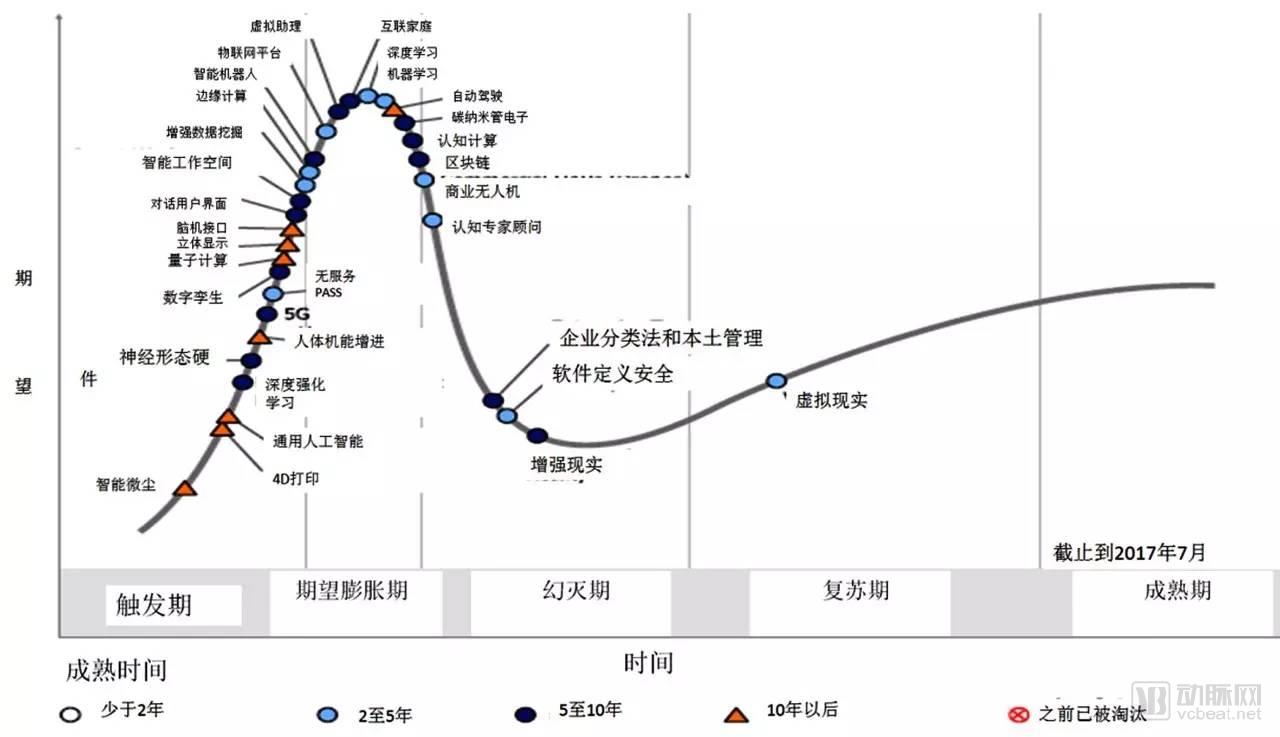
Gartner Hype Cycle for Emerging Technologies, 2017 (Source: Gartner, July 2017)
Bitcoin is a decentralized distributed ledger. However, from the perspective of national regulation, decentralization is not permitted in hospital management at the current stage, just as hospitals must have roles such as president, vice president, and department heads.
Taking the renminbi as an example, it is a currency issued under national sovereign credit. Its rating mechanism refers to the process by which rating agencies assess the political, economic, and creditworthiness of sovereign entities (typically sovereign nations) according to established procedures and methodologies, and express the rating results using standardized symbols.
Bitcoin, being fully decentralized, is a currency generated through cryptographic algorithms. This stands in conflict with state governance. The same applies to hospital management: the peer-to-peer model is not suitable for the current operational framework of healthcare institutions, and the centralized model remains dominant.
Similar to Shao Wei’s viewpoint, Huang Hong believes that blockchain is a decentralized concept, whereas the healthcare system, from a management perspective, is highly centralized. The healthcare system emphasizes leading hospitals and regional medical centers; therefore, the two follow entirely independent paths.
In her view, policies such as controlling the proportion of pharmaceutical costs and reforming medical payment methods reflect that the state’s current regulation of the healthcare system is primarily focused on containment rather than development. As relatively independent administrative entities, hospitals are subject to oversight where behavioral control and compliance are paramount, not profitability.
Under such circumstances, any innovation within a hospital entails significant risk for its president. Therefore, it remains highly challenging at present for blockchain to serve as a bridge for data exchange between hospitals.
Regarding the contradiction between the centralization of medical institutions and the decentralization of blockchain, Zuo Xiuran offers a different perspective. She believes, “The application of blockchain technology in healthcare scenarios also promotes the decentralization of medical services. The state’s promotion of tiered diagnosis and treatment is also a requirement for the decentralization of medical services.”
Overcrowding in large hospitals has left many nearby secondary and primary healthcare facilities with few patients. By fully leveraging electronic health records through information technology, and utilizing big data and machine learning to disseminate the expertise of major hospitals to the grassroots level via artificial intelligence and telemedicine, a tiered diagnosis and treatment system can be realized. This approach holds promise for diverting a portion of the population with basic medical needs to primary care institutions.
“Technology is a catalyst; it underpins business decentralization!” said Zuo Xiuran.
Not Completely Blocked: Centralized Application Scenarios Still Exist!
Some media outlets have reported that individuals, companies, researchers, and the U.S. government spend hundreds of billions of dollars annually on purchasing and maintaining IoT devices. However, all the data captured by these devices remains locked in silos and walled gardens.
Since the Internet of Things (IoT) relies on point-to-point communication, faces bottlenecks between different IoT technologies, and lacks trusted transactions, a trust mechanism is essential. The emergence of blockchain technology holds promise for addressing these existing challenges in the IoT.
In 2016, Shao Wei participated in the review of the "White Paper on Internet of Things in Healthcare (2016)."
At the white paper seminar, Shao Wei and several internet technology experts reached a consensus after discussion that deep integration of blockchain with the medical Internet of Things (IoMT) may be a feasible endeavor in the future.
The Resident Health Card is a computer-readable CPU card proposed under the national health informatics “3521 Project” framework. It serves as the essential personal information infrastructure enabling cross-system, cross-institution, and cross-regional interoperability and information sharing in healthcare services, based on electronic health records (EHRs), electronic medical records (EMRs), and a three-tier information platform. The Resident Health Card integrates the functions of the Social Security Card, the New Rural Cooperative Medical Scheme (NRCMS) all-in-one card, and healthcare institution visit cards, recording an individual’s complete medical information from birth to death.
For a long time, the Resident Health Card has operated under a centralized management model, with designated card-issuing and encryption authorities. However, in 2017, China officially began implementing the Electronic Health Card.
On November 8, 2017, the Statistical Information Center of the National Health and Family Planning Commission (hereinafter referred to as the “Statistical Information Center”) and China Merchants Bank formally signed the “Strategic Cooperation Agreement on Innovative Applications of the Resident Health Card” in Wuxi, reaching a consensus on cooperation regarding the digitalization of the Resident Health Card.
Since the initial launch of the Health Card in 2012, 27 provinces and more than 120 prefecture-level cities have implemented the issuance of Resident Health Cards and their acceptance and application by medical institutions. Currently, the National Health and Family Planning Commission has established a fully functional registration management system and key management system for Resident Health Cards, achieving interconnectivity and data sharing with provincial card management systems. A nationwide technical support system for Health Card applications has been basically established.
The implementation of the Electronic Health Card means that patients can directly use their personal ID information to generate an electronic card number or QR code for identity verification during hospital visits. With the Electronic Health Card, patients can complete the entire outpatient process—including appointment scheduling, consultation, and payment—on the hospital’s platform, achieving a “one-card-for-all” outpatient experience.
If all medical institutions across China were to operate on a single blockchain, it would enable the issuance of electronic health cards via this blockchain. On the chain, each patient would have a unique ID, allowing for medical treatment billing at any hospital nationwide. This approach would not only facilitate cross-provincial medical consultations but also provide a more comprehensive solution to the issue of settlement for out-of-area medical care.
According to Zuo Xiuran, the operational costs of public hospitals are generally high at this stage. While beds in many departments are operating at full capacity for extended periods, other departments experience intermittent bed vacancies. In response, many hospitals have begun exploring the concept of "virtualized beds." The core principle is to shift from a ward-based model to a patient-centered approach, where all beds and medical staff are not restricted to specific departments, achieving complete decentralization.
For instance, if the endocrinology department at a hospital has available beds while the neurology department is at full capacity, patients from the latter can be transferred to beds in the former. Similarly, physicians and nurses are mobile within the hospital, moving alongside patients without being tied to fixed workstations, thereby facilitating optimized resource allocation.
However, this necessitates that hospital data be made sufficiently open and accessible. Regardless of a patient’s physical location, any emerging issues will trigger timely notifications and early warnings. This enables physicians to monitor patients’ conditions in real time and intervene as needed.
“Clinical, disciplinary, or physician groups under the management of the healthcare system represent a relatively centralized model of collaboration. Blockchain technology may become a supporting tool for new healthcare models in the future,” Huang Hong told VCBeat.
She believes that healthcare groups and individual physicians who pursue individual value (brand, income) are poised to become a vital force in breaking through this impasse. By forming collaborative alliances, they can break down hospital silos and enable technologies such as blockchain to generate value within the new system.
“This is a form of collaboration that transcends time and space, bringing together physicians from different cities and specialties to form a unified team. In this context, blockchain technologies—such as consensus mechanisms, distributed ledgers, and smart contracts—can play a pivotal role,” said Huang Hong.
In April 2017, driven by the need to address information security issues in internet healthcare, Zuo Xiuran began investigating the applicability of new technologies in this field. Her research scope encompassed everything from Chinese domestic cryptographic algorithms to blockchain technology.
“Under the current internet-based healthcare environment, there are significant security risks associated with patients’ private information and the sharing of electronic health record data across medical institutions,” said Zuo Xiuran.
The approach of regional information platforms is to consolidate residents’ health records through centralized management and store them in a data center. The drawback of this model is that any security breach could lead to large-scale privacy leaks.
If blockchain technology is adopted to address the issue of resident data, each medical institution can serve as a node within the blockchain, thereby interconnecting these institutions through blockchain technology. All operations on data within the blockchain are encrypted using Chinese national cryptographic algorithms. Even if data on a particular chain is leaked, the information contained therein cannot be decrypted.
“I believe blockchain can play a significant role in the internet environment and in large-scale regional healthcare information applications. In particular, for cross-regional shared organizations such as medical consortia and healthcare groups, the application prospects of blockchain are broader than those for individual hospitals,” said Zuo Xiuran.
Typically, the data centers of such integrated healthcare organizations aggregate relevant shared data and make it accessible through authorization mechanisms. In essence, this remains a centralized management model.
Where there is a central hub, there is the risk of large-scale data breaches.
By leveraging blockchain decentralization, implementing asymmetric encryption for data, and utilizing distributed ledgers for data storage and deployment, it is possible to ensure the security of shared data.
“Although there is currently an emphasis on the open sharing of electronic health records, they are not effectively utilized in practice. The underlying reason lies in security concerns regarding data sharing; both healthcare institutions and regional health administrative authorities lack the confidence to open up their data.”
On December 5, 2013, the People’s Bank of China (PBOC) website announced that, in order to protect the property rights and interests of the general public, safeguard the legal tender status of the Renminbi, prevent money-laundering risks, and maintain financial stability, the PBOC, the Ministry of Industry and Information Technology, the China Banking Regulatory Commission, the China Securities Regulatory Commission, and the China Insurance Regulatory Commission had jointly issued the “Notice of the People’s Bank of China, the Ministry of Industry and Information Technology, the China Banking Regulatory Commission, the China Securities Regulatory Commission, and the China Insurance Regulatory Commission on Preventing Bitcoin Risks” (Yin Fa [2013] No. 289, hereinafter referred to as the “Notice”).
The “Notice” states that all financial institutions, payment institutions, and internet websites providing services such as bitcoin registration and trading shall immediately report any suspicious transactions related to bitcoin and other virtual commodities to the China Anti-Money Laundering Monitoring and Analysis Center, and cooperate with the anti-money laundering investigations conducted by the People’s Bank of China; where clues are identified indicating the use of bitcoin for criminal activities such as fraud, gambling, or money laundering, they shall promptly report such matters to the public security organs.
On September 4, 2017, four years later, the blanket ban imposed by the People’s Bank of China and six other ministries once again brought regulatory crackdowns to ICOs, which were already in the spotlight.
While Bitcoin struggles to survive in China, blockchain technology is poised to evolve through various iterations into a form that can be practically implemented across industries.
“Compared with local area networks, blockchain is more suitable for wide area networks. Only when the healthcare system achieves true interconnectivity can blockchain realize its maximum value. Of course, its emergence may accelerate this process to some extent. However, in my opinion, blockchain will not see successful implementation in hospitals within the next decade,” said Shao Wei.
Zuo Xiuran, however, believes that the primary obstacle to the genuine adoption of blockchain technology within hospitals is its level of technological maturity. “Much like integration platforms in their early days, there were initially no use cases in healthcare, with applications limited to the financial sector. Therefore, during its implementation at Wuhan Central Hospital, the challenges encountered were not technical in nature, but rather centered on how to effectively integrate the technology into clinical workflows.”
The process of implementing a new technology in a novel field involves continuous problem identification and resolution, entailing a prolonged cycle. This pioneering endeavor also poses significant tests and challenges for hospital administrators.
In integrating such emerging innovations and scenarios, hospitals may begin by validating them through localized pilot initiatives. “For instance, the Hubei Provincial Internet Hospital project adopts a centralized deployment model, making applications accessible to affiliated institutions. If there are viable blockchain application models worth exploring in this area, we would be more than willing to give them a try,” said Zuo Xiuran.
Huang Hong envisioned the future of blockchain: “The medical sector has evolved to a stage where it is no longer defined solely by traditional healthcare concepts; rather, it has become an integral component of the broader ‘Big Health’ ecosystem. In addition to medical institutions, numerous health-related organizations will participate in this system in the future, with individual physicians representing a key resource. The integration of blockchain and Big Health will yield many practical application scenarios, provided that the underlying technologies and business models reach maturity and perfection.”