

In Honor of 'Goddess Day': Insights and Product Overview of the HPV Vaccine Market
Cervical cancer is the most common malignant tumor of the female reproductive organs, ranking second in incidence among all female malignancies, and even first in some developing countries.
Epidemiological data on cervical cancer in China indicate that there are 131,500 new cases annually, with approximately 53,000 deaths each year, accounting for about 18.4% of all female cancer-related mortality. This underscores cervical cancer as a major disease posing a significant threat to the health and lives of women in China.
A large-scale clinical epidemiological study conducted by the Department of Obstetrics and Gynecology at Nanfang Hospital, Southern Medical University, revealed significant geographical disparities in the incidence and mortality rates of cervical cancer across countries with varying economic conditions and different regions.
The incidence and mortality rates of cervical cancer in developing countries or regions are significantly higher than those in developed countries or regions. The incidence and mortality rates of cervical cancer in urban areas are lower than those in rural areas. In China, the distribution of cervical cancer is mainly concentrated in the central and western regions.
According to the World Health Organization, persistent infection with high-risk oncogenic HPV genotypes is closely associated with the development of cervical cancer, and vaccination is the most effective method for preventing HPV infection and its progression to cervical cancer. On the annual “Women’s Day,” VCBeat (WeChat ID: vcbeat) shares insights on topics related to the HPV vaccine industry.
HPV (Human Papillomavirus) infection is the most common viral infection of the reproductive tract, capable of causing a range of diseases in both men and women, including precancerous lesions that may progress to cancer.
In 1974, German virologist Harald zur Hausen first proposed the association between HPV infection and cervical tumors.
Based on the L1 gene sequence of the HPV capsid protein, more than 100 HPV genotypes have been identified to date. According to their oncogenic potential, HPVs are classified into high-risk genotypes (such as types 16, 18, 31, 33, 45, 52, and 58) and low-risk genotypes (such as types 6 and 11). There are more than 10 high-risk HPV types associated with cervical cancer.
Low-risk HPV types cause warts on the genitals, anus, and surrounding skin (i.e., common genital warts); for example, HPV types 6 and 11 are responsible for 90% of genital warts.
Although the vast majority of HPV infections are asymptomatic, do not cause disease, and resolve spontaneously, persistent infection with high-risk HPV genotypes may lead to pathogenesis. Persistent infections caused by certain high-risk viral types can remain latent for many years; if not treated in a timely manner, they are a primary cause of cancerous lesions.
Persistent infection with certain oncogenic HPV genotypes (most commonly types 16 and 18) in women can lead to precancerous lesions, which may progress to cervical cancer if left untreated.
Currently, there are three vaccines successfully developed and marketed worldwide for the prevention of human papillomavirus (HPV) infection and cervical cancer: GlaxoSmithKline’s bivalent HPV vaccine (types 16/18), Merck’s quadrivalent HPV vaccine (types 6/11/16/18), and Merck’s nonavalent HPV vaccine (types 6/11/16/18/31/33/45/52/58).
Although the bivalent HPV vaccine targets only infections with HPV types 16 and 18, current studies indicate that these two most common oncogenic HPV genotypes account for approximately 70% of HPV-positive invasive cervical cancers.
Data indicates that females aged 9–45 are the target population for HPV vaccination, with a particular focus on those aged 13–15. In mainland China, the approved bivalent and quadrivalent HPV vaccines are indicated for females aged 9–25 and 20–45, respectively. The choice of specific vaccine depends primarily on physician recommendations and individual preference, as each vaccine targets specific HPV subtypes.
Although HPV vaccination is most effective when administered before the onset of sexual activity, it still provides substantial protective benefits for women who have already become sexually active.
An obstetrician-gynecologist told VCBeat that residents can now choose to get vaccinated at community hospitals and community health service centers. However, although 99.7% of cervical cancer cases are caused by the human papillomavirus (HPV), this does not mean that 99.7% of people infected with HPV will develop cervical cancer; these are two entirely different concepts.
There are three types of HPV vaccines available on the market: bivalent, quadrivalent, and nonavalent. The bivalent and quadrivalent HPV vaccines approved in mainland China both require a three-dose regimen. The typical schedule involves administering the second dose two months after the first dose, and the third dose six months after the first dose.
Although multiple domestic and international nine-valent HPV vaccine candidates are currently undergoing clinical trials, it will still take several years before these products are officially launched. As of now, no nine-valent HPV vaccines have been approved for sale in mainland China. The details of the three vaccines are as follows:
1. The bivalent HPV vaccine Cervarix, produced by GlaxoSmithKline (GSK), was launched in 2007. This is the vaccine available in China; it primarily targets human papillomavirus (HPV) types 16 and 18, preventing approximately 70% of cervical cancers and related precancerous lesions. No HPV vaccine suitable for male vaccination has been introduced.
2. The quadrivalent HPV vaccine Gardasil 4, manufactured by Merck & Co., was launched in 2006. It received approval from the China Food and Drug Administration in May 2016. In addition to effectively preventing cervical cancer caused by HPV types 16 and 18, it also prevents two low-risk subtypes, types 6 and 11, which can cause anal and genital warts.
3. The nine-valent HPV vaccine Gardasil 9, manufactured by Merck & Co., was launched in 2014. It is not currently approved in mainland China. Building upon the original quadrivalent vaccine, it adds five additional HPV types: 31, 33, 45, 52, and 58. In addition to preventing cervical cancer and genital warts, it also helps prevent genital cancers such as vaginal cancer and anal cancer.
On July 18, 2016, GlaxoSmithKline’s bivalent HPV vaccine (Cervarix) received approval from the China Food and Drug Administration, becoming the first HPV vaccine approved in China for the prevention of cervical cancer. The vaccine was officially launched on the market on August 1, 2017.
Since November 13, 2017, provinces and municipalities including Chongqing, Henan, and Yunnan have successively launched the administration of the quadrivalent HPV vaccine. Chongqing was the first city in China to offer the quadrivalent HPV vaccine. The vaccination regimen consists of three doses, priced at RMB 952 per dose, for a total cost of RMB 2,856.
As the second city to open vaccination services, Zhengzhou priced each vaccine dose at 820 yuan, with the total cost for the complete three-dose regimen amounting to 2,460 yuan. Subsequently, cities such as Kunming in Yunnan Province and Nanning in Guangxi Zhuang Autonomous Region have also sequentially initiated vaccination campaigns.
On January 22, 2018, the Beijing Center for Disease Control and Prevention announced that it had completed the tendering, procurement, and supply preparations for the quadrivalent human papillomavirus (HPV) vaccine.
As of now, residents in Beijing have access to both bivalent and quadrivalent HPV vaccines. Individuals within the eligible age range must schedule an appointment in advance at a nearby vaccination clinic before receiving the vaccine.
According to the public announcement on the China Government Procurement Network regarding the procurement of quadrivalent HPV vaccines by the Beijing Municipal Health and Family Planning Commission, the tender procurement price for the quadrivalent HPV vaccine is RMB 798 per dose, with a total cost of RMB 2,394 for the full three-dose series.
In February 2018, the Shanghai Municipal Center for Disease Control and Prevention announced that the quadrivalent HPV vaccine would be available at 287 vaccination sites across Shanghai starting in mid-March. The price was set at RMB 803.5 per dose, totaling RMB 2,410.5 for the full three-dose series. As a Category II vaccine, it was not covered by medical insurance.
An industry practitioner in the biologics sector revealed to VCBeat that the market supply of the quadrivalent HPV vaccine fluctuates due to factors such as manufacturing capacity and regulatory approval processes. Typically, newly launched vaccines face supply shortages.
Adult immunization is an emerging market. Big data from a clinical epidemiological study conducted by the Department of Obstetrics and Gynecology at Nanfang Hospital, Southern Medical University, shows that countries such as Sweden, Finland, Denmark, and Iceland began implementing population-wide screening and treatment as measures to control cervical cancer as early as 1965, leading to a continuous decline in incidence rates.
Currently, approximately 70 countries and regions worldwide have incorporated HPV vaccines into their national immunization programs. In China, regions such as Beijing, Shanghai, and Jiangxi have successively implemented universal screening and treatment initiatives, all of which have achieved significant results.
However, on a national level, such efforts have yet to be implemented and standardized in some remote areas, leading to uneven development and lagging prevention and treatment measures. In the future, universal education campaigns are more likely to be conducted in collaboration with the government, thereby accelerating and streamlining the promotion of HPV vaccines.
As it stands, the HPV vaccine is the first vaccine capable of preventing cancer, and its acceptance among the general public is self-evident. However, China’s adult vaccine market is still in its nascent stage; both the vaccine products themselves and public awareness require further enhancement.
Furthermore, batch release data for vaccines indicate that supply will fall far short of demand once the market matures, due to limited production capacity. As of press time, the total number of quadrivalent vaccine batches released amounted to 927,810 doses, while bivalent vaccine batches totaled 1,727,381 doses.
Vaccine lot release data are primarily based on the release data from the China Food and Drug Administration (CFDA). Two factors influence provincial quotas: market demand and each province’s tendering system.
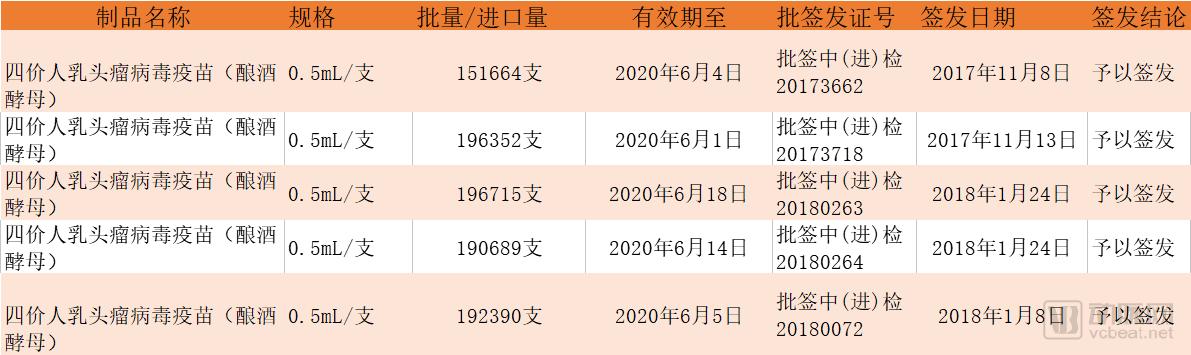
Data on Quadrivalent Vaccine Lot Releases from May 2017 to Present
(Data source: National Institutes for Food and Drug Control)
Given the current population base, the target demographic for vaccination spans ages 9 to 45, comprising 36 age groups. A rough estimate of the annual population growth within each group indicates that market demand and scale are substantial and steadily rising, while public awareness of health is also deepening.
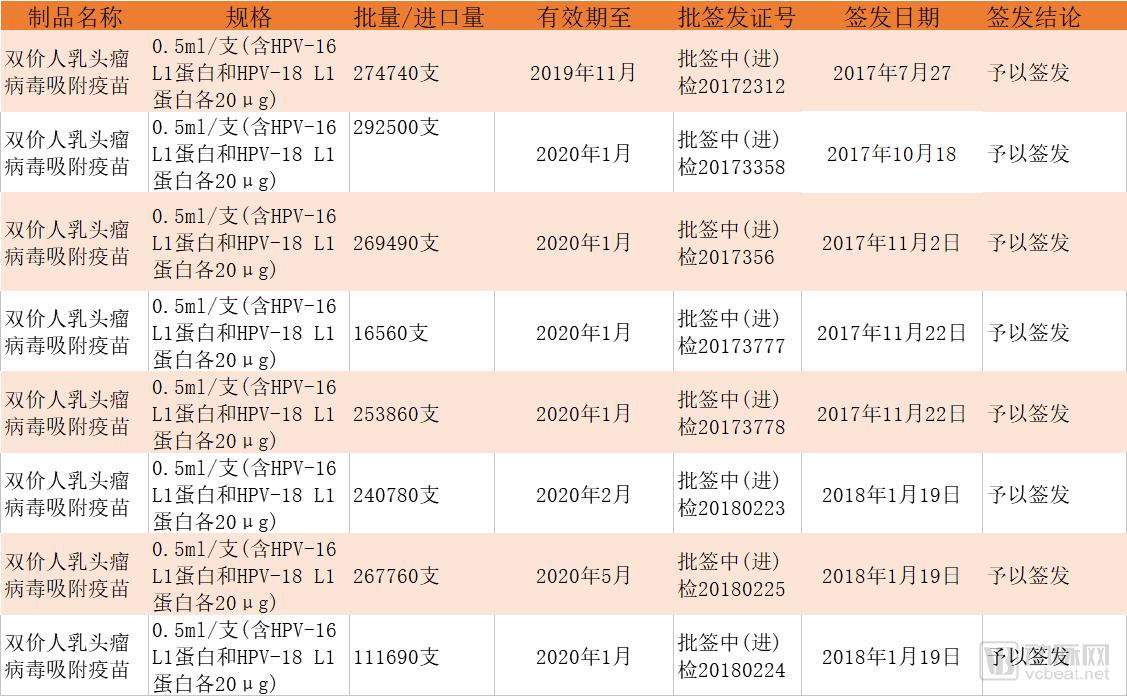 Batch Release Data for Bivalent Vaccines from May 2017 to Present
(Data source: National Institutes for Food and Drug Control)
Regarding HPV vaccines, the target population in China is currently very extensive. According to the China Statistical Yearbook 2017 published by the National Bureau of Statistics, there are 130 million individuals eligible for the bivalent vaccine (females aged 9–25) and 270 million individuals eligible for the quadrivalent vaccine (individuals aged 20–45).
Since the launch of GSK’s bivalent vaccine in 2007, HPV vaccine products have undergone continuous iteration and upgrades, evolving to include the quadrivalent and nonavalent vaccines currently available on the market. With the passage of time, product iterations, technological advancements, and heightened public awareness of prevention, vaccination rates are expected to continue rising.
According to data from the “2017–2022 In-Depth Research and Investment Strategic Planning Analysis Report on China’s Vaccine Industry” published by Qianzhan Industry Research Institute, the current global sales volume of the HPV vaccine market is close to USD 3.2 billion (with Merck & Co.’s market size exceeding USD 2.1 billion, accounting for more than 65%), and it is expected to surpass USD 4 billion by 2020.
China’s theoretical potential population for HPV vaccination is approximately 300 million people (across 36 age groups). Based on an anticipated price of RMB 2,000 per injection and a 30% penetration rate, this represents an exceptionally large consumer market.
The head of vaccine appointment services at the vaccination scheduling platform told VCBeat, “User feedback has been extremely enthusiastic. There are currently over one million individuals waiting in line for vaccines, distributed across 31 provinces, 345 prefecture-level cities, and 2,696 counties and districts throughout China. In cities such as Shenzhen and Chengdu, more than 100,000 people are awaiting vaccination. Previously, a user from Tibet inquired about when vaccines would become available there, expressing hope that cervical cancer vaccines would be included in Tibet’s procurement bidding process soon to enable earlier access to vaccination.”
Since the YueMiao platform launched its HPV vaccine appointment service, user inquiries have exceeded 800,000, with questions about “when can I get vaccinated” accounting for 38% of the total volume. There has also been a significant number of inquiries regarding “the differences between bivalent and quadrivalent vaccines” and “which vaccine is suitable for me.”
This indicates that users currently have a limited understanding of vaccines; their enthusiasm surges merely upon hearing that vaccines can prevent cancer. This also indirectly highlights the urgent need for popular science education on vaccine prevention.
Regarding the current trend of traveling to South Korea or Hong Kong, China, for HPV vaccination, the head of content operations at Chunyu Doctor told VCBeat that one reason for getting vaccinated in Hong Kong is that the nine-valent vaccine is available there under local policy; another factor may be related to some mainland residents’ trust in vaccines, particularly in the wake of a series of discussions and concerns about vaccines triggered by the 2016 vaccine scandal.
He stated that there is certainly a possibility for the nine-valent vaccine to be launched in mainland China; however, the CFDA has always maintained stringent regulations on imported drugs. In fact, the HPV vaccine itself has faced some safety concerns, and the domestic market approval of the bivalent and quadrivalent vaccines required six years of clinical trials.
According to Dr. Li Zhengqing, Global Vice President of MSD and General Manager of MSD R&D (China) Co., Ltd., in his response to the media, the nine-valent HPV vaccine has not yet entered the clinical trial phase (for mainland China), making a short-term market launch unlikely.
In accordance with relevant national regulations, vaccine products may be officially marketed and sold only after undergoing mandatory testing and review, and obtaining approval for lot release.
Vaccines are special pharmaceutical products, and national laws and regulations impose specific requirements on vaccination providers. The public must receive vaccinations only at officially approved institutions, such as Centers for Disease Control and Prevention (CDCs), community health centers with vaccination qualifications, and authorized medical examination facilities.
On the afternoon of November 9, 2017, Chongqing Zhifei Biological Products Co., Ltd., as the exclusive distributor of Merck’s quadrivalent HPV vaccine, received the “Certificate of Lot Release for Biological Products” for the Quadrivalent Human Papillomavirus Vaccine (Recombinant Saccharomyces cerevisiae), marketed under the brand name “Gardasil,” issued by the China Food and Drug Administration.
The issuance of the lot release certificate for the quadrivalent HPV vaccine marks its official entry into the market, providing eligible individuals with a protective vaccination option.
VCBeat has learned that, to date, Merck’s quadrivalent HPV vaccine has won bids in 22 provincial-level administrative regions (including provinces and municipalities directly under the central government) on the Chinese mainland, with supply remaining tight during the initial launch period.
The entire batch release process for Merck’s quadrivalent HPV vaccine took less than two months, far exceeding expectations. Post-launch, long-term safety monitoring will continue.
According to available information, Merck & Co.’s quadrivalent HPV vaccine is subject to centralized procurement organized by provincial Centers for Disease Control and Prevention (CDCs) through provincial public resource trading platforms. Subsequently, county-level CDCs procure the vaccine directly from manufacturers and distribute it to vaccination units within their respective administrative jurisdictions, thereby facilitating its gradual introduction and promotion in local vaccine distribution channels.
As the exclusive distributor of Merck’s quadrivalent vaccine, Zhifei Biological Products is responsible for the promotion and sales of the quadrivalent HPV vaccine, with related efforts currently being actively advanced.
Industry analysts stated that with MSD’s quadrivalent HPV vaccine priced at RMB 798 per dose in China (RMB 2,394 per person for a full course), and assuming a net profit margin of nearly 15%, the net profit per person would be approximately RMB 360. For a population of 5 million people, this would translate to a total net profit of approximately RMB 1.8 billion.
It is projected that the number of annual vaccinations will increase after the market introduction phase. If the annual vaccination volume reaches a peak of 10–20 million people, the net annual profit could reach RMB 3.6–7.2 billion.
Recognizing the potential of the adult immunization market, Meinian Onehealth and Zhifei Biological jointly announced in November 2017 that they had signed an agreement to establish a nationwide network of adult vaccination clinics. These clinics, to be set up within Meinian’s health examination centers, would provide HPV vaccination services and have already obtained vaccination qualifications from the Centers for Disease Control and Prevention (CDC).
The core of vaccination is to establish an immune barrier for “preventive care.” A key aspect of building this immune barrier is to increase vaccination rates by ensuring accessibility to convenient vaccination scenarios.
Currently, China’s adult vaccination rate remains very low on a global scale. In contrast, the United States places significant emphasis on adult preventive care through government and non-governmental organizations, featuring comprehensive adult immunization schedules and vaccine recommendations. Correspondingly, vaccination access points in the U.S. are abundant, with vaccines available at venues such as convenience stores and primary care physician offices.
Opening adult vaccination services to private medical institutions is conducive to the rapid development of preventive care as a consumer healthcare service in China.
The provision of adult vaccination health services by companies such as Meinian and iKang, along with the establishment of specialized adult vaccination centers by the state, indicates that national disease prevention management and public preventive awareness are strengthening. This is a positive development for both the population and relevant enterprises.
In addition to imported drugs, domestically developed biologics have also entered clinical trials. Dozens of Chinese companies, including Chengdu Institute of Biological Products Co., Ltd., Xiamen Wantai Canghai Biotechnology Co., Ltd., Shanghai Zerun Biotechnology Co., Ltd., Shanghai Bowei Biotechnology Co., Ltd., and Jiangsu Recbio Technology Co., Ltd., have advanced to various stages of clinical development.
The “Recombinant Human Papillomavirus Nonavalent Virus-Like Particle Vaccine (Types 6, 11, 16, 18, 31, 33, 45, 52, and 58 L1 Protein) (Pichia pastoris)” (Nonavalent HPV Vaccine), independently developed and submitted for clinical trial application by Shanghai Zerun Biotechnology Co., Ltd., a subsidiary controlled by Yunnan Walvax Biotechnology Co., Ltd., received the “Approval for Drug Clinical Trials” issued by the China Food and Drug Administration on January 15, 2018, with approval number: 2017L05282.
The company’s nine-valent HPV vaccine is an upgraded version of its bivalent HPV vaccine. The bivalent HPV vaccine is currently in the final stage of patient enrollment for Phase III clinical trials, with its R&D and industrialization progress ranking among the leading positions in China.
The head of the YueMiao platform stated, “If domestically developed HPV vaccines represent an upgrade in technology and product quality, they will certainly be competitive. However, as the number of domestic manufacturers increases, competition will intensify, posing a challenge to all manufacturers.”
He stated that increased competition would inevitably drive manufacturers to improve their services, allowing the public to benefit from advancements in science and technology. Noting Australia’s recent announcement of the elimination of cervical cancer, he expressed hope that concerted efforts across all sectors in China would enable the country to eliminate cervical cancer at an earlier date.
However, educating the adult immunization market remains a formidable challenge. The issue is complex; on a broader scale, anti-vaccine groups persist even in the United States. In China, anti-vaccine rhetoric continues to spread within certain small communities, and coupled with news reports concerning vaccine quality and safety, anti-vaccine sentiments still hold considerable sway domestically.
Regarding HPV specifically, the details requiring public education are highly granular—covering the risks associated with different HPV subtypes, the relationship between HPV infection and cervical cancer, the protective efficacy of vaccines, and selection criteria for various populations. Thus, the journey of public science communication remains long and arduous.
Finally, according to an HPV science popularization survey conducted by the YueMiao platform in collaboration with the Shenzhen Center for Disease Control and Prevention, over 90% of respondents expressed willingness to receive the HPV vaccine. This suggests that adult vaccination in China is progressing positively, with the HPV vaccine potentially serving as a turning point.