

Atomwise Secures $45 Million in Series A Funding Led by Monsanto Growth Ventures with Participation from Baidu and Tencent to Advance AI-Powered Drug Discovery
Recently, Silicon Valley-based software company Atomwise raised $45 million in its Series A funding round, led by Monsanto Growth Ventures. Other investors included DCVC (Data Collective), Baidu, and Tencent, representing a cross-section of investment firms from the technology, biopharmaceutical, and agrochemical sectors. Atomwise’s primary research focus is leveraging artificial intelligence (AI) to accelerate compound screening and facilitate new drug discovery.
According to VCBeat’s database, Atomwise has undergone multiple rounds of financing:
In January 2013, Atomwise received a $225,000 grant from Grand Challenges Canada.
In December 2014, the company secured $120,000 in seed funding from Y Combinator.
In March 2015, Atomwise secured an additional $225,000 in seed funding.
In June 2015, the company secured another $6 million in seed funding, with investors including OS Fund, Khosla Ventures, DFJ, AME Cloud Ventures, and Data Collective.
Dr. Abraham Heifets, Co-founder and CEO of Atomwise, stated, “From 2012 to the present, Atomwise has become the first commercial company to apply deep neural networks to drug development. Currently, Atomwise has demonstrated our capabilities in the field of drug R&D to numerous clients.”
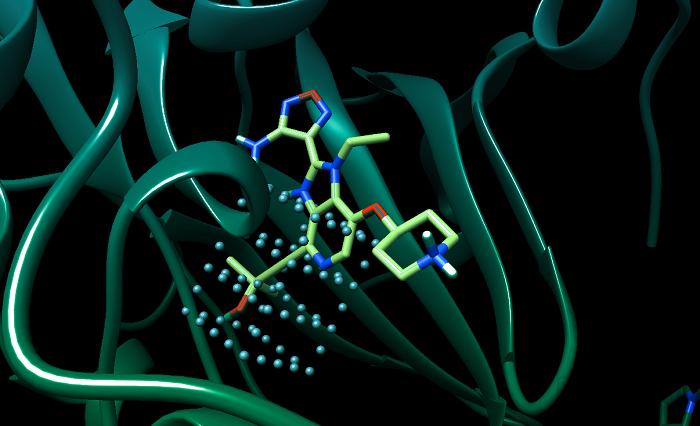
Atomwise’s pioneering software technology, AtomNet, leverages powerful deep learning algorithms and high-performance computing to analyze tens of millions of molecules daily for potential drug candidates, mirroring the capabilities of human chemists. The company has experienced rapid growth over the past two years, establishing collaborations with ten of the largest pharmaceutical companies in the United States, numerous biotechnology firms, and more than 40 leading research universities. Currently, over 50 R&D projects are underway. Atomwise has formed partnerships with four major pharmaceutical companies, including Merck, and maintains close ties with many other biotechnology companies, research institutions, and universities.
VCBeat has previously in "【AI Series】Atomwise: Developing New Drugs with AI, Slashing Costs by Hundreds of Millions of Dollars》reported. In 2015, the company announced some progress in finding treatments for Ebola virus, that is, among the drugs predicted by Atomwise, two might be used to combat the Ebola virus. They found these drugs within a week, and the cost did not exceed $1,000.
Currently, high-throughput screening robots can assist in identifying potentially effective molecules, with a maximum efficiency of 100,000 compounds per day. Atomwise claims that its software technology can increase the throughput to screen 10–20 million compounds per day.
Dr. Abraham Heifets, CEO of the company, stated that most companies identify targets from a biological perspective, determining which proteins and pathways play critical roles in disease processes. “Once these factors are elucidated, a specific molecule is required to block the corresponding protein and inhibit the pathway. All of this relies on chemical research, and our software is well-suited to address such challenges,” he said. “We have witnessed the rapid evolution of the biopharmaceutical industry from scarcity to abundance. Atomwise has established its own molecular library, allowing users to select compounds for screening online—for instance, choosing 600 million molecules—a task that would be virtually impossible using conventional screening methods. To achieve remarkable breakthroughs, the future of biopharmaceuticals will depend heavily on our computational software.”
Dr. Heifets also believes that companies are using AI technology to help drug designers determine whether molecules warrant further study, significantly reducing the time spent on screening and indirectly addressing the pharmaceutical industry’s low return on investment (ROI). “The pharmaceutical industry cannot sustain low ROI indefinitely; this is not a viable long-term strategy. We need new technologies like AI to help solve this problem.” However, many leaders in biopharmaceutical companies disagree with this view. The debate over whether AI can accelerate drug development remains contentious, with many arguing that the technology is overhyped. Science writer Derek Lowe has long followed AI-driven companies such as Atomwise. A few months ago, he wrote in his blog: “Compound screening is only one part of the early preclinical research phase. I have yet to see a successful drug whose early-stage screening was the rate-limiting step. Isn’t it interesting to spend a few more weeks in the initial discovery and exploration phase of drug development?”
Regarding the future application areas of the company’s technology, Dr. Heifets believes that its clientele will include not only biopharmaceutical companies but also agrochemical product manufacturers. Since computational software does not distinguish whether a carbon atom originates from human cells or wheat cells, the analysis of agricultural compounds can further enhance the reliability of this technology.
Regarding this investment, Monsanto Ventures deemed it highly worthwhile, expressing strong impression with Atomwise’s technological achievements. These capabilities can be leveraged in the future to identify promising compounds for crop protection and help address challenges in the research and development of agrochemical products.
Content Source:
http://vcbeat.top/Y2Q2MTcxOTIyNzgwZWUyMzczMzllYTcxZWNhM2ZiZDE=