

HIMSS18 Recap: Interoperability as the Ultimate Goal of U.S. Healthcare Under Trump, with AI Requiring Clinical Integration

Authors: Zhao Hongwei, Hao Xueyang
“Recently, Cerner and Apple have partnered to provide personal health information on consumer platforms. We are working with a range of partners and clients to jointly discuss issues related to interoperability.”
“For a long time,We all“We are using the Google Cloud Genomics API and are delighted to see Google Cloud expand its product portfolio to include the new Cloud Healthcare API. The ability to combine interoperability with Google Cloud’s scalable analytics will have a revolutionary impact on our research community.”
“The government’s strategy is to unleash data, spur innovation in artificial intelligence and machine learning, and achieve the ultimate goal of ensuring that all Americans can benefit from interoperability.”
The above are excerpts from speeches delivered by major corporations such as Apple and Google, as well as senior advisors to the U.S. President, at the HIMSS18 conference. From the aforementioned information, we can easily identify the keywords of this year’s HIMSS18 conference—Interoperability。
This term originates from the Trump administration’s new interoperability initiative.
According to HIMSS’s official definition, interoperability refers to the ability of devices from different vendors to exchange data and execute commands by adopting common data structures and transmission standards. For software, this means enabling data exchange through technologies such as APIs.
The United States already has widespread EHR systems, but citizens still find it difficult to access their own records through these systems due to a lack of interoperability. Many health issues could be prevented and managed through self-monitoring and self-care; however, the absence of interoperability keeps operational costs for the federal healthcare system excessively high.
At HIMSS18, interoperability has become a focal point of transformation across nearly all health technologies, including electronic health records (EHR), precision medicine, patient experience, and artificial intelligence. In addition, many companies unveiled their innovative products. As an on-site observer, VCBeat (WeChat Official Account: Vcbeat) will offer you a glimpse into the allure of these new technologies.
Policy-Driven Interoperability
The uneven quality of medical data and policy restrictions have long been criticized as obstacles to achieving interoperability. At this conference, executives from major companies called for the establishment of a reasonable data-sharing framework. However, from the government’s perspective, only regulation can bring about true interoperability.
At the HIMSS18 conference, Dr. Jon White, a representative of the Office of the National Coordinator for Health Information Technology (ONC), stated that the bipartisan-drafted “21st Century Cures Act” authorizes the U.S. Department of Health and Human Services (HHS) to issue guidelines on information blocking and interoperability requirements, which are expected to be fully rolled out in 2018.
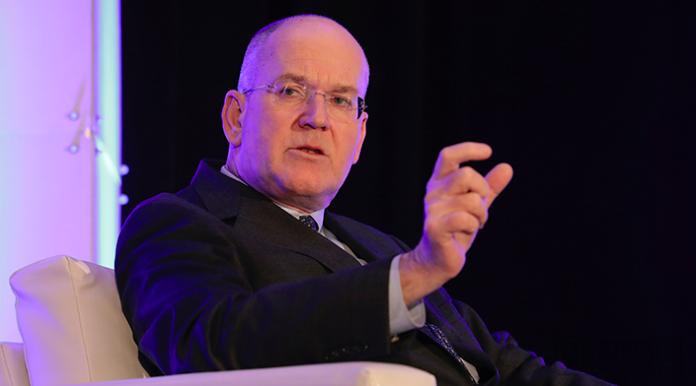
Dr. Jon White
The Guidelines specify how to identify information-blocking practices, the necessary conditions for exchanging information, and when it is permissible not to share information. Violations of the provisions outlined in the Guidelines will be subject to review and fines by the OIG (U.S. law enforcement agency).
To safeguard public privacy, appropriate regulation is inevitable. Dr. Jon White explained this guideline by stating, “Some companies adopt ‘out-and-out commercial practices’ to share data, rather than sharing information in the manner intended by Congress.”
To achieve nationwide interoperability, policy guidance may be the most effective approach.
How to Make EHRs More Efficient?
Although EHRs have undergone extensive development over a long period, significant potential remains to be unlocked. At the HIMSS 2018 conference, numerous industry leaders shared their innovative perspectives on this topic.
ONC addressed the efficiency of EHRs within the federal healthcare system from a governmental perspective at the conference.
Due to the massive volume of EHR data, such highly centralized data often becomes more of a burden than an asset in daily operations. In light of this, the Office of the National Coordinator for Health Information Technology (ONC) has recently begun implementing three separate repositories, decoupling the user interface components, documentation modules, and reporting systems.
Interoperability is also a key focus. Enhancing the interoperability of Electronic Health Records (EHRs) enables patients to better understand their health status, thereby alleviating the burden on federal healthcare institutions from a preventive perspective.
At the previous HIMSS17 conference, Judy Faulkner, founder and CEO of Epic Systems, announced that two simplified EHR systems would be created for clients who do not require the full Epic EHR system. At this year’s HIMSS18 conference, Epic unveiled its new plan: to replace the EHR with the CHR (Comprehensive Health Record).
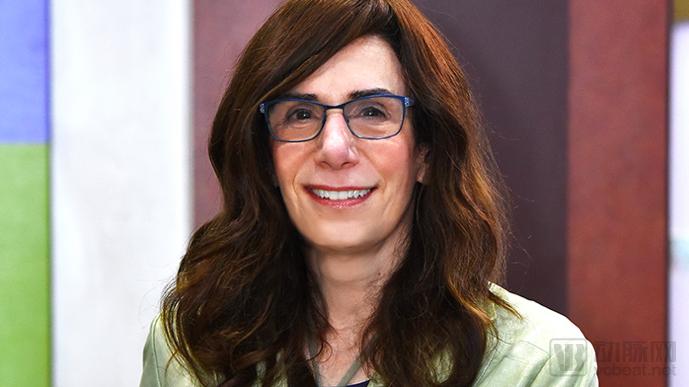
Judy Faulkner, Founder and CEO of Epic Systems
Over the past year, Judy Faulkner has found that CHR can address patients’ value-based needs, such as social value. In particular, for patients living alone, such information enables healthcare providers to deliver more humanized care.
Society is composed of individuals, and medical data lacking social context makes it difficult for healthcare providers to deliver compassionate, patient-centered care. Internet healthcare company Allscripts has identified an opportunity in this gap.
At the HIMSS18 conference, the company announced a partnership with Lyft to provide non-emergency transportation services for patients needing to attend medical appointments.
In 2017, 3.6 million Americans were unable to attend their medical appointments on time due to transportation issues. Twenty-five percent of low-income patients missed or rescheduled their appointments because of transportation barriers.
Leveraging Lyft’s proprietary application and Allscripts’ open platform, the two parties plan to integrate data into the Allscripts Sunrise EHR, enabling clinicians to schedule Lyft rides for patients.
This initiative will help millions of Americans overcome transportation barriers in accessing medical care, thereby improving the quality of healthcare services and enhancing patient satisfaction.
eClinicalWorks intends to go even further, with its CEO Girish Navani stating at the exhibition, “Our next EHR will be as intelligent as a Bloomberg Terminal!”
They hope that AI can analyze and filter data in the EHR system through machine learning, thereby assisting doctors in their work.
Navani describes a scenario in which a physician enters his office carrying a large monitor. This device displays information on all patients the physician will see that day, provides links to telehealth tools for those patients, and is equipped with a voice-based virtual assistant and a system capable of offering clinical recommendations.
“We spent ten years embedding data into EHRs,” said Navani. “Over the next decade, our development theme will center on intelligence and innovation.”
Interoperability Accelerates the Pace of Precision Medicine
Data scarcity is a major obstacle to the development of precision medicine. The research and development of precision medicine products requires extensive clinical data.
Jonathan Hirsch, President of Syapse, stated at the HIMSS18 Precision Medicine Forum, “Data for precision medicine is critically important, yet many healthcare institutions remain unwilling to share data.”
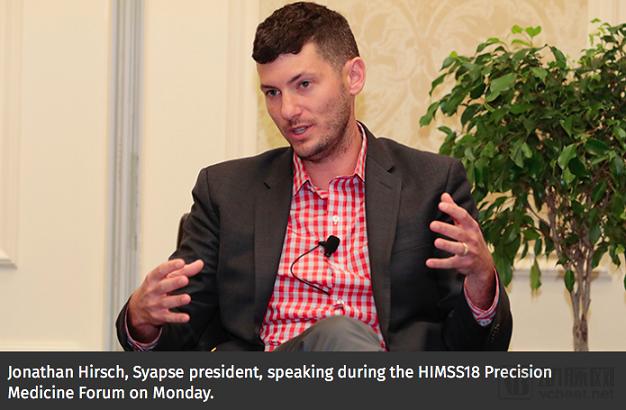
Jonathan Hirsch, President of Syapse
It is reported that Syapse, headquartered in Palo Alto, California, has established a cloud-based SaaS solution. It serves healthcare practitioners at the forefront of precision medicine. The service is built on a data platform that combines technologies such as semantic technology, data integration, and scalable enterprise backends, providing reliable assurance for applications utilizing genomic and other molecular data.
On the platform, the company has developed a single-page JavaScript application using innovative, semantic metadata-driven interfaces to help healthcare institutions leverage next-generation genomic and molecular data, as well as multi-source clinical data from various clinical systems (including medical history, treatments, outcomes, costs, etc.), thereby assisting physicians in making optimal decisions in patient care.
For Hirsch, diagnostic laboratories and other health technology vendors need to achieve collaboration through interoperability. “We need to make data sharing more comprehensive,” Hirsch said.
“Precision medicine must involve the interoperability of data and information, but I believe there are indeed challenges with current interoperability,” said Dr. Harold Paz, Executive Vice President and Chief Medical Officer at Aetna.
For Hirsch, the Centers for Medicare & Medicaid Services is moving in a direction where the approval of diagnostic tests is contingent upon an evidence framework. This depends on whether patients share this data or whether “there are registries tracking patients’ test results.”
Dr. Wohlgemuth argued, “The core of precision medicine should be grounded in clinical value and evidence-based support; admittedly, there are also issues with data formats.” Dr. Wohlgemuth explained, “Genomic information conveyed to patients is often unintelligible, and some providers are even uncertain about how to interpret the data or take appropriate action.”
“All healthcare services should be patient-centered,” said Wohlgemuth. “If patients are not engaged or do not understand how to process this information, it holds no value.”
It is reported that a single whole-genome dataset occupies approximately 200 GB of storage space. Lee stated that genomic therapy is part of the precision medicine practice at St. Jude’s Neonatal Care and Oncology Unit, and that greater data sharing among institutions is required.
To enable scientists to make breakthroughs in treating pediatric cancer, St. Jude uploads patients’ health data and anonymized genomic profiles of cancer cells to public databases, encouraging researchers worldwide to share genomic data and collaborate with one another.
Artificial Intelligence Requires Clinical Systems as Its Carrier
As AI competition intensifies, many companies unveiled new healthcare-assistance products at the HIMSS18 conference.
Research institutions, particularly in the field of precision medicine, urgently require data interoperability to ensure robust data sharing. To address this, Google has recently launched new Cloud Healthcare APIs aimed at resolving interoperability issues in health data.
The new API provides a powerful, scalable infrastructure solution for acquiring and managing healthcare data types—including HL7, FHIR, and DICOM—and enables Google Cloud customers to leverage this data for analytics and machine learning.
Zebra Medical Vision unveiled its latest algorithm at HIMSS18. The algorithm is capable of monitoring patients for intracranial hemorrhage and analyzing the type of hemorrhage.
The company's research data indicate that approximately 6 million people worldwide die annually from hemorrhagic stroke-related conditions, with nearly half of the patients failing to receive timely detection of intracranial hemorrhage. Therefore, early identification of intracranial hemorrhage is critical.
Another AI company, Orbita, announced significant improvements to its Orbita platform, which leverages voice assistance and AI conversational technologies to deliver auxiliary medical services.
Despite the proliferation of innovative artificial intelligence (AI) solutions, AI applications in healthcare remain in a “crawling” stage, with a long way to go before they can “walk,” according to IBM Watson, the Mayo Clinic, and a group of spokespersons from the American Medical Association. The primary reason is the lack of a clinical system capable of hosting these applications.
“I believe this has a great deal to do with trust,” said Kyu Rhee, Chief Medical Officer at IBM. “Fundamentally, healthcare is built on trust. Data is a natural resource, and trust is key when sharing data among multiple stakeholders. The entire operation of healthcare services requires the trust of patients, the trust of service providers, and the trust of stakeholders who connect the data.”
In his view, the key to the success of artificial intelligence lies in whether doctors and patients can accept this technological transformation. Therefore, the crux of the matter is how to design this system.
Regarding data, former Alphabet Chairman Eric Schmidt believes that cloud computing is more HIPAA-compliant, easier to use, and more secure.

Former Alphabet Chairman Eric Schmidt
Mayo Clinic is attempting to migrate its data to Google Cloud and Azure in order to exit the data center business. This outsourcing approach will reduce Mayo’s data security risks.
“How we leverage this information is key to taking the next step forward,” said Wolf, CEO of HIMSS. “It depends on the decisions we make in healthcare today regarding how to apply and advance artificial intelligence, machine learning, clinical decision support, clinical pharmacy, and mobile devices.”
Millennials Will Reshape Corporate Marketing Strategies
Data presented by Gergynn Sevenikar, Vice President of Sharp Healthcare, indicates that Millennials wield approximately $3.39 trillion in spending power. Having grown up alongside social media and consumer-centric technologies, this generation is poised to reshape the entire healthcare industry. Consequently, she has dubbed them “Digital Natives.”
Millennials have enjoyed a more affluent environment and abundant resources since birth, shaping consumption philosophies that differ markedly from those of the previous generation. When making purchases, they tend to rationally assess the practicality of services and express their affinity for products through “sharing.”
As millennials gradually become the core force of society, social media will exert a greater influence on the healthcare industry and potential consumer trends. Data provided by Sevenikar shows that during the entire consumption process, 42% of people read service-related reviews, 32% share their family’s medical experience records, and 27% post insights gained from their own experiences in online communities.
Thus, it is evident that the choices of such consumers depend to some extent on the depth of personalized services and the level of digitalization; the experience delivered by a company’s specific service encounter will have a decisive impact on their future decisions.
Many executives have begun to recognize that, to remain competitive in a fiercely contested market, companies must shift their focus from marketing-driven strategies to those centered on service and content. Delivering exceptional personalized services will become the goal of every company.
Sevenikar stated, “In my vision, by the time each patient walks into a hospital, their name is already well known to the healthcare providers. Subsequently, they will receive personalized services tailored to their needs—this is Sharp’s future service objective.”
Millennials will also bring about another change: healthcare will no longer be a low-frequency need in life, but will become an integral part of daily living. To maintain health, people are beginning to embrace disease prevention and self-managed health care.
Improved data management means that healthcare providers can now reach more patients beyond the scope of standard medical services, helping them with disease prevention and self-health management.
Judy Murphy, IBM’s Chief Nursing Officer, also shared her views on healthcare nursing at the current stage.
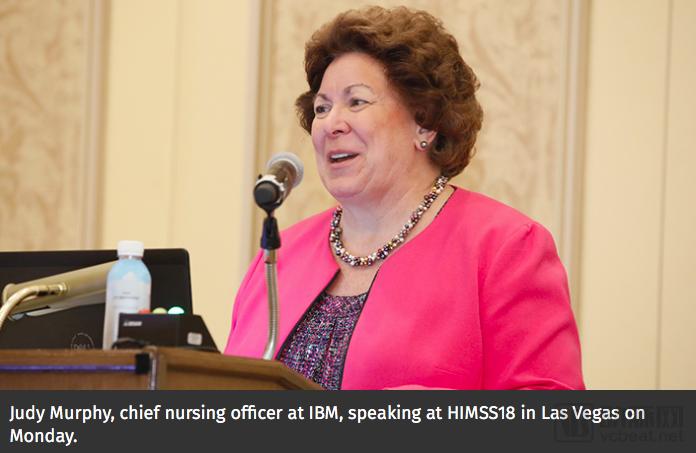
Judy Murphy, IBM’s Chief Nursing Officer
“Our doctors no longer focus solely on the patients immediately before them, which marks a stark departure from the past. Since physicians cannot be at their patients’ side around the clock, we must leverage predictive capabilities to deliver higher-quality care. Currently, we are building models using existing data to pilot predictive services.”
Over the past few decades, internet healthcare has made significant strides in collecting and organizing patient data. Although electronic health records have gradually taken shape, they still fall short of meeting researchers’ demands.
A series of industry development trends, such as the growing focus on behavioral health factors and the provision of high-value-added care, require greater patient engagement to obtain more valuable data, ultimately achieving the goal of accurate prediction.
A Politically Charged Exhibition with No Lack of Innovation
Although this year’s HIMSS conference was heavily politicized, we could still spot numerous flashes of innovation:
1. Interoperability enables patients, healthcare professionals, and enterprises to access data more easily;
2. A refined EHR system can effectively categorize complex patient data;
3. A more user-friendly clinical system is the key to the implementation of medical artificial intelligence;
4. In response to the younger consumer demographic, companies will recalibrate their marketing strategies.
At HIMSS18, in addition to foreign IT giants, we also saw the presence of a few domestic health informatics companies, including Lianzhong Medical, Duchang Information, and Mijian Information. VCBeat hopes that through this report, more Chinese health informatics enterprises will gain awareness of HIMSS, thereby accelerating the integration of China’s healthcare IT industry with international standards.

Union Medical Booth

Mijian Information Booth
Source of Information
1. http://www.healthcareitnews.com/news/onc-chief-donald-rucker-lays-out-his-agencys-very-full-plate
2. http://www.healthcareitnews.com/news/ais-potential-runs-against-lingering-data-issues
3. http://www.healthcareitnews.com/news/jared-kushner-says-trump-administration-has-new-plan-interoperability
4. http://www.healthcareitnews.com/news/technology-must-patient-engagement-it-isnt-cure-all
5. http://www.healthcareitnews.com/news/eric-schmidt-lays-out-formula-healthcare-innovation
6. http://www.healthcareitnews.com/news/it-leaders-highlight-big-success-machine-learning-models
7. http://www.healthcareitnews.com/news/precision-medicine-staring-down-some-familiar-roadblocks
8. http://www.healthcareitnews.com/news/digital-natives-will-lead-healthcare-consumer-revolution
9. http://www.healthcareitnews.com/news/patient-experience-we-need-dream-bigger-cleveland-clinic-leader-says
10. http://www.healthcareitnews.com/news/healthcare-moving-episodic-life-based-care
11. https://mp.weixin.qq.com/s/U6t7As7K2vA5gS-FLgHC-g
12. http://hitconsultant.net/2018/03/08/himss18-day-3-coverage-highlights-summary/