

Incarey Achieves Nearly RMB 300 Million in Sales through Vertical Services and Digital CSO Model, Files IPO Prospectus
Among the numerous pharmaceutical e-commerce companies, the development of incarey stands out as unique. Instead of competing on traffic and price wars, it has chosen the path of a vertical service-oriented e-commerce platform, earning recognition from both the market and investors.
Recently, VCBeat (WeChat ID: vcbeat) interviewed Huang Hui, Deputy General Manager of incarey, who shared the company’s development journey and its experience in providing specialized disease management services.
Targeting drug demand in the fields of chronic and special diseases
According to Huang Hui, the founding team of incarey came from frontline marketing teams at pharmaceutical companies and previously focused on clinical agency work for organ transplant medications, accumulating market experience in specialized disease services and promotion of specialized disease drugs. In 2011, as online pharmacies began to gain momentum, the founding team sought to leverage internet platforms to aggregate patients and provide them with medications and additional services.

Huang Hui, Deputy General Manager of incarey
“For certain specialized diseases, the incidence rate is very low and the market size is relatively small. Meanwhile, pharmaceutical companies face challenges such as difficulties in winning bids for hospital procurement, compressed profit margins, high costs of building in-house promotional teams, and numerous restrictions imposed by hospitals. Therefore, there is a demand for clinical agency services. Coinciding with the emergence of pharmaceutical e-commerce, we explored how to leverage internet platforms to rapidly aggregate patients and establish a patient-centric sales model. This approach not only reduces marketing costs but also enables more patients to benefit from high-quality products,” said Huang Hui.
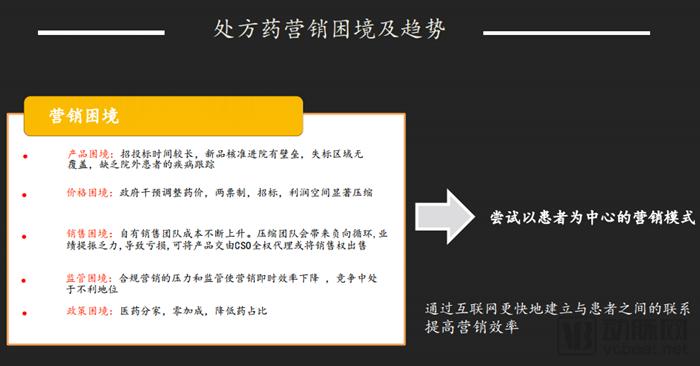
incarey’s core logic is “aggregating end-patient demand to forge a new path for pharmaceutical marketing,” with a commitment to developing an online digital CSO platform.
Since its inception, incarey has established a business model focused on pharmaceutical e-commerce for specific disease areas. Its approach involves three key strategies: first, identifying which diseases are suitable for online Contract Sales Organization (CSO) services, primarily considering factors such as disease incidence, clinical medication characteristics, and physicians' needs; second, selecting valuable products by disease type and formulating digital promotion strategies; and third, building teams of physician and pharmacist service providers to deliver continuous medical and pharmaceutical care to patients. Through this service process, a patient database can be gradually developed to facilitate the improvement and enhancement of subsequent marketing strategies.
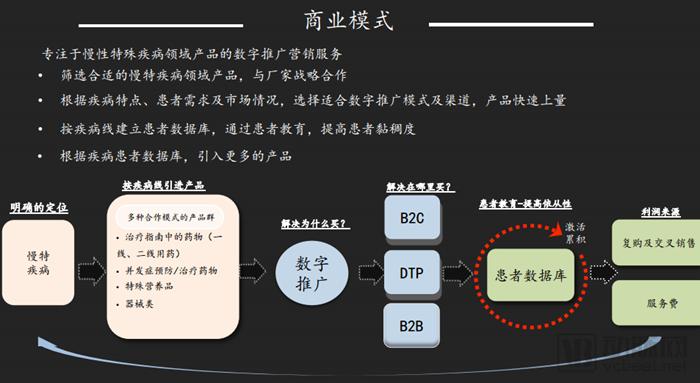
Service capability is a key factor enabling the success of InCarey’s business model. According to Huang Hui, after its launch, InCarey gradually established its own team of pharmacists and partnered with mobile healthcare platforms to integrate physician resources, thereby completing a closed-loop system for diagnosis, treatment, and pharmaceutical services.
“By aggregating patients through internet platforms and subsequently addressing their needs for follow-up diagnosis, treatment, and medication services, patient retention has been improved, resulting in strong patient stickiness.”
“Why are doctors willing to collaborate with us? Because we can help drive patient referrals, act as ‘medical assistants’ during communications, conduct patient follow-ups, and provide basic answers to their questions, thereby reducing doctors’ repetitive and inefficient workload. Meanwhile, we can build them into Key Opinion Leaders (KOLs) through the promotion of successful cases, establishing them as medical opinion leaders, which also benefits their personal brand building. Of course, doctors can also generate income on the platform through activities such as online consultations, participating in patient support groups, and live streaming.” Huang Hui introduced that incarey and doctors have rich models of cooperation and aligned interests.
Owing to its unique positioning and service model, incarey has experienced rapid growth since its establishment. In 2011, it received cornerstone investment from Hisun Pharmaceutical; in 2013, it obtained one of the first batches of Internet Drug Transaction C Licenses issued in Zhejiang Province. In 2014, its gross merchandise volume (GMV) exceeded RMB 100 million. In 2015, it completed a Series A financing round of RMB 100 million, led by Northern Light Venture Capital and participated in by Huagai Capital. In 2016, its GMV approached RMB 300 million, and it secured exclusive CSO (Contract Sales Organization) partnerships for multiple products.
incarey currently has an in-house team of approximately 150 pharmacists, offers over 1,200 SKUs of specialized drugs for key diseases, serves more than 2 million highly engaged patients, and achieves a six-month repurchase rate as high as 70%.
Orthopedic Single-Product Sales Exceed RMB 50 Million
Reviewing incarey’s development trajectory, its successful operation of products in the orthopedics sector stands out as the most representative. According to Huang Hui, this product series primarily targets patients with avascular necrosis of the femoral head (ANFH), a condition affecting approximately 7 million individuals across China, with patients being geographically dispersed. Early-stage symptoms are mild and often overlooked by patients and their families. During treatment, patients may experience symptom relief and develop a sense of complacency, leading them to discontinue or delay therapy, thereby missing the optimal window for standardized hip-preserving interventions. Clinical management predominantly relies on total hip arthroplasty, which faces relatively low patient acceptance.
In response to these circumstances, incarey has launched the “Osteonecrosis Rehabilitation Assistant,” providing patients with a comprehensive service system that covers osteonecrosis education, diagnosis, physician appointment scheduling, medication management, and second medical opinions, thereby helping patients seize the optimal window for osteonecrosis treatment.
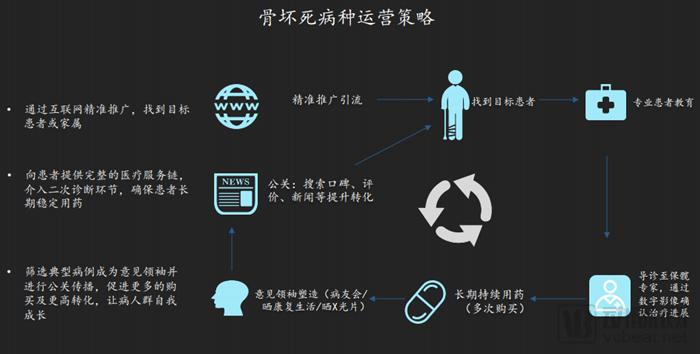
“Focusing on the treatment and rehabilitation of osteonecrosis, we have organized and participated in academic conferences to establish our academic standing in hip-preserving therapy and build a team of specialists in this field. We promote key physicians’ brands, cultivate ‘influencer experts,’ and increase outpatient visit volumes. With expert endorsement and online image interpretation, we provide value-added medical services to patients and facilitate second opinions. We leverage new media to showcase and disseminate high-quality patient case studies. Licensed pharmacists provide long-term follow-up for chronic disease management, thereby improving medication adherence. Patient-generated data are applied to marketing, scientific research, and clinical practice. This series of initiatives has helped us build a strong reputation in the field of osteonecrosis and laid the foundation for the agency business of orthopedic products,” said Huang Hui.
“Previously, the approach was solely product-sales-driven, with a relatively narrow pathway and weak product conversion. The new model offered by incarey starts from disease management and patient needs to optimize the service chain. With recognition from both patients and physicians, along with long-term medication tracking, product conversion rates will also increase.”
According to Huang Hui, incarey served 12,000 patients with osteonecrosis of the femoral head in 2017, with single-product sales exceeding RMB 50 million. It is expected to cover more than 120,000 patients with osteonecrosis of the femoral head in the future, with single-product sales surpassing RMB 300 million.
Transition Services Are the General Trend
“Looking back at incarey’s development, we often use the analogy of a race between a ‘small boat’ and a ‘large ship.’ incarey specializes in pharmaceutical services for chronic and rare diseases, akin to a small boat. When internet giants like Alibaba and JD.com, as well as traditional leaders in pharmaceutical distribution, entered the market, they were comparable to large ships. For the small boat to arrive before the large ship, there are two strategies: set sail earlier, or consistently chart a different course. This is the reason behind incarey’s sustained high-speed growth.”
Huang Hui believes that internet-plus-pharmaceutical services in vertical niches still have the opportunity to maintain rapid growth. “Growth potential remains strong in single-disease areas, with year-on-year growth rates likely to stay above 100% in the coming years. The key challenge lies in our ability to replicate proven business models, empower physicians, and serve patients. Even if our heavily verticalized model expands at a somewhat slower pace, there is still ample market space to tap into.”
Certainly, the transformation of pharmaceutical e-commerce toward service-oriented models is also a prevailing trend. Pharmaceutical e-commerce companies are no longer confined to online wholesale and retail of drugs; instead, they are actively exploring new models such as internet healthcare, O2O (online-to-offline), new retail, supply chain services, and smart healthcare. Their integration with medical services and the pharmaceutical supply chain is becoming increasingly distinct. The inherent correlation between medicine and healthcare is blurring the boundaries between internet healthcare and pharmaceutical e-commerce, giving rise to business models designed to meet consumer needs.
Policies also serve as a powerful “catalyst.” Around the New Year of 2018, the China Food and Drug Administration (CFDA) successively released two draft regulations for public comment on the supervision of pharmaceutical e-commerce. These drafts explicitly prohibited the online sale of prescription drugs and barred websites selling medicines to individual consumers from publishing information related to prescription drugs, creating significant pressure within the industry due to the perceived tightening of regulatory oversight.
“Although the online sale of prescription drugs has never been fully liberalized, the recent policy fluctuations have significantly impacted the industry. We hope that policies will be implemented promptly to clarify regulatory principles, thereby facilitating the subsequent development of the pharmaceutical e-commerce sector. We believe that under the broader framework of ‘healthcare reform,’ the gradual advancement of measures such as the ‘Two-Invoice System’ and ‘prescription outflow’ is conducive to the growth of pharmaceutical e-commerce. Moreover, internet platforms offer superior traceability and monitoring capabilities, which may lead to policy support leaning in this direction,” stated Huang Hui. Against this policy backdrop, optimizing services will be the key focus for the next stage of development in pharmaceutical e-commerce.