

National Two Sessions Highlight Health Literacy, Dingxiang Doctor Poised for Policy Tailwinds Amid IPO Filing
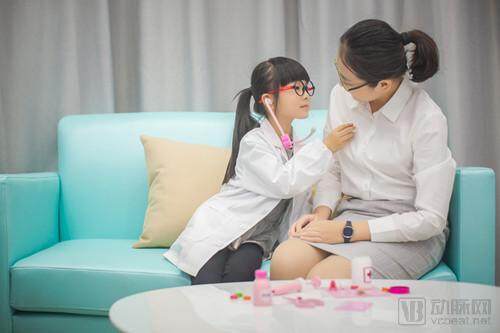
Once again, the annual “Two Sessions” have placed a spotlight on public health literacy in the healthcare sector. Many delegates have independently highlighted this concept. Health literacy refers to an individual’s ability to access and understand health information, and to apply such information to maintain and promote their own health.
Addressing China’s current “health challenges” and “chaotic wellness practices,” Wang Longde, a deputy to the National People’s Congress and former Vice Minister of Health, has stated that public health issues should not hinder GDP growth. As the chief expert of the “Healthy China 2030 Strategy Research Group,” health has become virtually the sole topic of Wang Longde’s remarks on various occasions. He emphasized that improving health literacy is the most economical, efficient, and fundamental approach to safeguarding public health.
In recent years, public health literacy has garnered increasing attention. Particularly with the advent of the mobile internet era, access to popular science health information has become more convenient and efficient. However, this has also facilitated the widespread dissemination of false and harmful health-related content. Due to a lack of discernment, the general public is easily misled by such misinformation, potentially adopting unhealthy or even detrimental lifestyle habits.
Therefore, Ge Minghua, a deputy to the National People’s Congress and Vice President of Zhejiang Cancer Hospital, submitted this year a “Proposal on Accelerating the Improvement of Citizens’ Health Literacy to Facilitate the Early Realization of Healthy China.” He stated that government departments should coordinate and advance health education and popular science initiatives; incorporate health literacy into all levels of the education system, including the nine-year compulsory education period; support a cohort of reputable health science popularization enterprises in building professional brands; and encourage social organizations to establish specialized bodies focused on health literacy.
“Healthy China 2030” states that to advance the construction of a Healthy China, we must adhere to prevention first, promote healthy and civilized lifestyles, create green and safe health environments, and reduce the incidence of disease.
Contrary to the goal of improving national health literacy, a large number of so-called “wellness celebrities” lacking medical backgrounds have emerged online in pursuit of web traffic, giving rise to a plethora of bizarre and unfounded wellness claims. Ge Minghua suggests that the government should strengthen the provision of health education information services. On one hand, it must promptly correct and severely crack down on media platforms that disseminate false or even harmful “health” information; on the other hand, it needs to increase the supply of scientifically accurate health information, striving to make the dissemination of health science popularization faster, better, more scientific, and more accurate.
Currently, DXY Doctor, an active presence on the Chinese internet, is a media platform dedicated to popularizing health knowledge. Since 2014, DXY Doctor has embarked on its journey of public health education. In 2016, it produced 26 million words of health-related educational content, accumulating 560 million reads on WeChat. In 2017, DXY Doctor intensified its content distribution efforts, achieving 3.17 billion reads throughout the year, with 69% of these views coming from channels other than the WeChat Official Account Platform. DXY Doctor now boasts nearly 30 million users, making it the largest health education platform in China and one of the earliest official rumor-refuting partners of Tencent WeChat.
Ge Minghua suggested that the government could select a group of enterprises with high public visibility, such as Dingxiang Doctor, which promote authentic science, enjoy strong brand reputation, and possess robust operational capabilities. The government should actively encourage and support these enterprises in building professional brands, strengthen strategic cooperation with them, leverage private-sector strengths to serve the public, and contribute to improving the health literacy of citizens.
President Xi Jinping once stated that national health must be cultivated from childhood. In line with President Xi’s health promotion strategy of “integrating health into all policies,” Ge Minghua recommends that national action plans aimed at improving the health literacy of the entire population should be incorporated into education systems at all levels, including the nine-year compulsory education system, and even included in the scope of the senior high school entrance examination (Zhongkao) and the national college entrance examination (Gaokao). This approach would also leverage children’s learning to drive updates in health concepts across their families, thereby promoting the enhancement of health literacy throughout society.
In December 2008, the Ministry of Education issued the Guidelines for Health Education in Primary and Secondary Schools (Document No. 12 [2008] of the Department of Physical, Arts and Health Education), which covers five domains: healthy behaviors and lifestyles, disease prevention, mental health, growth and development along with adolescent healthcare, and safety emergency response and hazard avoidance. However, a decade later, some schools continue to pay lip service to “Health First” while vigorously promoting exam-oriented education. Health education classes are often nominal, displaced, or misappropriated, and there is a significant shortage of qualified teaching staff.
Notably, the population in China experiencing suboptimal health is becoming increasingly younger. Surveys indicate that China has over 300 million smokers, ranking first globally, with a trend toward younger age groups; at least 500 million people are exposed to the harms of secondhand smoke. A report from the Chinese Center for Disease Control and Prevention shows that 51% of middle and high school students aged 12 and above consume alcohol, and one-quarter of these students have experienced drunkenness. Furthermore, 72% of the population aged 15 and older do not engage in proactive physical exercise.
It is imperative to prioritize public health starting from early childhood. Health science popularization platforms like Dingxiang Doctor have also begun to recognize the need to tailor their content to younger audiences. Simplicity and trustworthiness are the core brand values that Dingxiang Doctor has consistently upheld in its educational articles. Readers with only an elementary school education can easily understand these articles; meanwhile, the professionalism of the content is rigorously ensured by a dedicated team of experts and strict production protocols.
Chu Yang, Vice President of DXY and founder of Dingxiang Doctor, stated that the renewed emphasis on health literacy at this year’s Two Sessions is exciting news for “Dingxiang Doctors” dedicated to popularizing health knowledge. “The existence of Dingxiang Doctor aims to address information asymmetry arising from differences in communication between healthcare providers and patients. We are conducting health education in a manner accessible to the general public, thereby helping them adopt healthy, science-based lifestyles and behavioral habits.”
In the "Healthy China 2030" Planning Outline, General Secretary Xi Jinping proposed “promoting health for all, adhering to government leadership, and mobilizing participation from the entire society,” as well as “providing comprehensive, full-lifecycle health protection for the people, significantly improving health levels, and markedly enhancing health equity.” In this sense, improving health literacy is a major issue concerning national health and promoting the construction of a harmonious society. Vigorously carrying out popular science education on medicine for the general public and raising their health literacy constitute an effective approach to achieving the goals of Healthy China during the 13th Five-Year Plan period. The health-related science communication efforts being undertaken by platforms such as Dingxiang Doctor hold great promise and entail significant responsibilities.