

Stephen Hawking and His Black-Tech Wheelchair: Imprisoned by ALS, Liberated by Technology
VCBeat (WeChat ID: vcbeat) has learned that renowned physicist Stephen Hawking passed away on March 14, 2018, at the age of 76.
Stephen William Hawking, born on January 8, 1942, in Oxford, United Kingdom, served as the Lucasian Professor of Mathematics from 1979 to 2009. Regarded as the most distinguished theoretical physicist since Einstein, he was hailed as the “King of the Universe.” His theories, including “the Big Bang originated from a singularity” and “black holes eventually evaporate,” have significantly expanded humanity’s understanding of the cosmos.
But fate is often cruel to the gifted. This contemporary’s most renowned scientist was diagnosed with amyotrophic lateral sclerosis (ALS), commonly known as “Lou Gehrig’s disease,” at the age of 21. He became completely paralyzed, lost his ability to speak, and retained movement in only three fingers on one hand. At the time, doctors told him he had only two years to live.
Yet the resilient Stephen Hawking lived with ALS for 55 years, authoring more than ten bestsellers, publishing numerous influential papers, and appearing in several film and television productions, all while being unable to care for himself.
“At age 21, my expectations dropped to zero. Since then, everything has been a bonus.”
“My fingers can still move, and my mind can still think; I have ideals that I pursue throughout my life, and I have loved ones and friends who love me and whom I love; oh, and I also have a grateful heart.”
“Although one may have a physical disability, one must never let the mind become disabled as well.”
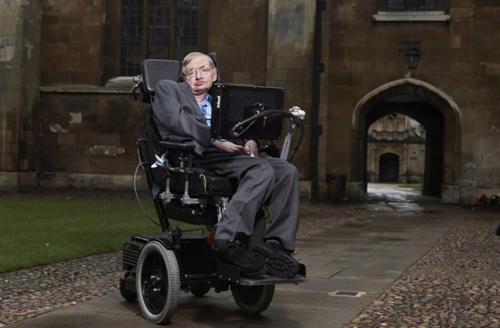
Image source: Techaeris
Hawking’s achievements would not have been possible without his “black-tech” wheelchair.
Initially, the wheelchair served merely as a means of mobility for Stephen Hawking. Apart from his physical limitations, he did not differ significantly from others; he could still engage in lively conversations and slowly write down mathematical formulas. After moving to the United States, Hawking began using an electric wheelchair and developed a unique penchant for “speeding” in it, often setting it to maximum speed and careening along sidewalks.
However, Hawking soon lost the mood to continue “racing his wheelchair.” His condition deteriorated again; he could no longer write, and his speech became increasingly slurred. At first, people could still barely understand him, but later, only his family and closest friends could accurately comprehend and guess what he was saying.
At that time, Hawking was still fortunate; although his speech was impaired, he could at least speak.
Unfortunately, in 1985, Hawking contracted severe pneumonia while traveling to CERN, and doctors performed a tracheostomy, causing him to permanently lose his ability to speak.
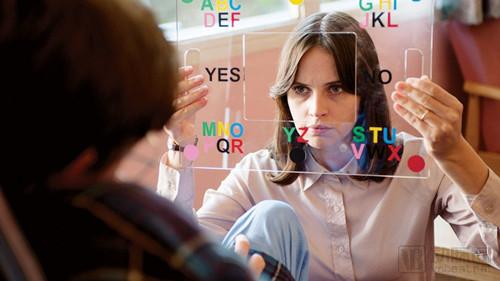
Image source: birtatlibireksi
After losing his voice, Hawking tried many methods to communicate with others, but none proved satisfactory. For instance, the most rudimentary method involved a spelling board: Hawking had to use eye movements to select a section and determine the color, then raise an eyebrow to confirm, spelling out words letter by letter. This spelling method required two people to operate and took several minutes to spell a single word, making it extremely cumbersome.
Restoring speech was not only Stephen Hawking’s own wish, but also an urgent need in the academic community. To enable Hawking to “speak,” scientists have spared no effort.
Physicist Martin King approached the CEO of Words+, a company based in California, USA, to design assistive software for Stephen Hawking to facilitate his speech. Engineers from Words+ installed an Apple II computer and a monitor on Hawking’s wheelchair.
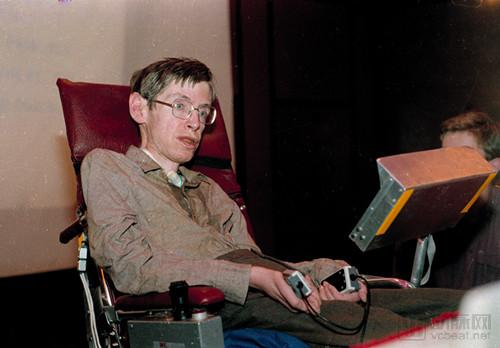
Image source: Wired
The principle behind this system is actually quite simple: a cursor scans the alphabet displayed on the screen line by line, and Hawking need only send a confirmation signal to the computer when the cursor highlights the desired letter in order to input it.
At that time, Stephen Hawking still retained some motor function in his hands, enabling him to operate his wheelchair independently and use assistive software without difficulty. This software addressed his writing challenges, allowing him to compose texts with ease.
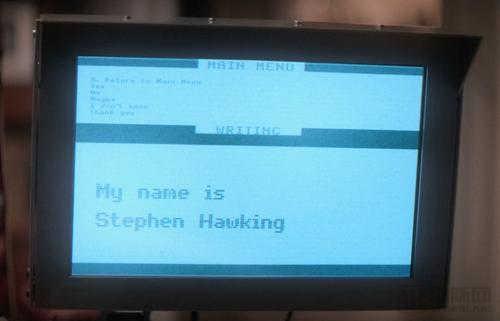
Hawking Sends His First Message on His Newly Purchased Computer (Image Source: eetimes)
However, relying solely on text-based communication was clearly insufficient for daily life. To enable Hawking to truly “speak,” his family and friends approached a company specializing in speech synthesizer development. The company modified a CallText 5010 device by incorporating the best available text-to-speech processor at the time and donated it to Hawking in 1988. This allowed Hawking to audibly “speak” out loud after inputting text.
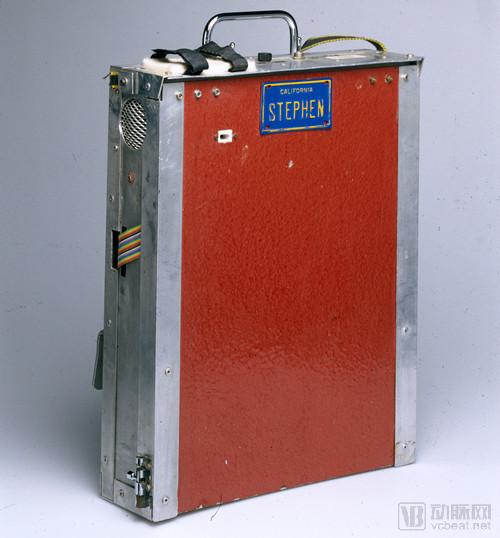
Image source: Wired
Equipped with a wheelchair enhanced by various cutting-edge technologies, Stephen Hawking was able to continue his writing and publish A Brief History of Time, which shocked the world. To date, A Brief History of Time has been translated into more than 40 languages and sold over 10 million copies, earning it the reputation of being the best-selling book that is the most difficult to understand.Stephen Hawking said with delight, “Compared to before I lost my ability to speak, I can now convey information more satisfactorily.”
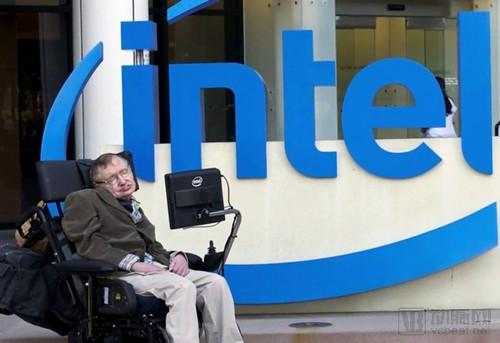
Image source: The Verge
In 1997, Intel Corporation redesigned Stephen Hawking’s wheelchair by integrating a computer into the chair, powering it with the wheelchair’s battery, and committing to upgrading the hardware every two years.
However, time not only stripped Hawking of his motor and speech abilities but eventually claimed the use of even the last three fingers that remained mobile. Starting in 2005, Hawking could operate his entire wheelchair system with just one finger. By 2008, his fingers had become so weak that he could no longer press the switch; only certain facial muscles retained some mobility, necessitating another major overhaul of his assistive technology.
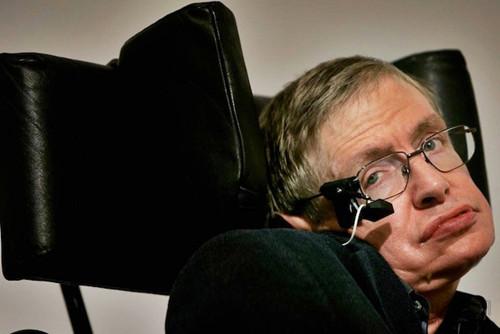
The infrared sensor device hanging next to Hawking’s glasses (Image source: VentureBeat)
Hawking’s graduate assistant had a brainstorm and designed a “cheek switch” device for him, which could be mounted on his eyeglass frames to detect muscle activity in Hawking’s right cheek using infrared technology. This control method is similar to the proximity sensors found on smartphones, where the sensor emits invisible infrared beams and measures distance based on the intensity of the reflection from the target object. When Hawking contracted his facial muscles, the sensor received a changing signal and sent a confirmation command to the computer.
This approach can completely replace the previously used manual clicking operations without altering the original operational logic. With upgrades to Hawking’s wheelchair, his method evolved from “navigating the world with a single finger” to “a performative art of a single muscle,” yet Hawking’s “speech” rate still declined to 5–6 words per minute.
Soon, Hawking’s input efficiency dropped significantly, reaching a rate of just one word per minute. The muscles in his face also began to degenerate, impairing his ability to precisely control muscle movements. He frequently found himself selecting the wrong letters and was thus compelled to seek assistance from the Intel team once again.
In Intel’s laboratory, it took Stephen Hawking a full 20 minutes to “speak” a greeting of approximately 30 words. Consequently, the engineers considered employing eye-tracking technology (which detects subtle eye movements) to identify the words Hawking intended to convey.
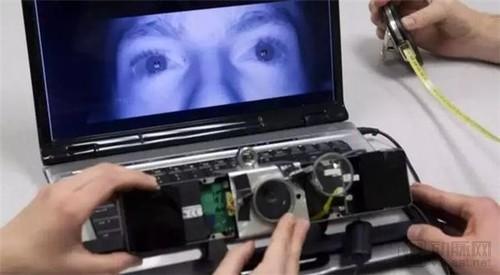
Unfortunately, Hawking's condition had caused severe ptosis, rendering eye-tracking technology unable to accurately lock onto his gaze, so this approach had to be abandoned.
After the failure of eye-tracking technology, engineers also had Stephen Hawking try the rather science-fiction-like brainwave recognition technology (i.e., Brain-Computer Interface, BCI). Perhaps because Hawking had been paralyzed for many years, his brain’s control over his limbs had deteriorated; even when wearing a professional EEG cap, signals of sufficient strength could not be detected.
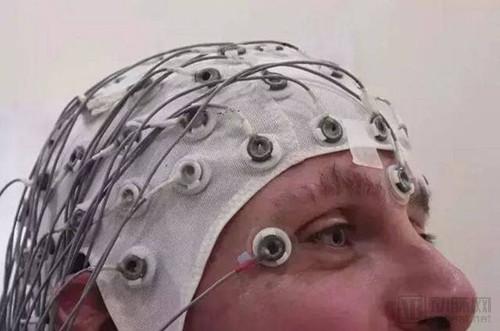
In addition, EEG recognition technology requires extensive training to achieve a high recognition rate, which poses significant challenges for Stephen Hawking, who was over seventy years old.
With no other option, the engineering team had to take a different approach, focusing on improving software input efficiency. They collected a large volume of Stephen Hawking’s documents, analyzed word frequency and contextual associations, and provided the most appropriate predictive text as he typed. For instance, typing “Stephen” would prompt the software to suggest “Hawking.” Additionally, the new software incorporated numerous convenience features, including one-touch mute, mouse-click functionality, and quick search.
Hawking also made no secret of his fondness for the new software, hailing this revolutionary upgrade and saying, “I hope it will continue to serve me for the next 20 years.”
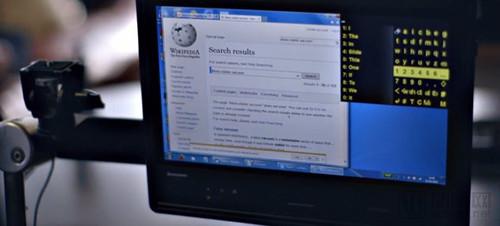
Image source: PCWorld
Witnessing the success of this new software, the Intel team aims to assist more people with disabilities. They have open-sourced the ACAT (Assistive Context-Aware Toolkit) and hosted it on GitHub, a renowned open-source community. This initiative not only provides free access to the same software used by Stephen Hawking for individuals with disabilities but also seeks to harness collective efforts, encouraging continuous improvement and refinement of the software through contributions from a broader developer community.
With the new software, Hawking’s input efficiency increased by approximately tenfold. He was not only able to browse the internet using the Firefox browser and log in to Facebook, but also check his emails independently and chat with friends via Skype. In 2016, Hawking even launched a Weibo account, personally posting updates to interact with Chinese netizens; as of now, his Weibo followers have exceeded 4.61 million.
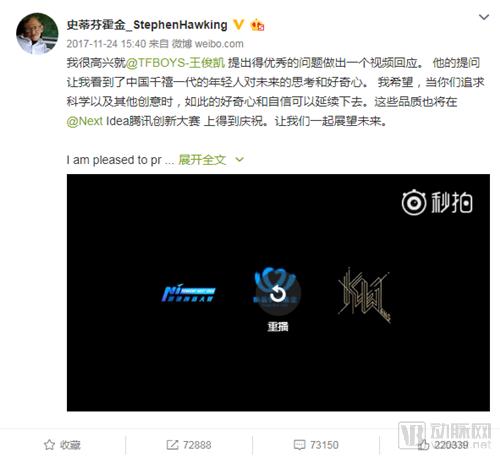
His last Weibo post remained an interaction with Wang Junkai, in which he expressed the hope that China’s new generation of young people would forever maintain their curiosity in pursuing science and technology.
It is precisely thanks to these advanced technologies that Stephen Hawking, confined to a wheelchair for decades and unable to move or speak, was still able to share his profound insights into the universe with us.
On March 14, 2018, this great scientist departed from us forever, yet the wisdom he left behind remains an enduring asset to humanity. With the advancement of technology, we have reason to believe that the cutting-edge innovations that once brought miracles to Stephen Hawking will ultimately benefit more patients with amyotrophic lateral sclerosis (ALS).
A Brief History of Hawking
On January 8, 76 years ago (1942), Stephen Hawking was born, marking the 300th anniversary of the death of Galileo, the Renaissance-era physicist (1642); and 139 years ago today was the birth anniversary of Albert Einstein, the greatest physicist of the 20th century. Thus, these three titans of physics are intertwined in the endless river of time.
In 1959, 17-year-old Hawking enrolled at University College, Oxford, to study natural sciences, where he earned a First-Class Honours degree in remarkably little time before moving on to Cambridge University to pursue research in cosmology.
In 1963, at the age of 21, he was unfortunately diagnosed with amyotrophic lateral sclerosis (ALS), also known as Lou Gehrig's disease. At that time, doctors predicted that he, suffering from a terminal illness, had only two years to live, but he tenaciously survived.
In 1965, at the age of 23, he earned his Ph.D. and remained at the University of Cambridge to conduct research.
In 1973, he investigated quantum effects near black holes and discovered that black holes emit radiation like celestial bodies. The temperature of this radiation is inversely proportional to the black hole’s mass, causing the black hole to gradually shrink due to radiation while its temperature rises, ultimately ending in an explosion. The discovery of black hole radiation, or Hawking radiation, holds profound fundamental significance, as it unifies general relativity, quantum field theory, and thermodynamics.
After 1980, Hawking’s interests shifted toward quantum cosmology, proposing the no-boundary condition as a solution to the problem of the universe’s initial impetus. In July 2004, he acknowledged that his original stance on the “black hole information paradox” was incorrect. Hawking regarded his life’s contribution as demonstrating, within the framework of classical physics, the inevitability of black holes and Big Bang singularities, with black holes growing ever larger. However, within the framework of quantum physics, he pointed out that black holes shrink due to radiation, the singularity of the Big Bang is continually smoothed out by quantum effects, and it is from this state that the entire cosmic space originates.
In 1985, he underwent a tracheostomy due to pneumonia, which completely deprived him of the ability to speak; his lectures and Q&A sessions could only be conducted through a speech synthesizer.
In 1985, I visited China for the first time, touring the University of Science and Technology of China and Beijing Normal University. I delivered an academic lecture on astrophysics at the USTC Waterfront Lecture Hall.
In 1988, Stephen Hawking’s popular science book A Brief History of Time: From the Big Bang to Black Holes was published. Starting from the study of black holes, it explores the origin and ultimate fate of the universe. The book has been translated into more than 40 languages and sold over 10 million copies worldwide. However, due to its highly abstruse content, it was jokingly referred to in the West as “the bestseller that nobody reads.”
In October 2001, another work, The Universe in a Nutshell, was published. This book is a companion to A Brief History of Time, recounting the origin of the universe through relatively simplified methods and extensive illustrations.
In 2002, during his second visit to China, he delivered popular science lectures titled “The Wondrous World of Membranes” in Beijing and Hangzhou, explaining to the public his “M-theory” on cosmic evolution.
In 2006, he revealed in Hong Kong that he was co-authoring with his daughter a novel series akin to Harry Potter, but themed around theoretical physics rather than magic.
In June 2006, during his third visit to China, he once again presented his latest research on cosmology. His lecture titled “The Origin of the Universe,” delivered at the Hong Kong University of Science and Technology’s sports center, created a sensation and was jokingly described as receiving “rock star”-level treatment. On the morning of June 19, 2006, he addressed the public in Beijing at the Great Hall of the People, delivering a talk on “The Origin of the Universe.”
On April 6, 2009, Hawking canceled his overseas visit due to illness; on the 20th of the same month, he was hospitalized for treatment, and his condition was poor.
In January 2012, it was reported that malignant atrophy of his facial muscles had severely impaired his ability to express himself and might even prevent him from producing his distinctive “computer voice.”
In Season 5, Episode 21 of the hit American TV series *The Big Bang Theory*, which aired on April 6, 2012, Stephen Hawking made a cameo appearance playing himself.
In 2012, Stephen Hawking pressed two golden fingerprints onto the Beijing Olympic torch in Zhao Xiaokai’s collection and inscribed the following message: “For the long-term survival of humanity and for world peace, we need to destroy all nuclear weapons.”
In 2017, filmed the documentary “The New Earth” for the BBC in the United Kingdom.
On March 14, 2018, Stephen Hawking passed away in the United Kingdom at the age of 76.
References:
1、https://baijiahao.baidu.com/s?id=1589807738052476075&wfr=spider&for=pc
2、https://mp.weixin.qq.com/s/UCC4ziD8CTVRJG7cCzw5gg
3、https://www.theverge.com/2015/8/18/9173041/stephen-hawking-intel-github-speech-software
4、https://www.intel.com/content/www/us/en/internet-of-things/videos/dr-hawkings-connected-wheelchair-video.html
5、https://thinkstories.com/intel-and-thinkpad-give-professor-stephen-hawking-a-voice/
6、http://news.zol.com.cn/632/6327454.html