Tronsystem Bets on AI as the Catalyst for Transformation in Traditional Healthcare IT
The rapid advancement of AI technology has spawned numerous medical AI startups. These companies have grown rapidly, securing Series A, Series B, and even Series C financing in quick succession. In fact, AI technology has not only facilitated the emergence and development of medical AI startups but also provided traditional healthcare IT companies with opportunities for upgrading and transformation.
Chen Junying, co-founder of Chuo Xi Interactive, stated, “After several years of development, medical information software has struggled to achieve breakthrough advancements, with updates being merely routine. The emergence of AI technology has brought new development opportunities for traditional companies like ours.”
As an international internet software R&D enterprise, ChuoXi Interactive is dedicated to development in fields such as cloud data communications, regional information integration, and the Internet of Things (IoT). Today, leveraging AI technology as a catalyst, the company has identified new innovative business opportunities. In response, VCBeat has conducted follow-up reporting on this development.
Technology-Driven Startups
When it comes to the founding of Chuo Xi Interactive, there seems to be no dramatic backstory; it all stemmed from the development journey of its founder, Zhai Yaobin.
Zhai Yaobin, Chairman and Chief Technology Architect at ChuoXi Interactive, immigrated to the United States in 1992 and worked in Silicon Valley. He later joined Power Solutions in El Cerrito as a core R&D engineer for multimedia projects, becoming one of the few professionals at the time with access to multimedia programming and internet technologies declassified by the U.S. military. In the course of his work, he conducted research on the principles of computer hardware, including IC chips.
In 2002, Zhai Yaobin entered the medical imaging processing industry. He successfully developed the first generation of browser/server (B/S) architecture PACS products. In an era when hard drives had only 250GB of storage, leveraging his years of experience in computer hardware, he configured the world’s first integrated hardware-software 5TB medical imaging server for CVI in Mountain View, solving a storage solution quoted at $1 million by GE with a cost of just $4,000.
Later, as his mother was unwilling to leave her homeland for the United States, Zhai Yaobin chose to return to China for career development and formally established Shenzhen ChuoXi Interactive Technology Co., Ltd. in 2012. Shenzhen was selected because Zhai’s medical product solutions primarily feature integrated hardware and software, and many of his long-standing clients are located in Southeast Asia. With Shenzhen’s relatively complete hardware and software industry chain, ChuoXi Interactive has made Shenzhen its hub for expanding within the domestic market while extending its reach to the Southeast Asian healthcare markets, particularly in Malaysia, the Philippines, and Singapore.
All in all, Zhai Yaobin has accumulated over 26 years of experience in the design and development of computer software and hardware systems in the medical field, with a particular strength in technical research and management, where he boasts 15 years of extensive expertise.
Currently, Zhai Yaobin is primarily responsible for building and managing the company’s R&D system. In addition to overseeing the Product Planning Center, R&D Center, and Technical Support Center, he is also studying industry-wide developments, including frontier technologies such as big data, the Internet of Things (IoT), cloud computing, mobile internet, and artificial intelligence (AI). Driven by his optimism about AI technology and the technical team’s longstanding expertise, Shunshi Erwei has chosen to integrate its traditional business operations with AI.
During the interview, VCBeat also observed that as a founder with a technical background, Zhai Yaobin has his own habits. He is not fond of storytelling; the purpose behind developing all products and the driving force for product updates and iterations are solely to create tools that customers love.
“Suoli” Series of Medical Imaging Informatics Products
Chaoxi Interactive’s core product is the “Suoli” series of medical imaging informatics solutions. All other solutions are extensions built upon Chaoxi Interactive’s core products.
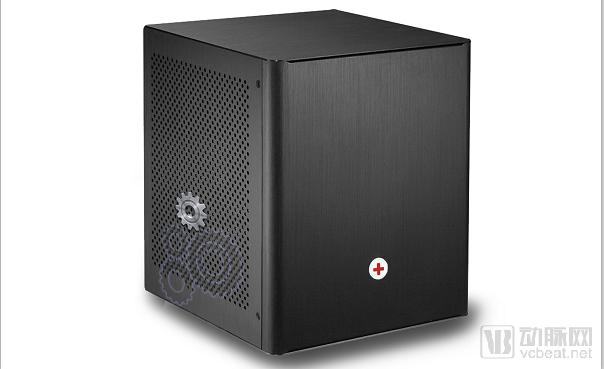
“Suoli Solid IntraCloud” is the world’s first all-in-one hardware-software integrated system supporting global remote “Internet + Medical Imaging Diagnostic Collaboration.” It integrates medical imaging device connectivity, data processing, transmission, storage, diagnosis, PACS/RIS reporting, video and voice interactive collaboration, business management, and information data security into a single platform. By combining “AI + Software + Hardware,” it can be understood as a collaborative neural network for healthcare.
“Ruiying Yuntu” Medical Imaging Application System
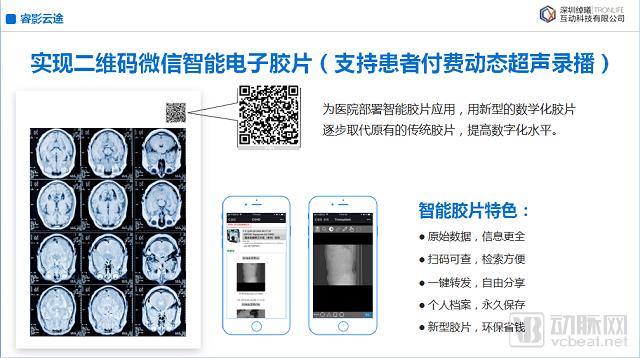
Ruiying Yuntu Medical Imaging System is a new-generation integrated collaborative platform for medical imaging. It breaks through the technical barriers and pain points of traditional Picture Archiving and Communication Systems (PACS) from multiple dimensions, enabling the integration of all medical imaging devices within a hospital into the platform. The system covers all medical technology and clinical departments across the entire institution, providing an integrated product solution that encompasses hospital-wide imaging, clinical decision support imaging, regional imaging, and internet-based imaging.
Tronsystem PACS Medical Imaging System, including radiology imaging diagnosis system, endoscopy imaging diagnosis system, ultrasound imaging diagnosis system, and pathology imaging diagnosis system. It connects all in-hospital imaging equipment to the system and supports integration with third-party platforms such as Hospital Information Systems (HIS) and Laboratory Information Systems (LIS) (Vendor Neutral Archive).
Ruiying’s design philosophy centers on the patient’s entire journey—diagnosis, treatment, and follow-up. It is a truly multi-device-compatible imaging diagnostic collaboration platform that continuously monitors patients’ conditions from diagnosis through postoperative follow-up.Supports advanced clinical research: AI-assisted diagnostic tools + AI interfaces。
Imaging data does not need to be uploaded to third-party cloud data platforms.
In addition to its imaging application system, Chaoxi Interactive also has an imaging platform system to empower primary healthcare.
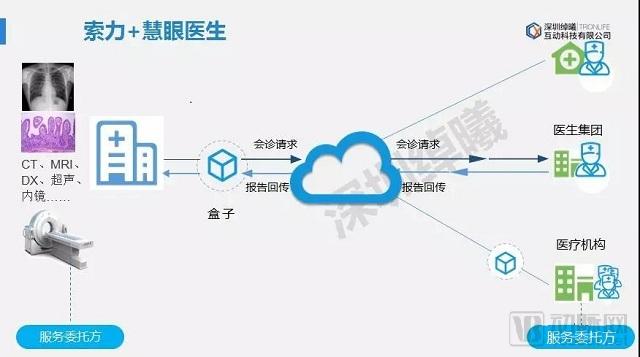
Primary care hospitals transmit raw imaging data to the central hub via the public internet. After specialists at the center make a diagnosis, the diagnostic report (or consultation opinion) is automatically returned to the primary care hospital. Meanwhile, for cases that cannot be definitively diagnosed at the center, diagnostic requests can be escalated to higher-level medical centers. Remote experts directly manipulate patients’ original DICOM images via mobile devices to conduct real-time or asynchronous consultations on complex cases and provide interactive teaching. This system offers four major advantages:
I. Comprehensive support across all regions and the entire disease course, featuring a unique consultation and communication platform system.
II. User-Friendly and Easy to Use: Ensures that all essential images required for each diagnosis are captured without omission. With one-click operation, users can quickly obtain the necessary diagnostic images. The system can emulate the operational modes of any original equipment manufacturer (OEM) device, aligning with physicians’ established workflows and eliminating the need to adapt to a new system. Featuring an international design with localized implementation, it ensures ease of use for every physician.
3. Flexible Architecture: Flexible access, flexible output, modular design, and flexible configuration. Supports secure data and application access from any device at any location, leveraging the latest mobile devices to deliver flexibility, choice, and productivity to end users. Simple and fast, with support for self-service installation and automatic updates. Supports hybrid cloud storage, backup, and disaster recovery. Enables cross-campus and internet-based collaboration solutions.
IV.Imaging data does not need to be uploaded to third-party cloud data platformsBy leveraging a distributed cloud storage architecture, medical imaging data remains stored within the healthcare institution’s internal storage center. Through internet channels, interoperability is achieved using distributed cloud storage technology and a proprietary, self-developed transmission encryption protocol, thereby providing utmost protection for data security and privacy.
Integration of Primary Healthcare Information
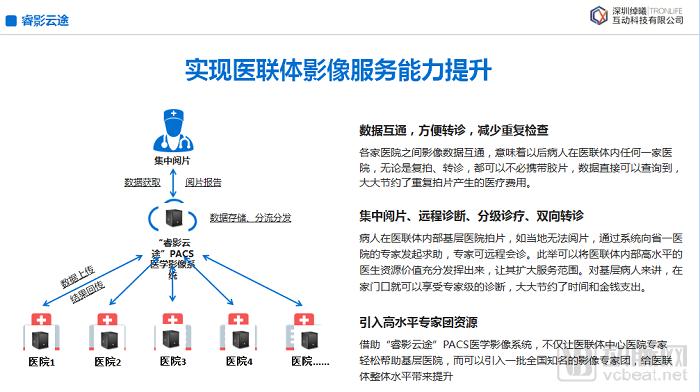
Integrated Primary Healthcare Information Platform: A Regional Medical Information Platform Built on Primary Healthcare IT Infrastructure, Equipped with Medical Data Integration Services, Implementing Regional Administrative Collaborative Management, and Seamlessly Connecting with the Public Health System for Residents to Ultimately Enable Remote Interaction of Medical Resources
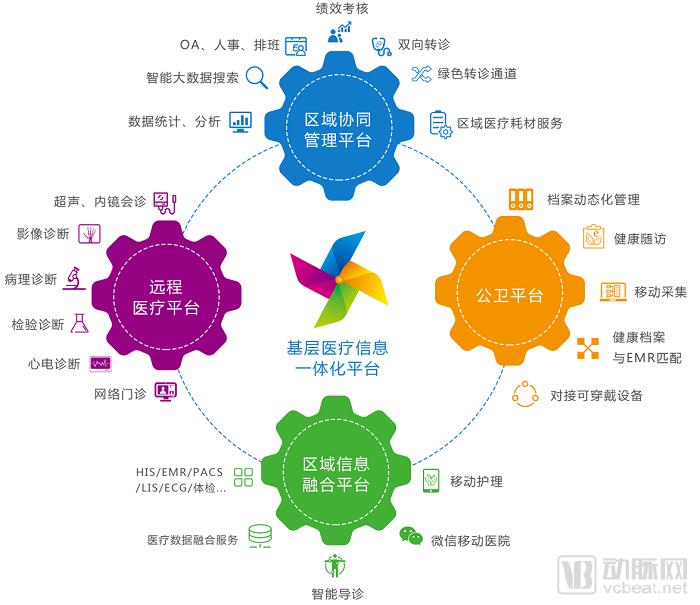
Smart IoT for Medical Devices
ChuoXi Interactive has specifically launched an IoT solution for medical devices, aimed at building a medical device Internet of Things (IoT) by interconnecting medical equipment through distributed networking.
The most critical first step is to integrate the medical data generated by medical devices into their respective clinical workflows. In every stage of these clinical workflows, physicians should theoretically be able to access services and data anytime and anywhere.
Of course, the ultimate goal is to ensure that physicians can make any diagnostic or treatment decision in clinical practice management without delay, by having real-time awareness of the patient’s overall condition. With the integration of these devices, near real-time feedback of patient data can be achieved.
Integrated Software, Hardware, and Services
In terms of software, hardware, and services, it is essential to adopt an integrated design philosophy. This means that when designing medical software, one must anticipate which external internet-based services will be connected and how these services will be operated. It also involves foreseeing the integration of artificial intelligence (AI) services into medical hardware devices and advanced medical robots. In other words, the entire healthcare business scenario—encompassing software, hardware, and services—should be holistically incorporated into the design from the very beginning. Only in this way can the maximum value of AI technology be realized.
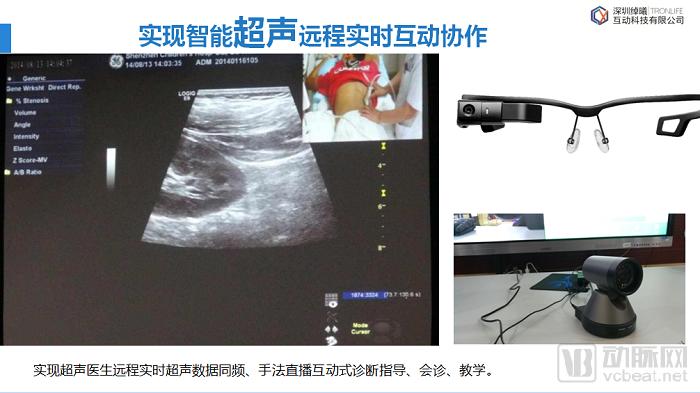
AI-Empowered Medical Imaging Product Tools
Chen Junying stated that, given the current state of healthcare informatization, it has become extremely difficult for many products to achieve significant breakthroughs.
AI is the productivity force of the new era, but AI itself is not a product.. It must be integrated with information software or medical device equipment to achieve practical implementation.
Chaoxi Interactive’s development strategy is to empower healthcare informatics software products with AI, providing medical institution users with the best software tools and building an ecosystem centered around these software product tools.
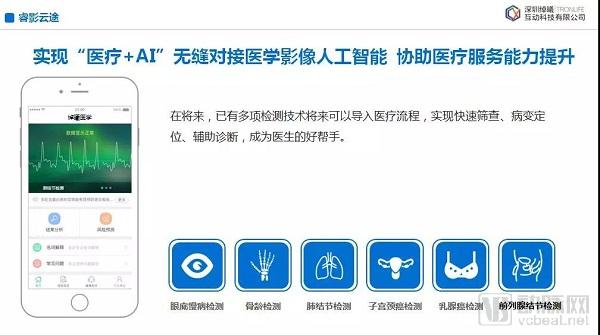
Chen Junying believes that in the future, the company’s multiple testing technologies can be integrated into medical workflows to enable rapid screening, lesion localization, and assisted diagnosis. The product form can also be modified according to physicians’ needs, as long as it better serves them.
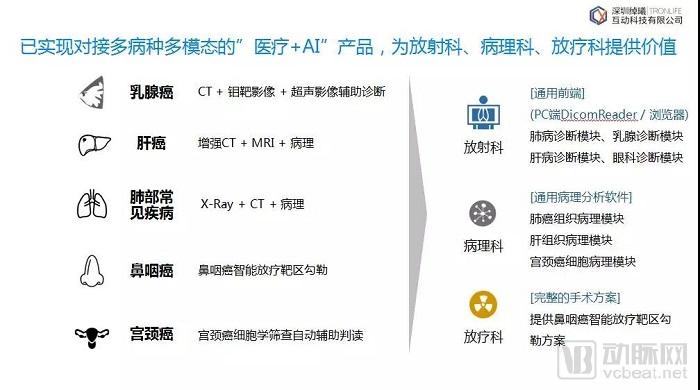
Aligned with this positioning, ChuoXi Interactive will not only empower its existing medical software products and tools under the “ChuoXi” brand with AI but also build a new product matrix featuring an integrated “Medical AI + Software-Hardware” solution.Currently, ChuoXi Interactive has successfully integrated its multimodal, multi-disease “Healthcare + AI” products, delivering value to departments of radiology, radiation oncology, and pathology. Meanwhile, it is building its own product ecosystem by leveraging its independently developed blockchain-based dynamic encryption technology.
When it comes to blockchain technology, Chen Junying stated that it is an excellent cryptographic technology,ChuoXi Interactive possesses independently owned intellectual property rights and patented encryption-based de-identification and mutual-trust transmission technology built on blockchain. It has independently defined the Tronsfer transmission protocol, breaking through traditional transmission methods to enhance both transmission speed and security.
Raw medical data achieves ultra-fast transmission over the public internet. Unlike traditional transmission methods such as VPNs and dedicated lines, this approach ensures both high-speed transfer and robust security while reducing infrastructure requirements and costs. Compliant with national and international data security standards, it employs fully effective encryption and de-identification technologies to completely prevent the leakage of medical data and patient privacy.