

From Humble Beginnings to Global Leadership: Wu Cai Lu Files IPO to Scale Autism Early Intervention
When discussing the original intention behind launching the autism project, Sun Menglin said toVCBeat (WeChat ID: vcbeat)The first sentence the reporter said was, “Maybe my brain has water in it.”
Unlike the cookie-cutter autism centers run by parents that saturate the market, Sun Menglin lived abroad for seven years prior to founding Wucailu (Colorful Deer), accompanying her husband due to his work commitments and serving as a homemaker dedicated to supporting her spouse and raising their children.
After returning to China in 2004 to settle down, Sun Menglin had grown accustomed to family life. However, she was jolted awake by a single remark from her son, who asked her, “Mom, aside from household matters, do you have anything of your own to pursue?” In that moment, meeting her child’s gaze, she realized that once a person has secured a livelihood, a family, and material stability, it is time to create their own value.
Consequently, Sun Menglin began to shift the focus of her life from her family to the outside world, seeking a career of her own. Although she had studied law at Renmin University of China and Peking University, and later pursued advanced studies in several countries, including Canada and Japan, embarking on her own entrepreneurial venture during the second stage of her life was no easy feat.
“After six months of searching without finding a suitable job, I began volunteering, and that is how the Wucailu School came into being,” Sun Menglin told reporters.
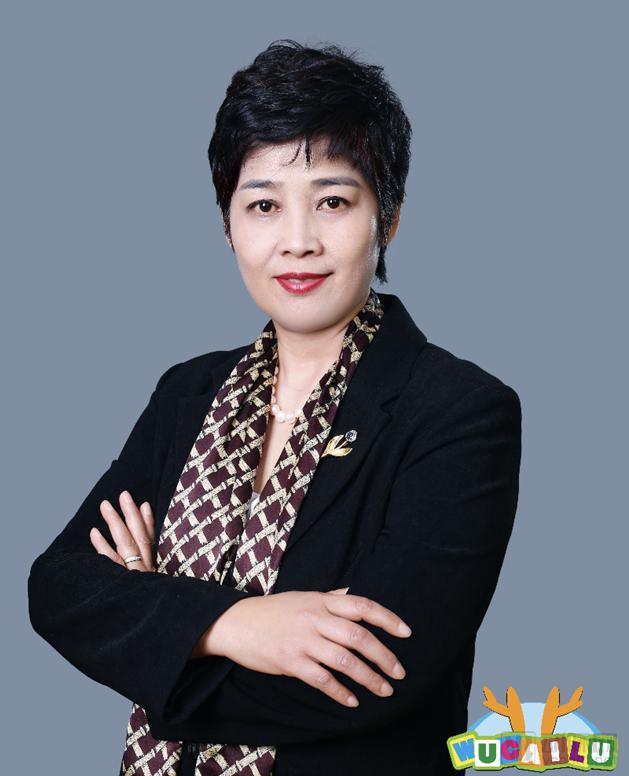
Sun Menglin, Founder and Chairman of Wucailu
The initial collaboration between Wucailu and the hospital was coincidental. Sun Menglin had previously volunteered at nursing homes, hospice care facilities, and orphanages. When she encountered children with autism, she realized that there were currently no effective medical interventions available to address this childhood developmental disorder.
The doctor reached out to her with the idea of establishing an autism rehabilitation center. Due to institutional constraints, the hospital lacked dedicated funding to initiate such a project independently. However, Sun Menglin’s involvement made it possible to accomplish this task, which had remained unfulfilled for two decades.
In 2004, the year Sun Menglin stepped out of her home, Wucailu (Colorful Deer) was established. Initially, it only accepted autistic children from hospitals; later, the hospitals withdrew, and Wucailu became an independent entity. This was also the first year that Sun Menglin began to understand autism.
Fourteen years have passed, and Sun Menglin has become a leading figure in the field of autism in China, serving as Vice Chair of the Autism Professional Committee under the China Association of Rehabilitation for Disabled Persons and as an Adjunct Professor at the School of Education, Jiangsu Normal University.
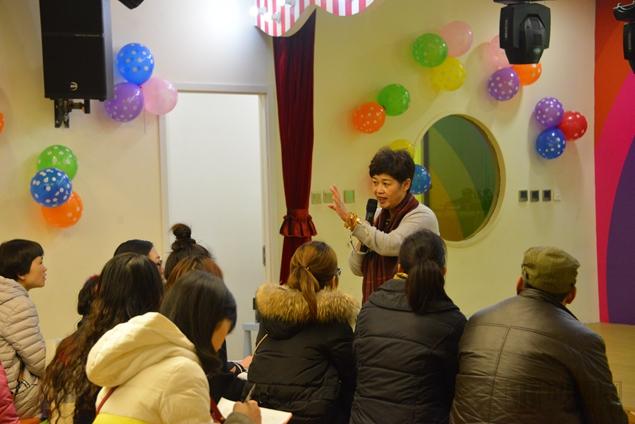
Sun Menglin, Founder of Wucailu, Explaining to Parents
Recalling the founding of Wucailu, Sun Menglin remarked with emotion, “At that time, I wanted to look into it, but I didn’t dare to do it—truly, I didn’t dare. Even looking back now, I still wouldn’t dare.” This single statement reveals just how challenging this market is.
Amidst Market Chaos, Teachers Are Wucailu’s Most Valuable Asset
China is the largest market for autism rehabilitation, with the highest number of affected children, conservatively estimated at around 10 million. The challenges in China’s autism rehabilitation market are twofold: first, it is difficult to standardize; second, there is a shortage of qualified professionals.
As previously described, most autism intervention institutions in the market are established by parents of affected children, with a predominance of private non-profit organizations.
The low level of commercialization has primarily resulted in inconsistent service quality. Beyond the prevalence of unregulated institutions, the most concerning issue is the lack of scientific rigor in the treatment of children with autism. In media reports, due to the specialized nature of autism interventions, harsh training methods and suppressive educational practices are widespread. As autism is a neurodevelopmental disorder, violent or coercive approaches only perpetuate a vicious cycle.
Sun Menglin emphasized that when she first entered the field of autism, she believed the industry could not rely solely on compassion; more importantly, it required scientific intervention. Therefore, “de-labeling” education has become the core philosophy of Wucailu (Colorful Deer).
More terrifying than the disease itself is the label of “I am sick.” There is a saying in the industry: “Change the parents before changing the child.” To remove the label of “autism” from children, we must start with parent training.
“Children who respond exceptionally well to intervention and make remarkable recoveries all have particularly wise parents,” Sun Menglin told VCBeat.
The three consecutive emphatic exclamations of “special” underscore the critical importance of parental involvement in the intervention process; at Wucailu, parents are required to undergo training alongside their children.
No two cases of autism in children worldwide are identical, and the varying degrees of severity pose significant challenges to treatment.
In terms of human resources, the first physicians consulted for children with autism are often not specialized psychiatrists but pediatricians, who lack experience in diagnosing autism. Data from the "Report on the Development Status of China's Autism Education and Rehabilitation Industry," published by Wucailu (Colorful Deer), indicates that there are fewer than 300 doctors specializing in autism.
In China, there is a severe shortage of professionals and an extreme scarcity of specialized resources in areas such as early intervention and rehabilitation for children with autism, nine-year compulsory education combined with rehabilitative training, vocational education and employment skills training at the high school level, as well as subsequent residential care, employment services, and higher education.
Scientific intervention is the prerequisite for autism rehabilitation, and providing relevant professional services is crucial for the early recovery, independent living, and social integration of children with autism.
“The current dilemma is that ‘no college or university can provide me with teachers who are ready to hit the ground running,’” said Sun Menglin.
Thus, Wucailu has established a standardized teacher training system, adhering to the educational philosophy of “leveraging strengths to address weaknesses” and implementing interventions through a scientific educational framework. Currently, the team comprises over 140 teachers, with the most experienced practitioner having 14 years of experience, and dozens of teachers boasting more than five years of professional experience.
Therefore, she introduced advanced international intervention concepts, trained dedicated teachers within her team, and even sponsored their overseas study and further education. As teachers at Wucailu came and went, a steady stream of teaching resources was continuously supplied, granting the organization significant influence across the entire industry.
It is reported that labor costs account for approximately 60% of total expenditures. “Experience is irreplaceable,” said Sun Menglin, who believes that this cohort of highly experienced therapists constitutes Wucailu’s most core asset and represents the highest competitive barrier established within the industry.
Localization of Interventional Technologies Introduced from the United States and Israel
Early-stage autism is difficult to detect, and China’s screening mechanisms are significantly underdeveloped; by the time it is identified through hospital screening, the condition has typically progressed to moderate or severe autism.
Wucai Lu primarily provides early intensive intervention for children under the age of six. Sun Menglin believes that early intervention is highly significant for children with autism, stating, “The severity of the condition determines the individual’s long-term functional outcomes. Early intervention can modify the course of the disorder, alleviating severe symptoms and further mitigating mild ones.”
Drawing on his years of living abroad, Sun Menglin recognized the research gaps in China’s autism field. He introduced advanced intervention systems from countries such as the United States and Israel into China, localized these international best practices to align with China’s national conditions and cultural context, and established a standardized, scientific, and highly effective early intervention framework.
In August 2006, Wucailu appointed Dr. Eitan Eldor, former president of the International Association for Behavior Analysis in Israel, as its Technical Director, introducing advanced international techniques to develop a set of autism rehabilitation methods tailored to China’s specific conditions.
In December 2009, Sun Menglin visited Queens College of the City University of New York (hereinafter referred to as “Queens College”) in the United States and signed a cooperation agreement with the college. The two parties established a close partnership to continuously improve autism rehabilitation techniques at Wucailu.
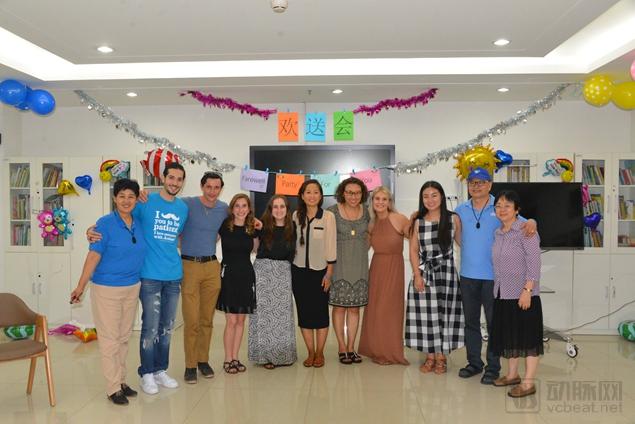
To this day, Professor Wang Peishi, who holds a Ph.D. in Special Education from Columbia University and serves as the Program Director of Special Education at Queens College (CUNY), remains a core member of the Wucailu team. As a Board Certified Behavior Analyst-Doctoral (BCBA-D), she has conducted extensive research in the field of autism.
2018 marked the ninth year that Professor Wang Peishi and her team of graduate students had been collaborating with Wucailu to refine, innovate, and standardize China’s early intervention system for autism. Advanced international concepts have not only introduced a unique teaching model to Wucailu but also overturned the unscientific notion prevalent among Chinese parents of children with autism, who traditionally stood behind their children rather than engaging in evidence-based supportive practices.
Professor Wang Peishi emphasized in a media interview that shifting societal attitudes is crucial for children’s development, stating, “Discrimination is instilled in children by their parents; if you treat them as normal children, they will be normal children.”
She even enrolled her own children at Wucailu to study alongside children with autism, enabling them to engage in normal communication and interaction. To their typically developing peers, they appeared “no different.” Her eldest son told her that every day at Wucailu was filled with joy, and he hoped that one day he would be able to come to Wucailu on his own, without accompanying his mother.
“Wucai Lu has had queues since its first day of opening.”
Having dedicated 14 years to the autism sector, Sun Menglin believes that two factors are particularly crucial in the entrepreneurial process: first, the ability to achieve self-sustaining revenue generation, and second, effective risk management.
Unlike other educational institutions that face extremely high customer acquisition costs, Wucailu has never engaged in marketing or promotion. Parents have been “queuing up at the door to enroll.” Sun Menglin told reporters, “Wucailu has had waiting lists since its very first day of operation.” Whether at the Shunyi campus or the Anzhen campus in Beijing, parents have voluntarily visited the center, hoping their children can receive scientific intervention and treatment.
Currently, Wucailu has established a total of seven campuses in Beijing, Xuzhou, Shanghai, Xi’an, and other cities, covering an area of over 8,000 square meters. In 2018, Wucailu plans to open at least three additional branch schools, with a strategic focus on expanding into provincial capital cities.
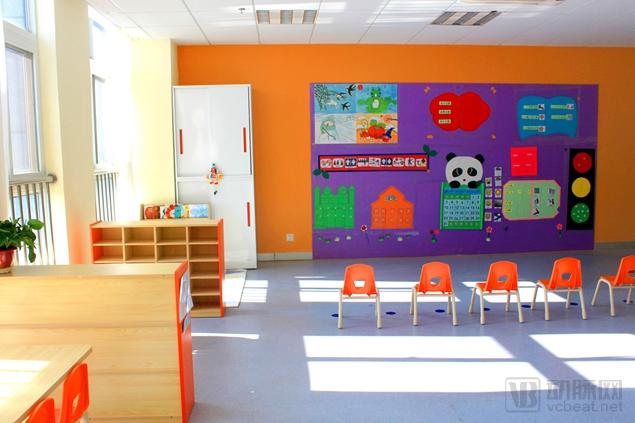
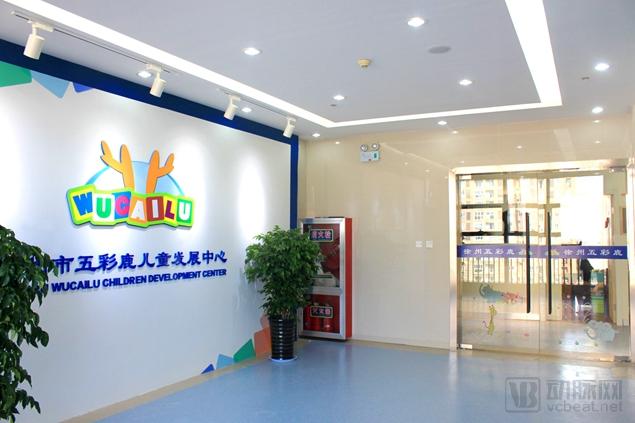
On-Site Photos of the Wucailu Campus
Unlike educational institutions located in bustling areas, Wucailu’s site selection is driven by three key factors: low rent, long lease terms, and large floor space. According to Sun Menglin, all of Wucailu’s facilities are secured under long-term leases, with a minimum term of 10 years. The initial investment for each branch campus ranges from RMB 1 million to RMB 3 million.
The rehabilitation cycle for autism lasts approximately three years. In the United States, the total cost of intervention ranges from $70,000 to $120,000, exceeding tuition fees at Harvard University. However, Wucailu, an organization committed to supporting children with autism, has not raised its prices for eight consecutive years, maintaining an average rate of 100 yuan per session—less than one-fifth of the tuition charged by leading educational institutions such as Xueersi.
Although autism care may appear to be an unprofitable venture, Wucailu achieved profitability in 2017 after successively expanding to four campuses.
Addressing autism rehabilitation, a matter of social responsibility, requires joint commitment and promotion by the government, capital, and enterprises.
As the government has increasingly prioritized autism rehabilitation, it has provided Wucailu with facilities for its educational programs in recent years; other institutions offering such support include rehabilitation hospitals.
In addition, the government provides subsidies for the rehabilitation of children with autism. The subsidy amounts vary by province and city; for example, Beijing’s subsidy standard is RMB 26,000 per year, while Xuzhou’s is RMB 1,400 per month.
In 2015, Wucailu secured angel-round financing from Danen Capital. Sun Menglin emphasized, “Wucailu has established deep and robust professional expertise; however, in terms of social impact, capital infusion is still needed, along with a larger platform to drive the development of the autism rehabilitation industry. Wucailu’s growth also requires a stronger management team.”
Beyond Compassion, Scientific Rescue Is What Matters
Regarding the speech-focused autism interventions prevalent in the market, Sun Menglin argues that emphasizing speech alone is a misconception in autism treatment, as the core impairment of autism lies in communication and social interaction.
According to the report from the China Disabled Persons' Federation, autism is classified under mental disability.
Guided by the internationally leading Applied Behavior Analysis (ABA) theory, Wucailu strives to align with advanced international technologies. It employs scientific methods to shape children’s appropriate behaviors for social communication and interaction, while helping parents master training techniques. Having accumulated extensive primary data, Wucailu has independently developed teaching management software and established comprehensive databases of case studies, teaching materials, and instructional aids.
In Sun Menglin’s view, the value of the database is immeasurable. The instructional data generated during the teaching process, along with assessment data derived from children’s progress curves, serve as important primary samples for research in the field of autism studies both domestically and internationally, providing a data foundation for research in behavioral therapy.
According to Sun Menglin, Wucailu aims to build an open database platform hosting educational and behavioral data from children with autism undergoing rehabilitation, thereby driving the development of the entire industry.
From a rare disease affecting 1 in 5,000 to a highly prevalent condition affecting 1 in 45, autism has undergone this shift in just over 40 years. Yet in the 36 years since China reported its first autism case in 1982, large-scale institutions in the autism market remain few and far between.
Perhaps the industry’s inherent complexity is too great, or perhaps people are unwilling to confront the unfamiliar and helpless faces of those affected; in any case, scaling up the autism rehabilitation sector faces certain challenges.
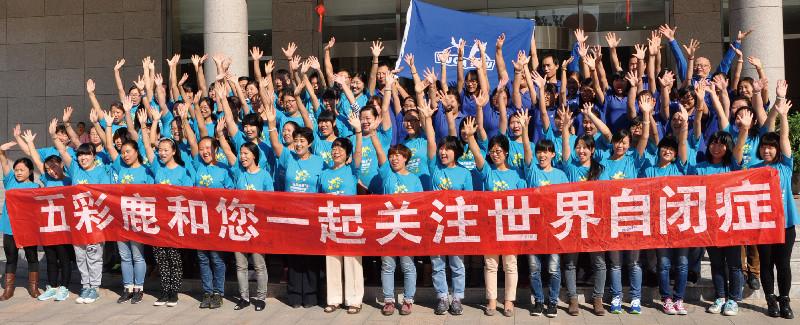
There is a saying: “something bigger than yourself.” It means that some things hold greater significance than one’s own interests. For Sun Menglin, the social value of her deep commitment to the field of autism rehabilitation outweighs its commercial value. “This can bring meaningful help to families affected by autism and raise societal awareness of autism—these are matters more important than myself. Therefore, although this path will be more arduous, I am certain that I am determined to take this most challenging route.”
To our delight, in recent years, capital firms such as Dan En Capital have turned their attention to this market, willing to collaborate with entrepreneurs to drive the development of the autism sector.
Discussing the partnership with Wucailu, Ling Daihong, Founding Partner of Danen Capital, stated, “Director Sun Menglin is an outstanding entrepreneur. Danen Capital’s investment philosophy is to pursue exceptional entrepreneurs. Therefore, Danen Capital has stepped forward to join hands with Wucailu in meeting this challenge.”
For autism rehabilitation, commercialization is not an inevitable path, yet it is one that must be taken.
The influx of capital will further standardize the market, enhance corporate management efficiency, and significantly improve service quality. Commercial operations bring not only capital but also opportunities. As domestic private capital enters the nearly untapped field of autism rehabilitation in China, VCBeat will continue to monitor its developmental trajectory.