

Baiyun District Medical Consortium in Guangzhou: A Deep Dive into Solving Multi-Hospital Resource Coordination Challenges
Tiered diagnosis and treatment follows a “positive pyramid” structure, with the broad base comprising primary care institutions that manage common and chronic diseases, while the narrower apex consists of tertiary hospitals (Grade 3A) that address complex and refractory conditions. In 2017, the Second People’s Hospital of Baiyun District in Guangzhou collaborated with Community 580 to establish a medical consortium platform, enabling seamless information interoperability among township health centers, community health service centers, and the Second People’s Hospital of Baiyun District.
Guangzhou Baiyun District Second People’s Hospital (hereinafter referred to as “Baiyun Second Hospital”) is located in Jianggao Town, Baiyun District—a nationally designated key town and a key development central town in Guangdong Province. It is a Grade II Class A general hospital integrating medical care, teaching, scientific research, health preservation, rehabilitation, and emergency services. Baiyun Second Hospital is also the first primary chest pain center unit in Guangdong Province to receive certification from the Chinese Chest Pain Center, employing a “thrombolysis + rapid transfer” treatment strategy. Additionally, it serves as the affiliated hospital of Guangzhou Health Science College.
In October 2017, the Guangzhou Municipal Health and Family Planning Commission launched a pilot project for medical consortia at designated hospitals, with the Second Baiyun District People’s Hospital selected as one of the first pilot institutions. In January 2018, the medical consortium officially commenced trial operations. Centered on the Second Baiyun District People’s Hospital, the consortium comprises two township health centers, one community health service center, and 18 subordinate community health stations, serving a population of approximately 400,000. This structure has achieved vertical integration across different levels of care and established a two-way referral system among participating facilities.
Phase III Project of the Baiyun District Medical Community
According to Li Hong, Vice President of the Second Baiyun Hospital, the Baiyun District Medical Community project will be implemented in three phases.
Step 1: The core objective is to establish the foundational platform for the Medical Consortium. This includes services such as family physician programs, remote assistance, and two-way referrals (outpatient appointment scheduling and inpatient referral transfers). The coverage encompasses one tertiary hospital and two secondary hospitals (the implementation scope is determined by hospital needs, with specific costs dependent on the number of participating secondary hospitals).
By the end of 2017, the family doctor contract signing rate at Baiyun Second Hospital had reached 30%, with more than 30,000 residents having signed up.
Issues with family doctor contract services mainly stem from insufficient contracted personnel and poor information flow. The establishment of medical consortia can first provide family doctors with support in overall coordination; secondly, through an information system platform, family doctors can promptly relay issues to higher-level hospitals, enabling timely communication.
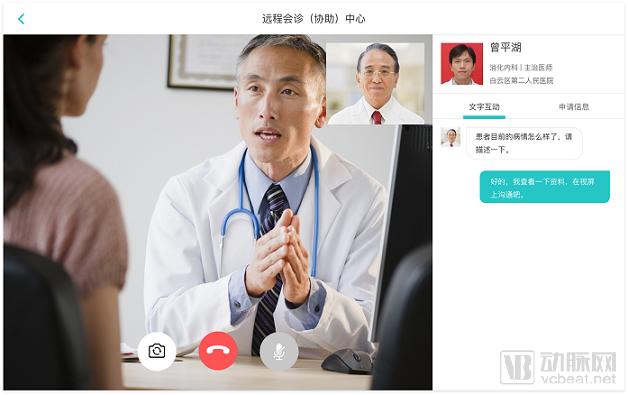
President Li frankly stated, “In theory, the role of family doctors is that of general practitioners, but we have not yet met this requirement. Therefore, through an information technology platform, family doctors can provide timely feedback, enabling specialists to assist them in resolving issues via remote consultations.”
Step 2 centers on the Medical Consortium Data Center (Electronic Medical Record Sharing). This includes unified patient management, unified medical record management, remote imaging, remote electrocardiography, and integration of the Medical Community Platform with systems such as HIS, EMR, PACS, and LIS.
Given the relatively large elderly population in Baiyun District, the Medical Community will focus its services on geriatric and chronic diseases.
Step 3 centers on the Medical Consortium Resource Center (shared imaging and laboratory services), including referrals for imaging and laboratory tests, as well as integration with systems such as PACS and LIS.
In the past, because primary hospitals struggled to manage severe cases, their diagnostic equipment often remained idle, resulting in unnecessary waste of resources. Through medical consortiums, primary hospitals can upload imaging and electrocardiogram (ECG) data to a shared platform within the medical community, allowing higher-level hospitals to perform centralized diagnostic interpretations.
“Distinctive” County-Level Medical Consortiums
Currently, medical resources are overly concentrated, exhibiting an "inverted pyramid" distribution. In contrast, healthcare demand follows the opposite pattern, with a substantial volume concentrated at the grassroots level in rural areas, thus forming a "positive pyramid." This "positive pyramid" of demand contributes to difficulties in accessing medical care, while the "inverted pyramid" distribution of resources drives up healthcare costs. Meanwhile, this mismatch between supply and demand continuously exacerbates the risk of depleting the basic medical insurance fund.
Tiered diagnosis and treatment is a "right-side-up pyramid" structure, with the largest base consisting of primary care institutions that manage common and chronic diseases; the apex is smaller, where tertiary A (Grade 3A) hospitals address complex and refractory conditions. Each hospital has its own specialties and focuses on services in which it excels.
Baiyun Second Hospital has partnered with Community 580 to establish a medical consortium platform, enabling information connectivity between township health centers, community health service centers, and Baiyun Second Hospital. Through this medical consortium, the hospital coordinates physician resources and creates a closed-loop healthcare system for patients, spanning prevention, diagnosis and treatment, and rehabilitation.
President Li stated, “The difference between a Medical Community and a Medical Consortium lies in their leadership: the latter is led by tertiary Grade A hospitals, whereas the former is spearheaded by regional hospitals, encompassing grassroots health centers, community health service centers, clinics, and village medical stations. The Medical Community model represents the most fundamental, extensive, and effective approach to addressing the difficulty of accessing medical care.”
In his view, larger scale is not necessarily better for medical consortia; their systems and institutions must be established in an orderly manner. If the scale is too large, leading to a mismatch between staff and resident populations, implementation is likely to be inadequate.
Challenges in the Development of Medical Consortiums
Allocating resources across different hospitals is the core challenge in the construction of the medical consortium in Baiyun District. In response, Baiyun No. 2 Hospital needs to share and allocate resources such as personnel and equipment from different hospitals through a platform.
“Only through an information platform can all resources be mobilized and coordinated,” said Zhong Weijian, Director of the External Liaison Department at Guangzhou Baiyun District Second People’s Hospital. As the Medical Quality Director for the Baiyun Second Hospital Medical Consortium project, Director Zhong is primarily responsible for conducting research on platform development, collecting data, and liaising with the hospital’s Information Technology Department.
“The Hospital Information Department is primarily responsible for supporting platform data and integrating the Community 580 Medical Consortium Platform. This requires the department to handle interface integration between the platform and systems such as HIS, LIS, and PACS, which entails a substantial workload,” stated Director Zhong.
In the past, inter-hospital referrals lacked support from information systems, forcing primary care hospitals to rely on offline paperwork to refer patients to higher-level hospitals. Due to the absence of personnel management and efficient information flow, tertiary hospitals had no way of knowing whether referred patients would actually follow through with the transfer.
Following the collaboration with Community 580, hospitals can leverage its referral system to implement standardized management of the entire referral process, ensuring that every patient referral and hospitalization expense is clearly documented in the system.
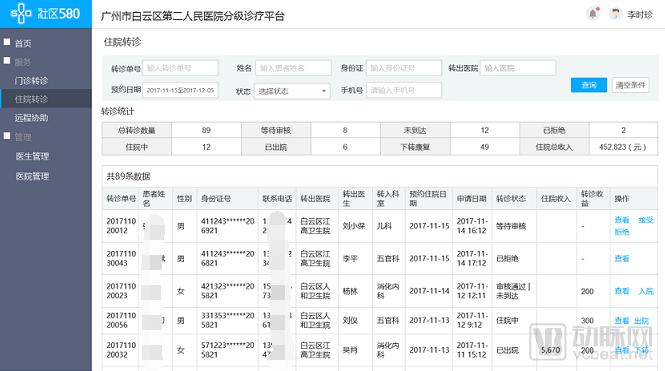
To enhance management efficiency, in October 2017, Baiyun Second Hospital established a Healthcare Reform Office team composed of personnel from the Party and Administration Office, the Medical Affairs Department, the Nursing Department, and other relevant departments. To ensure rational coordination, the Healthcare Reform Office first clearly defined the responsibilities of each medical institution.
President Li stated, “The medical consortium has reduced costs for healthcare institutions at all levels, which includes two aspects: hospital costs and patient costs.”
Following the implementation of hospital information sharing, mutual recognition of results from major diagnostic tests can be achieved. Primary care hospitals within medical consortia no longer need to procure expensive equipment such as CT scanners, MRI machines, and color Doppler ultrasound systems, thereby significantly reducing maintenance costs and maximizing resource utilization. For patients, remote consultations enabled by information systems allow them to receive treatment locally, thus reducing medical expenses.
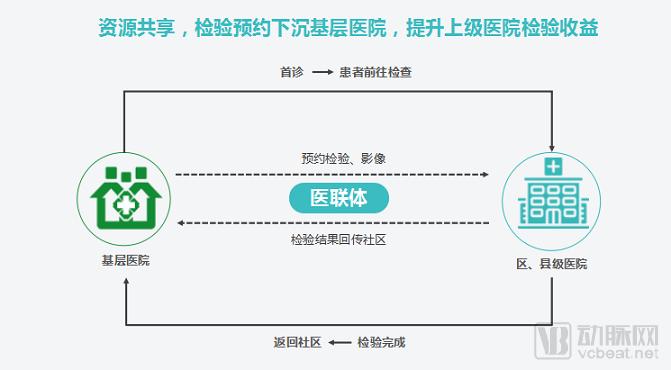
In addition, whether the two-way referral channels are unimpeded is also a key issue.
To address this, the medical consortium platform should be leveraged to connect healthcare institutions, enabling hospitals at all levels to access real-time data on patient categories and volumes, as well as bed availability, thereby providing accurate information feedback for referrals. Furthermore, a referral system must be established, wherein the Medical Reform Office of Baiyun Second Hospital coordinates patient referrals and hospitalizations across all tiers within the medical consortium.
Adhering to the above points ensures seamless information flow.
Moreover, the low level of informatization in primary healthcare institutions and the limited proficiency of primary care physicians in utilizing information systems constitute a practical challenge.
In response, Baiyun Second Hospital has adopted the following improvement measures: assigning medical staff to collaborate with personnel from Community 580 at grassroots medical institutions, providing training to these institutions while simplifying the information system interface to reduce operational complexity for frontline healthcare workers.
In medical consortium projects, informatization first addresses the issue of data interoperability, with data analysis being the next step. Once the medical consortium operates maturely, data generated during this process—such as two-way referrals, remote consultations, family doctor contract signings, and resident satisfaction—will play a crucial role in the hospital’s future overall decision-making.
In the past, Baiyun Second Hospital’s understanding of patient satisfaction was largely confined to the hospital setting, with almost no direct insights into resident satisfaction from community health service centers and health stations. Therefore, Director Zhong hopes that the Community 580 platform will subsequently introduce features such as “likes” and third-party surveys to help the hospital collect such data.
Prerequisites for Multi-Party Benefits
When discussing the enthusiasm for building medical consortia, Director Li shared his perspective. He believes that to encourage primary care hospitals to participate in medical consortium projects, it is essential first to establish a community of shared interests among all stakeholders. By unlocking the potential of hospitals at all levels and generating benefits through the referral process, participants can achieve tangible gains. When there are profits and rewards, both hospitals and physicians will be more willing to engage.
Second, patients. Through the medical consortium platform, patients can address their diagnostic and treatment needs locally and access high-quality medical services decentralized from tertiary hospitals, thereby realizing value.
Third is the system. Whether tiered diagnosis and treatment can be integrated with health insurance payment is also a key factor. If the reimbursement rate for primary healthcare institutions is high, both these institutions and residents will be more willing to actively participate. Of course, policy support is a prerequisite.