

Infervision Secures RMB 300 Million in New Funding to Accelerate AI Medical Imaging Product Deployment and Global Expansion
VCBeat has learned at the earliest opportunity that,Infervision has completed its financing round, with investments from Xianghe Capital, Shangcheng Fund, Yuansheng Capital, Sequoia Capital, and Qiming Venture Partners.RMB 300 Million in New Round of FinancingAs of February 2018, Infervision had completed four rounds of financing within two years. Chen Kuan, Founder and CEO of Infervision, stated that the company would continue to deepen its focus on the niche sector of AI-powered medical imaging, with all raised funds dedicated to the research and development, production, and international marketing of its AI medical imaging products.
According to the VCBeat database, Infervision has completed a total of four rounds of financing since February 2016.
In February 2016, Infervision secured RMB 12.5 million in angel financing, with investors including Inno Angel Fund, Zhenyun Ventures, and Lu Chuanwei, the former CEO of Kuaidi Dache, in his personal capacity.
In January 2017, Infervision secured RMB 50 million in Series A financing, led by Sequoia Capital China and followed by GF Securities’ proprietary investment department.
In September 2017, Infervision announced the completion of its RMB 120 million Series B financing round, led by Qiming Venture Partners, with joint investment from Genesis Capital and Sequoia China. Taihe Capital served as the exclusive financial advisor.
Chen Kuan stated that the reasons why Tuixiang Technology has been able to stand out among numerous medical AI companies are mainly derived from two aspects:
First, Infervision emphasizes practical implementation.If artificial intelligence, as an emerging technology, is not deeply rooted in its specific medical domain, it risks becoming merely a hyped concept. Over the past two years, Infervision has placed particular emphasis on physician acceptance of its products and their user experience. Through continuous updates and iterations, many of Infervision’s clients are now proactively sharing their own experiences with AI adoption.
Second, the team at Infervision is well-balanced.Infervision attaches great importance to comprehensive development, boasting exceptional teams in technology, product development, medicine, and marketing. This well-balanced team structure ensures that Infervision advances with solid and steady progress at every step.
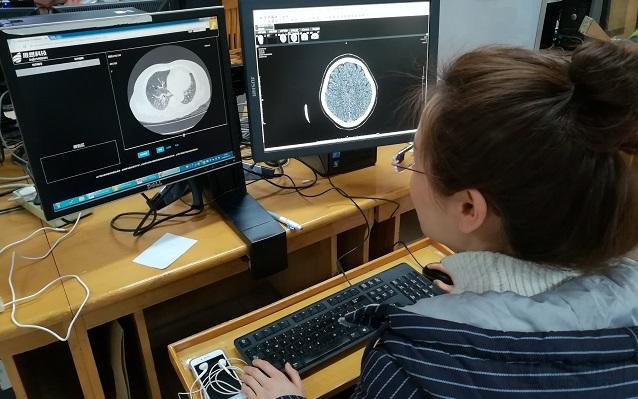
Assisted in the diagnosis of over 450,000 patients, covering 85 Grade IIIA hospitals
In 2017, nearly 30 financing deals were announced in China’s medical AI industry, with total funding exceeding RMB 1.8 billion. Last year’s surge in investment interest stemmed from the growing validation of the practical applicability of medical AI. As a highly favored player in the niche segment of AI-powered medical imaging, Infervision’s performance over the past year is undoubtedly the primary reason for the sustained attention from investors.
Chen Kuan shared, “As of the statistics from February 2018,”Among the top 10 hospitals in Fudan University’s national hospital rankings, Infervision’s AI has been deployed and launched in seven; among the top 50 hospitals, Infervision’s AI system has been implemented in 25., including Peking Union Medical College Hospital, Shanghai Changzheng Hospital, Tongji Hospital Affiliated to Tongji Medical College of Huazhong University of Science and Technology, Shengjing Hospital Affiliated to China Medical University, the First Affiliated Hospital of China Medical University, Zhongshan Hospital Affiliated to Dalian University, Huashan Hospital Affiliated to Fudan University, Tongji Hospital Affiliated to Tongji Medical College (Shanghai), Zhongda Hospital Affiliated to Southeast University, the First Affiliated Hospital of Zhengzhou University, the Second Affiliated Hospital of Zhejiang University School of Medicine, the Second Hospital of Hebei Medical University, the First Affiliated Hospital of Sun Yat-sen University, Xijing Hospital of Air Force Medical University, Qinghai Provincial People's Hospital, and the First Affiliated Hospital of Chongqing Medical University, among many other top-tier hospitals. Currently,Infervision’s AI has been fully integrated into physicians’ diagnostic workflows, aiding in the diagnosis of nearly 450,000 patients and delivering tangible improvements to the healthcare environment through authentic AI technology.。”
Although Infervision has secured a significantly larger cumulative funding round and is hailed as a rapidly rising “AI healthcare unicorn” worldwide, Chen Kuan stated that the company places greater emphasis on product reputation among physicians and the product’s own performance. Headquartered in Beijing, Infervision has established operational hubs in Shanghai, Wuhan, Dalian, Guangzhou, and other cities, enabling efficient coverage of the national market.
In 2017, as Infervision flourished across the Chinese market, it also established overseas branches in the United States, Japan, and Germany, rapidly advancing the global deployment of its AI business model to accelerate commercial implementation, with the ambition of leveraging Chinese innovation to benefit the world.
To date, Infervision’s internationalization efforts have achieved breakthrough progress across multiple fronts. In Japan, the company has completed the official installation and deployment of its systems at one hospital. Taking into account the differences in healthcare environments between China and Western countries such as the United States and Germany, the exploration of diverse cooperation models further demonstrates Infervision’s determination to leverage its Chinese base to expand into the global market.
According to VCBeat, Infervision conducted extensive research when it initially expanded overseas. Although healthcare systems vary and each country faces competitors from different nationalities, the commercial model for sales markets remains a global “blue ocean,” much like in China, where capital investment has already become a “red ocean.” Infervision’s strategic resource allocation laid the foundation for establishing three overseas subsidiaries and paved the way for its subsequent development.
Three Mature Product Lines
After more than two years of development, Infervision has established three mature product lines, all of which have been deployed in clinical practice.
X-ray ProductsChen Kuan stated that the user feedback received after Infervision’s X-ray products were introduced to hospitals exceeded their expectations. As a highly traditional radiology product, X-ray imaging had rarely been discussed in academic circles, with most attention focused on newer radiological equipment such as CT, MRI, and PET-CT. However, X-ray devices have a very large installed base across various hospitals. According to “The Current Status and Future of Radiologists in China,” by the end of 2016, there were a total of 60,463 medical radiological devices in hospitals at or above the secondary level nationwide. These included 13,200 conventional X-ray machines, 12,662 DR (Digital Radiography) systems, 5,676 gastrointestinal fluoroscopy units, 2,460 mammography units, and 12,888 CT scanners.
As AI technology matures, X-ray machines are making a "comeback." After learning from more cases than human doctors at local hospitals, AI systems become more sensitive and adept at identifying issues in DR (Digital Radiography) images. With the assistance of Infervision’s AI system, physicians have detected many lesions previously unseen on DR images. Such cases have reignited discussions about DR applications at top academic conferences, leading clinicians to integrate AI systems into their clinical workflows.
Chen Kuan stated that, compared to CT, DR imaging offers lower screening costs and is more widely used, with many primary healthcare institutions already equipped with such devices. AI systems tailored for DR imaging will therefore have a broad market potential.。
Lung CT: Chest CT products are Infervision’s most mature offerings, currently adopted by 25 of the top 50 hospitals in China. Chen Kuan emphasized that all partner hospitals of Infervision integrate its products into their daily workflows. The AI system has become an essential assistant for some radiologists in their routine practice.
Stroke Products: Infervision’s stroke product has been launched and is undergoing clinical trials, enabling physicians to rapidly and accurately identify the location and volume of intracranial hemorrhage with the system’s assistance. The product has been implemented in renowned Grade A tertiary hospitals, including Beijing Tiantan Hospital, Tongji Hospital, and Peking Union Medical College Hospital.
In addition to the three mature product lines mentioned above, Infervision’s other products have also entered multicenter trials, including AI-assisted cardiac screening, AI-assisted fracture screening, liver-related products within the abdominal AI series, and AI-assisted breast cancer screening.
Investors Say
Tang Hesong, Founder of Xianghe Capital, the Lead Investor in This Round“Artificial intelligence holds immense application potential in the healthcare industry. It not only significantly reduces labor costs and improves efficiency, but also greatly enhances the accuracy of diagnosis and treatment. Infervision is a leader in this field, boasting first-class strategic capabilities, technical expertise, and a diligent, professional commitment to serving healthcare clients. We are willing to invest in and support Infervision’s rapid development, working together to serve the healthcare industry and benefit humanity.”
Nan Ping, Director of Hongwei Shangcheng Fund“The application of artificial intelligence in the medical imaging industry is an inevitable trend. Infervision’s products have gained recognition from numerous top-tier Grade 3A hospitals and healthcare institutions, significantly enhancing the efficiency of cancer screening and addressing key pain points in the industry. Chen Kuan and his team are energetic and pragmatic. We will leverage the industry resources and expertise of Hongwei Shangcheng Fund to support the company’s continued growth.”
It is reported that the new round of funding will be continuously invested in the research and development of AI products for medical imaging across multiple disease types, accelerating the clinical deployment of AI solutions beyond pulmonary applications, and achieving robust market penetration both domestically and internationally. Chen Kuan, CEO of Infervision, stated, “The Infervision team has been rapidly growing and evolving throughout our entrepreneurial journey. We are proud to leverage the fertile ground of our homeland amidst the historical transformation brought about by artificial intelligence, pioneering AI technological advancements for a new era and addressing issues that are most closely related to people’s livelihoods.”