

BGI Genomics and Peking Union Medical College Hospital Launch Multi-Center Carrier Screening Project to Explore Regional Genetic Differences of Monogenic Disorders in China
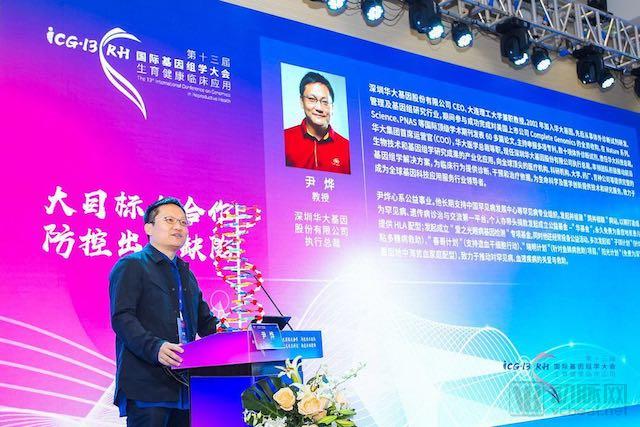
BGI CEO Yin Ye Delivers Address at Opening Ceremony
On March 18, 2018, at the 13th International Conference on Genomics: Reproductive Health Clinical Applications (ICG13·RH), hosted by BGI Genomics Co., Ltd. in Shenzhen, BGI Genomics, in collaboration with Peking Union Medical College Hospital, spearheaded the launch of a Chinese multicenter carrier screening project for common monogenic diseases among pregnant women.
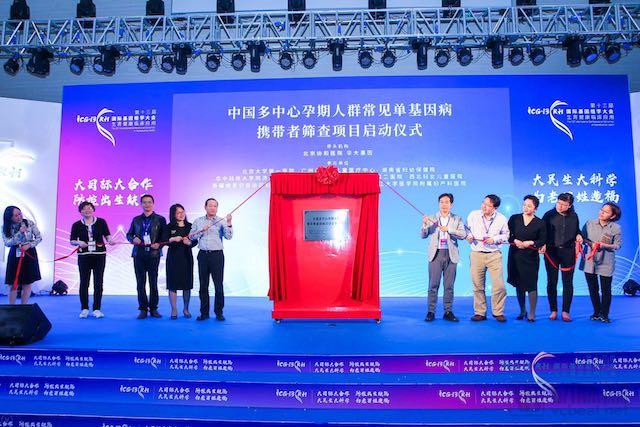
Project Unveiling Ceremony
This project aims to conduct carrier screening for 100 types of autosomal recessive monogenic disorders in no fewer than 4,000 pregnant women and their husbands (particularly those identified as high-risk), thereby generating data on the carrier status among the Chinese prenatal population. Furthermore, through prenatal diagnosis, it will accurately assess the proportion of birth defects that can be controlled via carrier screening.
In addition to Peking Union Medical College Hospital, the other participating institutions comprise nine production and diagnosis units from various regions across China, including the east, south, west, north, and central areas.
Monogenic Genetic DisordersMonogenic genetic disorders are diseases caused by defects in a single gene. According to statistics from the World Health Organization (WHO), the cumulative incidence of monogenic genetic disorders among the global birth population is as high as 1%, making them a significant cause of birth defects.
Carrier screening for recessive genetic disorders refers to the use of genomic analysis to determine whether both partners are carriers of pathogenic variants associated with the same autosomal recessive or X-linked monogenic disorder (such as hereditary deafness, thalassemia, albinism, and hemophilia), thereby enabling risk assessment and reproductive counseling.
Carrier screening for birth defect prevention and control falls under the primary prevention tier of the three-tier prevention framework, aiming to fundamentally prevent and eliminate diseases by taking measures before their onset. Compared with prenatal diagnosis and newborn screening, carrier screening is the least invasive and most effective measure in the prevention and control of birth defects.
During project implementation, Peking Union Medical College Hospital will collaborate with other production and diagnostic units to undertake clinical sample screening, clinical guidance, genetic counseling, and prenatal diagnosis, thereby establishing a carrier screening model for the pregnant population and ensuring the successful completion of this project. BGI Genomics will serve as a key technical supporter, providing products and technical support for carrier screening to facilitate the close integration of technology with clinical practice.
In addition to testing and counseling, the hospital will conduct research on market demands and awareness of service models from three perspectives—pregnant women, physicians, and administrative management—through follow-up visits and questionnaire surveys, thereby providing direction for exploring service models for the prevention and control of monogenic diseases.
“Preconception interventions for couples planning pregnancy are rare, mostly limited to folic acid and vitamin supplementation. They often undergo carrier screening only during a subsequent pregnancy after having a child with a birth defect, which is a highly passive approach,” said Jiang Yulin, Associate Professor in the Department of Obstetrics and Gynecology at Peking Union Medical College Hospital. “We hope to move this process earlier.”
“We also take both technical and clinical perspectives into account in our product design, aiming to make our products more aligned with clinical practice,” added Peng Zhiyu, Chief Product Officer at BGI. “Every major technological revolution drives new social development, and we hope our technologies can deliver value in the prevention and control of birth defects.”
The phased objective of this project is to conduct carrier screening for over 100 autosomal recessive monogenic disorders in no fewer than 4,000 pregnant women and their husbands, particularly those identified as high-risk, thereby generating data on the carrier status of the prenatal population in China. This initiative aims to establish a standardized model for carrier screening during pregnancy, contributing to the national prevention and control of birth defects, while also filling the research gap in expanded carrier screening in China.
Furthermore, both parties will jointly advance the development of genetic counseling capabilities in hospitals. Genetic counseling is a critical component in the prevention and control of birth defects; however, China has not yet established a comprehensive genetic counseling system, with inadequacies in both the education and training of genetic counselors and their professional career development frameworks. Currently, genetic counseling services in China are primarily delivered by frontline clinicians, who require technological support and vocational education backed by enterprises. The systematic cultivation and development of genetic counseling necessitate close collaboration between technology companies and clinical hospitals. The monogenic disease screening project jointly launched by BGI Genomics and Peking Union Medical College Hospital represents an active exploration toward establishing and developing China’s genetic counseling workforce.
It is reported that the screening program will be conducted through a multi-center clinical study model. In previous single-gene disorder screening projects, participants were primarily from southern regions. This study will cover five regions across China—east, south, west, north, and central—to investigate genetic differences in single-gene disorders among different regions of China, laying the foundation for subsequent product design and research on promotion models.