

Ma Xiaowei Appointed as Director of the National Health Commission
VCBeat (WeChat ID: vcbeat), March 19 – At the seventh plenary session of the First Session of the 13th National People’s Congress held this morning, it was decided, following a vote, to appoint other members of the State Council.Ma Xiaowei is the Director of the National Health Commission.
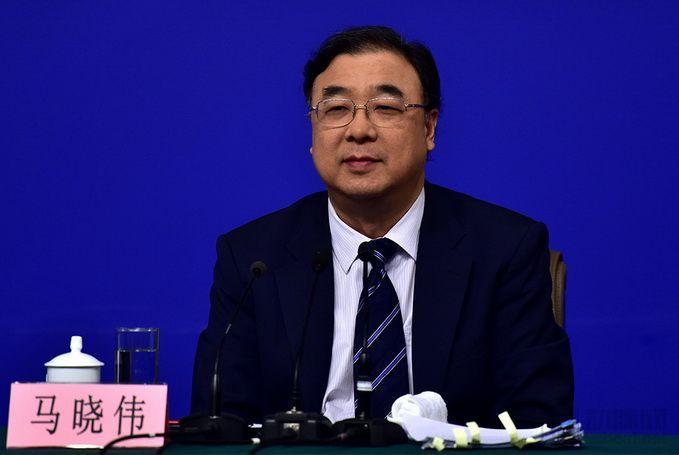
Resume of Comrade Ma Xiaowei
Ma Xiaowei, male, Han ethnicity, born in December 1959, native of Wutai County, Shanxi Province. He joined the Communist Party of China in October 1982 and began his work in August 1977.
From April 1978 to December 1982, he studied in the Department of Medicine at China Medical University. After graduation, he successively served as an official in the Department of Science and Education of the Ministry of Health, a secretary in the General Office, Associate Researcher, Researcher, Vice President, President, and Party Secretary of the First Affiliated Hospital of China Medical University, Vice President of China Medical University, and Director of the Liaoning Provincial Health Department and Secretary of its Party Leadership Group.
In October 2001, he was appointed Vice Minister of the Ministry of Health and a member of its Party Leadership Group. In April 2013, he was appointed Vice Chairman of the National Health and Family Planning Commission and a member of its Party Leadership Group.
During his tenure at the National Health and Family Planning Commission (NHFPC), Ma Xiaowei was primarily responsible for work in planning and information, primary healthcare, maternal and child health, and family planning technical services. He oversaw the Department of Planning and Information, the Department of Primary Healthcare, and the Department of Maternal and Child Health Services. His purview also included the Chinese Academy of Medical Sciences & Peking Union Medical College, the Center for Drug and Device Management, Peking Union Medical College Hospital, the Institute of Medical Information, the Statistical Information Center, the National Health Development Research Center, the National Medical Examination Center, the National Center for Cardiovascular Diseases, the National Cancer Center, and the Maternal and Child Health Care Center of the Chinese Center for Disease Control and Prevention. Additionally, he maintained liaison with the Chinese Medical Association.
About the National Health Commission
On March 13, the State Council’s institutional reform plan was submitted to the First Session of the 13th National People’s Congress for deliberation. According to the plan, the National Health Commission will be established.
The plan proposes to integrate the responsibilities of the National Health and Family Planning Commission, the Office of the Leading Group for Deepening Medical and Healthcare System Reform under the State Council, and the Office of the National Working Commission on Aging; the lead responsibility of the Ministry of Industry and Information Technology in implementing the WHO Framework Convention on Tobacco Control; and the occupational safety and health supervision and administration responsibilities of the State Administration of Work Safety, so as to establish the National Health Commission as a constituent department of the State Council.
Its primary responsibilities include formulating national health policies, coordinating and advancing the deepening of healthcare system reforms, organizing the development of the national essential medicines system, supervising and managing public health, medical services, and health emergency response, overseeing family planning management and services, and formulating policy measures to address population aging and promote the integration of medical care with elderly care.
The National Working Commission on Aging is retained, with its daily operations undertaken by the National Health Commission. The China National Committee on Aging, previously under the interim administration of the Ministry of Civil Affairs, shall now be placed under the interim administration of the National Health Commission. The National Administration of Traditional Chinese Medicine shall be administered by the National Health Commission.
The National Health and Family Planning Commission is no longer retained. The Office of the Leading Group for Deepening the Reform of the Medical and Healthcare System under the State Council is no longer established.
Other aspects of the State Council’s institutional reform plan related to healthcare regulation include: establishing the State Administration for Market Regulation by integrating the functions of the former China Food and Drug Administration; and establishing the National Healthcare Security Administration as an agency directly under the State Council, by consolidating the responsibilities for basic medical insurance for urban employees and urban residents and maternity insurance from the Ministry of Human Resources and Social Security, the New Rural Cooperative Medical Scheme from the National Health and Family Planning Commission, drug and medical service price management from the National Development and Reform Commission, and medical assistance from the Ministry of Civil Affairs.
On March 17, the First Session of the 13th National People's Congress voted to approve the Decision on the Plan for Reform of State Council Institutions, thereby endorsing the plan.