

China's Healthcare Regulatory Reforms: Streamlined Governance and Expert Leadership Reshape the Industry
“If innovation is the new engine of China’s development, then reform is the indispensable igniter; more effective measures must be adopted to fully accelerate the innovation engine.”
Recently, healthcare regulatory reforms have remained a focal point, with a more centralized, clearly defined, and highly efficient regulatory system taking shape. The landscape of healthcare regulation is undergoing profound transformation.
“Super-Ministry” Reform: Experts Assume New Roles. What Signals Are Being Sent by Healthcare Regulatory Reforms and Personnel Changes? What Remains Unchanged and What Is Shifting in Healthcare Regulation? Where Will the New Leadership Direct Its Initial Efforts, and Which Way Is the Wind Blowing for Healthcare Oversight? VCBeat (WeChat ID: vcbeat) has compiled industry perspectives on these questions.
Super-Ministry Reform: Let Healthcare Be Healthcare, and the Market Be the Market
Institutional restructuring is a key hallmark of the transformation of government functions. In the 1980s, the theme was “improving governmental efficiency and promoting the rejuvenation of cadre ranks”; in the 1990s, it shifted to “meeting the needs of the socialist market economy system.” By 2008, institutional arrangements underwent more substantial adjustments, marking a critical step forward in the reform process.
Institutional reform can resolve contradictions such as overlapping agencies, intersecting responsibilities, fragmented policy-making, and jurisdictional conflicts within government departments. It helps reduce and standardize administrative approvals, streamline official procedures and processes, and enhance the effectiveness of policy implementation. This approach is also a widely adopted model of government management in countries with relatively high levels of marketization.
The “2018 Government Work Report” pointed out that, in the period ahead, efforts will continue to be made to comprehensively improve government efficiency. The institutional setup and functional allocation of the government will be optimized, institutional reforms deepened, and a system of government governance with clearly defined responsibilities and law-based administration established, thereby enhancing government credibility and executive capacity.
Under the top-level design of “decentralization, control, and service,” healthcare regulation has also ushered in major reforms. According to the approved State Council institutional reform plan, changes involving healthcare industry regulation include:
1. Establish the National Health Commission.Integrate the tobacco control responsibilities led by the National Health and Family Planning Commission (NHFPC), the State Council Office of Healthcare Reform, the National Working Committee on Aging, and the Ministry of Industry and Information Technology (MIIT), as well as the occupational safety supervision responsibilities under the State Administration of Work Safety (SAWS), into a constituent department of the State Council. The NHFPC shall no longer be retained, and the State Council Office of Healthcare Reform shall no longer be established.
Industry observers believe that the establishment of the National Health Commission sends several signals: First, the commission’s functions will be more focused, prioritizing the formulation of national health policies, the continued advancement of healthcare reform, and the regulation of medical services. Second, the explicit emphasis on “Health” highlights a shift from “treatment” to “prevention and control,” which is expected to provide positive guidance for industries such as health management, elderly care, and consumer healthcare.
2. Establish the State Administration for Market Regulation.Integrate the responsibilities of the State Administration for Industry and Commerce, the General Administration of Quality Supervision, Inspection and Quarantine, and the China Food and Drug Administration (CFDA), among others, to establish the State Administration for Market Regulation as an institution directly under the State Council.
The responsibilities of the newly established State Administration for Market Regulation include comprehensive market supervision and administration, integrated law enforcement for market regulation, anti-monopoly law enforcement, quality and safety oversight, and accreditation and certification. In view of the special nature of drug regulation, the National Medical Products Administration was established as a separate entity. Drug regulatory agencies are set up only at the provincial level, while the supervision of drug distribution and sales activities is uniformly undertaken by market regulation departments at the municipal and county levels.
In fact, prior to the announcement of the institutional reform plan, innovative attempts had already been made in drug regulation. More than ten provinces and municipalities across China have implemented comprehensive market supervision law enforcement, adopting a “three-in-one” model that integrates the functions of industry and commerce administration, quality inspection, and food and drug supervision. Pilot results have shown both achievements and challenges. The challenges include the weakening of drug regulatory functions and a lack of professional knowledge and skills among the regulatory workforce. These challenges will need to be directly addressed following the institutional reform.
3. Establish the National Healthcare Security Administration.This is a newly established department whose functions are integrated from the basic medical insurance and maternity insurance for urban employees and residents under the Ministry of Human Resources and Social Security, as well as the New Rural Cooperative Medical Scheme under the National Health and Family Planning Commission, representing the “integration of three insurance schemes.” It also encompasses responsibilities such as drug and medical service price management from the National Development and Reform Commission, and medical assistance duties from the Ministry of Civil Affairs. As it is primarily responsible for managing the medical insurance fund and controlling medical expenditure, the National Healthcare Security Administration is also referred to as the “purse of medical insurance” and the “most powerful medical insurance payer in history.”
The industry believes that after the National Healthcare Security Administration takes unified control over the revenue and expenditure of medical insurance funds, adjustments may be made to the formation of the medical service pricing system, drug centralized procurement, and medical insurance reimbursement rules. Given the financial pressure on medical insurance funds, there will likely be more payer-led cost containment measures in the future, with initiatives such as “medical insurance payment negotiations” and “diagnosis-related group (DRG) payment” continuing to advance.
4. Other institutional adjustments closely related to healthcare regulation include: transferring the National Council for Social Security Fund from the administration of the State Council to the Ministry of Finance, which assumes primary responsibility for fund security and the preservation and appreciation of its value; reforming the tax collection and administration system by merging national and local tax bureaus at the provincial level and below. Following the merger, a dual leadership management system is implemented, with the State Taxation Administration taking the lead and sharing authority with the people’s governments of provinces, autonomous regions, and municipalities directly under the Central Government.
Industry experts believe that the reform of the national and local tax collection and administration system will help streamline corporate tax filing procedures, reduce corporate tax compliance costs, and contribute to establishing a more transparent tax environment.
Overall, the institutional reform plan will transform the previous fragmented landscape of healthcare regulation—often described as “nine dragons taming the water”—by enabling coordinated reforms across healthcare services, medical insurance, and pharmaceuticals, thereby establishing a regulatory system with clearly defined responsibilities and authority.
“Insider” Takes New Post: How Will the New Leader Make Their Mark?
On the morning of March 19, the Seventh Plenary Session of the First Session of the 13th National People's Congress decided, through voting, to appoint Ma Xiaowei as the Director of the National Health Commission.
Since April 2013, Ma Xiaowei has served as Vice Minister and a member of the Party Leadership Group of the National Health and Family Planning Commission. Prior to this appointment, he held various positions within local and national health systems, accumulating nearly two decades of experience in medical regulation and witnessing multiple rounds of institutional and healthcare reforms.
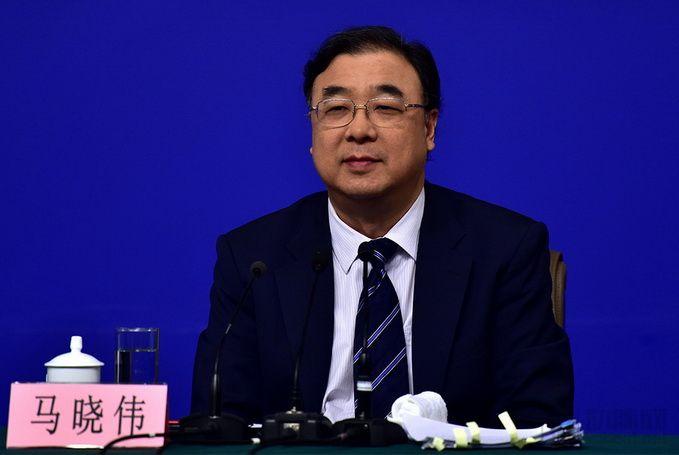
Ma Xiaowei, First Director of the National Health Commission
According to public records, Ma Xiaowei is a native of Wutai County, Shanxi Province. He was born in December 1959 and began his career in August 1977. From April 1978 to December 1982, he studied at the Department of Medicine, China Medical University. Upon graduation, he held the following positions:
Official, Department of Science and Education, Ministry of Health; Secretary, General Office
Associate Research Fellow, Research Fellow, Vice President, President, and Party Secretary of the First Affiliated Hospital of China Medical University
Vice President of China Medical University
Director of the Health Department of Liaoning Province, Secretary of the Party Leadership Group
Vice Minister of the Ministry of Health, Member of the Party Leadership Group
During his tenure at the National Health and Family Planning Commission, Ma Xiaowei was primarily responsible for planning and information, primary healthcare, maternal and child health, and family planning technical services., overseeing the Department of Planning and Information, the Department of Primary Healthcare, and the Department of Maternal and Child Health Services; as well as the Chinese Academy of Medical Sciences & Peking Union Medical College, the Center for Drug and Contraceptive Management, Peking Union Medical College Hospital of the Chinese Academy of Medical Sciences, the Institute of Medical Information & Library, the Statistical Information Center, the National Health Development Research Center, the National Medical Examination Center, the National Center for Cardiovascular Diseases, the National Cancer Center, and the Maternal and Child Health Care Center of the Chinese Center for Disease Control and Prevention; and maintaining liaison with the Chinese Medical Association.
With a background in the medical profession and years of experience working within the healthcare system, Ma Xiaowei’s appointment can be described as an “insider” assuming a new role.
As the saying goes, “a new official sets three fires upon taking office.” Judging from his key areas of responsibility and policy positions during his tenure at the National Health and Family Planning Commission, these three initiatives may likelyTiered Diagnosis and Treatment, Health Insurance Cost Containment, Medical Talent WorkforceFocus on construction.
First is tiered diagnosis and treatment. The tiered diagnosis and treatment system involves classifying diseases based on their severity, urgency, and complexity of treatment, with medical institutions at different levels assuming responsibility for treating different conditions. This aims to achieve a healthcare delivery model characterized by initial consultations at the primary care level, two-way referrals, separate management of acute and chronic conditions, and coordinated collaboration between upper- and lower-level institutions.
“Since the launch of the ‘New Healthcare Reform,’ tiered diagnosis and treatment has been a policy priority. With the continuous refinement of policy deployment, supporting measures such as family physician services, telemedicine, chronic disease management, and primary healthcare have also been improved, initially establishing a healthcare environment for tiered diagnosis and treatment.”
In recent years, the development of medical consortia has also become a key lever for advancing tiered diagnosis and treatment. Through the establishment of medical consortia, healthcare institutions can properly define and realign their functional roles, facilitate the integration and sharing of high-quality medical resources, enhance primary care service capacity, improve mechanisms for division of labor and collaboration, and thereby promote the effective implementation of the tiered diagnosis and treatment system.
Next is the control of medical insurance expenditures. Practices such as overtreatment, fraudulent reimbursement claims using fabricated materials, and “bed-hanging” (fake hospitalizations) have led to the misuse of medical insurance funds. As the basic coverage of medical insurance has expanded, cost containment has become an urgent priority. In recent years, regulatory authorities have adopted diverse cost-control measures, including global budgeting, capitation, diagnosis-related group (DRG)-based payment, and restrictions on the use of antibiotics and adjuvant therapies. The newly established National Healthcare Security Administration will comprehensively manage the revenue and expenditure of medical insurance funds, while the National Health Commission will continue to be responsible for formulating health policies and reforming medical institutions. Joint efforts by both agencies to control medical insurance costs are therefore an inherent and necessary component of this framework.
Finally, regarding the development of the healthcare workforce, the National 13th Five-Year Plan for the Development of Health and Family Planning Personnel noted that certain structural and institutional contradictions in China’s health and family planning workforce development remain prominent. The structure and distribution of personnel are still unreasonable, with shortages of grassroots personnel, public health professionals, and health service providers, while the policy environment for talent development requires further improvement. The next steps in healthcare workforce development should focus on strengthening the grassroots health and family planning workforce, building teams of urgently needed and scarce specialized professionals, and cultivating high-level and managerial talent.
Tiered diagnosis and treatment, health insurance cost containment, and the development of medical talent are the three core pillars of “healthcare reform.” Strengthening the workforce at the primary care level enhances grassroots healthcare capacity, which in turn helps retain patients within the community. Collaboration between primary care institutions and tertiary hospitals enables the implementation of tiered diagnosis and treatment. These three elements are interwoven and mutually reinforcing. The newly established National Health Commission must formulate national health policies while also addressing the practical needs of building a tiered diagnosis and treatment system and containing health insurance costs. For the newly appointed Director of the National Health Commission, initiating bold reforms in these three areas is not only imperative but must be pursued with vigor and determination.
What Changes Will Occur in the Healthcare Industry?
“Super-Ministry” Reform, with Industry Insiders Assuming New Roles. We believe that the aforementioned changes will impact the healthcare industry across various dimensions, including pharmaceutical and medical device R&D and innovation, production and distribution, tendering and procurement, clinical application, personnel and compensation systems in medical institutions, pricing mechanisms, revenue structures, as well as health insurance financing, fund management, and cost containment, thereby affecting all aspects of the healthcare industrial chain. Potential changes may include:
1. R&D innovation in pharmaceuticals and medical devices continues to advance.The functions of the former China Food and Drug Administration (CFDA) have been integrated into the newly established State Administration for Market Regulation. However, given the specific nature of drug supervision, the National Medical Products Administration (NMPA) has been separately established. This implies that regulatory functions will remain largely unchanged. Previously implemented policies—such as the consistency evaluation of generic drugs, the Marketing Authorization Holder (MAH) system, streamlined review and approval processes to encourage innovation in pharmaceuticals and medical devices, accession to the International Council for Harmonisation of Technical Requirements for Pharmaceuticals for Human Use (ICH), and the “green channel” for importing new drugs—remain in effect. Innovation continues to be a key direction for the development of pharmaceuticals and medical devices. From an industrial perspective, with more focused regulation and strengthened measures in health insurance cost containment and distribution management, innovative products with stronger market competitiveness are likely to benefit, thereby promoting industrial upgrading.
2. Drug centralized procurement bidding has become more stringent.“The Emergence of the ‘Most Powerful Payer’” signifies a more centralized approach to the fundraising and utilization of medical insurance funds, with the National Healthcare Security Administration (NHSA) playing a deeper role in tendering and procurement processes, thereby truly leveraging its power as the “purse strings.” Drawing on experiences from Fujian and other regions, the NHSA will engage in direct negotiations with pharmaceutical and medical device suppliers to effectively reduce procurement prices. Furthermore, during the later stages of its functional transition, the NHSA may collaborate with social institutions through “government purchase of services” models to pilot initiatives such as Group Purchasing Organizations (GPOs).
3. Comprehensive reform of public hospitals continues to advance.The comprehensive reform of public hospitals encompasses various aspects, including personnel and compensation systems, the separation of prescribing from dispensing, and tiered diagnosis and treatment. Following the establishment of the National Health Commission, there may be a deliberate effort to strengthen the comprehensive reform of public hospitals, eliminate the practice of subsidizing healthcare with drug profits, and improve the tiered diagnosis and treatment system. In addition, encouragement for privately run medical institutions will continue. Previously, approval restrictions were lifted for ten categories of third-party independent medical institutions. As the comprehensive reform of public hospitals advances, the number of categories with relaxed restrictions will gradually increase, truly achieving the establishment of a “multi-level and diversified” healthcare system that better meets the public’s medical needs.
4. Commercial health insurance may see favorable developments.Basic medical insurance has achieved near-universal coverage, operating on the core principle of “broad coverage and basic protection.” As the medical insurance fund faces increasing financial pressure, cost containment will remain a key focus in the foreseeable future. In this context, commercial health insurance will serve as a vital supplement to public medical insurance. Commercial health insurers will collaborate with healthcare providers, health management organizations, and rehabilitation service institutions to deliver high-quality and convenient insurance and healthcare services to residents.
5. The development of traditional Chinese medicine remains a key priority.In this institutional reform plan, the provision concerning traditional Chinese medicine (TCM) states that “the National Administration of Traditional Chinese Medicine shall be administered by the National Health Commission,” signifying that TCM continues to hold a prominent position within the healthcare system. As the crystallization of wisdom from China’s five-thousand-year civilization, TCM has been continuously driving the development of the nation’s pharmaceutical and health sectors. In recent years, policies have explicitly called for the revitalization of traditional Chinese medicine and have laid out comprehensive strategic deployments. The TCM concept of “preventive treatment” aligns synergistically with the key focus of health policies shifting from “treatment” to “prevention and control,” suggesting that TCM may play a significant role in primary healthcare and disease prevention and control.
6. Numerous sectors within the broader health and wellness industry are poised for significant growth.The transition from the National Health and Family Planning Commission (NHFPC) to the National Health Commission (NHC) signifies a growing emphasis on “health.” The NHC’s responsibilities also encompass family planning, responses to population aging, and public health. As fertility rates reach a turning point and population aging intensifies, numerous opportunities will emerge in areas related to childbirth and elderly care, such as assisted reproductive technology, obstetrics and gynecology, maternal and infant care, elderly care services, and the integration of medical and elderly care. For the healthy population, consumer healthcare, medical tourism, and health management will also receive greater attention. The “Healthy China Strategy” will continue to advance, poised to ignite the trillion-yuan big health industry.
Rome was not built in a day, nor can a healthcare system that satisfies the government, industry, and the public be established overnight. It should be recognized that, in the process of “comprehensively deepening reform,” medical regulation is undergoing numerous adjustments to balance the interests of all parties. The novelty of comprehensively deepening reform lies in its comprehensive nature, while the difficulty lies in its depth. Reforms such as the “super-ministry” restructuring and the appointment of professional experts to leadership positions will bring profound changes to the healthcare industry, making them well worth watching.