

Hope Pain Management Announces Plan to Open 27 Specialty Clinics Nationwide Within Five Years to Advance Tiered Care and Differentiated Patient Experience
Pain medicine is an emerging interdisciplinary field that integrates neurosurgery, anesthesiology, interventional radiology, and orthopedics. While it collaborates with these adjacent specialties in the management of pain, it maintains distinct roles and clear divisions of responsibility.
On July 16, 2007, the former Ministry of Health issued a document approving the establishment of “Pain Management Departments” in hospitals at Level II and above, designating it as a primary clinical specialty. This marked the formal integration of pain management into the medical organizational structure of hospitals.
National policies stipulate that only hospitals at Level II or above are permitted to establish pain management departments. This raises the question: who will address the needs of pain patients in hospitals below Level II and in community outpatient clinics? Furthermore, how should pain patients be referred between tertiary hospitals and those below Level II within the tiered diagnosis and treatment system? Hepu Medical has keenly identified these pain points in the tiered care system and aims to leverage social capital to establish a chain of specialized pain management clinics, thereby addressing these challenges and filling the existing gap.
In China’s public hospitals, anesthesiologists handle 90% of the workload in pain management departments. The establishment of such departments within hospitals further burdens anesthesiologists, who are already overworked; consequently, even within hospital settings, setting up pain management departments presents certain challenges.
As an emerging discipline in its early stages, it faces substantial demand for medical services among pain patients. Hupu Medical’s first pain-specialized clinic in Beijing officially opened in January 2018, marking the first such specialized pain clinic in China.
In the market beyond hospitals, how does Hepu Medical build differentiated specialty clinics under the backdrop of tiered diagnosis and treatment, filling the gap of no pain specialty chain in China? With this question in mind,VCBeat (WeChat ID: vcbeat)Interview with Dang Jingdong, Founder of Hopu Medical.
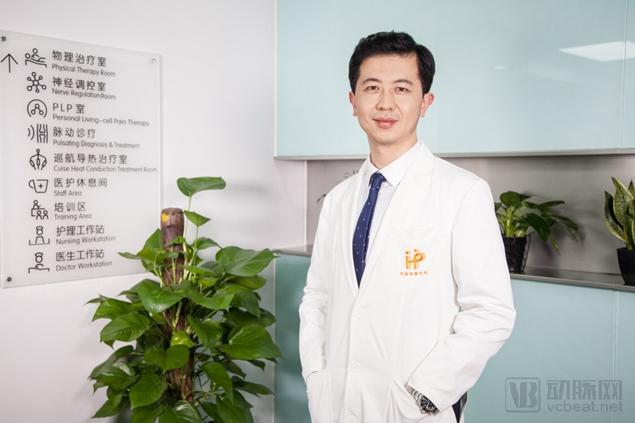
Dang Jingdong, Founder of Hepu Medical
From Specialty Hospitals to Specialty Clinics: 11 Years of Deep Expertise in Pain Management
As the founder of Hupu Medical, Dang Jingdong embarked on his entrepreneurial journey in specialized pain rehabilitation hospitals in 2007. Just two years after graduating from university in 2005, he established his first specialized pain hospital, the Jingbian County Minimally Invasive Surgery Hospital, with a capacity of 120 beds, serving as its president. Later, in July 2010, he founded his second specialized pain hospital, the Yulin City Minimally Invasive Surgery Hospital, with a capacity of 160 beds. Both hospitals are classified as secondary-level specialized institutions and have demonstrated strong growth momentum.
To accelerate the development of local pain medicine disciplines, Dang Jingdong took the lead in establishing Shaanxi Province’s first municipal-level pain society—the Yulin Pain Medicine Association—in June 2014, and served as its President.
Dang Jingdong’s aspiration is to expand and strengthen the field of pain management, ultimately establishing a branded chain of specialized pain clinics. To this end, he founded Hepu Medical in Beijing in March 2017, which operates the “Beijing Hepu Pain Specialist Clinic” and the “Hepu Pain Physicians Group.” With strategic planning focused on Beijing, Shanghai, Xi’an, Shenzhen, Chongqing, Nanjing, Hong Kong, and other key cities, the company centers its core business on “branded chain clinics specializing in pain management” and “training for pain specialist physicians,” striving to create an international-quality branded chain of pain specialty clinics.
Dang Jingdong told reporters that pain afflicts many people, representing a common and frequently occurring condition. As a symptomatic manifestation, it often serves as an entry point for diagnosing numerous diseases. However, current realities reveal ambiguities in defining the appropriate clinical departments for pain patients and the professional origins of pain specialists.
“Most patients, and even some physicians within hospitals, are unaware of the existence of pain medicine departments or unclear about which symptoms warrant consultation in such specialties. Consequently, patients with pain-related conditions are typically dispersed across orthopedics, neurology, physical therapy, and rehabilitation departments for diagnosis and treatment.”
Meanwhile, the diagnosis and treatment of pain disorders face challenges in implementing a tiered healthcare system, particularly regarding referral mechanisms between tertiary hospitals and secondary or lower-level hospitals. In light of the current situation in China, the vast majority of pain departments in county-level hospitals are still in their nascent or early developmental stages.
The composition of pain management practitioners in China lacks standardization. The workforce, numbering approximately 90,000, primarily consists of traditional Chinese medicine (TCM) massage therapists, acupuncturists, anesthesiologists, orthopedic traumatologists, and psychiatrists. Widespread non-standardized practices in diagnosis and treatment have resulted in 70% of chronic pain patients in China failing to receive timely and standardized care.
Benchmarking against the international landscape, the United States had 157 accredited anesthesia-based pain training programs and 97 accredited pain fellowship training programs in 2006, while in Canada, 30% of physicians providing pain management services had received formal training in pain treatment. Therefore, large-scale, standardized training for pain management physicians in China is imperative.
Professor Xu Zhonghuang from the Department of Anesthesiology and Pain Management at Peking Union Medical College Hospital has pointed out that using pain complaints as an entry point allows for the screening of many diseases, such as tumors, tuberculosis, and myofascialitis, through pain symptoms. The best first choice should be the pain management department. Pain requires high attention from people, establishing the concept that if one experiences pain in the future, they should first seek diagnosis and treatment at a pain clinic.
Implementing first-contact care in clinics is not only advocated in general practice; the demand for segmented markets and differentiated experiences has also invigorated niche specialty clinics.
Implementing Tiered Diagnosis and Treatment for Various Pain-Related Conditions
Dang Jingdong emphasized that, unlike most rehabilitation specialty institutions on the market which primarily employ physical therapy modalities and rarely utilize minimally invasive interventional techniques, our department not only applies foundational rehabilitative approaches integrating Traditional Chinese Medicine (TCM) with Western medicine but also incorporates minimally invasive treatments such as ultrasound-guided nerve blocks.
HePu Pain Specialty Clinic specializes in the diagnosis and treatment of chronic and common diseases, with a primary focus on neck and shoulder pain, soft tissue pain, pathological neuralgia, and spinal-origin pain.
The clinic employs eight full-time pain specialists and ten nurses. With the relaxation of regulations on multi-site practice, more experts are choosing to provide consultations at medical institutions outside their primary hospitals. It is reported that Hope Pain Specialty Clinic currently engages dozens of part-time experts. Meanwhile, the Hope Pain Physicians Group, which provides expert talent support, has recruited 39 pain specialists, all from renowned Grade A tertiary hospitals in Beijing, Shanghai, and other regions.
Hepu Pain Specialty Clinic integrates high-quality medical resources from renowned Grade A tertiary hospitals, establishing a “four-in-one” diagnosis and treatment model that combines online consultation with offline clinical care. It provides mid-to-high-end medical services, including specialist outpatient clinics, on-demand specialist consultations, multidisciplinary team (MDT) consultations, and private physician services.
Consultation room design and outpatient services emphasize a “patient-centered” approach, with fully appointment-based operations to enhance efficiency and maximize patient privacy protection.

Patient Waiting Area in the Clinic (Photo provided by Hope Medical)
Centering on “visualized precision pain management” as its core technology, the clinic integrates advanced modalities—including superlaser therapy, pulsation-based diagnosis and treatment, PLP therapy, and exercise rehabilitation—to provide robust technical support for delivering mid-to-high-end pain medical services.
While leveraging expert resources, the clinic has also established green channels for medical services with multiple Grade A tertiary hospitals, including Peking Union Medical College Hospital and the PLA General Hospital (301 Hospital), to refer patients requiring transfer to the departments where these experts practice, thereby implementing tiered diagnosis and treatment in pain management.
Differentiated Services, Positioned in the Mid-to-High-End Market
Guided by the clinical philosophy of “prioritizing function and patient experience with specialized pain management; assessing morphology and reviewing indicators to eliminate pain,” Hepu Pain Specialty Clinic strives to establish a model characterized by “strong specialty focus, supported by general practice capabilities.” By using pain symptoms as the entry point, the clinic aims to implement tiered diagnosis and treatment in the field of pain management, delivering high-quality pain management services to its clients.
Beijing’s First HePu Pain Specialist Clinic is located in the R&F City complex in Shuangjing, within the Guomao CBD area on the East Third Ring Road in Chaoyang District. The clinic features two modern consultation rooms (each equipped with advanced Ritter examination tables from the United States), eight treatment rooms, as well as procedure rooms, monitoring rooms, waiting areas, and rest areas, covering a total floor area of over 400 square meters.
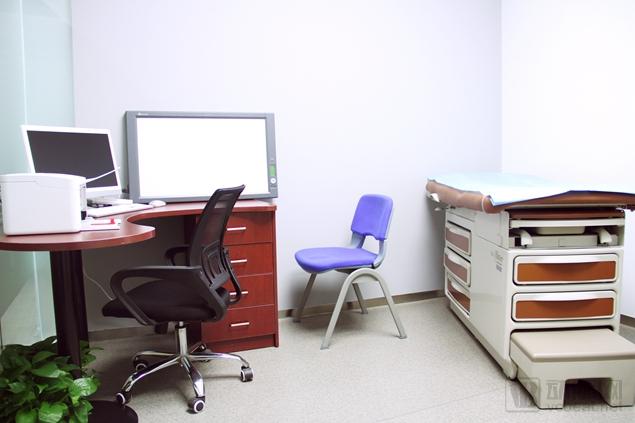
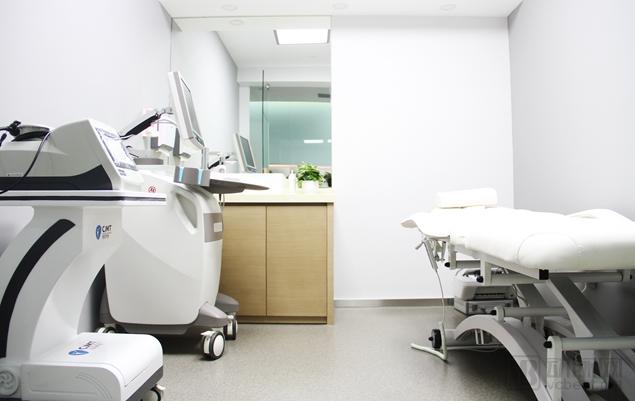
(Courtesy of Hepu Medical) Interior View of the Clinic
According to Dang Jingdong, the core customer base of HePu Pain Specialty Clinic currently consists mainly of white-collar workers and office employees born in the 1970s and 1980s. With consumption upgrading, this financially capable demographic has become the “main force” driving demand for mid-to-high-end clinics and medical institutions.
Although it requires heavy asset investment, Dang Jingdong stated that the core priority lies in establishing a robust chain operation model. It is reported that Hepu Pain Specialty intends to establish multiple chain clinics in seven cities, including Beijing, Shanghai, and Shenzhen. Under this chain clinic model, the initial investment is estimated at approximately RMB 5 million to RMB 10 million, depending on the size of the clinic.
Dang Jingdong exudes confidence in Hupu’s business model, envisioning that Hupu clinics can “break even within one year and recoup costs within two years.”
During the conversation, Dang Jingdong consistently emphasized the differentiated development strategy of Hupu Pain Specialty Clinic, which is positioned differently from pain departments in public hospitals. “We integrate therapeutic techniques and offer high-end services and advanced technology, yet our pricing remains at a mid-to-low level.”
At public hospitals, patients seeking pain treatment are often uncertain about which department to visit, and may receive inconsistent recommendations from doctors in different specialties. However, at HePu Pain Specialty Clinic, experts conduct a comprehensive assessment of each patient’s condition and develop a personalized treatment plan. By integrating techniques from relevant specialties into a coordinated, multi-modal approach—often described as a “combination punch”—the clinic eliminates the cumbersome process of shuttling between multiple departments, truly providing pain patients with a “one-stop” solution for pain management.
In addition to standardizing the clinical diagnosis and treatment process, Dang Jingdong believes that another major advantage of Hepu Pain Specialty Clinic lies in the standardization of talent training in pain medicine. Beyond the mutual referral of existing physicians and expert resources, the Hepu Pain Physicians Group is cultivating more pain specialists to address the shortage of professionals in this field, thereby aligning with the policy on tiered diagnosis and treatment.