

Direct Sales vs. Agent Model: How Consumer Genomics Companies Market Their Products
Consumer genetic testing is a field distinct from clinical diagnostics. Testing products in this sector fall outside the scope of clinical use and do not require approval from the China Food and Drug Administration (CFDA). Theoretically, these products should be among the first to enter the market. Similarly, unlike clinical tests, they are not required to go through hospitals or physicians. Their sampling methods are relatively simple, and services can be delivered directly to consumers.
It is understood that by 2017, the number of individuals in China who had undergone consumer genetic testing reached 300,000. If we follow the experience of the United States, the number of people tested is projected to reach 50 million by 2020—a vast market.
For the time being, we can categorize consumer-oriented genetic testing products into two types: medical-grade and consumer-grade. As the names suggest, medical-grade products must be distributed through hospitals, whereas consumer-grade products have a broader range of distribution channels, including hospitals, health examination centers, educational institutions, fitness centers, beauty clinics, and health management centers.
So, how are these products sold? What considerations do companies take into account when choosing a sales model for different products? Next, we will explore this topic.
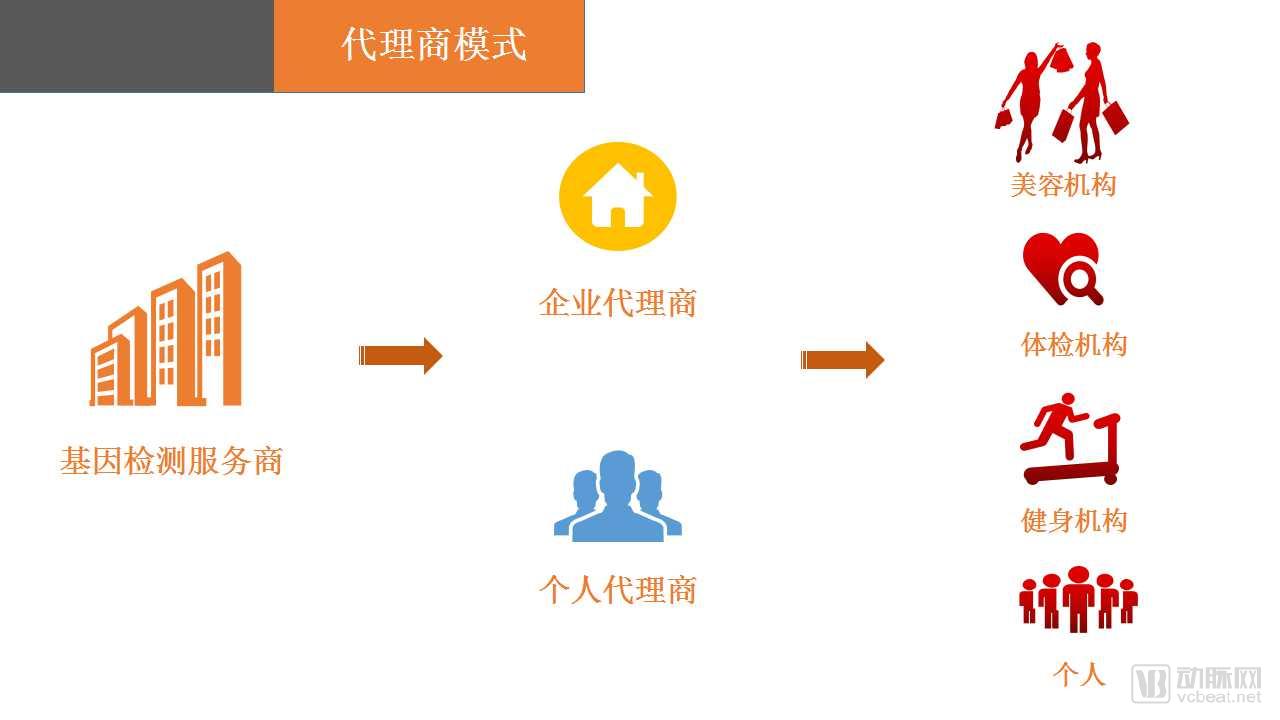
An agent is a general representative who, within the scope of their industry management authority, accepts commissions from others to facilitate or conclude transactions on their behalf. Simply put, an agent engages in business operations by managing commercial affairs for enterprises and earning commissions from manufacturers.
As with all agency models, this represents an entrepreneurial venture for the agents, while for the company, it constitutes a business recruitment process. These agents may be individuals, enterprises, or institutions such as beauty salons. Whether merchants, companies, or individuals, they do not hold ownership of the products they represent; instead, they facilitate sales on behalf of the company. This model is similar to the most common agency arrangements in the food and beverage industry, yet differs from them in essence.
Corporate or individual agents can establish partnerships with enterprises (primarily for corporate group health examinations), health examination institutions, aesthetic clinics, and educational institutions, or they may adopt a direct-to-consumer (2C) sales model targeting individuals and families. Additionally, they may recruit sub-agents or distributors.
These agents serve as market partners for enterprises and, to some extent, function as a group of external sales personnel.
Upon successful signing, the company will provide training to these agents, covering product knowledge, sales scripts, and sales techniques.
operational strategies, among others. On one hand, this involves standardizing distributors’ sales models and promotional plans; on the other hand, it aims to boost product sales by enhancing distributors’ level of understanding.
This model offers a rich array of products, covering nearly all consumer-grade genetic testing offerings, such as health checkups, susceptibility gene testing, and beauty and fitness-related services. Moreover, companies with strong capabilities can even customize products for high-traffic user segments.
Of course, the operational costs associated with this model are relatively high, encompassing agent recruitment and management as well as promotional expenses. When selecting a genetics company, agents should conduct a comprehensive comparison of factors such as corporate qualifications, product packages, pricing advantages, and sales training support.
Therefore, companies of this type are typically well-established or large-scale enterprises, such as Da An, CapitalBio, and Kangxi Rui.
Channel Pathways from Manufacturers to Retail Endpoints:
1. Manufacturer → Distributor → Consumer
2. Manufacturer → General Agent → Distributor → Consumer
3. Manufacturer → General Agent → Tier-1 Agent → Distributor → Consumer
4. Manufacturer → General Agent → Tier-1 Distributor → Tier-2 Distributor → … → Dealer → Sub-dealer → Consumer
DTC, or Direct-to-Consumer, refers to a marketing model that engages directly with consumers. It encompasses all communication activities targeted at end consumers. Compared with traditional media channels such as television advertising, its advantages primarily lie in closer proximity to consumers, greater emphasis on the study of consumer behavior, and heightened attention to understanding consumers’ lifestyles.
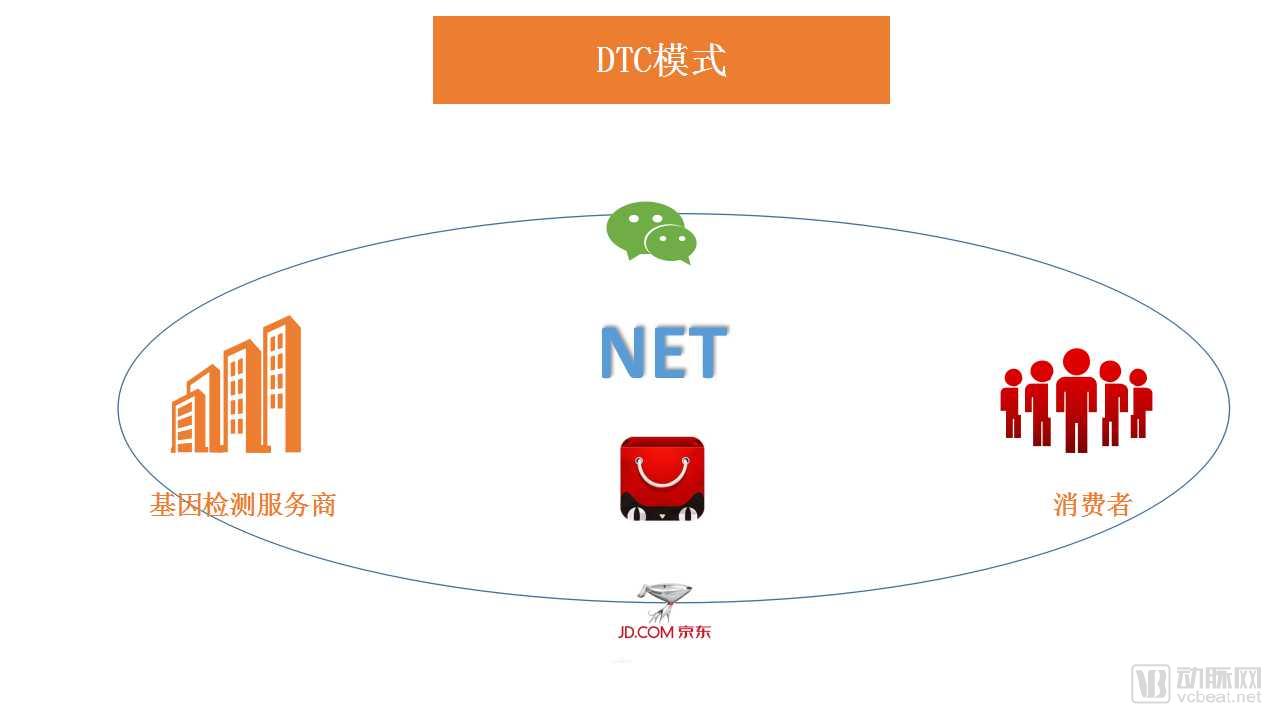
Consumer-grade genetic testing mostly uses oral swab or saliva samples, which are relatively easy to collect, thereby enabling the direct-to-consumer (DTC) marketing model for consumer genetics. These companies can sell their products through their own platforms or via third-party platforms such as WeChat, Tmall, and JD.com.
"Although this sales model does not require excessive channel costs, it does demand significant effort in promotion and content operations."
Taking 23Mofang as an example, since its price reduction in August 2017, the sales volume of 23Mofang’s products has tripled. As of February 2018, the company’s cumulative sample size had reached 150,000. How did they achieve this? I believe content marketing is the core.
23Mofang operates a WeChat Official Account under the same name, which publishes daily posts related to genetics. The content naturally revolves around its products, presented in engaging and vivid articles.

Image from the 23Mofang WeChat Official Account
This is, in fact, an excellent platform for promotion and marketing. Here, companies have a robust channel to educate users on the capabilities of genetic testing and the significance of their reports. For users, it provides access to engaging and useful knowledge, which in turn is likely to stimulate their purchase intent.
Zhou Kun, founder and CEO of 23Mofang, told VCBeat, “The message we want to convey is ‘power yourself.’ After receiving their reports, users gain a deeper understanding of themselves and reflect on their identity from a genetic perspective. Only with such thorough self-awareness can they develop greater reverence for life and make better choices.”
But this process must be fun and enjoyable.
Initially, the WeChat Official Account platform was 23mofang’s primary sales channel. The account’s homepage featured a purchase interface, and embedded purchase links were included within articles. This operational model resembled content-driven e-commerce.
In the later stages, as brand reputation took shape, word-of-mouth among users became the primary source of sales. During this period, the WeChat Official Account platform functioned more as an interactive hub. Akin to a community, it not only provided post-purchase users with a space for interaction and knowledge enrichment but also served as a strong catalyst for prospective buyers.
In addition, they are also promoting their products through other advertising channels, such as third-party promotional platforms. Zhou Kun revealed that the product’s target audience mainly consists of individuals born in the 1980s and 1990s, with a smaller segment from the 1970s. Therefore, when selecting marketing strategies, they deliberately seek out platforms and media channels that attract these demographic groups, such as sponsored content placements in other WeChat official accounts or video advertisements.
However, in the aforementioned marketing efforts, although promotional channels are becoming more diversified, the purchase channel remains limited to the website alone, necessitating traffic redirection from other channels.
Starting in 2017, as public education and awareness deepened, companies began to establish a presence on two third-party platforms, JD.com and Tmall. This was essentially an initial foray into the Direct-to-Consumer (DTC) model via e-commerce channels. Whether through official websites or third-party platforms, online shopping has become an integral part of young people’s lives.
JD.com was the first to roll out its platform, with approximately 11 companies onboarded. Tmall had fewer participants, numbering less than seven, as it maintained stricter qualification requirements, mandating that applicants hold clinical laboratory credentials.
Currently, sales on third-party platforms account for only a small fraction of the total. Most companies are essentially using these platforms to test the waters. Nevertheless, this represents a breakthrough. Previously, such products could only be sold on their proprietary platforms, meaning consumers had to purchase specific items through designated channels, with no circulation on general retail platforms. Listing on e-commerce platforms signifies that these DTC (Direct-to-Consumer) products are poised to circulate through conventional sales channels, much like mobile phones, apparel, and even food products.
DTC companies are predominantly startups, and influenced by internet-centric thinking, their testing products tend to focus on “light wellness,” such as ancestry testing, genetic risk monitoring, and fitness health.
In addition, some companies have attempted to sell biocosmetic and medical aesthetic products online, but the market is not yet mature.
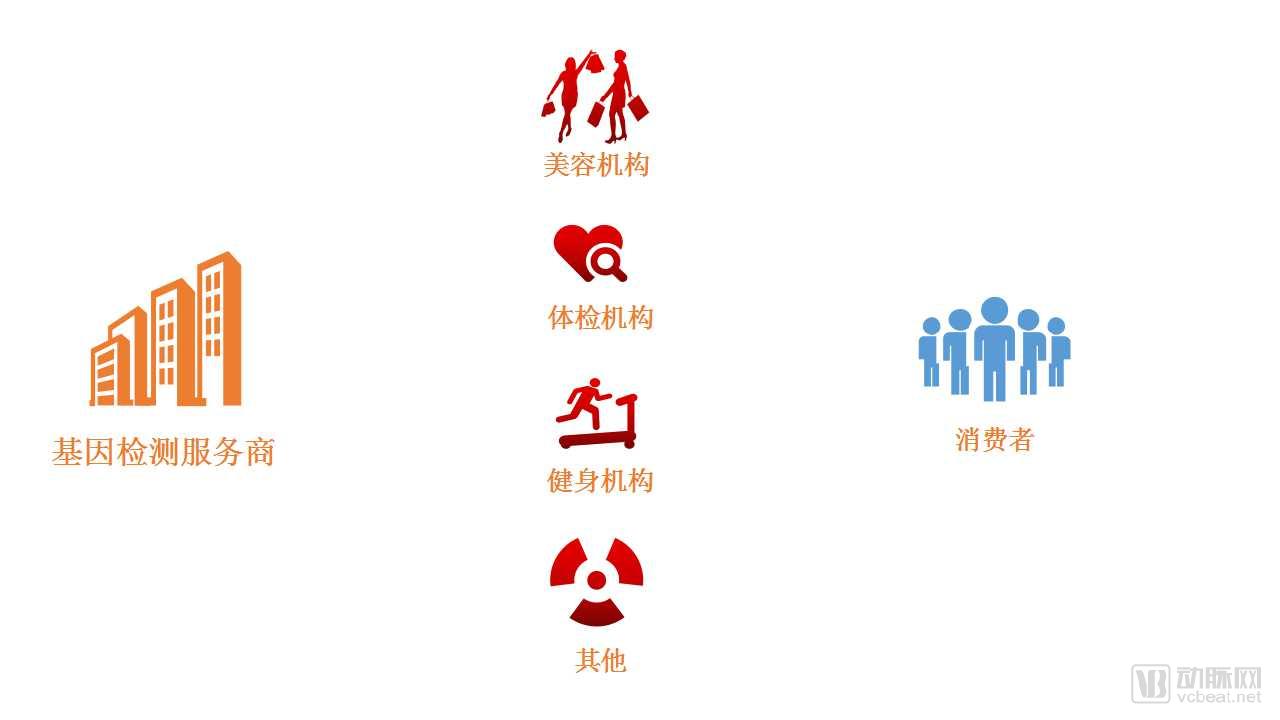
This approach is fundamentally different from the agency model. The agency model involves cooperation between enterprises and distributors, where the relationship is purely one of supply and sales. In contrast, B2B2C entails business collaboration.
For instance, in their relationships with health checkup and aesthetic clinics, these institutions help companies sell products. Conversely, the products themselves can drive business growth or enhance service quality for the institutions. While distributors typically handle a more diverse range of products, institutions tend to select products that align more closely with their existing business operations.
The following are several commonly used channels:
Products sold through medical examination institutions are primarily health risk-related, mainly catering to public demand for health management. Individuals who visit these centers for check-ups are already health-conscious, representing a demographic highly similar to the target audience for health risk monitoring services.
However, there is still a significant gap in the frequency of product usage. Health checkups are typically conducted once or twice a year, whereas health risk detection products, apart fromctDNA, Gut Microbiota andRNASuch sensitive changesProjectApart from these, the usage frequency of other products is almost once in a lifetime.
“This is a low-frequency product; to achieve high-frequency sales, it is necessary to introduce different product forms,” Zheng Naizhong, co-founder and product director of Meian Gene, told VCBeat.
Many disease-associated loci are distributed across the 23 pairs of chromosomes. At present, the cost of one-time whole-genome sequencing remains prohibitive for many individuals. However, fragmenting whole-genome analysis into targeted tests for specific loci significantly reduces costs and offers users greater flexibility. This approach allows consumers to choose different products for subsequent testing after completing an initial assessment.
Following this model, the frequency of health risk monitoring can also align with that of medical check-ups.
Another approach is to develop high-frequency testing products, such as gut microbiota analysis and early cancer screening. These products align more closely with the objectives of health checkups and exhibit similar usage frequencies.
The above applies to the product; sales strategies will also be tailored to different customer segments.
Taking Meinian Gene as an example, through Meinian Onehealth Healthcare, Meinian Gene has established a very close connection with health checkups. Meinian Onehealth Healthcare has a large number of group examination users, and Meinian Gene directly incorporates genetic testing as a checkup item, offering it to users as an add-on or supplementary service.
This group primarily opts for testing packages. They may not have chosen genetic testing themselves, and their understanding of it may be limited. However, by completing the tests at a relatively low cost, they can recognize the benefits and results, thereby gaining a deeper understanding of the product. If the test results indicate a high risk, healthcare providers will directly recommend more advanced testing options, allowing users to experience personalized services throughout the process.
The second approach is in-person testing at physical locations. During the health examination process, certain conditions may be detected in some individuals; these conditions may be genetically related or may require further diagnostic evaluation. In such cases, consumers may need additional test items, which could include genetic testing products. Health examination institutions provide a face-to-face communication setting for customers and educational staff, with dedicated educators available to create an optimal environment for user education.
Another model is the sales seminar salon, which primarily targets high-end consumers. In these salons, presenters explain to consumers the significance of genetic testing for health. The products featured in this category are mainly whole-genome or whole-exome sequencing services.
“Testing enables us to provide him with health guidance and recommendations for future medical check-ups, allowing him to follow a clear roadmap,” said Zheng Naizhong. He revealed to VCBeat that, at present, this approach is feasible. Individuals undergoing medical examinations already have a high level of health awareness, and after receiving new knowledge and educational outreach, they are motivated to purchase related products.
Of course, in addition to these, Meinian Gene also includes its genetic testing products as routine health checkup items in the examination catalog of Meinian Onehealth.
In collaborations with health checkup institutions, products for cancer susceptibility risk testing have achieved the highest sales volume. Zheng Naizhong revealed that among the top ten best-selling products, the top nine are all cancer susceptibility risk testing products.
Beauty products can be divided into two sectors: medical aesthetics and lifestyle beauty.
Aesthetic medicine offers significant improvements to current conditions, but surgical procedures may involve wounds. Furthermore, due to individual intrinsic factors, the final outcomes of the same procedure can vary among patients. If preoperative outcome prediction or more personalized guidance were available, consumers would be motivated to purchase such products. This also serves as an incentive for aesthetic medical institutions to collaborate, as it enables them to understand individual differences among clients and enhance their service quality.
Another area is aesthetic biotechnology, with beauty salons serving as the primary partners. Upon completion of genetic testing, these salons can customize their products based on consumers’ genotypes. However, such products target the high-end market, and from a production standpoint, the costs associated with customization are exceptionally high.
“Profit margins on the product are not high, making it difficult to reduce costs,” said Zheng Naizhong. Against the backdrop of high costs, customized products cannot be distributed through intermediaries like conventional cosmetics.
Zheng Naizhong revealed that, by comparison, products in the medical aesthetics sector are more mature. However, overall, products in the beauty and wellness sector still fall far short of those in the health examination industry, with corresponding collaboration models and consumer acceptance patterns still being explored.
Companies adopting this model are predominantly startups. By partnering with institutions, they benefit from a more favorable promotional environment and reach a more precisely targeted audience compared to the agency model. However, the challenge lies in identifying a compatible institutional partner to prevent genetic testing products from being reduced to mere marketing tools, or worse, allowing one bad actor to spoil the entire endeavor.
The above are several relatively mature sales models. Each has its own advantages and disadvantages. Regardless of the approach, it must be aligned with the product and user habits. Similarly, whether online or offline, cost remains the primary factor in sales.