

Virtual Hospital Model Reshapes Cross-Border Critical Care: A New Era in Global Healthcare Delivery
In the past two years, healthcare has arguably become one of the hottest topics in the investment community.
In 2015, the “Future Hospital” vision outlined by Jack Ma, Chairman of Alibaba Group’s Board of Directors, was gradually becoming a reality. More than 400 medium- and large-sized hospitals joined the alliance, enabling patients to complete every step—from appointment scheduling and registration to payment and report retrieval—via Alipay. He declared, “The next person in China to surpass me will undoubtedly emerge from the healthcare and medical industry.”
That same year, Mercy Hospital in the United States launched its Virtual Care Center. The center employs more than 300 healthcare professionals who serve patients via telemedicine services. This year, Intermountain Healthcare also announced plans to establish its virtual hospital in Salt Lake City.
In early 2017, U.S. e-commerce giant Amazon made a high-profile announcement of its entry into the healthcare sector. By fully leveraging its online and offline networks, AI products, and big data platforms, Amazon will focus on key areas such as pharmaceutical retail integration, direct-to-consumer drug sales, virtual physicians, electronic prescriptions, and online medication purchases.
Almost simultaneously, Ping An Good Doctor, a subsidiary of China’s Ping An Group that covers online consultations, doctor-patient management, O2O pharmaceutical services, chronic disease management, and pediatric health, is planning to list in Hong Kong with an aim to raise $1 billion.
These exciting developments within the industry have generated high expectations for the future of medical technology. Among them, cross-border healthcare between China and the United States has emerged as a compelling new sector. Driven by increasingly frequent Sino-US exchanges, growing healthcare demand in China, and the continuous advancement of high-tech capabilities, Chinese patients’ demand for US medical technologies is on the rise, giving birth to a vast market.
Cross-Border Healthcare Emerges as a Hot Investment Sector
Capital often precedes the explosive growth of an industry, and venture capital targeting cross-border healthcare has been one of the fastest-growing sectors in recent years.
According to statistics, from the beginning of 2016 to March 2017, Chinese companies actively invested in “overseas medical asset allocation,” with total investments in the overseas healthcare market exceeding $5.8 billion. Overseas healthcare service providers have successively received venture capital funding from investors such as Sequoia Capital, Sunshine Ronghui Capital, Fosun Tonghao Capital, Mountain Shape Capital, and Huayao Capital.
In addition, the trend of Chinese citizens seeking medical treatment abroad is increasingly prevalent. In 2017, the total number of Chinese patients traveling overseas for medical care reached 500,000, marking rapid growth, with average per-capita expenditure exceeding $150,000.
The underlying reason is likely the significant gap that still exists between the healthcare standards in China and the United States.
In China, medical resources are scarce and concentrated, leading to long-standing issues such as overcrowded hospitals, difficulties in securing appointments, and an assembly-line approach to treatment. In contrast, the United States employs a physician appointment system that allows for ample consultation time.
Substantial investment by the U.S. medical community in research on novel therapies has propelled its medical technology to a position of significant leadership, particularly in the treatment of critical illnesses. In 2018, the prestigious medical journal The Lancet published a report on global cancer survival trends from 2000 to 2014, encompassing data from 37.5 million patients across 71 countries over a 15-year period. With regard to survival rates for common cancers in China and the United States, the U.S. was found to be far ahead.
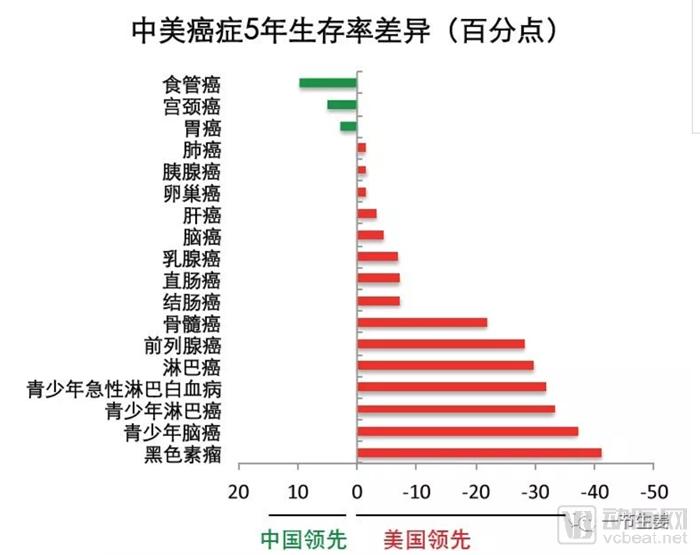
“The primary difference in cancer survival rates between China and the United States stems from disparities in early diagnosis and early treatment. Additionally, there are differences in the accessibility of comprehensive care, and it takes time for advanced equipment and therapies to become available in China. Furthermore, China still lags significantly behind international standards in education and multidisciplinary collaboration among medical oncology, surgical oncology, and radiation oncology. In particular, non-standardized treatment practices are widespread in small and medium-sized hospitals, leading to an overall deficiency in the national level of cancer care,” explained Dr. Joe Zhang, a physician at the renowned U.S. cancer center, MD Anderson.
On the other hand, the United States also holds a significant advantage in pharmaceutical supply.
In China, the pharmaceutical market is demand-driven, whereas in the United States, it is breakthrough-oriented. Patented drugs entering China must undergo multiple rounds of approval by government agencies, a process that often takes more than three years. As a result, there is a relative scarcity of anti-cancer drugs in China. Taking lung cancer medications as an example, while the United States has more than fifty options, China has only seven.
Therefore, cross-border healthcare has become the choice for many patients with critical illnesses.
Stephanie L. Hines, head of Mayo Clinic’s Executive Health Programs and International Patient Services, openly acknowledges that China is one of the fastest-growing sources of foreign patients. The number of Chinese patients traveling to the United States for treatment of serious conditions was approximately 3,000 in 2015 and exceeded 5,000 the following year.
Traditional Cross-Border Healthcare Models May No Longer Be Effective
“Cross-border healthcare” is not a recent invention; however, its true significance has undergone various changes at different stages, and its service models have evolved through several phases.
The earliest forms of cross-border healthcare, or simply overseas medical treatment, fell under the category of “travel agency-style cross-border healthcare.” This model operated through intermediaries who contacted foreign hospitals on behalf of patients, assisted with translating medical records, facilitated visa applications, arranged airfare, and provided accompanying interpreters, charging service fees for these services. Without U.S. health insurance coverage, patients had to bear the exorbitant medical costs entirely on their own. A single surgical trip often cost hundreds of thousands, or even millions, of dollars. Consequently, only patients’ families with substantial financial resources could afford such expenses.
In addition to intermediary agencies, many foreign hospitals have established offices in China to capture a share of the Chinese healthcare market, providing services to local patients and accepting appointments and referrals. Examples include the Mayo Clinic and Cleveland Clinic in the United States.
Given the prohibitive costs of this nascent form of “medical tourism abroad,” the market has spawned an alternative service: leveraging telemedicine to enable foreign physicians to review patients’ medical histories, symptoms, and test reports, thereby providing diagnostic and treatment recommendations as a second opinion alongside the patient’s primary attending physician in China.
However, the aforementioned cross-border healthcare models all have fundamental limitations.
The primary drawback of traditional overseas medical treatment services is their prohibitive cost, with expenses often reaching hundreds of thousands of US dollars—far beyond the means of average households. Moreover, many diagnostic tests and examinations conducted domestically must be repeated abroad, thereby incurring additional unnecessary expenses.
More importantly, such overseas surgical procedures are largely one-off services that fail to provide postoperative follow-up and continuous care, both of which are critical to patients’ treatment and recovery. Furthermore, should any issues arise after returning home, patients often find it difficult to seek consultation from the foreign institutions that performed the surgery.
Heather Way, head of the Special Services Department at Massachusetts General Hospital in the United States, stated in an interview with The New York Times that the greatest challenge for Chinese patients seeking medical treatment in the U.S. is the inability to ensure continuity of care upon their return to China.
While obtaining a second opinion from foreign physicians remotely is cost-effective, such opinions are often not adopted by the patient’s primary attending physician, making local implementation difficult. “A second medical opinion without the involvement of Chinese experts is unlikely to gain support from Chinese hospitals and specialists, rendering it substantively meaningless,” industry insiders acknowledged.
Furthermore, if therapeutic drugs prescribed by foreign physicians have not yet been approved for use in China, patients will face significant difficulties in accessing these medications, thereby substantially compromising treatment efficacy.
“Historically, in response to major drug-related disasters, governments around the world have established drug registration systems, requiring pharmaceutical review and approval before market entry into their respective sovereign states, with patient medication safety safeguarded by national drug regulatory systems,” said Cheng Long, Director of the Information Research Office at the Health Development Research Center of the National Health and Family Planning Commission.
“Although the drug has been marketed in the United States, domestic data remain lacking. Its use in China cannot be incorporated into the National Adverse Drug Reaction Monitoring System, and compliance of its production, packaging, storage, and distribution with regulatory requirements falls within a regulatory gray area. In the event of adverse incidents, patients’ medication use is considered merely personal behavior; patients may not be aware of the associated legal risks, thus necessitating comprehensive informed consent. For companies, selling drugs that have not been approved for marketing in China carries the risk of being deemed as selling counterfeit drugs. Currently, patients’ self-procurement of medications from overseas operates in a regulatory gray area, but corporate involvement would entail substantial legal risks.”
Breakthrough in Cross-Border Healthcare: “Virtual Hospital”
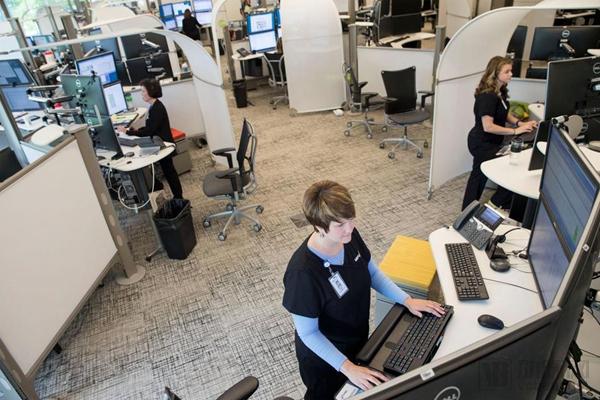
(Mercy Virtual Hospital’s “Patient-Free Ward,” reposted from Mercy’s official website)
Focusing on the pain points in the market, a new model of "cross-border healthcare without crossing borders" has emerged.
As the name suggests, this type of cross-border healthcare does not provide intermediary services but rather genuine medical services; however, compared to the “medical tourism” of the past, it integrates technological capabilities and medical resources, allowing patients to access care without traveling overseas.
According to forecasts by HITC Consulting and Verify Market, the annual revenue of Virtual Hospitals in the United States will reach $3.5 billion in 2022, with a compound annual growth rate (CAGR) of 49.8%—a rate that is rare in the traditional healthcare industry. Mercy Virtual Hospital states that its telehealth services can save patients 15%–40% in time and financial costs. Amidst nationwide calls to reduce healthcare expenditures, Virtual Hospitals offer a potentially highly effective solution.
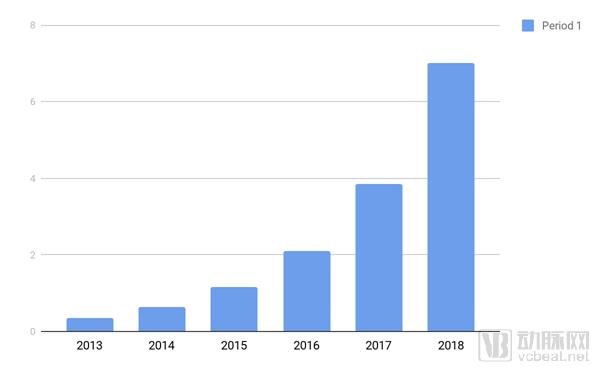
Figure 1: Global Statistics and Forecast of Telemedicine Patients, 2013–2018 (Unit: Million) |
In the United States, virtual hospitals already have a number of prominent market players.
Virtual Hospital (虚拟医院): The largest market participant is currently Teladoc (NYSE: TDOC). As the first publicly listed company in this sector, Teladoc provides 24/7 telephone or video consultations, diagnoses, and e-prescribing for non-emergency conditions.
Currently, the company primarily serves the U.S. market, focusing on minor illness consultations and establishing a closed-loop service from consultation to prescription. By the end of 2016, Teladoc had 17 million members and more than 3,000 physicians. Since 2014, Teladoc’s user base has tripled, and it has begun partnering with numerous large corporations and insurance institutions to integrate its services into employee benefits packages. In 2015, Teladoc became the world’s first virtual hospital to go public, with a valuation of $1 billion at IPO; by 2018, its valuation had reached $2.2 billion.

In the United States, a new type of health insurance company is reshaping the traditional healthcare security system. Founded in 2013, Collective Health leverages enterprise software with robust analytical capabilities to help employers provide health coverage to their employees, bypassing traditional health insurers. Through data mining and analysis, the company reduces unnecessary healthcare expenditures, closely connects employees with medical resources, enables more effective disease management, and facilitates early intervention at the nascent stage of illness to prevent condition deterioration.
This innovative coverage model has already reached over 170 million people in the United States, while Collective Health has seen robust growth—according to TechCrunch, its corporate clients now include prominent companies such as SpaceX, Palantir, and eBay, serving more than 120,000 individuals. In late February this year, Collective Health closed its Series D financing round, raising a total of $230 million from major institutional investors including NEA, Founders Fund, Google Ventures, and Mubadala.
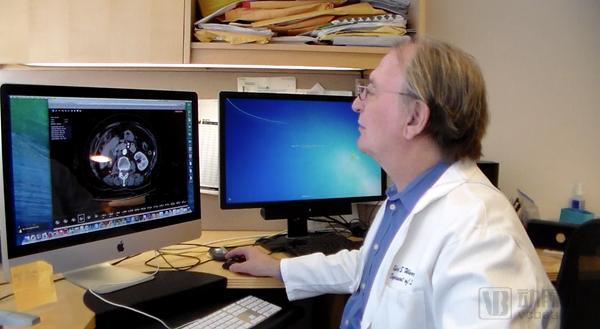
Dr. Robert Warren conducts diagnoses and provides treatment plans via a telemedicine platform.
Focusing on the intersection of cross-border healthcare and virtual hospitals, MORE Health, Inc., a top-tier American physician group and medical institution founded in Silicon Valley, serves as an excellent example. The company was co-founded by leading U.S. medical experts, including Dr. Robert Warren, former Chair of Hepatobiliary Surgery at UCSF[1][2]; Dr. Mark Wintermark, current Chair of Neuroradiation Oncology at Stanford University School of Medicine[3][4]; and Dr. Marc Shuman, co-founder of UCSF Helen Diller Family Comprehensive Cancer Center[5][6]. Targeting overseas patients with serious illnesses, it provides telemedicine services and is committed to building a “Global Virtual Hospital.” In 2017, MORE Health, Inc. was hailed by Forbes magazine as an “innovator” and “dark horse” in the cross-border healthcare industry.

Taking the Chinese market as an example, MORE Health’s model involves establishing a cloud-based consultation platform that connects patients, their attending physicians in China, and top-tier specialists in the United States to collaboratively develop treatment plans and provide post-treatment follow-up. The company has direct contracts with leading physicians and hospitals across various specialties throughout the United States. When patients utilize MORE Health’s services, the company translates medical records, test reports, and other clinical data into formats compatible with U.S. hospital systems and provides them to American physicians for diagnostic purposes, thereby sparing patients from undergoing redundant tests.
Under the MORE Health model, U.S. physicians provide initial diagnostic opinions within five days of receiving patient data. Subsequently, MORE Health arranges a joint consultation between U.S. specialists and the patient’s attending physician in China. Both parties collaboratively discuss and determine the final diagnosis and treatment plan; where feasible, the treatment plan is ultimately implemented locally under the supervision of the Chinese attending physician.
Through MORE Health’s services, patients can receive diagnoses and treatment from renowned U.S. physicians without traveling abroad, at a fraction of the cost of seeking medical care overseas. “We aim not only to serve those with greater financial means but also to make our services accessible to the general public, collaborating with Chinese doctors to provide care for more patients,” said Dr. Robert Warren, co-founder of MORE Health.
Following the implementation of the treatment plan, MORE Health also provides 3–6 months of follow-up care by U.S.-based physicians to ensure real-time monitoring of the patient’s condition. This constitutes genuine medical care, rather than mere medical consultation.
On the other hand, as Director Cheng Long of the National Health and Family Planning Commission pointed out earlier, cross-border medical services face certain risks in prescription drug management. To address this issue, MORE Health also provides international medication delivery services. Specifically, through electronic prescriptions issued by U.S.-based physicians who have participated in consultations and established a doctor-patient relationship with the patient, the healthcare institution can enable patients in China to legally obtain and use prescription drugs that have not yet entered the Chinese market, via international shipping and other statutory procedures.
In addition, cross-border Virtual Hospitals require rigorous operational mechanisms and strict compliance. Platforms must meet stringent security standards, implement processes that safeguard patient privacy and information security, legally establish remote doctor-patient relationships, provide medical malpractice insurance with coverage across global jurisdictions, and address differences in language, culture, and time zones encountered during actual service delivery. “They must comply with the U.S. Health Insurance Portability and Accountability Act (HIPAA) and regulations set by the U.S. Food and Drug Administration (FDA),” Robert Warren, founder of MORE Health, told VCBeat. His platform began developing compliant diagnostic and treatment protocols from its inception and is one of the few platforms on the market to have received FDA clearance.
This service has already helped numerous patients. In December 2014, Mr. Li, aged 55, was diagnosed with multiple myeloma. Over the following two years, he underwent multiple treatment regimens, but his condition showed little improvement.
By January 2017, the original medication regimen had failed, and the attending physicians were at a loss regarding the management of his condition. Upon the recommendation of his primary care physician, Mr. Li engaged MORE Health’s services to connect with leading U.S. experts in myeloma treatment, including Dr. Thomas Martin, Chair of Hematology at UCSF, and Dr. Steven Coutre, Professor of Hematology at Stanford University School of Medicine. Through MORE Health’s remote consultation platform linking Chinese and American specialists, a cutting-edge treatment plan was formulated. The prescribed CD38 monoclonal antibody, daratumumab, cleared Chinese customs and was subsequently delivered to Mr. Li in China.
After two weeks of treatment, the patient, who had been bedridden for several years, began to show gradual improvement, with significant enhancements across all health indicators. Moreover, the total cost of the entire process was less than one-tenth of that required for seeking medical treatment abroad.
“Previously, my health condition made it impossible for me to travel to the United States for medical treatment, and I never imagined I would have the opportunity to be treated by American doctors. I am very grateful to MORE Health for providing such a service. For many patients, this service significantly reduces both financial and time costs while enabling direct access to world-class experts, truly bringing hope to patients,” Mr. Li told the reporter.
As the economy, policies, and technology continue to advance, the healthcare industry is undergoing profound transformation. Technological advancements related to healthcare—including artificial intelligence, wearable devices, genetic technologies, cloud computing, and big data—have the potential to revolutionize this traditional yet vital industry, making precious medical resources more accessible to the general public and scalable.
China is undoubtedly set to become a major market. The 2016 White Paper on Cross-Border Medical and Healthcare Services for China’s High-Net-Worth Individuals predicts that the size of China’s cross-border healthcare market will surge from RMB 8.9 billion in sales in 2015 to exceed RMB 53.1 billion by 2020. With rising health awareness among Chinese consumers, growing demand for higher-quality medical care, and the commercial application of advanced technologies such as AI in healthcare, cross-border healthcare is poised to be one of the most promising sectors for rapid growth in China in the years ahead.
Source:
[1] https://www.ucsfhealth.org/robert.warren
[2] http://www.aiyichuandi.com/physicians/595d35b9f1e34d111db178a3
[3] https://profiles.stanford.edu/max-wintermark
[4] http://www.aiyichuandi.com/physicians/595d35b9f1e34d111db178fc
[5] http://profiles.ucsf.edu/marc.shuman
[6] http://www.aiyichuandi.com/physicians/595d35b9f1e34d111db17903
[7] https://www.ucsfhealth.org/thomas.martin
[8] http://www.aiyichuandi.com/physicians/5a7d17962f85be1500ed1952
[9] https://profiles.stanford.edu/steven-coutre
[10] http://www.aiyichuandi.com/physicians/595d35b9f1e34d111db17928