

Ningxia's Internet Healthcare Industry Aligns with National 'Internet + Medical Health' Strategy: A Prospectus Overview
On April 12, 2018, Premier Li Keqiang of the State Council presided over an executive meeting of the State Council to determine measures for developing “Internet + Healthcare,” with the aim of alleviating difficulties in accessing medical care and improving public health. The meeting pointed out that, in accordance with the deployments of the CPC Central Committee and the State Council, accelerating the development of “Internet + Healthcare” can enhance the efficiency of medical services, reduce the need for patients to make multiple trips, provide greater convenience, and enable more people to benefit from high-quality medical resources.
The meeting confirmed the following: First, accelerate the widespread provision of online services by hospitals at Level II and above, including appointment scheduling and inquiry of laboratory and examination results. Allow medical institutions to deliver certain internet-based medical services, such as follow-up consultations for common and chronic diseases. Second, promote the coverage of telemedicine across all medical consortia and county-level hospitals nationwide, facilitating the alignment of high-quality medical resources in eastern regions with demands in central and western regions. Support the extension of high-speed broadband networks to urban and rural medical institutions and establish dedicated internet lines to safeguard telemedicine requirements. Third, explore information sharing between medical institution prescriptions and pharmaceutical retail data. Implement intelligent health insurance audits and “one-stop” settlement systems. Improve the standard system for “Internet + Healthcare,” accelerate interoperability and information sharing, and strengthen supervision of medical quality and protection of information security.
As this news broke, leading figures in China’s internet healthcare sector shared it widely on their WeChat Moments, with widespread acclaim. The industry has finally received the state’s “definitive ruling.”
Readers familiar with the internet healthcare industry and long-time followers of VCBeat (WeChat ID: vcbeat) will recall that in March 2017, Yinchuan City in Ningxia Hui Autonomous Region became China’s largest hub for the internet healthcare industry. (See details:Internet Healthcare and a City’s Milestone: Why Have 17 Internet Hospitals Clustered in Yinchuan, Ningxia?) Subsequently, major internet healthcare platforms, including WeDoctor, Haodf Online, and DXY, have further deepened their medical service layouts in Ningxia.
From the perspectives of industrial structure and business models, Ningxia’s form of internet healthcare aligns almost entirely with the direction of the “Internet + Healthcare” initiatives that the national government is vigorously developing and promoting. In early April, just one week prior, VCBeat visited Ningxia to conduct an in-depth investigation into the practical achievements of the Internet Medical Consortium in Shizuishan City, aiming to gain a comprehensive understanding of the actual implementation status of internet healthcare in Ningxia over the past year.
Policy- and Demand-Driven Success of Internet-Based Medical Consortia
As a long-established “Coal City on the Frontier,” Shizuishan City borders Inner Mongolia to the north, connects with Yinchuan City to the south, is shielded by the Yellow River to the east, and rests against the Helan Mountains to the west. It was once the most affluent region in Ningxia and is one of the five prefecture-level cities in the Ningxia Hui Autonomous Region. In pursuit of environmental and ecological protection, the city has begun planning an industrial transformation in recent years, aligning its transition direction with that of Yinchuan City, namely, building a smart city.
On the government information disclosure section of the Shizuishan Municipal People’s Government website, one can strongly sense the city’s determination to transform through the “Internet Plus” initiative. In line with Shizuishan’s goals for building an internet-enabled city, the plan aimed to turn the entire city into an “Internet Plus” testing ground by 2019, exploring the establishment of internet hospitals and accelerating the opening and sharing of public data resources. The livelihood and healthcare component of the city’s smart city project is described as follows: improve and build informatization management systems, establish electronic medical records and health archives for all residents, and achieve online appointment registration, telemedicine, and real-time monitoring and collection of patients’ health indicators.
Over the past two years, Ningxia has maintained a proactive approach to exploring internet-based healthcare, with policies continuously providing regulatory support. During the 2018 "Two Sessions" prior to the State Council executive meeting on April 12, Ningxia delegates and committee members, including Li Yuhua, Deputy to the National People's Congress (NPC) and Mayor of Shizuishan City, and Ma Xiuzhen, Member of the National Committee of the Chinese People's Political Consultative Conference (CPPCC) and Director of the Ningxia Health and Family Planning Commission, submitted proposals and recommendations respectively, aiming to promote the innovative upgrading of internet-based healthcare. While participating in the discussions with the Ningxia delegation, Premier Li Keqiang stated that relevant departments should adjust and optimize the investment structure, directing more fixed-asset investment toward foundational information infrastructure and other areas, accelerating the development of "Internet + Healthcare" and "Internet + Education," so that high-quality medical and educational resources can benefit a broader population at the grassroots level.
From Director Ma Xiuzhen’s recommendations, it is evident that Ningxia’s healthcare system, as a region with underdeveloped medical resources, faces five major challenges:
1. There is still a lack of effective coordination and collaboration mechanisms among government departments related to medical insurance, pharmaceuticals, and healthcare;
2. There is still room to reduce the proportion of drug costs, curb unreasonable growth in medical expenses, and address the issue of artificially inflated drug prices; the leveraging and guiding role of health insurance in the rational allocation and scientific use of medical and pharmaceutical resources remains to be strengthened;
3. Sufficient data sharing of medical information has not yet been achieved among various departments and medical institutions;
4. Telemedicine still lacks health insurance support, suffers from insufficient usability, operates on a limited scale, and thus plays a very limited role in supporting the tiered diagnosis and treatment system;
5. The capacity for family doctor contract services remains relatively weak, and physicians at higher-level medical institutions are too occupied with their clinical duties to provide online medical services.
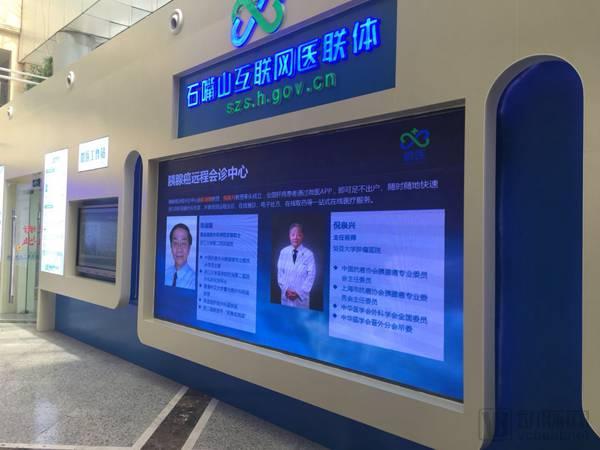
Shizuishan Internet Medical Consortium Hall
Consequently, in August 2017, Ningxia’s first Internet-based Medical Consortium—the Shizuishan Internet Medical Consortium—was launched. This consortium was led by the Shizuishan Municipal People’s Government and jointly established by the Municipal Health and Family Planning Commission and WeDoctor. Leveraging WeDoctor’s advantages in internet healthcare technology, expert resources, and specialty operations, the Shizuishan Internet Medical Consortium not only connects primary care facilities with municipal and county-level medical institutions to strengthen local business coordination but also enables the initiation of consultation requests for complex cases to more than 2,700 hospitals nationwide, thereby allowing local residents to access superior medical services.
Initial Success in the Decentralization of Medical Resources and Talent
The Shizuishan Internet Medical Consortium is a medical alliance built upon public medical institutions, with the Second People’s Hospital of Shizuishan City (hereinafter referred to as “the Second Hospital”) serving as the core hospital and covering affiliated hospitals in the surrounding areas. Its operational model follows a “1+3+X” framework: one Shizuishan Internet Medical Consortium Comprehensive Service Center acts as the central hub; three municipal general hospitals across the city’s three counties/districts serve as centers to establish three internet-based medical consortia; these consortia connect primary healthcare institutions within their respective regions, thereby extending coverage to “X” primary healthcare service points throughout the city. Leveraging internet and AI technologies, Weiyi has integrated the HIS, LIS, and PACS systems among hospitals within the consortium, fulfilling connectivity requirements across five tiers of medical institutions—autonomous region, municipal, county, township, and village levels.
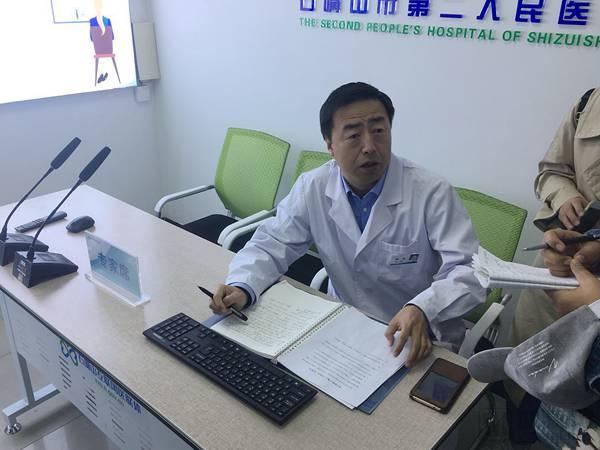
Tao Li, President of Shizuishan Second People's Hospital, is being interviewed by reporters.
“The initial planning phase for the Internet-based Medical Consortium lasted approximately six months. After reviewing numerous advanced case studies, we were introduced to this project by WeDoctor, which we found highly compelling as it addressed our hospital’s needs in both operational services and disciplinary development. In particular, WeDoctor’s platform facilitates patient access to care and has accumulated substantial resources that support hospital growth. Through the platform, we can achieve interoperability with more than 2,700 hospitals, enabling us to readily connect with and learn from their advanced practices. We can also share high-quality surgical demonstrations and best practices with them in real time. Additionally, we can participate in valuable activities hosted on the WeDoctor platform. The convenience of accessing and adopting advanced experience at any time significantly benefits our own business development and improvement. Our initial collaboration with WeDoctor was founded on this objective,” Tao Li, President of the Second Hospital, revealed to VCBeat the rationale behind the partnership with WeDoctor.
Currently, the Shizuishan Internet Medical Consortium has achieved direct HIS system integration with five medical institutions, including the Second Hospital of Shizuishan, the Yongle Community Health Service Station in Dawukou District, the Xinghai Town Central Health Center, the Changsheng Community Health Service Center, and the Changxing Health Center. This integration enables medical services such as remote diagnosis and treatment, sharing of electronic medical records, laboratory and imaging reports, online medical orders, electronic prescriptions, and remote training. Furthermore, by connecting upward to the Weiyi platform, it links to over 2,700 key hospitals nationwide, 7,400 expert teams, and 220,000 medical specialists, thereby facilitating the decentralization of high-quality medical resources to the grassroots level.
For the internet-based medical consortium clinics, the Second Hospital has implemented targeted scheduling, with one expert stationed at the Internet Remote Center each day to provide medical services such as remote consultations, online follow-up visits, and evaluation and diagnosis of complex and rare diseases. President Tao Li stated that during the six months of operating the internet-based medical consortium, patients accessing care through the online platform accounted for approximately 5% of the hospital’s total outpatient volume (which stands at 370,000 visits annually). Given that Shizuishan City has a total population of only around 780,000, it can be said that the goal of leveraging internet platforms to facilitate the downward distribution of medical resources and professional talent has begun to show initial results.
Not only that, but the Second Hospital has also seen a significant improvement in management and operational efficiency, while reducing personnel and administrative costs. For example, patients who previously had to visit the hospital for registration and consultation can now complete many of their initial and follow-up visits at primary care facilities, eliminating the need for repeated trips. In the past, remote consultations required coordinating the schedules of experts, patients, and hospital staff, with cumbersome data connectivity and transmission; now, these consultations can be conducted in real time. What was once emphasized as remote consultation has evolved into comprehensive telemedicine services, which, building on previous capabilities, now also include video-based teaching and guidance.
To address the current situation in which primary healthcare institutions are well-equipped but suffer from a shortage of physicians, the Second Hospital has recently launched a remote electrocardiogram (ECG) network. Patients can undergo ECG examinations at primary care facilities, while specialists directly interpret and diagnose the results via the remote ECG network, significantly improving healthcare delivery efficiency. President Tao Li further revealed that the internet-based medical consortium will subsequently introduce remote testing and diagnostic services for radiology and dynamic ultrasound, all featuring real-time diagnosis, to effectively tackle the common challenges faced by primary healthcare institutions.
Medical consultations have been resolved through remote means, and the issue of medication supply is now being addressed. Currently, the Second Hospital and Weiyi are exploring solutions for drug delivery (including prescription drugs), so that patients no longer need to visit the hospital each time to obtain their medications. “Our approach involves partnering with chain pharmacies in Shizuishan. The first requirement is that these pharmacies have sufficient coverage; for instance, residents within a one-kilometer radius or from two to three nearby residential communities would pick up their medications at a designated pharmacy. The delivery service would also be handled by the pharmacies. The process begins with a physician consultation, after which the prescription is transmitted via the internet to our pharmacists for review. Our clinical pharmacists will audit the prescription, and once approved, it will be forwarded online to the pharmacy for dispensing and delivery. We have calculated the costs and found that if deliveries are consolidated based on monthly prescription volumes, the operational costs are significantly lower than the personnel expenses associated with an in-hospital pharmacy,” described Zhang Wei, Associate Chief Physician at the Second Hospital, outlining this future scenario.
Leveraging AI Systems to Support Primary Care Physicians
Within the healthcare system, strengthening the diagnostic capabilities and service capacity of primary care institutions has always been the most burdensome yet core task. Strengthening primary care requires not only the downward dissemination of high-quality medical resources but also the enhancement of primary care physicians’ competencies. In this regard, the Shizuishan Internet Medical Consortium has played a pivotal role. During our visits to two affiliated institutions under the consortium—the Xinghai Town Central Health Center and the Yongle Community Health Service Station in Wukou District—we profoundly experienced the trickle-down of high-quality medical resources through remote consultations. Meanwhile, two AI systems developed by WeDoctor for traditional Chinese medicine (TCM) and Western medicine—the Xuanhutai TCM Auxiliary Diagnosis and Treatment System and the General Practice Auxiliary Diagnosis and Treatment System—are also assisting primary care physicians in enhancing their professional value.
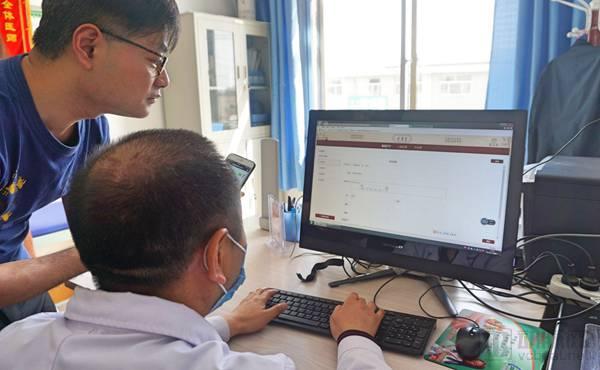
General practitioner Yang Xiaoli highly recommends this TCM AI system to VCBeat.
“The Xuanhutai TCM Auxiliary Diagnosis System consolidates the clinical experience of renowned physicians and classic prescriptions into a cloud-based solution that encompasses disease syndromes, therapeutic principles, body constitutions, prescriptions, and herbal compatibility. Following body constitution identification and analysis, the system automatically recommends prescriptions and similar medical cases, enabling primary care physicians to independently select and modify treatments according to clinical needs, thereby achieving specialized diagnosis and treatment for specific diseases.” Yang Xiaoli, a general practitioner at Xinghai Town Central Health Center, highly recommended this TCM AI system to VCBeat. Meanwhile, the AI-powered General Practice Auxiliary Diagnosis and Treatment System for Western medicine provides predictions for common and critical diseases based on patients’ age, gender, chief complaints, history of present illness, family history, allergy history, and physical examination findings. It also offers recommendations for referral, diagnosis, treatment, laboratory testing, and patient management. By learning from over 5 million literature articles and tens of millions of medical records and health archives, the general practice auxiliary diagnosis and treatment system now covers more than 2,000 diseases and 5,000 symptoms.
Assisting primary care physicians with diagnostic support through medical AI systems has long been a highly anticipated application scenario. According to Yang Xiaoli, since the central township health center joined the Shizuishan Internet Medical Consortium, its physicians have not only helped local residents address complex and intractable conditions and alleviate their suffering via telemedicine systems, but also continuously improved the accuracy of specialized diagnoses and service capabilities by leveraging the Xuanhutai Traditional Chinese Medicine (TCM) Assisted Diagnosis and Treatment System and the General Practice Assisted Diagnosis and Treatment System. The application of AI-powered intelligent assisted diagnosis systems for both TCM and Western medicine enables the rapid replication of medical experts’ knowledge and clinical experience. This is equivalent to assigning a senior specialist or renowned TCM practitioner to provide guidance behind each primary care physician, thereby reducing rates of missed and misdiagnoses and ultimately enhancing the diagnostic accuracy and service capacity of primary care providers.
Shizuishan Internet Medical Consortium May Become a Model Project
Thanks to the implementation of WeDoctor’s internet-based medical consortium in Ningxia, remote consultations have become routine within the Shizuishan Internet Medical Consortium. According to data from the Second Hospital, since its launch on August 26, 2017, the Shizuishan Internet Medical Consortium has facilitated over 120 remote consultations with renowned specialists for local patients, resulting in successful treatment plans and discharge after recovery for 98 patients. In addition to connecting upward with experts at major hospitals, the Shizuishan Internet Medical Consortium provides integrated medical service solutions to primary healthcare institutions by deploying all-in-one terminals and a comprehensive internet-based remote system that integrates both hardware and software.
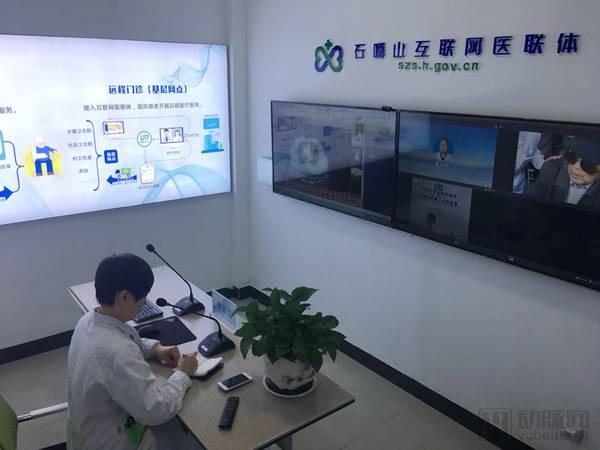
Teleconsultation has become a routine service within internet-based medical consortiums.
Zhang Yanhua, Director of the Yongle Community Health Service Center in Dawukou District, informed us that specialists from the Second People’s Hospital’s key departments—including cardiology, pulmonology, gastroenterology, orthopedics, and traditional Chinese medicine—have established a rotating on-call schedule to provide remote outpatient services. Primary care physicians at lower-tier medical institutions can engage in real-time video consultations with specialists from the Second People’s Hospital via the telemedicine system without prior appointment. For cases beyond the scope of primary care providers, patients can be referred through a “green channel” to municipal-level hospitals, enabling villagers to access high-quality specialist care without leaving their communities. Over the three months since the launch of the remote outpatient service, primary care institutions have cumulatively served 319 patient visits, with an upward referral rate of approximately 20%. This initiative has not only alleviated the burden on tertiary hospitals but also enhanced the clinical capabilities of primary care facilities, sparing patients the hassle of repeated travel and promoting the sharing of medical resources.
Visits over the past few days have revealed that doctors within the Shizuishan Internet Medical Consortium have adopted a positive attitude toward remote consultations, image interpretation, and AI systems. Although they have offered numerous suggestions for optimizing the overall user experience of the system, they also acknowledge the efficiency gains and enhanced capabilities it provides. It can be said that WeDoctor’s training and promotion of the “Internet + Healthcare” concept in Ningxia have begun to yield initial results. Once a model effect is established, it will be easier to replicate this approach in other regions, as many healthcare scenarios and practices in Ningxia, an underdeveloped medical region, are scalable across China. Lu Yuan, Project Lead for WeDoctor in Ningxia, stated that WeDoctor will continue to leverage technologies such as the internet and AI to help Ningxia become a national leader in “Internet + Healthcare,” accelerate the implementation of tiered diagnosis and treatment, and ensure that high-quality medical resources benefit grassroots populations throughout the region more quickly and equitably, thereby better serving the people of Northwest China.
Finally, in light of the policy directions outlined at the State Council’s executive meeting on April 12, the first two measures have now been largely implemented: namely, the provision of online services such as appointment scheduling and access to laboratory and diagnostic test results; and the fulfillment of consultation and follow-up visit needs for patients with common and chronic diseases through internet-based medical services.
The third measure, in our view, represents a critical step toward the sustainability of internet-based medical consortia: exploring information sharing between medical institution prescriptions and retail pharmacy data, and implementing intelligent health insurance audits alongside “one-stop” settlement services. Currently, the Shizuishan Internet Medical Consortium is exploring issues related to prescription management and medication delivery. However, its entire telemedicine operation remains free of charge, primarily because it has not yet been integrated into the national health insurance system, resulting in limited patient willingness to actively utilize these services. With the national government’s clear directives on implementing these measures, we believe integration with the health insurance system is inevitable. Once achieved, this will foster more sustainable and healthy development for internet-based medical consortia.
We believe that the most challenging tasks may lie in establishing a robust standard system for “Internet + Healthcare,” enabling interoperability and information sharing, strengthening oversight of medical quality, and enhancing cybersecurity protections. We hope that major internet healthcare platforms will promptly propose viable solutions.