When Clinical Masters Embrace Cutting-Edge Technology: The Optimal Human-AI Collaboration Model in Post-AI Era Healthcare Has Begun
In the real world, artificial intelligence has moved from the laboratory to practical applications, helping people solve a wide variety of problems.
In the medical field, artificial intelligence has already assisted physicians with tasks such as image interpretation, medical record processing, and diagnostic and therapeutic support. By leveraging AI technology to handle complex and cumbersome medical records and imaging data, healthcare efficiency can be improved and misdiagnosis reduced, thereby freeing up clinicians to focus on more meaningful responsibilities.
At a higher level, artificial intelligence will play a significant role in alleviating the scarcity of medical resources in China, promoting tiered diagnosis and treatment, and benefiting patients. For instance, many remote, border, and impoverished areas lack sufficient physicians; if a “virtual doctor” were available to assist with consultations, patients would no longer need to endure arduous travel to crowd into major hospitals in large cities.
Currently, the most mature application of artificial intelligence in the healthcare sector is in medical imaging. Approximately 80%–90% of data in the healthcare industry originates from medical images, which serve as a critical basis for physicians’ disease diagnosis. The so-called “AI + Medical Imaging” refers to AI-assisted tools that leverage deep learning algorithms to perform image classification, object detection, image segmentation, and retrieval based on medical images, thereby assisting physicians in diagnostic and therapeutic workflows.
From Human-Machine Competition to Human-Machine Collaboration: Exploring Medical Artificial Intelligence in the Post-AI Era
While artificial intelligence (AI) has the potential to drive significant innovations in the healthcare industry, several challenges remain to be addressed, such as data sourcing, standardized data usage, and the implementation of viable business models. Additionally, some physicians are concerned about job displacement by medical AI, as well as issues related to safety and liability attribution. Nevertheless, amid the current surge of interest, AI is making an aggressive entry into the healthcare sector.
In March 2018, an artificial intelligence system for breast cancer diagnosis, developed by scientists from Google, Google Brain, and Verily, outperformed human medical experts in a comparative pathological analysis. The AI achieved an accuracy of 88.5% in sensitivity (identifying correct tumors) and false positive rate (misdiagnosing normal tissue as tumors), surpassing the 73.3% accuracy of pathologists.
A month earlier, Professor Kang Zhang, a Chinese-American scholar, developed an artificial intelligence tool capable of precisely diagnosing multiple diseases. This tool can effectively classify images into categories of macular degeneration and diabetic retinopathy, and accurately differentiate between bacterial and viral pneumonia on chest X-rays. As a result, Professor Zhang became the first Chinese scientist to have his latest medical AI achievements published in *Cell*, one of the world’s three top academic journals.
Abroad, the field is booming; domestically, China is also “making its presence felt.” Since 2017, research and exploration in medical artificial intelligence have continuously expanded public awareness and influence of this technology.
In October 2017, the “Tianchi Medical AI Competition” concluded in Hangzhou, bringing together the largest number of participating teams worldwide (2,887) and the largest dataset (over 2,000 annotated CT scans). The winning team received the highest prize money in China at the time, amounting to RMB 500,000.
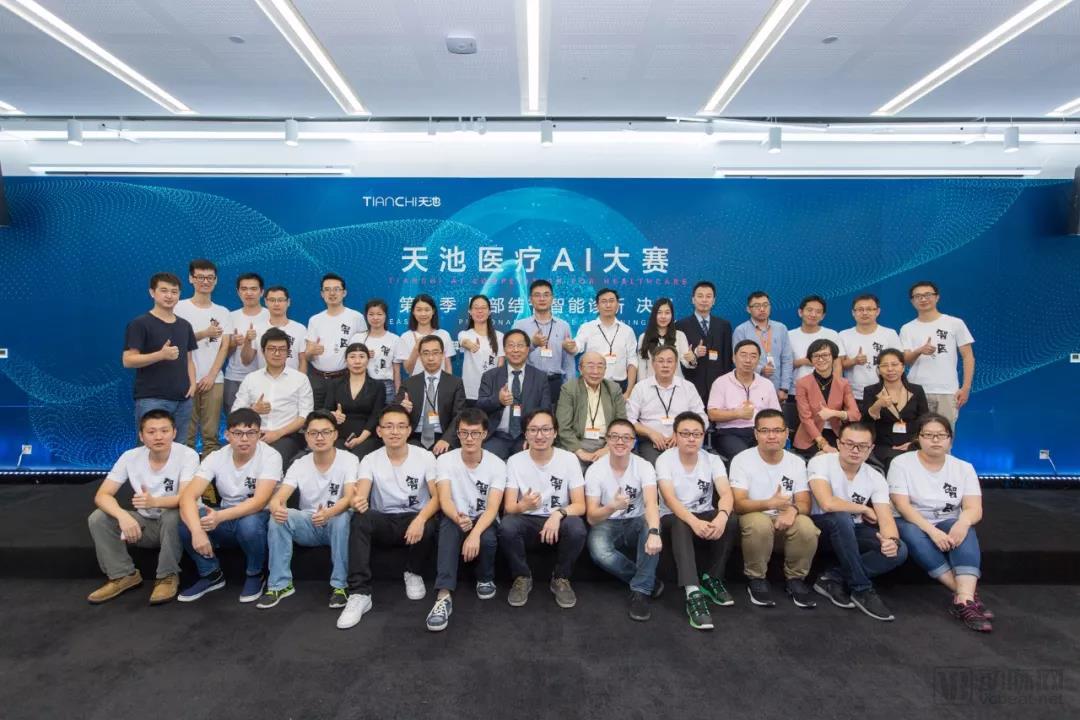
"Tianchi Medical AI Competition"
In December 2017, medical AI was featured on the hit CCTV program “Super Brain,” where it competed against 15 experienced chief physicians from top-tier (Grade A tertiary) hospitals across China, each with 15 years of professional experience and having interpreted over 200,000 medical images. The AI ultimately emerged victorious.
Although human doctors appear to be at a slight disadvantage when facing the “aggressive” advance of artificial intelligence in a series of human–machine competitions, voices within the industry are increasingly converging on a consensus:AI may win in competitions, but in reality, doctors will never be replaced by AI.
There is no direct competitive relationship between physicians and medical artificial intelligence (AI); rather, medical AI serves to assist human clinicians by saving time and enhancing efficiency. The future trajectory of medical AI will ultimately evolve toward “human-machine collaboration.”
"In the future, there will be no doctors replaced by AI, only those who are unwilling or unable to use it."
Guided by the concept of AI-assisted diagnosis and treatment, research and exploration into human-AI collaboration for the AI-based diagnosis of pulmonary nodules in China were set to commence in 2018...

March 31, 2018
Chengdu, Sichuan, China
2018 Annual Meeting of the Thoracic Surgeons Branch, Chinese Medical Doctor Association
AI-Assisted Diagnosis of Small Pulmonary Nodules: Exclusive Experience Session
Hosted by the Chinese Medical Doctor Association and its Thoracic Surgeons Branch, and organized by West China Hospital of Sichuan University, this conference features a dedicated session on AI-assisted diagnosis of small pulmonary nodules. This session is designed to provide a platform for thoracic surgeons in China to experience, learn, and discuss artificial intelligence, with the aim of exploring optimal models for human-AI collaboration.
Professor Zhang Xun from Tianjin Chest Hospital, Honorary President of the Thoracic Surgeons Branch of the Chinese Medical Doctor Association, pointed out that the diagnosis of pulmonary nodules is a hot and frontier research topic for artificial intelligence in the field of thoracic surgery. Currently, AI-assisted diagnosis of pulmonary nodules, from localization to characterization, is expected to be widely applied in clinical practice soon. The special session on AI-assisted diagnosis of small pulmonary nodules aims to help grassroots and young thoracic surgeons in China rapidly improve their clinical diagnostic and treatment capabilities through research on human-machine collaboration models.
At the 2018 Annual Meeting of Thoracic Surgeons, as clinical masters wield cutting-edge technologies, what surprises will the inaugural exploration of human-machine collaboration in the diagnosis of small pulmonary nodules bring? We eagerly await the outcomes!