

Smart Care at the Core of 'Internet Plus Elderly Care': How It Lands – Prospectus Highlights and Product Overview
As China’s population ages at an accelerating pace, elderly care has increasingly become a focal point of societal concern in recent years. During this year’s “Two Sessions,” it also emerged as a hot topic of discussion among delegates.
"Smart Elderly Care," supported by big data and the Internet of Things (IoT), has become a key component of top-level design, playing a crucial role in improving care efficiency and enhancing service quality. This policy emphasis suggests that smart elderly care is likely to move beyond the conceptual stage and receive more comprehensive support for practical implementation.
Before delving into the relevant issues, let us briefly introduce what smart elderly care is.
Smart elderly care encompasses several dimensions. First, at the technological level, it integrates advanced technologies such as medical electronics, the Internet of Things (IoT), cloud computing, big data, and mobile internet. Second, at the data and information level, it promotes interoperability among households, community healthcare institutions, health and elderly care service providers, and specialized medical institutions by collecting data on physiological signs and home environments. Third, at the service level, smart elderly care must deliver intelligent, personalized, and diversified services to meet the growing demand for health and elderly care.
Based on the above analysis, it is evident that smart elderly care essentially leverages emerging IT technologies to comprehensively transform the industrial structure of the elderly care sector, thereby achieving a dual improvement in service efficiency and quality.
This aligns with the national government’s overarching policy direction for the elderly care industry. In February 2017, the state issued the Action Plan for the Development of the Smart Elderly Care Industry (2017–2020), which set forth scientific and reasonable development goals for smart elderly care over the subsequent three years. In brief, the plan aimed to: establish more than 100 demonstration bases for smart health and elderly care applications; cultivate more than 100 leading enterprises with demonstrative and guiding roles; and formulate 50 standards for smart health and elderly care products and services.
According to the plan, smart elderly care will usher in unprecedented opportunities over the next three years, with the state channeling substantial resources and financial investment into this sector.
Furthermore, the term “Internet Plus” was repeatedly mentioned in this year’s Government Work Report. In his report, Premier Li Keqiang stated, “Foster and strengthen new growth drivers. Build up emerging industrial clusters, implement big data development initiatives, enhance the research, development, and application of next-generation artificial intelligence, and promote ‘Internet Plus’ across multiple sectors, including healthcare, elderly care, education, culture, and sports.” Among these, promoting “Internet Plus” in the field of elderly care falls within the scope of smart elderly care.
Of course, national policy support alone is not enough. On the other hand, smart elderly care also requires substantial corporate drive to be effectively implemented. So, what should enterprises do? How can they address the challenges associated with the practical implementation of smart elderly care solutions?
Although the concept of smart elderly care is not complex, its practical implementation is intricate. Current smart elderly care projects in the market include terminal devices, software products, and system integration services. Application services primarily encompass remote monitoring for the elderly, chronic disease management, online medical consultations, and community-based health and elderly care. As market segmentation accelerates, related enterprises are demonstrating robust growth momentum.
Natali China, a subsidiary of the Sanpower Group, has introduced advanced Israeli concepts and operational models for health and elderly care services. By integrating domestic and international medical resources, it provides Chinese users with one-stop smart healthcare and eldercare solutions. Its service system comprises four comprehensive components: home-based elderly care, intelligent monitoring, telemedicine, and chronic disease management.
Yi Yi Ban (Beijing) Information Technology Co., Ltd.’s product, e-Ban Xiao Xin, leverages human behavior recognition technology to monitor safety incidents and abnormal behaviors among elderly individuals living alone. By employing automated, real-time, and intelligent data collection methods, e-Ban Xiao Xin has replaced the outdated approach of relying solely on phone calls or home visits for information gathering, thereby striking a balance between efficiency and cost.
Based on the aforementioned introduction, it can be stated that smart elderly care has achieved certain accomplishments driven by enterprises. However, this is insufficient. From the perspective of the overall industry landscape, the vast majority of enterprises can only offer targeted products starting from specific segments, making it difficult to provide integrated solutions based on the entire industrial chain. This hinders smart elderly care from achieving fundamental breakthroughs.
According to Beijing Seven Heart Cloud Technology Co., Ltd., smart elderly care should center on elderly care services, with the aim of facilitating convenience for seniors from the service provider’s end. “In so-called ‘smart elderly care,’ elderly care is the core—the ‘skin’—while ‘smart’ technology is merely the ‘fur.’ In other words, technological means are readily accessible; the key lies in leveraging technology to build and refine the elderly care service system. Only with a solid ‘skin’ can there be vibrant ‘fur.’”
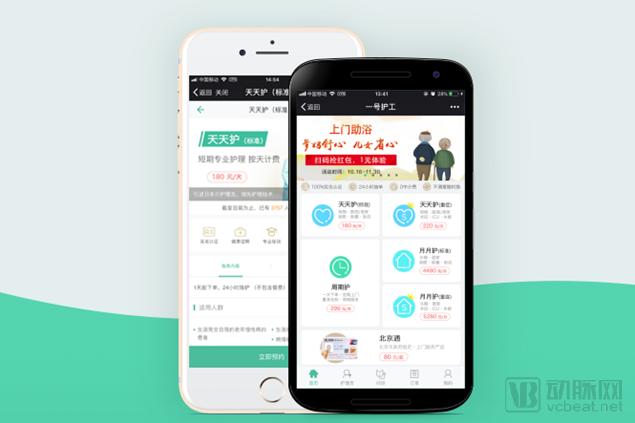
At the recently concluded 2018 Second China International Elderly Care Industry Expo, the No. 1 Caregiver Platform, under Beijing Seven Heart Cloud Technology Co., Ltd., attracted widespread attention from attendees with its numerous innovations and disruptive advancements. Through relevant analysis, the platform has also prompted significant reflection within the industry on how to effectively implement smart elderly care solutions.
The essence of smart elderly care lies in leveraging online resources to serve offline needs; therefore, the integration of online and offline services forms the foundation. In this regard, Yihao Hugong centers on smart nursing, utilizing advanced technologies and platform tools to efficiently and effectively connect users, caregivers, administrative staff, and medical professionals (doctors and nurses). This approach optimizes resource utilization and ensures high quality and efficiency across the entire service system.
In addition, No. 1 Caregiver is also vigorously developing its merchant SaaS platform, onboarding nursing companies and health service providers to create a closed-loop ecosystem for nursing and health services. This initiative aims to encourage all enterprises across the elderly care industry chain to participate, achieving win-win cooperation.
Third, Yihao Hugong accumulates platform-based nursing knowledge, connects with external medical and nursing expert resources, and provides functions such as online consultation, training, certification, and assessment to build a knowledge ecosystem. For users, accessing various services from experts on Yihao Hugong will become effortless in the future.
Smart elderly care is a complex system; therefore, from a product perspective, diversified strategies must be adopted to achieve comprehensive, gap-free user coverage.
In terms of product portfolio, No. 1 Caregiver has established an integrated suite featuring intelligent call systems, needs assessment, smart matching, location tracking, health records, service supervision, consultation and Q&A, care planning, and family member connectivity, comprehensively meeting users’ diverse online and offline needs. In other words, leveraging this robust product ecosystem, No. 1 Caregiver delivers a one-stop smart care service to its users.
Furthermore, Caregiver No. 1 is actively collaborating with various types of institutions, such as Beijing Tong. In addition to providing professional and comprehensive health management services, it also helps elderly users access a wide range of services from commercial community convenience stores.
Meanwhile, No. 1 Caregiver has also engaged in multi-level collaborations with enterprises such as CITIC Guoan and PICC, comprehensively promoting the development of a smart elderly care ecosystem.
No. 1 Caregiver is building an open ecosystem and may collaborate with more big data and artificial intelligence-related enterprises in the future to gain additional technical support, thereby enhancing and optimizing service quality and promoting the expansion of its ecosystem.
Huang Jingjin, Chief Medical Officer (CMO) of No. 1 Caregiver, believes that the development of smart elderly care requires robust industrial collaboration. Close cooperation across different segments of the industry chain is essential to integrate resources and advantages from both upstream and downstream sectors, thereby enabling faster, more stable, and more substantive progress in smart elderly care.
Driving service improvements through intelligence to meet user needs is the fundamental basis for the practical implementation of smart elderly care. Since the vast majority of enterprises are not yet capable of achieving this, the operational models of a select few platforms, such as No. 1 Caregiver, naturally serve as valuable references for the entire industry.