

Aishen Medical Completes Tens of Millions Series A+ Financing, Plans to Open Over 10 Independent Dialysis Centers This Year, Eyes Unicorn Status
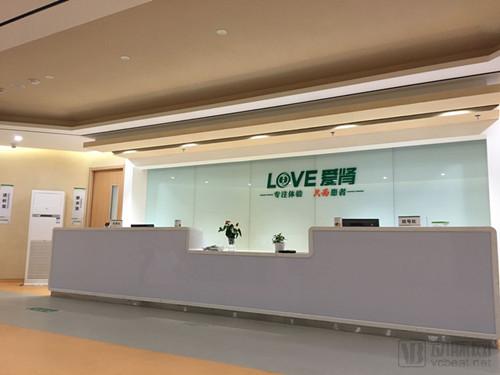
Currently, AiShen Medical is experiencing even faster growth.
Gao Xing, founding partner of Aishen Medical, promptly informed VCBeat (WeChat ID: vcbeat), “The company is about to enter its fourth year of organic growth. Before the Chinese New Year, we completed a Series A+ financing round amounting to tens of millions of yuan, led by Volcanic Stone Capital and Morningside Venture Capital, with participation from Zixu Capital.”
It has been just over six months since Aishen Medical’s previous Series A financing round. “For us, securing this funding was a natural progression. I have also formulated corresponding plans for the next round of financing,” stated Gao Xing.
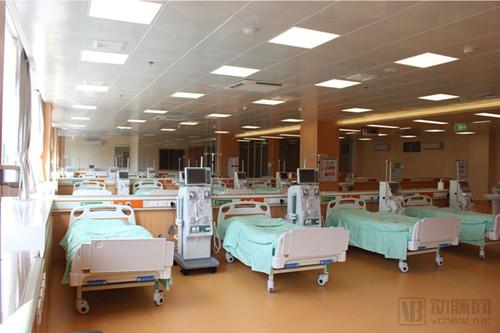
Following this round of financing, Aishen Medical will accelerate the deployment of hemodialysis centers in high-quality offline markets. Since the opening of Haikou Aishen Medical’s nephrology specialty hospital (Level II) in October 2017, independent hemodialysis centers in Sanya, Qionghai, Danzhou, Guangdong, Anhui, Heilongjiang, Gansu, Chongqing, and other regions have all obtained approval and entered the preparatory phase within just a few months. More than 10 centers are expected to open this year.
On the other hand, Aishen Medical will also establish a new board of directors, composed of Zhang Suyang, Founding Partner of Volcanic Stone; Shi Jianming, Managing Director at Morningside Venture Capital; Zhou Mi, Founding Partner of Puhua Capital; and Zhang Jun, Founding Partner of PA Capital, among others. The purpose is to provide strategic support for Aishen Medical’s later-stage development and to offer capital operation solutions for a potential future IPO.
What are the reasons behind its rapid fundraising? How do investors evaluate Aishen Medical?
Currently, few domestic kidney disease management platforms offer services as comprehensive as those provided by Aishen Medical. Established in late 2014, the company operates Aishen.com, an online service platform, and Hainan Aishen Hospital (affiliated with Aishen Hospital Investment Management), an operational platform for its chain of offline dialysis centers. By integrating its online platform with offline dialysis centers, Aishen Medical is committed to providing patients with a complete continuum of medical care, ranging from chronic disease management to dialysis treatment.
According to Gao Xing, Ai Shen Wang is an internet platform dedicated to providing science popularization and chronic disease management services for kidney disease patients. It has attracted over 20% of nephrology healthcare professionals in China to join its network and collaborates with more than 500 public hospitals nationwide, offering kidney disease patients round-the-clock information on kidney disease knowledge and nutrition, as well as nutritional management services.
Although Aishen Medical has gained industry recognition, it faced numerous challenges in its early days. “I was one of the earliest founders of this company, and every team member was individually recruited. At that time, we only secured RMB 2 million in angel funding, which was insufficient to accomplish much in Shanghai, as establishing a single offline hemodialysis center cost approximately RMB 10 million.”
Reassuringly, the arduous conditions of entrepreneurship have not dampened their passion. They work seven days a week, and all employees, including senior executives, stay at budget chain hotels during business trips.
With the support of its team, Aishen Medical has achieved healthy growth, earning widespread recognition from industry professionals and attracting an expanding base of partners. In the medical device sector, Aishen Medical collaborates with Bedeng; in the pharmaceutical field, it partners with Jianke. For offline operations, in addition to building its own facilities, Aishen Medical has joined forces with Sweden’s Dery Care to explore a Sino-foreign cooperative model for dialysis centers. It is with the support of these partners that Aishen Medical continues to move forward.
Currently, Aishen Medical has also recruited a specialized hemodialysis nurse from Singapore. In Gao Xing’s view, her addition will introduce Singapore’s healthcare service philosophy to the team, which holds significant implications for the future development of Aishen Medical. “We have always hoped that patients visiting Aishen Medical would experience warm and compassionate care.”
Liu Kai, Vice President of Volcanic Stone Investment, who has recently begun following the sector, stated: “Chronic kidney disease (CKD) treatment represents a substantial market. The future trend in nephrology care lies in leveraging dialysis services to provide integrated online and offline CKD management solutions. This requires service providers to possess more specialized medical capabilities, a stronger service orientation, and more advanced operational management models. We have been tracking AiShen Medical for an extended period. The team has deep industry expertise, extensive experience in managing hemodialysis centers, and robust online operational capabilities, all underpinned by a clear strategy. We believe AiShen Medical is well-positioned to become a pioneer in new models of CKD treatment services in China.”
Morningside Venture Capital, the lead investor in the previous round, has also continued to increase its stake in Aishen Medical in this round. “Hemodialysis services represent a niche sector that can transcend economic cycles, exhibits compound growth effects, and is well-suited for scaled chain operations; it is a track in which we will actively invest. We believe that Aishen Medical, as one of the most professional and execution-driven teams in this sector, can lead the company to become an industry leader,” said Shi Jianming, Managing Director at Morningside Venture Capital.
Jing Xutian, Investment Manager at Morningside Venture Capital, added, “Our investment in Aishen Medical is driven by three key factors. First, industry dynamics have created significant growth opportunities, including medical insurance reimbursement coverage and policy allowances for private capital to establish for-profit hemodialysis centers. Second, drawing on the development of hemodialysis centers in the United States, where nearly 70% of the market share is held by two publicly listed companies, we observe that this sector has the highest concentration among specialized medical services. This is due to transparent pricing and service processes that are highly conducive to standardization and chain operations; therefore, we anticipate that major hemodialysis players will inevitably emerge in China. Third, since the initial pilot opening of private hemodialysis centers in China, Aishen Medical’s core team has been deeply engaged in the nephrology field, accumulating years of successful experience in both building and operating chain hemodialysis centers.”
So, why has Aishen Medical’s team garnered such acclaim from investors? The answer lies in their impressive backgrounds. It is reported that all members of Aishen Medical’s team come from leading companies in the nephrology industry. The company’s CEO, Jie Renxiang, previously served as Deputy General Manager of Weigao Blood Purification Group, where he was responsible for marketing operations and sales since the company’s inception. He later served as Managing Director of Weigao Terumo Medical Company and is one of the earliest practitioners in China’s hemodialysis industry. Zhang Yongqiang, one of the company’s founders, served as project lead in Shandong Province and successfully applied for China’s first independent private dialysis center in 2011. He also participated in the formulation of establishment standards for dialysis centers with relevant regulatory authorities. Co-founder Gao Xing is a lawyer who previously served as Investment Director at a publicly listed company.
“Such teams are scarce in China. We believe that Aishen Medical can leverage its team’s successful experience as a first-mover advantage, focus on the hemodialysis service sector, and grow into a leading private chain of hemodialysis centers in China within a few years,” commented Jing Xutian on Aishen Medical.
Liu Kai believes that the roles of these three co-founders are highly complementary: one oversees offline hemodialysis centers, another is responsible for resource integration, and the third handles fundraising and online operational management. Meanwhile, they all bring extensive industry experience and professional networks. “I recall the founder of AiShen Medical once saying, ‘I can reach 90% of people in the nephrology industry with a single phone call; for the remaining 10%, I can still locate them through referrals obtained with just one call.’”
Surveys indicate that the prevalence of chronic kidney disease (CKD) among adults in China is 10.8%, corresponding to an estimated 120 million affected individuals, including 1–2 million patients with end-stage renal disease (ESRD). Currently, ESRD patients in China primarily undergo renal replacement therapy via peritoneal dialysis or hemodialysis to compensate for failed kidney function. This suggests that the number of patients receiving hemodialysis is disproportionately low relative to the substantial disease burden.
Despite the high prevalence of kidney disease, patient awareness remains remarkably low. Gao Xing told reporters, “The awareness rate of kidney disease among Chinese people is only 10%. If we could raise this rate to 50%, enabling early detection, patients could often keep their condition under control through standardized treatment and chronic disease management. In contrast, when the disease is detected at a late stage, patients are often on the verge of requiring dialysis, and the effectiveness of interventions in delaying progression is significantly less pronounced than with early intervention.” This is why he has remained committed to providing online science popularization and education, distinguishing himself from other entrepreneurs who are primarily interested in profiting from dialysis services.
He has always believed that leveraging internet technology to enhance the efficiency of chronic disease management is an inevitable trend. Therefore, he started with an online-first approach, aiming to build a platform that creates a closed loop between online and offline services. Although the likelihood of these users transitioning to offline dialysis centers is low, the data collected from them prior to dialysis remains highly valuable.
In the future, Aishen Medical will continue to pursue a dual-track strategy combining offline and online operations. It is precisely through its long-term online health education initiatives and patient engagement activities that Aishen Medical has gradually gained recognition, thereby building trust among healthcare professionals and patients alike.
Meanwhile, according to Gao Xing, Aishen Medical has also established China’s first company dedicated to providing supply chain services for nephrology medical equipment and consumables specifically for independent hemodialysis centers. The procurement and supply of equipment and consumables are a critical component in the operation of chain hemodialysis centers, representing a domestic market valued at over RMB 100 billion. Each independent hemodialysis center requires approximately RMB 5 million in initial investment for medical equipment upon opening, covering more than 100 categories; after stabilizing operations, annual consumable purchases range from RMB 5 million to RMB 10 million. Therefore, supply chain services are crucial. Although many companies in China have attempted to enter the hemodialysis supply chain sector, none have truly integrated the full range of equipment and consumables. Through this collaboration with Bedeng Medical, Aishen Medical has created the first supply chain company in China tailored to independent hemodialysis centers. Leveraging this supply chain platform, Aishen Medical can rapidly support the establishment of independent hemodialysis centers nationwide while also extending its services to hemodialysis centers within other private hospitals.
About Morningside Venture Capital
Morningside Venture Capital is one of the earliest institutions in China to engage in early-stage venture capital. It currently manages four USD-denominated funds and one RMB-denominated fund, with assets under management totaling approximately $1.7 billion. Its limited partners include internationally renowned sovereign wealth funds, family offices, funds of funds, and university endowments.
For nearly two decades, Morningside Venture Capital has been dedicated to identifying, supporting, and empowering solitary entrepreneurs, sharing their exceptional vision while providing our insights, industry expertise, and comprehensive support spanning from spiritual encouragement to all operational aspects. Notable success stories include Sohu, Ctrip, The9, China Distance Education Holdings, Xunlei, Phoenix New Media, UCWeb, YY, and Xiaomi Technology. Morningside Venture Capital maintains offices in Shanghai, Beijing, and Hong Kong.
In recent years, Morningside Venture Capital has prioritized the healthcare sector as a key investment focus, actively seeking out exceptional startup teams in healthcare services and those leveraging IT or internet technologies to empower the medical industry.
About Volcanic Stone Capital
Volcanic Stone Capital focuses on investing in high-growth enterprises at the early and growth stages in the fields of internet innovation, pan-smart technology, and healthcare. The team’s past investment achievements include Ctrip, Tudou, Hanting Hotel, Home Inn, EachNet, Allyes, Andon Health, Kanghui Medical, Baosteel Packaging, Ping An Good Doctor, Shanghai Pharmaceuticals Cloud Health, Ecovacs Robotics, Fourier Intelligence, Hyperstrong, and Geetest.
About Zixu Assets
Zixu Assets is a large-scale healthcare industry fund and fund of funds. Its managing partners have over 15 years of experience in venture capital and industry incubation, while its investment team combines global perspective with localized operational expertise.