

From NHFPC to NHC: Institutional Reform Ushers in a New Era for China's Healthcare Industry
In 2018, the healthcare industry underwent significant changes.
On February 28, the Third Plenary Session of the 19th Central Committee of the Communist Party of China adopted the Plan for Deepening the Reform of Party and State Institutions. In the healthcare sector, the National Health Commission (abbreviated as “NHC”) and the National Healthcare Security Administration were newly established.
In March, the Central Committee of the Communist Party of China issued the Plan for Deepening the Reform of Party and State Institutions, and circulated a notice requiring all regions and departments to conscientiously implement it in light of their actual conditions.
On March 19, the Seventh Plenary Session of the First Session of the 13th National People's Congress decided on other members of the State Council. Following a vote, Ma Xiaowei was appointed as Director of the National Health Commission.
Late on the night of March 21, a photo went viral in the medical community. It showed staff replacing the plaque bearing the name “National Health and Family Planning Commission” with one reading “National Health Commission.”
On March 26, the official website of the “National Health and Family Planning Commission of the People’s Republic of China” was renamed to “National Health Commission of the People’s Republic of China.”
From the “National Health and Family Planning Commission” to the “National Health Commission,” a single-character change in Chinese better aligns with the “Healthy China” initiative in terms of government functions, reflecting the elevation of population-wide health management to a basic national policy. Health cannot rely solely on pharmaceuticals; the era of non-pharmacological interventions has arrived.
What are the functions of the two newly established ministries? How do experts evaluate them? And how do medical entrepreneurs view these changes?
VCBeat (WeChat ID: vcbeat) reporters, seeking answers to pressing questions, interviewed Zhu Hengpeng, Deputy Director of the Institute of Economics at the Chinese Academy of Social Sciences; Miao Yanqing, Researcher at the Health Development Research Center of the National Health and Family Planning Commission; Lin Yuming, Chairman of the Board of Directors of HeMei Medical; and Li Changjiang, Founder of Chongqing Jiaxing Medical.

From left to right:
Zhu Hengpeng, Deputy Director of the Institute of Economics at the Chinese Academy of Social Sciences,
Miao Yanqing, Researcher at the Health Development Research Center of the National Health and Family Planning Commission,
Lin Yuming, Chairman of the Board of Directors of Hemei Medical,
Li Changjiang, Founder of Chongqing Jiaxing Medical
The newly established National Health Commission regards the health of the people as a significant indicator of national prosperity and strength. Its main responsibilities include formulating national health policies, coordinating and advancing the deepening of healthcare system reforms, organizing the development of the national essential medicines system, supervising and managing public health, medical services, and health emergency responses, overseeing family planning management and services, and formulating policy measures to address population aging and integrate medical care with elderly care.
The National Working Commission on Ageing is retained, with its day-to-day operations undertaken by the National Health Commission. The China National Committee on Ageing, previously under the interim administration of the Ministry of Civil Affairs, shall now be placed under the interim administration of the National Health Commission. The National Administration of Traditional Chinese Medicine shall be administered by the National Health Commission. The National Health and Family Planning Commission is no longer retained. The Office of the Leading Group for Deepening the Reform of the Medical and Healthcare System of the State Council is no longer established.
Zhu Hengpeng, Deputy Director of the Institute of Economics at the Chinese Academy of Social Sciences, told VCBeat, “"The first step of this institutional reform plan has been executed exceptionally well. We look forward to the successful implementation of the next phase, namely the separation of regulation and operation in the healthcare industry. Achieving this separation will resolve a unique challenge inherent to China’s healthcare reform, after which there will be no further 'deep-water zones'."
He believes that this round of the State Council’s institutional reform plan redefines the relationship among the government, society, and the market, and clarifies the boundaries of governmental authority. It represents an active exploration in advancing the modernization of China’s national governance system and governance capabilities. There are two specific operational principles: the first is the principle explicitly stated in the Decision of the Third Plenary Session, which advocates that “in principle, one category of affairs should be coordinated by a single department, and one specific matter should be handled by a single department, so as to avoid multiple sources of policy issuance, unclear responsibilities, and buck-passing.”
The second principle is not explicitly stated in text; however, the clearly defined responsibilities of various agencies in the plan do not assign ministries the duty to formulate reform plans or lead reforms. Regarding reforms within their respective industries, where mentioned, the wording used is “coordinate and advance” or “overall planning and advancement.”
This means that the current institutional reform plan is committed to addressing the previous malpractice, whereby individual departments independently designed and led their own sectoral reform initiatives. Instead, it empowers the Central Leading Group for Comprehensively Deepening Reforms—an authoritative body transcending departmental interests—to design the reform blueprint and spearhead its implementation.
Miao Yanqing, a researcher at the Health Development Research Center of the National Health and Family Planning Commission, holds the view that,As population aging intensifies in China, burdening elderly care and healthcare systems, which tier of medical institutions is better suited to implement the Healthy China-centered strategy?
Undoubtedly, it isPrimary healthcare institutions.On the one hand, it is closely connected to the general public, making it easier to monitor their health on a continuous basis; on the other hand, within the medical talent training system, the disciplinary framework, consultation model, and underlying philosophy of general practitioners are all grounded in the concept of comprehensive health.
When residents seek care at primary healthcare institutions, general practitioners pay closer attention to the factors influencing their illness, even exploring causes from multiple dimensions. For instance, are family conflicts or stress from a child’s work difficulties triggering physical symptoms? Based on this assessment, they develop tailored service plans for patients, which differs from the disease-centered diagnostic and treatment model.
Meanwhile, the functional positioning of the “National Health Commission” also highlights the integration of medical and elderly care services, demonstrating that this is a major national strategy from a macro perspective.Since chronic diseases are prevalent among the elderly, with pharmaceuticals accounting for 70% of medical expenses, operating eldercare institutions or medical facilities in isolation fails to achieve effective integration. Therefore, unified management by the National Health Commission will better facilitate resource integration. In particular, integrating medical and elderly care services within primary healthcare institutions represents a sound strategy that aligns well with China’s national conditions.
Therefore, the establishment of this ministry presents a significant opportunity for primary healthcare.
Lin Yuming, Chairman of the Board of Directors of Hemei Medical Group, believes that the current restructuring of national health institutions, with “Healthy China” as its strategic goal, reflects the development imperative to shift the focus from disease treatment to people’s health.As a comprehensive strategy encompassing all aspects, its implementation faces significant challenges due to the difficulties in multi-departmental coordination. By integrating responsibilities such as health management and supervision across multiple departments through this institutional restructuring, the smooth advancement and early realization of the Healthy China strategic objectives will be facilitated.
Li Changjiang, founder of Chongqing Jiaxing Medical, a provider of community-based chain medical services, stated that the newly established National Health Commission represents both a boon and a source of hope for the healthcare industry. Its centralized management, unified direction, and coordinated actions facilitate the implementation of the Healthy China strategy, reflecting the central government’s high prioritization of public health and its determination to improve the current state of medical care.
In essence, it has a positive impact on the healthcare industry.First, it facilitates comprehensive planning for the entire healthcare industry and has a positive impact on healthcare system reforms. Second, it reduces overlapping management across multiple departments, thereby improving administrative efficiency. Third, it effectively advances the implementation of policies promoting tiered diagnosis and treatment and strengthening primary care, thereby truly realizing the goal stated in the Report to the 19th National Congress of providing the people with comprehensive, full-cycle health services. This represents a concrete manifestation of the shift from a disease-centered approach to a people’s health-centered approach.
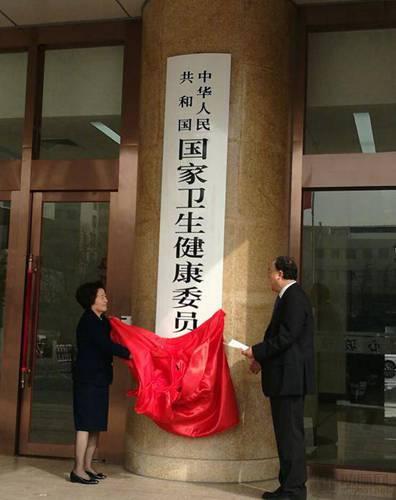
Image from Xinhua News Agency
Next, the National Healthcare Security Administration was established. Its primary responsibilities include formulating and implementing policies, plans, and standards for healthcare security systems such as medical insurance, maternity insurance, and medical assistance; supervising and managing related healthcare security funds; improving the national platform for cross-regional medical care management and expense settlement; organizing the formulation and adjustment of pricing and charging standards for pharmaceuticals and medical services; formulating policies for the tendering, procurement, and bidding of pharmaceuticals and medical consumables and overseeing their implementation; and supervising and managing medical service behaviors and medical expenses covered within the scope of healthcare security expenditures.
Zhu Hengpeng expects the newly established National Healthcare Security Administration to leverage the integration of its institutions and functions as an opportunity to effectively advance social governance in health insurance, with the potential to become a key lever for breaking the long-standing impasse in healthcare reform.
As recommended by the plan, the National Healthcare Security Administration consolidated two major functions: first, it integrated the management functions of the three major government medical insurance programs and the medical assistance function into a single department, thereby ending a five-year interdepartmental dispute over the jurisdiction for managing the integration of urban and rural resident basic medical insurance.
Consolidating the administration of the three major social medical insurance schemes under a single agency, while ensuring seamless coordination between medical insurance and medical assistance programs, has created synergistic effects. This integration has laid the foundation for effectively curbing unreasonable growth in public hospital medical expenses and for establishing a unified national health insurance system in the future.
Next, the medical and pharmaceutical pricing functions previously under the National Development and Reform Commission (NDRC), the centralized drug bidding functions under the National Health and Family Planning Commission (NHFPC), and the healthcare security authority’s own function of determining healthcare payment methods (standards) were integrated into a single unified function: organizing the formulation and adjustment of prices for drugs and medical services, as well as fee standards.
Previously, these three functions with significant overlap were dispersed across three ministries due to historical reasons, but this inevitably led to buck-passing and conflicts, as well as serious behavioral distortions among pharmaceutical companies and healthcare institutions.
With the establishment of a universal health insurance system, health insurance payments have become the primary source of revenue for medical services, pharmaceuticals, and consumables. In effect, health insurance payment methods have evolved into the pricing mechanism for healthcare and pharmaceutical products. It is an inevitable trend to consolidate the previously overlapping pricing functions into the determination of health insurance payment methods. The centralization of this authority under the newly established National Healthcare Security Administration reflects this trend and aligns with the principle of “optimized coordination and efficiency.”
This reform has laid the foundation for ultimately achieving “social administration and governance of social health insurance.” It also marks a step closer to “establishing a nationally unified public service platform for social insurance.”
From Miao Yanqing’s perspective, in terms of the division of national functions, integrating the three basic medical insurance schemes offers two advantages:
First, it ensures the rational use and secure, controllable management of medical insurance funds, while coordinating the integrated reform of healthcare services, medical insurance, and pharmaceuticals (“the Three-Medical Linkage”). This better guarantees patients’ access to medical care, continuously improves the level and efficiency of medical security, and serves patients more effectively. Second, regarding medical insurance payment, centralized fund management with clear delineation of rights and responsibilities can reduce unnecessary disputes and enhance efficiency. Previously, fragmented medical payment processes were cumbersome, leading to year-on-year increases in medical expenditures and escalating financial inputs, while the services accessible to the general public dwindled.
Li Changjiang believes that the establishment of the National Healthcare Security Administration is a measure that benefits both the country and its people.It may become easier for the general public to access medical care across different regions in the future.Previously, multiple departments managed medical insurance payments, but now they are under unified management. Given China’s high population mobility, many patients choose to return to their local areas for treatment, as medical insurance provides reimbursement.
Secondly, health insurance payment serves as a favorable incentive for tiered diagnosis and treatment. By reforming health insurance payment methods and strengthening cost control measures, patients with chronic diseases who have clear diagnoses and stable conditions are guided to be referred downward from tertiary hospitals, while these hospitals proactively assume the responsibility of providing diagnosis and treatment services for patients with difficult and complex diseases.
With the establishment of the National Health Commission and the National Healthcare Security Administration, China’s health industry chain is gradually improving, and new business models are constantly emerging. The health industry has become a new highlight of China’s economy, and China is set to become the largest market for the global health industry. Private medical institutions should seize new development opportunities, leverage their own advantages, strengthen capacity building, actively seek cooperation with leading enterprises in related fields, extend the upstream and downstream industry chains, and use “Big Health” as an opportunity to initiate a grand pattern in the health sector.
“Currently, we are also actively positioning ourselves to create a closed-loop industrial chain spanning from eugenics and assisted reproduction (IVF) to postpartum rehabilitation, confinement centers, and medical aesthetics. Disease relies on diagnosis and treatment, while health depends on management. Private hospitals must develop new strategic plans targeting the needs of healthy and “sub-healthy” populations, deploying full-lifecycle and full-industry-chain health projects to provide comprehensive solutions for health management needs at all levels.“Lin Yuming said.”
Another sector experiencing rapid development is primary healthcare. According to Miao Yanqing,Standardized documents on strengthening primary healthcare capacity and training general practitioners are expected to be issued in the near future.In the training of primary care general practitioners, focusing on health as the core to enhance the service capabilities of primary healthcare institutions,From the original separation of medical care and prevention to their integration,Achieve the state of treating illness when present and enhancing health when absent.
In this way, the issue of “signed but not serviced” in family doctor contract services at primary healthcare institutions will be eliminated. Since the public is primarily concerned with the content of the contracts, ensuring the fulfillment of these contractual obligations will effectively resolve trust issues toward primary healthcare institutions.
Backed by medical insurance payments, the system adopts a results-oriented approach to fund comprehensive primary healthcare services. Incentive mechanisms have been established for general practitioner teams in primary care, enabling residents to benefit from enhanced services in medication management, clinical consultations, and dietary guidance. By leveraging payers to drive changes in medical practice, the ultimate goal is to improve the overall health of the population.
Regarding the allocation of medical insurance funds, Li Changjiang believes that two points require special attention. The primary focus should remain on covering costs for major and critical illnesses, thereby providing better protection for the public and preventing poverty caused by illness or relapse into poverty due to medical expenses. Although it advocates for safeguarding basic medical care, this is a pseudo-concept.
For example, a patient with a serious illness incurred medical expenses of RMB 300,000, of which only RMB 50,000 was reimbursed by basic medical insurance, leaving an out-of-pocket cost of RMB 250,000. In contrast, for a minor illness costing RMB 5,000, RMB 4,000 was reimbursed, resulting in an out-of-pocket expense of RMB 1,000. Which patient faces greater financial pressure?
Second, medical insurance funds should be used rationally, with increased support for health management services. Currently, many family doctor contracts remain inactive; this is primarily due to low compensation and the absence of a designated payer.
Zhu Hengpeng stated that the consolidation of functions and administrative responsibilities holds promise for reducing conflicts, bureaucratic wrangling, and mutual obstruction. The integration of the three major medical insurance schemes and medical assistance functions into the National Healthcare Security Administration (NHSA), along with the transfer of pricing authority for medical services and pharmaceuticals to the NHSA, provides this possibility. However, we must remain clear-headed: this can only be described as a “hopeful” solution, not a guaranteed one. While consolidating responsibilities necessitates a reduction in administrative departments and personnel, it does not mean such reductions will occur automatically. Historically, eliminating departments and staff has been among the most challenging aspects of reform.
The pricing department for medical services and pharmaceuticals under the National Development and Reform Commission (NDRC) comprises a team of civil servants along with a price management staff supporting their work. Under the provincial Health and Family Planning Commission, there is a dedicated bidding office staffed by personnel with established public institution positions. The Healthcare Security Administration has specific divisions and personnel responsible for determining healthcare insurance payment methods. Although the formulation of healthcare insurance payment methods (payment standards) could and should encompass all three of these functions, the question remains: how should the employees previously responsible for administrative pricing and those in charge of bidding be reassigned? Clearly, they cannot simply be laid off.
In short, the success of merging and streamlining administrative functions and authority hinges on the ability to reduce the size of the public sector workforce. As long as personnel remain in place, there must be a justification for their existence; consequently, they will seek out tasks to demonstrate their necessity.
Certainly, these personnel do not necessarily become redundant; in fact, there is a significant shortage of staff in current medical insurance administration. If the reform of the medical insurance administration system proceeds smoothly, allowing medical insurance agencies to become independent public legal entities with socialized operations, a considerable portion of the team previously engaged in long-term medical and pharmaceutical pricing and bidding work can transition into medical insurance administrative roles. Of course, it is necessary to discard "outdated mindsets," specifically the obsession with civil servant status or institutional staffing quotas.
In other words,If the transformation of the health insurance administration system is not advanced in tandem, merely consolidating functions scattered across multiple ministries into a single department will neither resolve the “nine dragons taming the waters” dilemma nor address issues of bureaucratic wrangling and shirking of responsibilities, thereby precluding the modernization of social health insurance management and administration.
After nearly four decades of reform and opening-up, some industries have undergone profound transformations, while others have been completely reinvented. Healthcare is one of the few sectors where underlying concepts and institutional frameworks have remained largely unchanged, highlighting the exceptional difficulty of self-driven innovation and systemic renewal.Reform architects must vigorously implement the “separation of regulation and operation” reform to break the deadlock in healthcare reform.
Under the State Council’s institutional reform plan, the powers of the National Development and Reform Commission (NDRC)—the biggest barrier to a planned economy—have been significantly reduced, demonstrating the boldness and determination of the reform’s architects.
Therefore, the breakthrough in healthcare reform is worth anticipating!